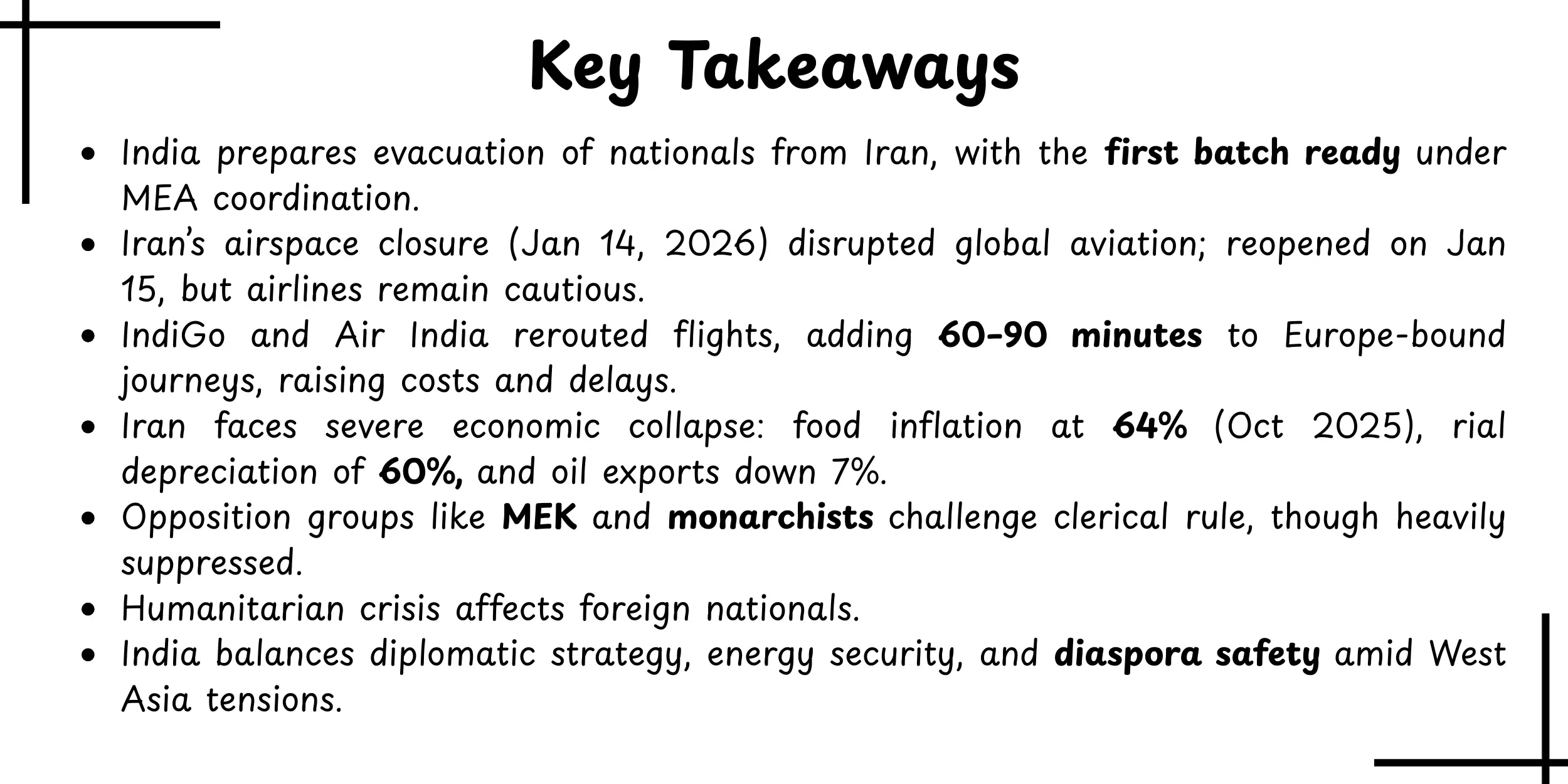
As the escalating situation in Iran continues, India is in readiness to evacuate its nationals in Iran, where the first group is already prepared to leave. In the meantime, Airspace in Iran is closed, forcing IndiGo and Air India airlines to divert their flights, which increases their operational costs, thus increasing travel time and leading to inconvenience among passengers. India Initiates Operation Sindhu to evacuate citizens as Iran airspace volatility continues.
|
Key highlights
- Increasing Tensions in Iran
- What is happening in Iran?
- Who are the opposition groups of Iran?
- External Forces Impacting Iran
- Humanitarian Crisis in Iran
- Concerns among Foreign Nationals
- Indian Strategic and Diplomatic Dimensions
- Evacuation Plans by India
|
The announcement of the evacuation of Indian citizens in Iran is a major ledge in reference to the growing tension in the region. In coordination with the Indian embassy in Tehran, the Ministry of External Affairs has prepared the first set of its citizens to depart, underscoring the role played by the government in protecting its diaspora. At the same time, the Iranian airspace has been closed, forcing Air India and IndiGo to reroute flights, which has led to long journey times, high operation costs and logistics. This two-part narration brings out the humanitarian aspect as well as the general situations in regard to international aviation security.
What is happening in Iran?
The country is going through one of its worst internal crises in recent years, which is characterised by large-scale protests and economic breakdown as well as increased foreign pressure. It signifies dissatisfaction on the domestic level, as well as a shift in geopolitics.
Historical background and present factors in Iran
Since 1979, Iran has experienced sanctions, armed conflicts, and political instabilities, which have continued to impact Iran to date. The most recent unrest was initiated by strikes of traders against hyperinflation and currency depreciation, which soon developed into national protests. These protests have become violent, and as such, the government has been cracking down harshly.
Social anger and economic collapse in Iran
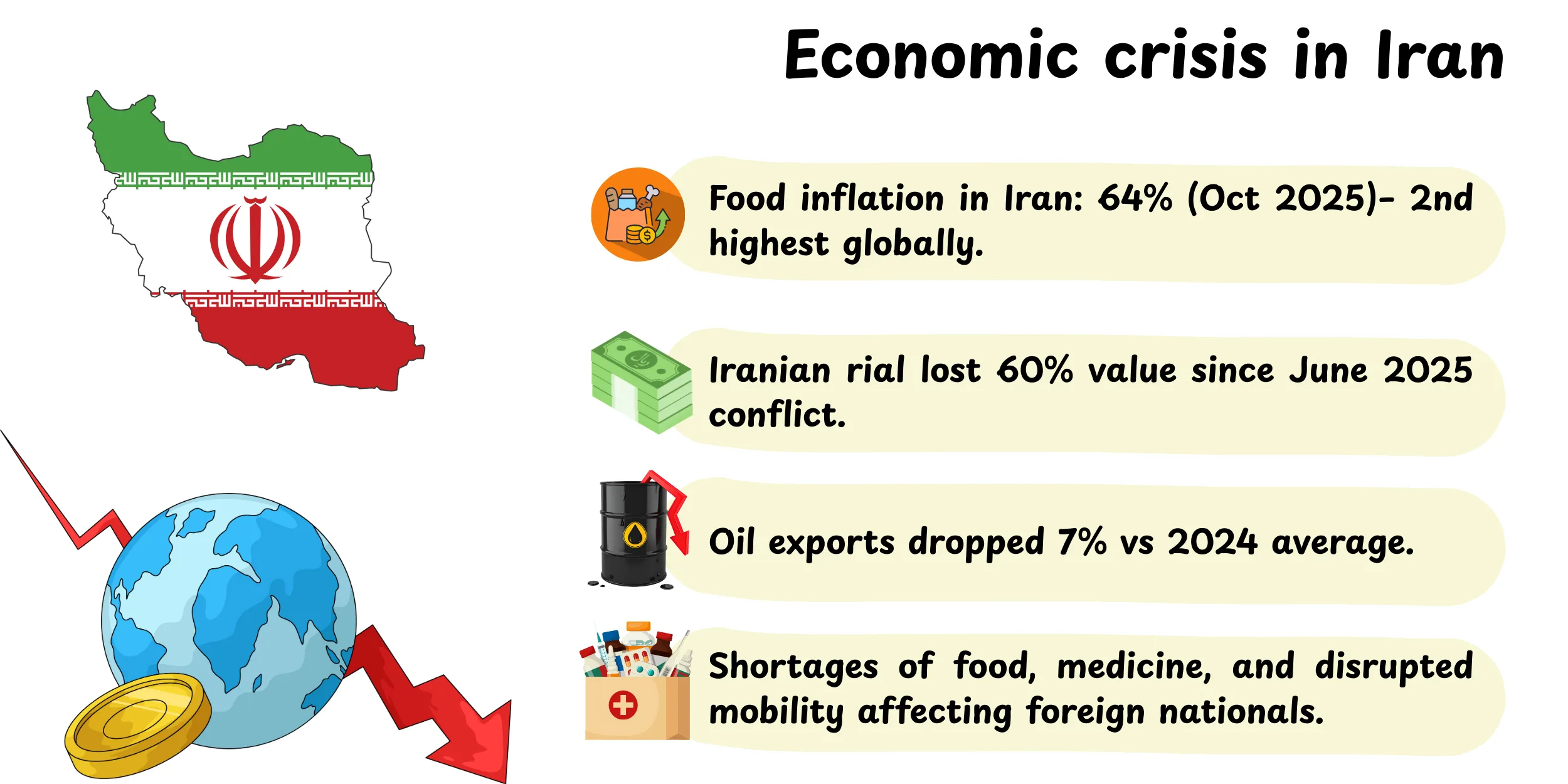
The origins of the unrest spring into the debilitating economic misery in Iran. In October 2025, food inflation was 64 percent, the second in the world after South Sudan, and the Iranian Rial had fallen 60 percent since the June 2025 war. Fiscal instability was further propelled by oil exports reducing by 7 percent compared to 2024 levels. These statistics drive the point across the scale of economic suffering, fuelling folk enmity.
International aspect of the protests in Iran
Protesters have been branded as rioters and terrorists by Iranian authorities, the internet has been blocked, and security troops are in force. Hundreds of deaths have been documented, but they have not been proven independently. At the same time, such external actors as the United States and Israel have increased anti-government narratives, making the crisis even more complicated. Nevertheless, pro-government demonstrations point towards the fact that the regime still has a large support base.
The Airspace Closure and Aviation Impact in Iran
That unilateral action by Iran to close its airspace on 14 January 2026 interfered with the global aviation schedule and forced Air India and IndiGo airlines to change their route networks. This detour caused about 60 to 90 minutes on the flight times on some of the routes to Europe, causing the cost of operation and loss of fuel in these flights.
Who are the Opposition Groups of Iran?
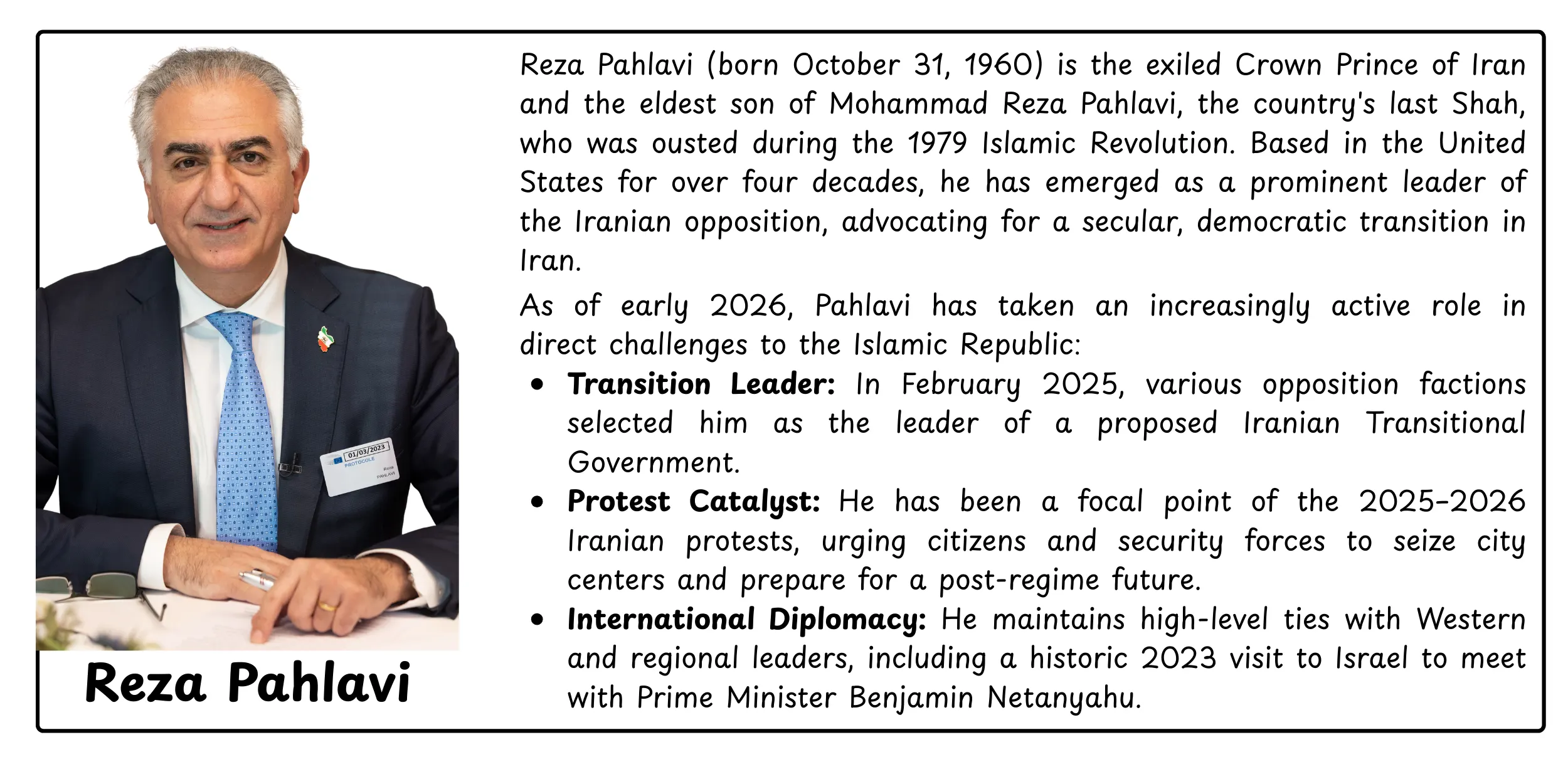
Mujahedin-e-Khalq (MEK) is considered to be one of the most notable former outlawed groups in July 2025, two MEK affiliates were executed due to an attempt to reach critical infrastructures. Other significant players include Reza Pahlavi, the son of the previous Shah, who supports a democratic change, but whose support is not clear as far as domestic popular support is concerned. The smaller ethnic and reformist movements also work, but they are extremely suppressed. Together, these groups highlight the political vacuum in Iran that is contentious in the situation of upheaval.
External Forces Impacting Iran
The current crisis in Iran cannot be attributed to internal upheavals, but rather, geopolitical and security interactions have significantly contributed to the problem, affecting its economic flow as well as the instability of its political condition.
Conflicts in the region and Military Pressure
The challenge that Iran has raised towards Israel has served as a main external instability trigger. The June 2025 war lasted about fourteen days, which undermined the military might of Iran and drained it financially. The harshness of the hostilities directly caused the depreciation of the Rial by 60 percent, and also disrupted the oil exports in the country.
Sanctions by the United Statesand Economic Isolation
Continued sanctions on Iran by the United States and European Union have limited the interaction of Iran with international markets, limiting both oil revenues and foreign direct investment. Such limitations increase the inflationary pressures,with food prices increased by 64 percent in October 2025, which made Iran one of the most problematic economies in the world.
Terrorism and Proxy Engagements in Iran
The second threat that faces Iran is the outsourcing of extremist organisations. Iran is weak against cross-border terrorism, as seen in January 2024 bombings in Kerman, where suspects were members of the Islamic State, which resulted in the deaths of almost 90 people. These cases enhance a sense of insecurity and undermine the confidence of the people in the ability of the state.
Humanitarian Crisis and Concerns among Foreign Nationals
The current development in Iran, where the conflict has intensified, has brought about a humanitarian crisis that is largely affecting the foreign nationals who live or work in the country. India has initiated an evacuation plan. Reportedly, there is an increased concern among students and workers because of the scarce supply of food and medicine, and aggravated by air travel disruptions. This crisis highlights how fragile expatriates in unstable areas are and the need to have a coordinated international evacuation system.
Indian Strategic, Diplomatic Dimensions and Evacuation Plans
The evacuation plan of India in Iran is indicative of humanitarian centrality and state interest diplomatically, since the government considers the security of citizens and the security of Iran as a regional issue, along with the escalating unrest and airspace disruption.
The Strategic Dimensions of the Indian Response
The Iranian crisis is being addressed by India based on its overriding geopolitical interests in West Asia. The region is strategic to the energy security of the area, considering that Iran has had a historical contribution to supplying crude oil to India. Although the sanctions have minimised direct imports, the instability in Iran is still contributing to the global oil prices, and this directly has an impact on the Indian economy too. In addition, India has to balance its diplomatic relations between Iran, the Gulf countries and the West. The increased tensions between Tehran and Washington make the cautious approach of India into the matter a necessity in ensuring strategic autonomy.
Diplomatic Intervention and Co-ordination by India
The Ministry of External Affairs (MEA) has been engaged in negotiations with the Iranian leadership and foreign compatriots to find a safe passage for Indian nationals. The Indian embassy in Tehran has reached out to the citizens, registering their positions and analyzing needs about logistics and more. This is a diplomatic coordination where India decided to be noninterfering and aimed at addressing humanitarian interests.
Operation Sindhu for Evacuation from Iran
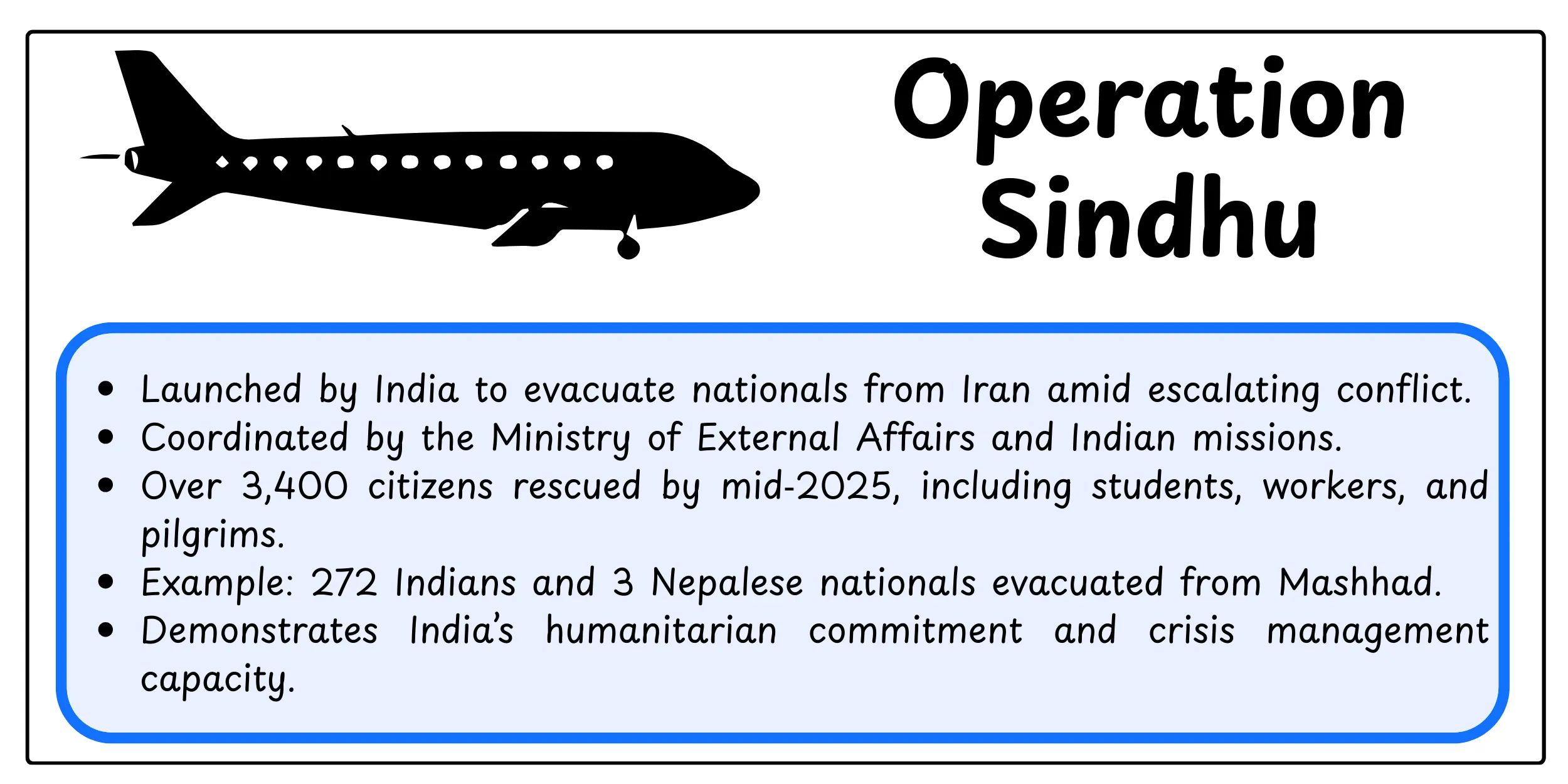
In response to the evolving situation in West Asia, the Government of India launched Operation Sindhu on 18 June to evacuate Indian nationals from conflict-affected areas in Iran and Israel.
Key Highlights of Operation Sindhu
- Total Evacuations: By the time the operation concluded on June 25, 2025, around 4,429 individuals had been safely brought back to India.
- Iran Phase: A total of 3,597 Indian citizens were evacuated from Iran. The operation began with the evacuation of 110 students, who were transported by road to Armenia and subsequently flown from Yerevan to New Delhi between June 18–19, 2025.
- Israel Phase:818 Indian nationals were rescued from Israel through land routes into Jordan and Egypt, followed by airlift operations using Indian Air Force C-17 aircraft and special chartered flights.
- Humanitarian Outreach: Reflecting international solidarity, India also facilitated the evacuation of nationals from Nepal and Sri Lanka during the operation.
Evacuation Plans and Evacuation Logistics by India
India is also organising several airlift operations to get back its nationals. The temporary shutdown of Iranian airspace on the 14thJanuary 2026, followed by its re-opening on 15thJanuary, provided operational challenges to airlines like Air India and IndiGo. Long travelling distances have increased the costs and travel time, but contingency planning increases the evacuation preparedness. The proactive approach of the MEA is an example of the developing successful economies in handling crises, combining aviation logistics, coordination of the embassy and a forward-looking strategy.
Conclusion
The evacuation of the Indians in Iran highlights the intersection of humanitarian duty, flight safety, and diplomatic wisdom. The border shutdown of Iran and the consequent change of routes to avoid these situations demonstrate that the mobility of the world is vulnerable to regional instability. At the same time, such initiatives of the government to protect its citizens can be viewed as a sign of institutional readiness and future orientation. The episode shows that crises in turbulent areas have a worldwide impact, where the state is compelled to weigh the safety of its citizens and other geopolitical issues, and thus affirms the relevance of agile foreign-policy concepts.
Frequently asked questionsFrequently asked questions
What is happening in Iran?
The country is going through one of its worst internal crises in recent years, which is characterised by large-scale protests and economic breakdown as well as increased foreign pressure. It signifies dissatisfaction on the domestic level, as well as a shift in geopolitics.
International aspect of the protests in Iran?
Protesters have been branded as rioters and terrorists by Iranian authorities, the internet has been blocked, and security troops are in force. Hundreds of deaths have been documented, but they have not been proven independently. At the same time, such external actors as the United States and Israel have increased anti-government narratives, making the crisis even more complicated. Nevertheless, pro-government demonstrations point towards the fact that the regime still has a large support base.
Who are the Opposition Groups of Iran?
Mujahedin-e-Khalq (MEK) is considered to be one of the most notable former outlawed groups in July 2025, two MEK affiliates were executed due to an attempt to reach critical infrastructures. Other significant players include Reza Pahlavi, the son of the previous Shah, who supports a democratic change, but whose support is not clear as far as domestic popular support is concerned. The smaller ethnic and reformist movements also work, but they are extremely suppressed. Together, these groups highlight the political vacuum in Iran that is contentious in the situation of upheaval.
External Forces Impacting Iran?
The current crisis in Iran cannot be attributed to internal upheavals, but rather, geopolitical and security interactions have significantly contributed to the problem, affecting its economic flow as well as the instability of its political condition.
Humanitarian Crisis and Concerns among Foreign Nationals?
The current development in Iran, where the conflict has intensified, has brought about a humanitarian crisis that is largely affecting the foreign nationals who live or work in the country. India has initiated an evacuation plan. Reportedly, there is an increased concern among students and workers because of the scarce supply of food and medicine, and aggravated by air travel disruptions. This crisis highlights how fragile expatriates in unstable areas are and the need to have a coordinated international evacuation system.