|
Key Highlights
- Night-club Fire in Goa
- Asphyxiation asa major cause
- Major lapse in regulations
- Effects of Toxic Fumes
- Need for reforms
|
The nightclub fire in Goa, which resulted in the deaths of 25 people, proved that asphyxiation was the leading cause of death and not thermal injury. The intense use of oxygen and the release of harmful combustion by-products, in the first place, carbon monoxide, lead to rapid unconsciousness. Smoking out in enclosed spaces, e.g. night nightclubs or theatres, is more fatal than actual exposure to flames. According to the studies and practising specialists, fire suppression, fire detection equipment, egress signs, and community education are the important measures to be taken.
The recent nightclub fire in Goa highlighted the critical danger of fire smoke, which is often a more significant cause of fatalities than flames themselves. The hidden hazard lies in the toxic gases, fine particulate matter, and oxygen depletion that rapidly incapacitate individuals, especially in enclosed spaces.
|
Tips for Aspirants
This article is applicable to the UPSC CSE and State PSC studies because it combines scientific knowledge, governance, disaster-management guidelines, and safety to the population. The topics are fundamental to analytical essay writing, ethical discourse, and the general‑studies syllabus.
|
|
Relevant Suggestions for UPSC and State PCS Exam
- The revelation of the nightclub conflagration incident in Goa laid a chain of structural weaknesses in the form of combustible roof building materials, closed escape paths, and the absence of proper ventilation.
- The evidence shows that most of the deaths encountered in fire cases can be attributed to asphyxiation and inhalation of poisonous gases and not due to combustion burns.
- The oxygen intake in a fire situation is very fast, resulting in drops below 16% in the air, and pulmonary activities are compromised; threshold levels below 10% cause unconsciousness.
- Toxic substances like carbon monoxide and hydrogen cyanide directly affect the oxygen delivery and breathing processes of the cell by haemoglobin and obstructing cellular functioning.
- The inhalation of the smoke causes the inflammation of the respiratory system of the body, decreases visibility, and causes panic, which leads to an increased casualty rate.
- The lack of regulations is also reflected in the presence of venues operating without the necessary licences, a deficiency of fire-safety facilities, and the slow reaction to emergencies.
- Preventive strategies thus involve the installation of sprinkler systems, early fire warning systems, sufficient ventilation, well-marked exit routes, and frequent evacuation training.
- Constant education of the population is required; people will have to learn that the fumes are much more poisonous than flames, which are visible.
- The reforms in governance must include strict auditing, fines, penalties, and accountability measures meant to bring fire-safety standards to a strict interpretation.
|
The recent nightclub fire in Goa that claimed numerous lives has generated fresh academic research into the area of fire safety, along with the mechanisms of pathophysiology that drive fire-related deaths. Unlike the common opinion of most people that thermal burns are the main result of such an occurrence resulting in death, forensic-focused systematic evidence proves that asphyxiation, a result of inhaling smoke and lack of oxygen, is much more lethal. Within enclosed spaces like nightclubs, cinemas, and residential buildings, fast rates of combustion consume the oxygen present in the air but at the same time release toxic fumes such as carbon monoxide, carbon dioxide, and even hydrogen cyanide. These chemicals reduce the lung capacity to operate well, trigger hypoxia, and in many cases, one becomes unconscious in a few minutes, hence making it impossible to escape.
The Goa incident, along with similar incidents such as the Birch incident of the Romeo Lane, shows the extreme importance of questioning the role of combustion chemistry and toxic aerosol dynamics, as well as the architectural protection of the public. This article attempts to elucidate the prevalence of suffocation as compared to burns as the cause of immediate death in a fire accident, and, at the same time, outlines mitigation measures, such as smoke alarms, sprinklers, and effective evacuation procedures. The intersection of science and policy issues in analysis aims at increasing information awareness and institutional accountability to human life in the case of fire hazards.
Context of the Goa Nightclub Tragedy
The fire that took place in the nightclub in Goa is one of the most fatal fire incidents in the recent history of the state. Having claimed the lives of at least 25 people, the case in question demonstrates how infrastructural carelessness, regulatory lapses, and the nature of enclosed entertainment spaces can be combined to create an act of catalysis and ultimate harm. The context of the recent Goa nightclub tragedy involves a fatal fire at the Birch by Romeo Lane nightclub in Arpora, North Goa, on December 6, 2025, which tragically claimed at least 25 lives, including both staff and tourists, highlighting safety concerns in Goa's popular party zones known for attracting crowds, despite this being a new incident, Goa's nightlife areas like Baga and Calangute have long been party hubs
Structural Vulnerability
The nightclub was built using a palm-leaf roof and limited exits, choices of materials and space plans that significantly increased the probability of fire. When the fire started to spread, the flames rapidly spread, and the passageways were narrow, which hindered movement out of the building, further aggravated by the fact that the combustible roofing fuelled the fire. Witness reports suggest that several victims were on the lower floor- a room with poor ventilation and escape options, hence exacerbating the fatal effects of smoke inhalation.
Compliance and Safety
It was established that the establishment was functioning without the necessary construction permits and was found to be in contradiction to several fire-safety standards. The lack of sprinkler systems, alarm systems, and proper emergency outlets points to institutional weaknesses of enforcement. Even though this venue received a significant amount of tourists, it was reported to remain in direct opposition to the norms of safety, which casts doubts not only on the principles of governance but also on accountability and the bending of all commercial interests to the welfare of the majority.
Human Cost and Short-term Effect
Most of the victims were employees, such as kitchen staff, and some of the tourists. The images of chaos recorded by eyewitnesses describe the scenes when the panic creates the congestion of people in the sealed area, leading to the quick build-up of poisonous gases. The access lane of the venue was narrow, thus making rescuing activities slow and therefore requiring amenities to put the fire-fighting team at a significant distance. National mourning followed the tragedy; the Prime Minister and the Chief Minister both made heartfelt statements about the tragedy and authorized official inquiries.
Science Behind: Fire and Oxygen Depletion
Fire events are not the simple process of releasing heat and flame, but they are complex chemical reactions that change the composition of the atmosphere that is found in enclosed spaces. With the progress of combustion, the oxygen is used up quite quickly, and toxic gases are produced, thus creating the conditions in which suffocation becomes the main cause of death as opposed to burn injuries. The recent Goa nightclub tragedy refers to a major fire at the Birch by Romeo Lane nightclub in Arpora, North Goa, on December 7, 2025, which killed 25 people and injured several others. Most fatalities were due to suffocation from smoke and a lack of oxygen in the enclosed space, rather than direct burns.
Combustion and Oxygen Consumption
This is because, at its simplest, fire is a quick oxidation process. When fuel materials are ignited, e.g., during the burning of wood, plastics, or textiles, they use the oxygen around them to maintain combustion. In tightly crowded areas such as nightclubs, basements, and the like, oxygen is exhausted very easily. When oxygen levels drop to a level of less than sixteen percent, breathing in humans cannot occur normally. At lower levels of less than ten percent, one can pass out unconscious and die within minutes.
Generation of Toxic Gases
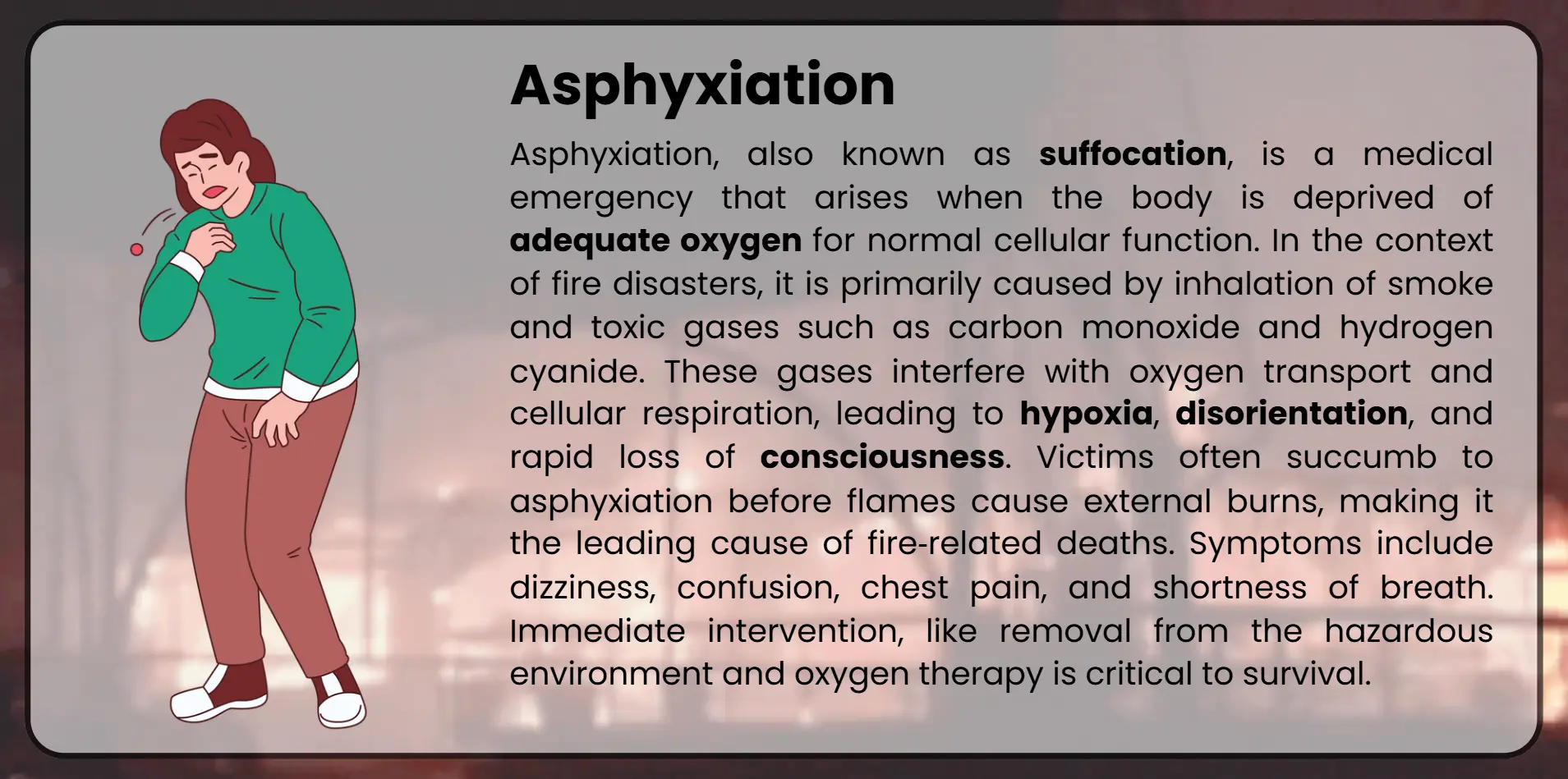
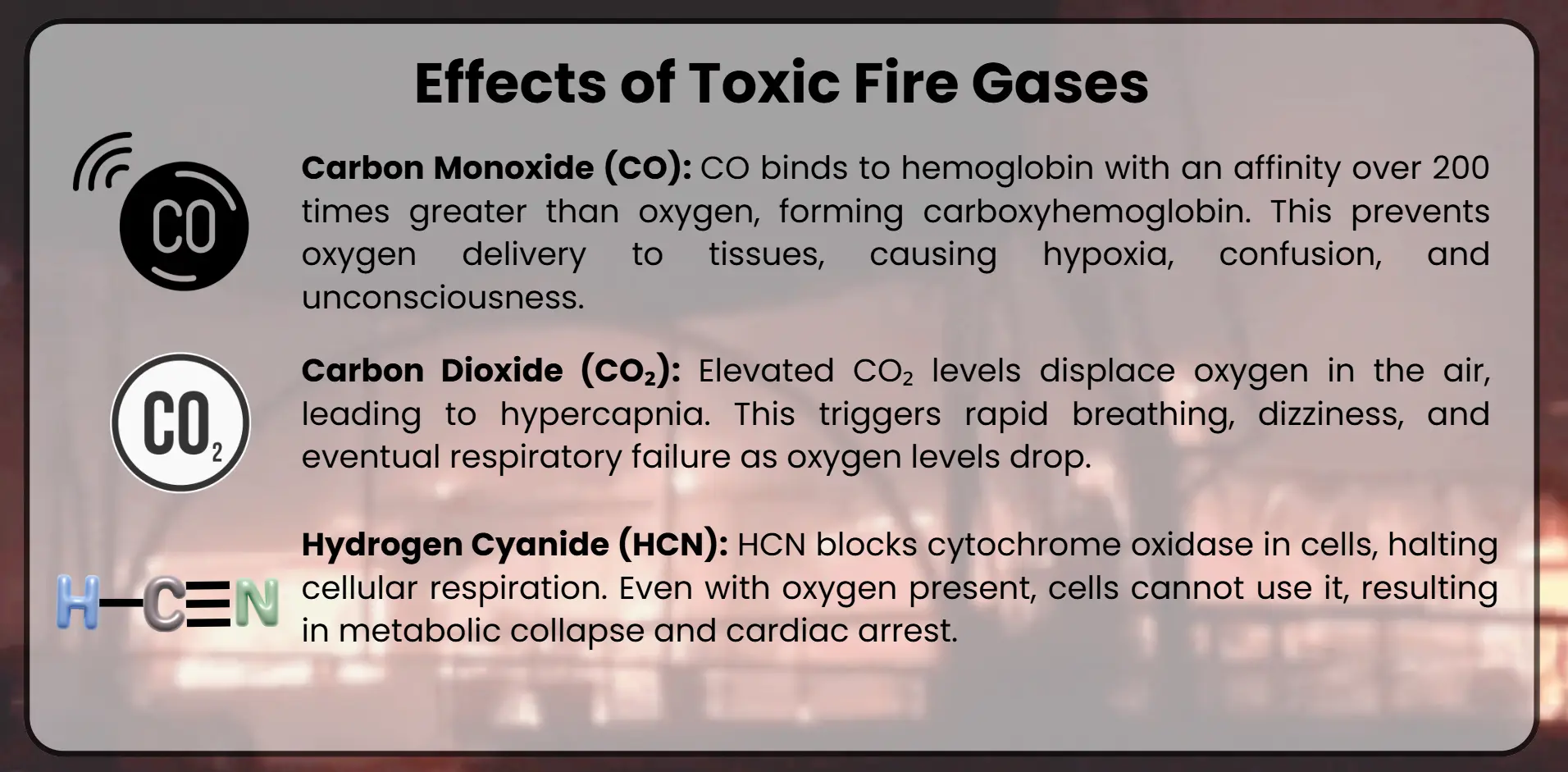
Besides the oxygen depletion, fires produce dangerous gases such as carbon monoxide, carbon dioxide, and hydrogen cyanide. The carbon monoxide will show more affinity to the haemoglobin as compared to oxygen, hence reducing the blood oxygen to the essential organs. Hydrogen cyanide disrupts respiration in cells, worsening the effect of hypoxia. As a result, before being combusted with flames, many people die from these gases, explaining that the leading cause of death in a fire accident is suffocation.
Physiological Effects
The damage to the respiratory tract with the introduction of hot gases and particulate matter is the consequence of smoke inhalation. Heat triggers the development of airway inflammation, and small particles enter deep into the pulmonary system, hindering the screening of oxygen. This is the process of a pathophysiological cascade that causes disorientation, dizziness, and loss of consciousness, which is why people working in closed fires fall quickly and cannot rescue themselves even when the flames are further away.
Safety and Prevention Implications
The acknowledgement of the processes involved in oxygen depletion provides support in regard to the need for preventive infrastructure. The mitigation of the risk has been achieved through smoke alarms, sprinklers, and ventilation systems to be able to detect a fire at its early stages and be able to preserve breathable air. Public awareness should include the message that the invisible danger of suffocation is more dangerous to people than flames in sight. Implementation of fire safety standards by the enforcers to ensure that people abide by the rules is crucial to lessen the number of casualties in social buildings.
Why Smokes are Dangerous than Fire
Fire accidents are usually considered deadly as they are associated with heat and destructive flames; however, data and forensic studies have always proved and shown that smoke and toxic fumes have a relatively higher mortality effect, and they have been the major cause of death as a result of fire.In the recent Goa nightclub tragedy, 23 of the 25 victims died from suffocation and smoke inhalation, not direct burns. This highlights the scientific fact that smoke is often more dangerous than the fire itself, primarily due to the toxic gases it contains and its ability to quickly incapacitate victims.
Fire Fumes: Chemical Composition
The resultant combustion occurring in the confined environments produces a complex mixture of gases, which includes carbon monoxide, carbon dioxide, hydrogen cyanide, as well as sulphur dioxide, amongst others. Carbon monoxide has a binding capacity some 200 times greater than that of oxygen to haemoglobin, thus causing impairment of oxygen delivery to vital organs. Hydrogen cyanide disrupts cell respiration, and ancillary gases are irritants and inflammatory substances within the respiratory tracts. As a result, such a lethal synergism combination oversteps physiological systems before external thermal burns show up.
Physiological Effects of Toxic Inhalation
Smoke inhalation triggers an acute manifestation of hypoxia, which rapidly leads to suffocation. The victims of smoke are usually characterized by dizziness, disorientation, and unconsciousness within a few minutes. The fine particulate matter enters the pulmonary structure, thus knocking off the exchange of oxygen and causing pulmonary edema. The resulting physiological effect of this has been compared to drowning, due to the attempt made by the body to breathe in an environment that does not offer functional oxygen.
Visibility Issues and Escape Problems
Besides causing physiological damage, smoke also worsens visualization and causes panic. Thick smoke blocks the means of escape, and the acrid smell and the climate accompany the occupants and confuse them. In fuller-attended places like nightclubs or cinemas, this kind of disorientation is often the catalyst for a stampede or entrapment. Fumes, therefore, have a secondary impact of increasing the mortality rates by hindering prompt evacuation even when a conflagration happens at a remote site.
Statistical Support
Statistics in fire safety internationally show that most of the mortalities in case of indoor fires occur due to smoke inhalation and not heat injuries. This conclusion highlights the significance of the preventive infrastructure, such as smoke detectors, sprinkler systems, and controls over ventilation, and population awareness. The recognition of fumes as the most crucial causative agent focuses on the transfer of the focal point of the discussion from the visible flames to the insidious risks, and thus develops more effective safety measures.
Safety and Community Education
Fire disasters like the Goa nightclub fire show that deaths may be mostly averted. Strong safety precautions, along with extensive educational campaigns conducted among the population, represent the core policy of reducing the risks in closed entertainment places and open areas.The context of the recent Goa nightclub tragedy (December 2025, Arpora) involves a deadly fire at Birch by Romeo Lane, initially suspected to be a gas leak but confirmed by authorities as caused by burst firecrackers/indoor fireworks, leading to 25 deaths, highlighting critical gaps in venue safety regulations and the urgent need for robust community education on fire safety.
Infrastructure and Compliance
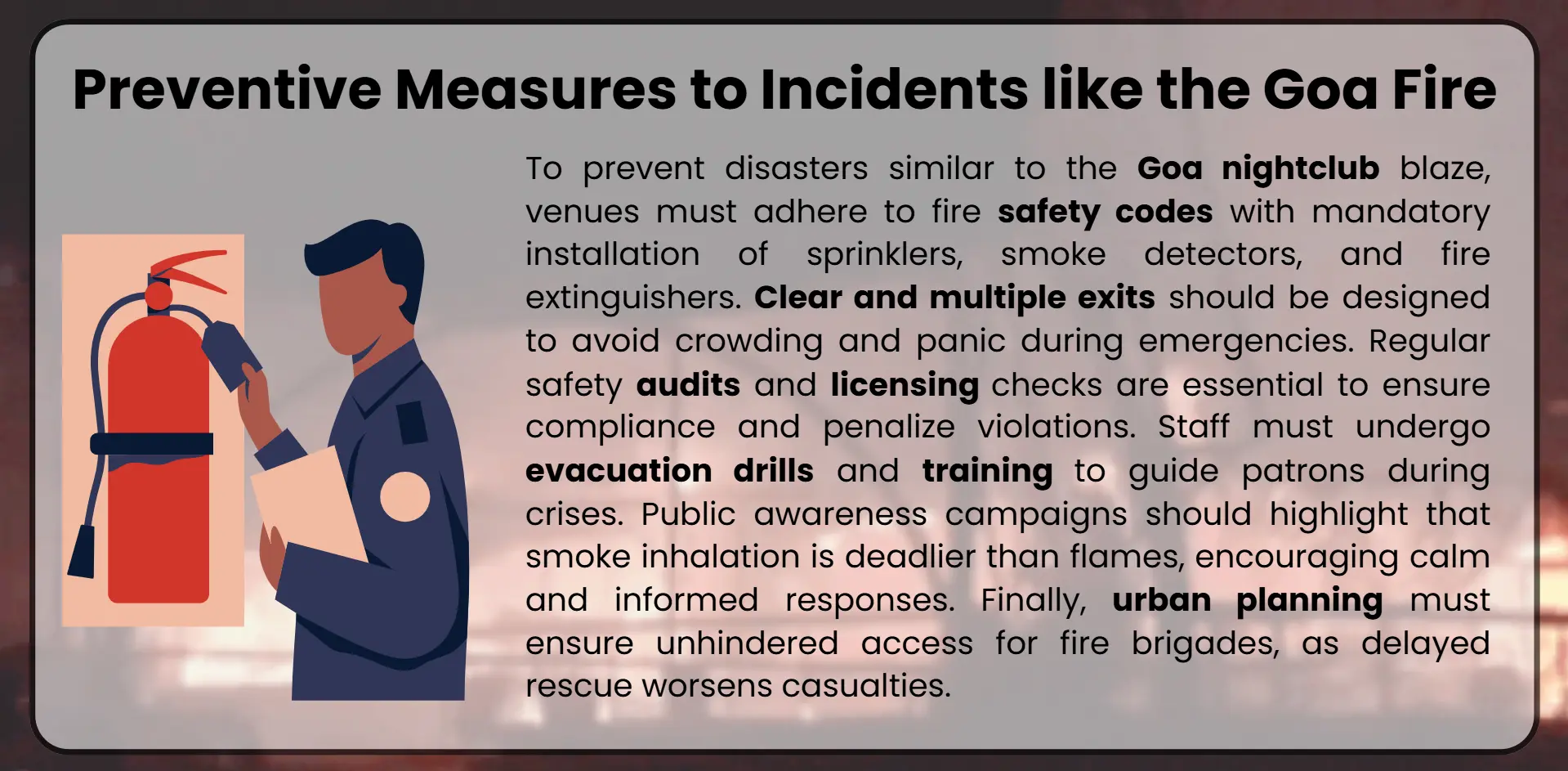
The main protection against fire disasters lies in the construction of a building's infrastructure. The facilities, be they commercial and recreational facilities, should have sprinkler systems, smoke detectors, and fire extinguishers, which should be maintained on a regular basis. Strict monitoring of established regulatory agencies should enforce adherence to the stipulated construction codes in ensuring that only a valid license and safety clearance venue is operated. This Goa incident exemplified how underground modes of construction, poor design, including a lack of egress points, and the employment of combustible roofing materials increased the magnitude of victims.
Evacuation and Emergency Preparedness
Preparation is equally important. The venues are expected to regularly carry out evacuation exercises to familiarize the employees and visitors with exit points. The presence of the obvious signage, lightened walkways, and excessive exits is to resolve panic in the case of an emergency. Moreover, fire brigades need free access to places, an aspect which was not met in Goa because of narrow approach lanes.
Awareness and Behaviour Change
The public awareness campaigns are needed to make the citizens aware of the dangers that smoke inhalation may cause and how orderly evacuation needs to be conducted. Customers should be advised not to rush into kitchen spaces or enclosed cellars, as this was one of the causes of entrapment during the Goa incident. Awareness campaigns may include education in schools, neighbourhood seminars, and online outreach campaigns, which highlight that toxic gas fumes, and not fire, are the number one cause of death.
Imperatives of Policy and Governance
The governance makes a conclusive impact on safety outcomes. The government should randomly carry out safety inspections of places of high risk, such as clubs, cinemas, and restaurants. Non-adherence to rules should be penalized adequately to discourage carelessness. The proactive safety culture can be provided through collaborative efforts involving the municipal bodies, fire departments, and civil society organizations. Accountability is also enhanced by public reporting systems, which allow citizens to report unsafe premises.
Conclusion
The case in the Goa nightclub is used to highlight an important fact: the leading cause of fire-related deaths is not direct thermal injury, but being smothered by the poisonous fumes and subsequent loss of oxygen. Science has proven that victims are paralyzed by smoke easily, thus impeding escapes, increasing the number of casualties in the enclosed space. What this tragedy thus underscores are the urgency of extreme regulation enforcement, laying down of well-built infrastructural protective measures such as early warning alarms and programmed sprinkler systems, and an extensive educational effort on the issue of fire hazard. Through the amplification of the visibility of fumes as the main deadly threat, the policymakers, the institutions, and the population, as a whole, have the opportunity to reinforce preventive mechanisms, which will result in the fact that recreational or residential areas will not turn into fields of preventable disasters.