The Union Budget 2026 is stepping forward with the green transition in India and is devoting much funding to renewable energy, green hydrogen, and climate-adaptable infrastructure. It is important because it helps to match the fiscal policy with the sustainability goals, strengthen the energy security, and make India a global climate action leader, besides solving the problem of the reconciliation between the growth demands, equity factor, and long-term ecological stability.
|
Key highlights
- Green Priorities in Union Budget 2026
- Vision for the Next Decade in the Union Budget 2026
- Key Green Investments in Union Budget 2026
- Institutional and Policy Reform in Union Budget 2026
- Union Budget 2026: Environmental Impact and Challenges
|
Union Budget 2026-27 for renewable energy
Ajai Malhotra, Distinguished Fellow at TERI, remarked: “The Union Budget 2026 meaningfully advances India’s long-term energy security and green transition through its strong emphasis on renewable energy, grid expansion, energy storage, carbon capture, utilisation and storage (CCUS), and critical minerals, including rare earths.
The Union Budget 2026 is a turning point in India with regard to achieving sustainable development, with fiscal policy being the key factor towards environmental change. The budget focuses on developing green hydrogen, renewable energy, electric mobility, and climate-resistant infrastructure, which emphasizes the desire of the government to develop long-term ecological capacity. It gives a strategic fit to India's net-zero investments and climate commitments at the international level, and at the same time, fulfils the national use needs, energy security, and inclusive development. This budget, therefore, does not only symbolize a very notable economic blueprint, but also an overall system of inculcation of sustainability into the growth pattern of India in the coming decade.
What is Green Budget 2026
Green budgeting involves assessing, planning, and reporting government expenditure and revenue to promote environmental sustainability.A green budget is a fiscal planning tool used by governments to identify and track expenditures, revenues, and policies that promote environmental sustainability and climate objectives. It embeds climate considerations into budgetary decisions, supporting the transition to a low-carbon economy.
Green Priorities in Union Budget 2026: What the Green Sector Wants This Year
The Union Budget 2026 is a critical turning point in India's economic and environmental growth process as it entails incorporating the aspect of sustainability in the fiscal management system and balancing the national development with the international climate obligations.The Union Budget 2026–27 advances India’s Net Zero 2070 target by prioritizing a ₹20,000 crore Carbon Capture, Utilization, and Storage (CCUS) incentive scheme, launching a new Nuclear Energy Mission for small modular reactors (SMRs), and continuing strong support for green hydrogen, biogas, and electric vehicle (EV) infrastructure. It places significant emphasis on integrating renewable energy into the national grid and expanding clean energy infrastructure nationwide.
Green Agenda of the Indian Government in the Union Budget 2026
The budget 2026 of India highlights the idea of intent to action regarding its green agenda. Having a goal of 500 GW of renewable-energy capacity in the year 2030, the government has redirected its focus on infrastructure preparedness, grid stability, and the development of skilled manpower. This shows that it has realized that clean energy is not only a climate imperative but also an ambition behind industrial competitiveness, energy security, and inclusive growth. This budget, therefore, puts sustainability at the core of the Indian developmental story that tries to strike a balance between financial prudence and long-term ecological strength.
Vision for the Next Decade in the Union Budget 2026
The vision that has been expressed in Union Budget 2026 is to establish India as a green-endowment base as a gateway to Viksit Bharat or developed India by 2047. Some of the important actions are enhancements in the fiscal support of green hydrogen, solar power, etc., and the policy support of carbon-credit markets and climate-sensitive bonds. The budget lays the ground for growth, contemporary climate action, reconciliation, energy security, coupled with development resilience plans. This vision will make India a global leader in sustainable development so that in the next decade, the expansion of the economy is balanced with ecological management.
Key Green Investments in the Union Budget 2026
A strategic push for growth, green energy, and technology. The Union Budget 2026 puts green investments at the pivotal point of the Indian development agenda, linking the fiscal allocations, in the next decade, clearly towards climate resilience, energy security, and industrial competitiveness.For business stakeholders, the Union Budget 2026–27 reflects policy continuity coupled with targeted reinforcement, including increased allocations for renewable energy and rooftop solar, formal budgetary support for CCUS and decarbonization technologies, and a sustained focus on energy storage, grid infrastructure and transmission.
Renewable Energy Expansion Plan in the Union Budget 2026
The Union Budget 2026 supports 500GW capacity of non-fossil fuels by 2030 and further fiscal incentives for solar and wind projects, grid modernisation and energy storage systems. Such actions are to reduce reliance on fossil fuels and to encourage domestic production as per the Atmanirbhar Bharat framework.
National Green Hydrogen Mission Support in Union Budget 2026
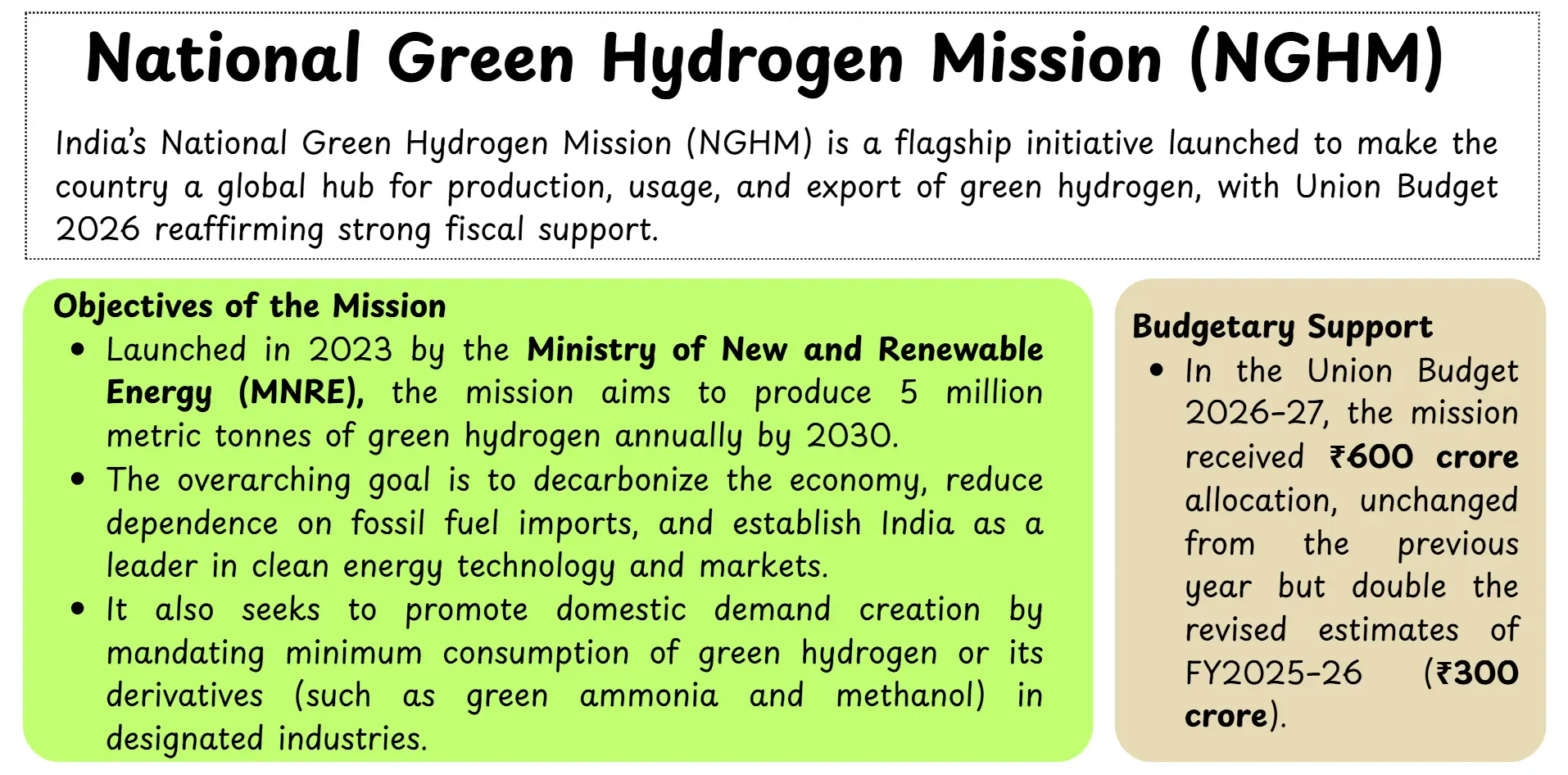
One aspect that has remained constant is the continued investment of INR 600 crore in the National Green Hydrogen Mission to produce 5 million metric tonnes per year by 2030. Funds are to be allocated to pilot projects, the production of electrolyser and hydrogen mobility across ten routes where 37 vehicles have been rolled out. Such an investment makes India a potential global hydrogen manufacturing and exporter of hydrogen, which will decarbonise hard-to-abate industries like steel and fertiliser manufacturing.
Electric Mobility and Sustainable Infrastructure in Union Budget 2026
The Union Budget 2026 also highlights electric mobility with incentives in EV adoption and charging infrastructure, as well as the allocations on energy-saving housing and climate-resilient urban planning. All of these investments contribute to the green capacity of India, such that the fiscal policy will pay off in both ecological and economic terms.
Institutional and Policy Reform in Union Budget 2026
These institutional and policy changes that are integrated into the Union Budget 2026 express the strategic purpose of India to incorporate sustainability in the governance, finance, and industry to ensure decade-long sustainability and competitiveness in an unstable global economy.In the area of direct taxes, the Union Budget 2026–27 proposes several new reforms. The New Income Tax Act, 2025 will come into effect from April 2026, and simplified Income Tax Rules and Forms will be notified shortly. These forms have been redesigned to ensure easier compliance for ordinary citizens.
India Union Budget 2026-27: Strengthening the Institutional Framework
The Union Budget 2026 highlights the establishment of special green finance institutions and the growth of carbon-credit markets to bring together private capital to deal with climate projects. The government aims to incorporate ecological priority into the mainstream financial mechanism by institutionalising the climate-linked bonds and sustainability indices. The Union Budget 2026reforms are aimed at improving fiscal credibility and ensuring that India achieves a 7.4 percent growth in FY26 with sustainable investment flows.
Green Transition Policy in Union Budget 2026
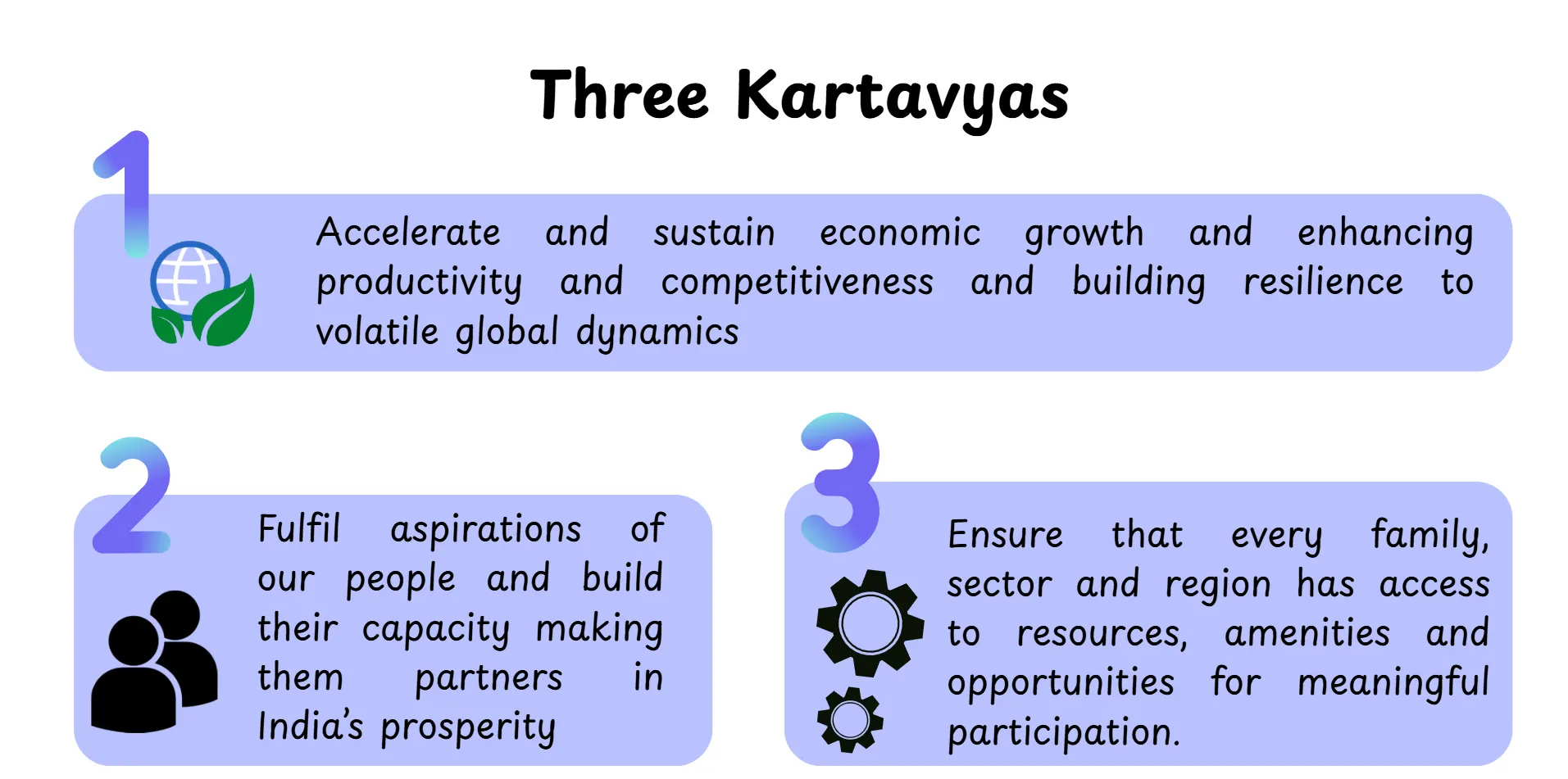
The reforms in policymaking involve rationalisation of the subsidies in favour of renewable energy, mandating the usage of green hydrogen, and offering tax incentives on low-carbon technologies. As the Finance Minister pointed out, the idea of Three kartavyas (shared responsibility) is the key concept to be used, and fiscal discipline should be combined with environmental stewardship. Union Finance Minister Nirmala Sitharaman stated that the Union Budget 2026 is the first to be prepared at Kartavya Bhavan. She highlighted three Kartavyas of the governmentaccelerating economic growth, fulfilling the aspirations of the people, and ensuring inclusive access to resources and opportunities.Furthermore, the budget promotes regulatory transparency over electric mobility and responsible agriculture, through which climate adaptation is incorporated in sectors. Clean energy has become not only a climate agenda but also a fundamental catalyst for industrial competitiveness and energy security.
Union Budget 2026: Environmental Impact and Challenges
Union Budget 2026 lays the framework on which the green transition in India will take place; however, the long-term consequences and the challenges related to it will help establish whether the fiscal pledges will translate into long-term economic stability in this nation.The Centre has allocated ₹1,091 crore for pollution control in FY 2026–27, which is ₹209 crore lower than the revised estimate of ₹1,300 crore for 2025–26. The 2025–26 revised figure itself represented an increase from the originally allocated ₹853.9 crore for that year.
Long-term Effect of Union Budget 2026 on Growth and Sustainability
The Budget predicts clean energy as a key source of industrial competitiveness, energy security, and resilience, thus overcoming its traditional nature of being simply an agenda on climate.
- With the focus on renewable energy sources, green hydrogen, and sustainable infrastructure, it is estimated that India will strengthen its industrial resource and, at the same time, decrease the impact of carbon intensity.
- The Hindu notes that the budget balances the short-term macro-stability with long-term strategy-focus, thereby making growth and creation of jobs a key priority without at the cost of fiscal restraint.
- This Alignment enhances the credibility of India on the global level in climate talks and supports its net-zero trajectories by 2070.
Challenges in Implementation and Financing in the Union Budget 2026
Execution is a major problem, although there are high expectations.
- According to industry analysts, any success will be based on financing on time, transfer of technology, and assurance of demand for clean-energy projects.
- Balancing fiscal discipline and the size of investment needed to develop green hydrogen, electric-vehicle infrastructure, and carbon markets creates a threat of financing gaps.
- The economic fragility and uncertainties of the global market and the disruption of supply chains also affect the ability to maintain momentum.
Conclusion
Union Budget 2026 provides a strategic turning point in the developmental flow of India, and this aspect entails sustainability across both fiscal and institutional capacities. This puts the green hydrogen at the forefront of the budget via renewable energy, climate-resilient infrastructure, and ecological stewardship, making the budget a competitive trend in terms of ecological concerns. Although the issues connected with financing, technological transfer, and governance will remain, the reforms are a significant basis of resilience in the long term. In the end, this budget will place India in a position to balance growth with sustainability, as a result, cementing its position in the world as a leader in the fight for a green economy.
Frequently asked questionsFrequently asked questions
Green Priorities in Union Budget 2026: What the Green Sector Wants This Year?
The Union Budget 2026 is a critical turning point in India's economic and environmental growth process as it entails incorporating the aspect of sustainability in the fiscal management system and balancing the national development with the international climate obligations.The Union Budget 2026–27 advances India’s Net Zero 2070 target by prioritizing a ₹20,000 crore Carbon Capture, Utilization, and Storage (CCUS) incentive scheme, launching a new Nuclear Energy Mission for small modular reactors (SMRs), and continuing strong support for green hydrogen, biogas, and electric vehicle (EV) infrastructure. It places significant emphasis on integrating renewable energy into the national grid and expanding clean energy infrastructure nationwide.
Key Green Investments in the Union Budget 2026?
A strategic push for growth, green energy, and technology. The Union Budget 2026 puts green investments at the pivotal point of the Indian development agenda, linking the fiscal allocations, in the next decade, clearly towards climate resilience, energy security, and industrial competitiveness.For business stakeholders, the Union Budget 2026–27 reflects policy continuity coupled with targeted reinforcement, including increased allocations for renewable energy and rooftop solar, formal budgetary support for CCUS and decarbonization technologies, and a sustained focus on energy storage, grid infrastructure and transmission.
Institutional and Policy Reform in Union Budget 2026?
These institutional and policy changes that are integrated into the Union Budget 2026 express the strategic purpose of India to incorporate sustainability in the governance, finance, and industry to ensure decade-long sustainability and competitiveness in an unstable global economy.In the area of direct taxes, the Union Budget 2026–27 proposes several new reforms. The New Income Tax Act, 2025 will come into effect from April 2026, and simplified Income Tax Rules and Forms will be notified shortly. These forms have been redesigned to ensure easier compliance for ordinary citizens.
Union Budget 2026: Environmental Impact and Challenges?
Union Budget 2026 lays the framework on which the green transition in India will take place; however, the long-term consequences and the challenges related to it will help establish whether the fiscal pledges will translate into long-term economic stability in this nation.The Centre has allocated ₹1,091 crore for pollution control in FY 2026–27, which is ₹209 crore lower than the revised estimate of ₹1,300 crore for 2025–26. The 2025–26 revised figure itself represented an increase from the originally allocated ₹853.9 crore for that year.