The Mission 100% Electrification of Indian Railways is proving a historical step towards a sustainability initiative which will have a significant impact in reducing carbon footprint and cutting fuel costs. In UPSC CSE and State PSC examinations, the part is important in governance and infrastructure development, which includes the modernisation of infrastructure, energy transition, and enforcement of the state policy.
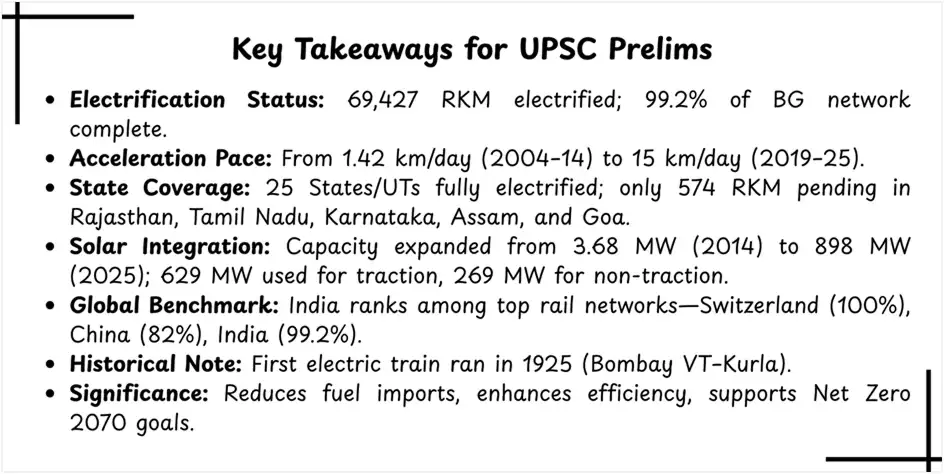
Indian Railways, which has often been described as the vein of life to the country, has traditionally represented the touch of connectivity, economic sustainable growth in India. However, in recent years, the focus has been shifted towards sustainability and modernization with electrification being the foundation of the same change. Mission 100 % Electrification is aimed at ending fossil fuel dependence, carbon emissions, and better efficiency of operations. This venture is a promise of India to climate and energy security, as well as technological advancements.
Introduction & Vision: Mission 100% Electrification
The Indian Railways' Project 100 % Electrification is an indicator of a ground-breaking change in the transport industry in India that would integrate technology with sustainability. The project sees a complete electrification of the network, making it less reliant on fossil fuels and maximising efficiency and aligning with environmental commitment in the country. As of December 2025, 99.4% of the broad-gauge routes (comprising 69,712km) have been electrified. This vision is not a mere reference to economic thoughtfulness, but also a green thinking in the future, and the Indian Railways is poised to be an example of green mobility in the world.
- National Vision: Total electrification helps in achieving the net-zero targets and the Sustainable Development Goals in India.
- Operational Efficiency: The programme has saved 136 crore litres of fuel from 2018-2024, and hence it will save cost.
- Technological Modernisation: The renewable energy sources and smart grid systems are also integrated to provide a reliable energy supply.
- Global Leadership: The project makes Indian Railways one of the largest electrified systems in the world, proving the desire of the country to take action in relation to climate.
Environmental and Economic Revitalisation
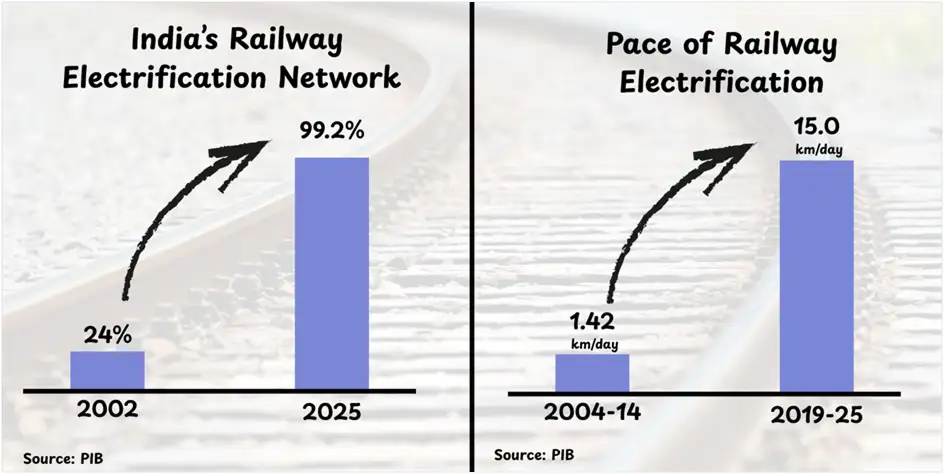
Indian Railways has a mission to completely convert to electricity, and this move is not just a technology improvement tactic but a strategic intervention plan in the sustainable development agenda of India. The programme helps in preserving the environment, efficient operation costs and sustainable energy; hence reducing the use of diesel. Recent statistics shed light on the quantifiable effect of such a change.
- Carbon Emission Reduction: Carbon emission reduction involves lowering greenhouse gases from energy, transport, industry, and agriculture through efficiency, renewables, electrification, and lifestyle changes like reduced consumption. It is estimated that the nearly 32 million tonnes of carbon dioxide power emissions each year will be reduced by electrification, and this will support India's efforts in its climate commitments.
- Fuel Savings: In the years 2018-2024, the Indian Railways saved 136 litres of diesel, which would help save the expenditure on operations to a large degree.
- Economic Efficiency: The electric traction uses less fuel; thereby lowering the cost of haulage by 20-30 %, thus making freight and passenger services more competitive.
- Energy Security: Through the incorporation of renewable sources, the network will be more resilient to price fluctuations on fuel in the global market and, consequently, sustainable in the energy independence of India in the long-term.
Indian Railways Infra-Tech
Indian Railways Infra-Tech refers to the massive, technology-driven modernization of India's railway infrastructure, focusing on electrification, high-speed lines (like Vande Bharat), station redevelopment, dedicated freight corridors. Indian Railways has been fundamentally based on comprehensive electrification, which is based on large scale technological and infrastructural changes. The scope of such an undertaking is the modernization of track infrastructure, the modernization of electrical substations, and the introduction of new rolling stock, which are all requirements of a continuous power supply and operational stability upgrade. Moreover, the project implies the use of renewable energy resources and the latest technologies, which makes the railway network adequately ready to cope with future emergencies.
- Modernised Network: By the end of December 2025, 69,712 kilometres of broad-gauge routes were electrified, which is 99.4% of the total network.
- Smart Power Systems: Energy-efficient substations and smart-grid technologies installed to achieve optimal use of electricity distribution.
- Rolling Stock Innovation: The implementation of all-electric locomotives that have a regenerative braking system, thus consuming less energy.
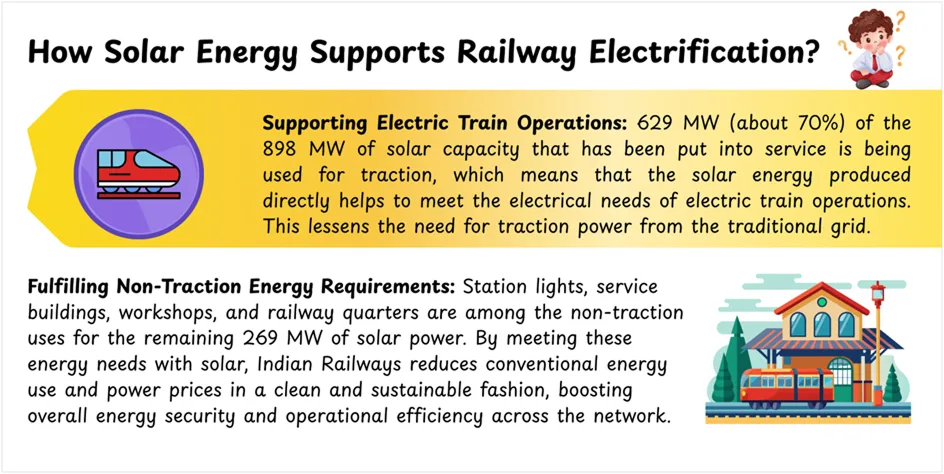
- Integration of Renewables: It is intended to obtain 30GW of renewable energy by 2030, thus matching the clean-energy goals of India.
Future Outlook& Challenges
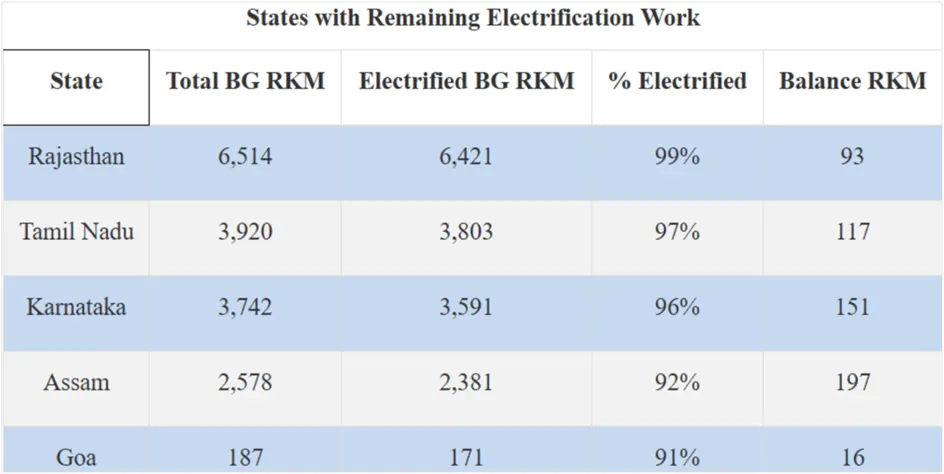
The process of electrifying the Indian Railways to 100 %, though still in progress, offers opportunities and challenges in the short-run perspective. To maintain this performance, there is a need to deal with financial, infrastructural, and regional discrepancies and maintain consistency with the energy-transition goals of India at large.
- Funding Investment: To complete such an electrification, a capital aspect is necessary on a regular basis; the Indian Railways designated INR 27000 crore in FY 2024-25 to finance such projects.
- Execution Speed: Plains are easier to be electrified, but due to technological challenges,it is challenging in remote and hilly areas.
- Energy Integration: It is important to have a reliable renewable supply for that plans are put to source 30GW of solar power and wind power by 2030.
- Global Competitiveness: With the success, India will have the largest electrified railway network in the world, but this will require efficiency and resilience.
Conclusion
The 100 % Electrification of Indian Railways is one of the breakthroughs in the quest for sustainable infrastructure and energy transition in India. The initiative strengthens national climate commitments by cutting down carbon emissions and improving the efficiency of activities and the incorporation of renewable energy, coupled with modernising one of the largest railway networks in the world. Financial limitations, geographical imbalances, and technological dispersion are the major limitations to green mobility and energy security, but the long-term gains of the interventions should be more than the short-term challenges. This purpose not only transforms the transport sector in India but also makes the country a pioneer in terms of sustainable railway innovation and climate-sensitive development in the world.
Test your understanding
Questions from this article
Prelims practiceWith reference to Mission 100% Electrification, consider the following statements:
- The Mission 100% Electrification of Indian Railways is proving a historical step towards a sustainability initiative which will have a significant impact in reducing carbon footprint and cutting fuel costs.
- In UPSC CSE and State PSC examinations, the part is important in governance and infrastructure development, which includes the modernisation of infrastructure, energy transition, and enforcement of the state policy.
- Indian Railways, which has often been described as the vein of life to the country, has traditionally represented the touch of connectivity, economic sustainable growth in India .
View answer
Answer: 1, 2 and 3. Mission 100% Electrification is transforming Indian Railways by replacing diesel with electric traction, cutting emissions, saving fuel costs, and advancing India’s net-zero goals.
Mains practiceExplain the key features of Mission 100% Electrification and examine its significance, major issues and wider implications.
Answer in 250 words.
View answer approach
- Define and place Mission 100% Electrification in context.
- Examine Introduction & Vision: Mission 100% Electrification.
- Examine Environmental and Economic Revitalisation.
- Examine Indian Railways Infra-Tech.
- Conclude with a balanced assessment and an appropriate way forward.
Frequently asked questionsFrequently asked questions
Introduction & Vision: Mission 100% Electrification?
The Indian Railways' Project 100 % Electrification is an indicator of a ground-breaking change in the transport industry in India that would integrate technology with sustainability. The project sees a complete electrification of the network, making it less reliant on fossil fuels and maximising efficiency and aligning with environmental commitment in the country. As of December 2025, 99.4% of the broad-gauge routes (comprising 69,712km) have been electrified. This vision is not a mere reference to economic thoughtfulness, but also a green thinking in the future, and the Indian Railways is poised to be an example of green mobility in the world.