The National Youth Day, also known as Vivekananda Jayanti, is celebrated on 12 January 2026, being the birth anniversary of Swami Vivekananda. In 1984, the Government of India declared this day as National Youth Day, and since 1985, the event has been celebrated in India every year.The National Youth Day has become a major topic of media focus, with the Government declaring Viksit Bharat Young Leaders Dialogue, which will involve millions of young nationals in the nation. The Prime Minister is also set to engage 3,000 young leaders on matters relating to innovation, governance and nation building.
|
Key highlights
- National Youth Day
- Youth Engagement, Leadership and Civic Inclusion
- Education and Skills Development
- Business and Economic Development
- Health and Fitness
|
The spirit of youth empowerment and nation-building can be seen in the celebration of the national youth day every 12 January to engage the people to remember Swami Vivekananda on the day of his birth anniversary. Creating a range of events to mark the 2026 commemoration, it states its importance in the context of the Indian developmental vision Viksit Bharat2047. The celebration this year has the Viksit Bharat Young Leaders Dialogue that will involve millions of people across the country and help in the formation of a disciplined and organised conversation on governance, innovation, sustainability and inclusive development. The project highlights how youths are key drivers of the future of India.
Youth Engagement, Leadership and CivicInclusion
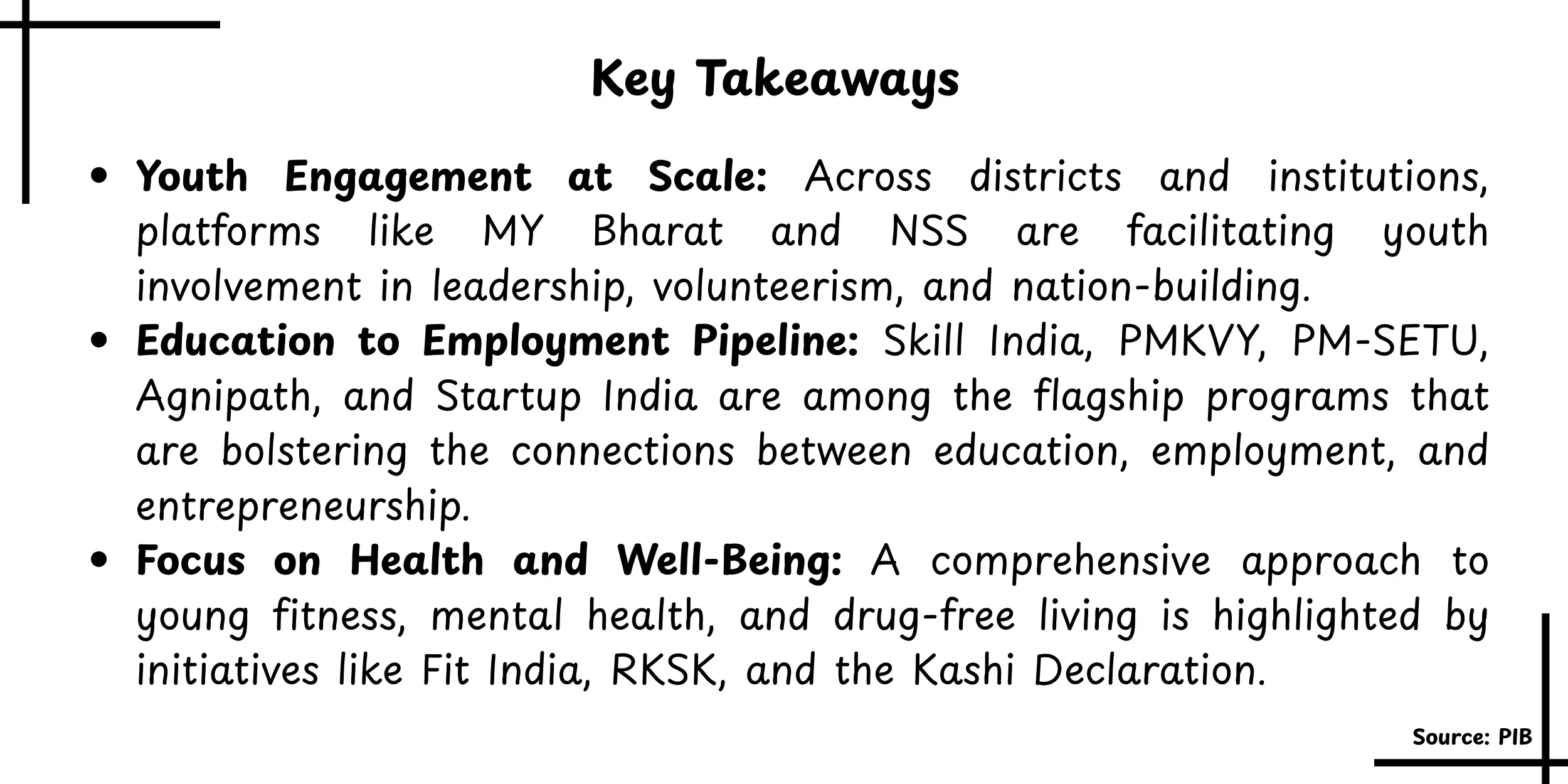
The involvement of the youth in India has become one of the central pieces of nation-building because of the demographic aspect that almost 65% of the population is under 35 years of age. The National Youth Day 2026 is emphasising this possibility through the structured platforms of leadership and civic action. Various steps taken by the government in this direction include:
Mera Yuva Bharat (MY Bharat)
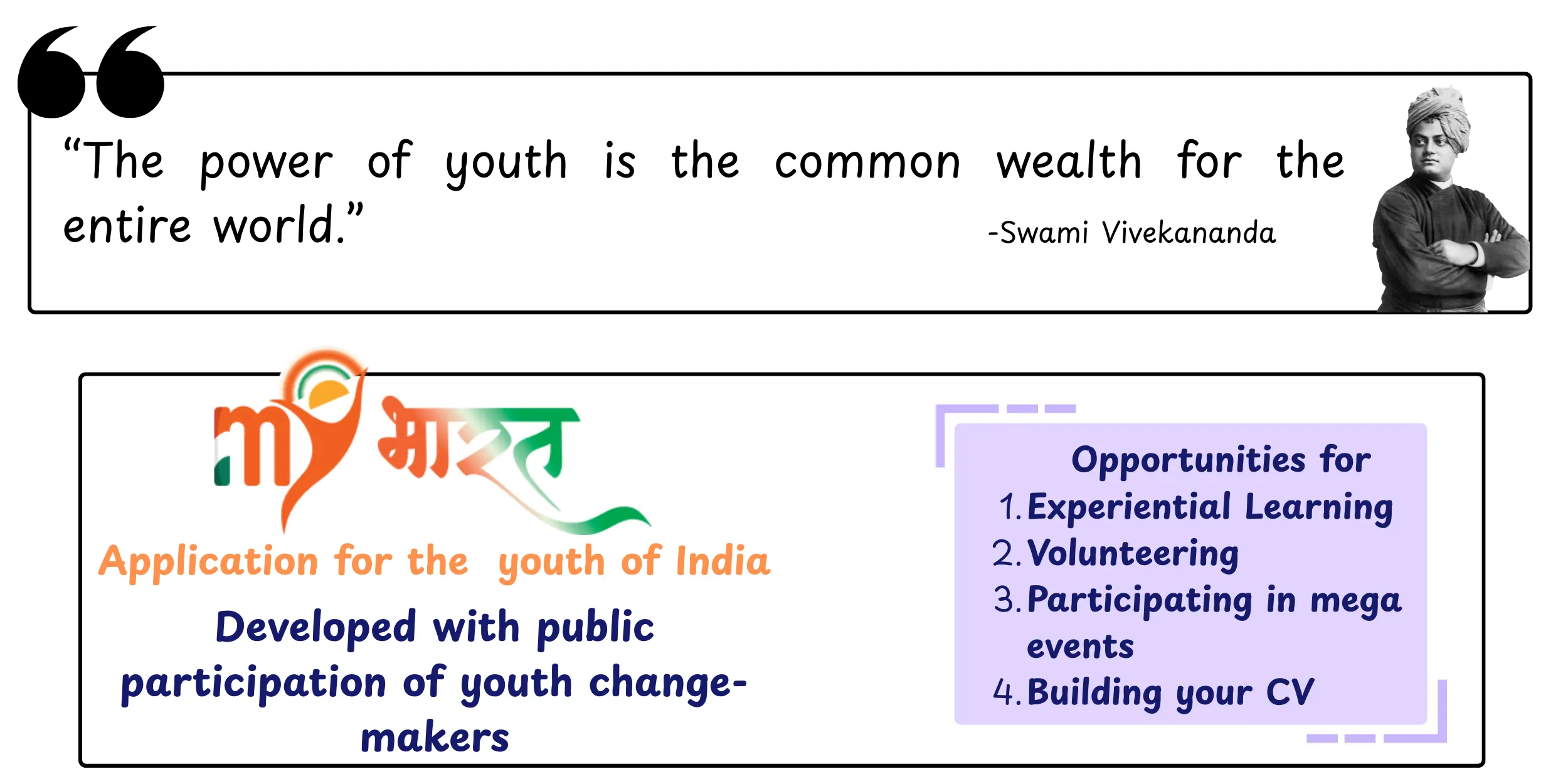
Launched in October of the year 2023,MY Bharat is a technology-based ecosystem that opens up access to youth in the areas of volunteering, skilling and leadership. In November 2025, 2.05 crore registrations had been made, 14.5 lakh volunteer opportunities were facilitated using 16,000 plus youth clubs and 60,000 institutional partners. Corporate partnerships, including collaboration with Reliance, have also increased reach, whereas the MY Bharat Mobile App (launched October 2025) added language support (something in all classes), AI chatbots, and Smart CV functions, which have guaranteed the availability of services, as well as authentication of verified digital profiles.
National Service Scheme (NSS)
The NSS was started in 1969 and has grown to involve 3.9 million volunteers in 657 universities and more than 20,000 colleges every year. Its programmes are the National Integration Camps, Adventure Programmes and Republic Day Parade Camps, which facilitate cultural diversity, patriotism and community service. NSS is still a strong tool for nurturing civic awareness and leadership among the student youth.
Viksit Bharat Young Leaders Dialogue (VBYLD)
Through a rebranding of the National Youth Day Festival, Viksit Bharat Young Leaders Dialogue (VBYLD) 2026 brings together 3,000 participants, of which 100 are overseas and engages in a discussion on ten national priority themes. The event was preceded by a digital quiz with 50.42 lakh people participating in it, and this translates to unprecedented levels of civic engagement on a large scale.
Education and Skills DevelopmentViksit Bharat 2047
Education and skills development are the building blocks of the Indian dream of ViksitBharat2047 to reflect the intention of the government in equipping the younger generation with knowledge, employability and leadership abilities. This priority is emphasised by the government by...
The Skilling Ecosystem Expansion
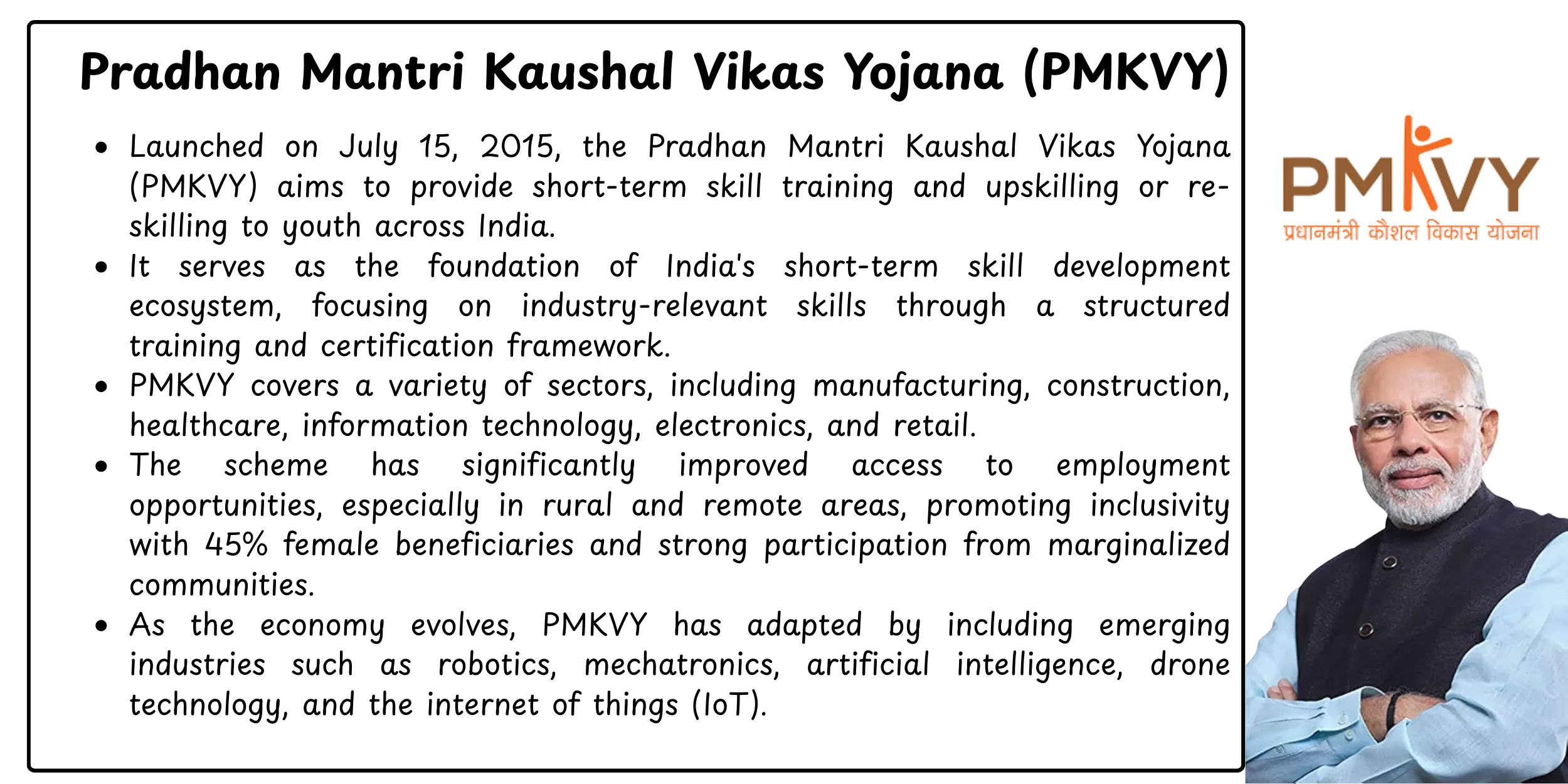
Skill India Mission has trained more than 1.4 crore young people since its inception, with special focus on the emerging fields like artificial intelligence, green technologies and digital services. This co-existence of developing the skills and the higher education institutions is what makes vocational training not a one-sided burden of learning and placement of the ideas and skills.
Learning through Digital Platforms
The mobile application and the MY Bharat portal extend beyond civic engagement to providea validated digital profile, Smart CV systems, and AI-powered recommendations. These innovations close the education-to-employment divide to bridge youths with internship, apprenticeship and volunteer opportunities. By the end of 2025, 14.5 lakh opportunities have been arranged, which proves the volume of digital outreach.
Institutional Support and Leadership
The National Service Scheme (NSS) is an addition to formal education that makes people responsible and leaders. NSS activities, including integration camps and adventure programmes, are designed to provide experiential learning, reinforcing teamwork, resilience and social awareness among 3.9 million volunteers between the ages of 18 and 35 years in an annual record.
When is National Youth Day Celebrated in India
National Youth Day is celebrated in India on January 12thevery year. The National Youth Dayis marked as the birth anniversary of Swami Vivekananda, a great spiritual leader and youth icon of India. The Government of India observes this day to inspire young people to follow its ideals of courage, confidence, and self-discipline. Various programs, seminars, and cultural activities are organised nationwide to motivate young people to contribute positively to society and nation-building.
Business and Economic Development
The culture of entrepreneurship has emerged as a keystone of the developmental course of India, the connection between the youth innovation and the development of the national economy.
Start-Up Ecosystem and Young Innovation
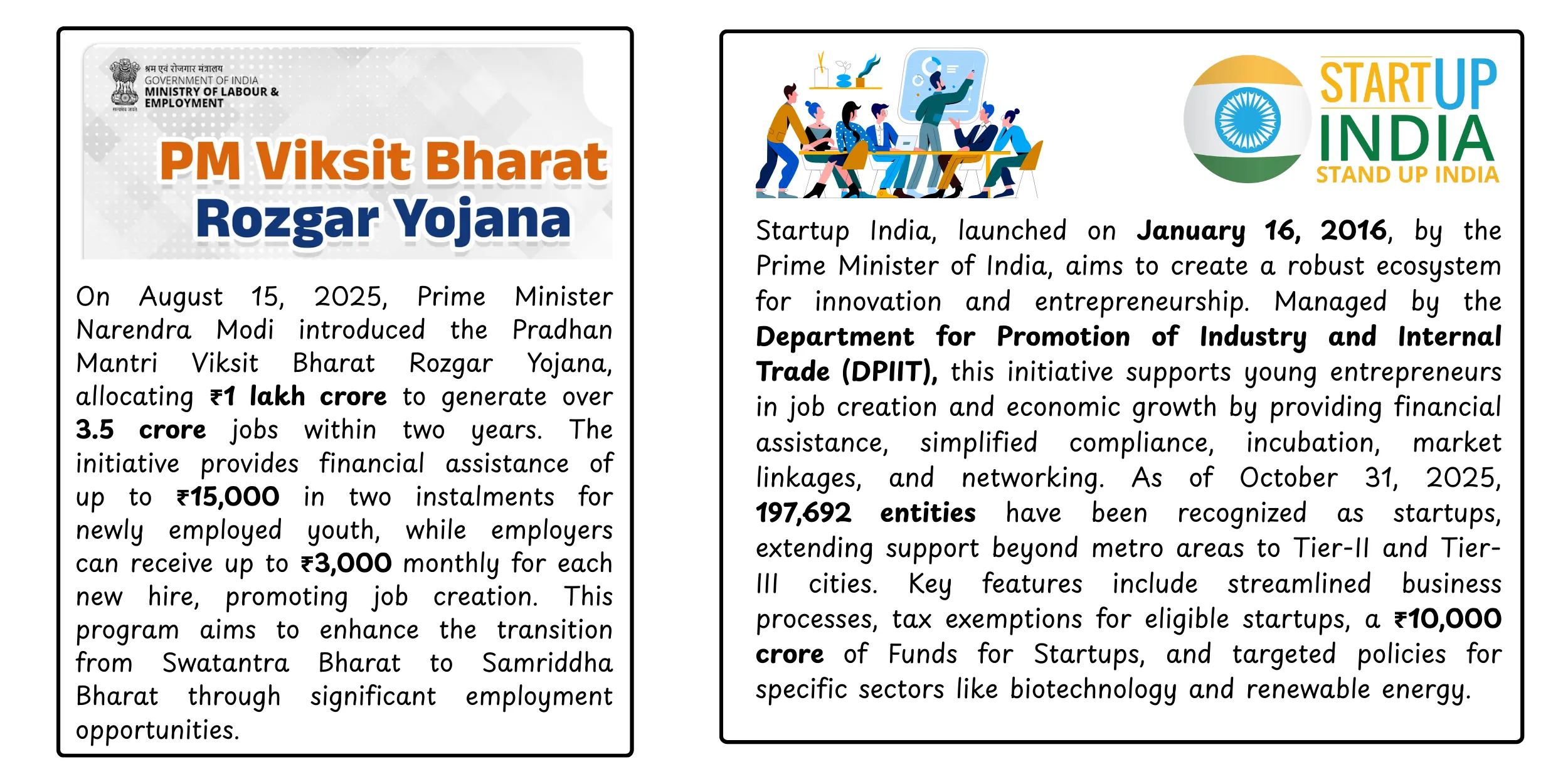
The start-up ecosystem in India is the third largest in the world, with exponential growth, with more than 1.25 million registered start-ups by the end of 2025. There are government initiatives like Startup India and Stand-Up India, which offer seed funding, mentorship and incubation. According to the PIB press note, youth-led enterprises are prioritised in areas of renewable energy, digital services, and agri-tech, which are connected to the entrepreneurial activity and sustainable development objectives.
Financial Inclusion
Financial inclusion is closely tied to economic progress. Under Pradhan Mantri Mudra Yojana, programmes have provided credit worth 27lakh crore to 54crore beneficiaries since its inception, making micro and small enterprises flourish. Skill development missions should be integrated into the program to give young people whohave been trained the opportunity to work in the entrepreneurial data seamlessly to minimise reliance on the conventional job channels.
Global Leadership and Economic Perspective
The Viksit Bharat Young Leaders Dialogue 2026 places entrepreneurship in the larger economic perspective of Viksit Bharat@2047 in India. The dialogue connects 3,000 youth leaders and 100 international delegates and thereby encourages cross-border collaboration and makes Indian youth global economic participants. The digital quiz that took place before the event and encompassed 50.42 lakh respondents corresponds to the magnitude of civic-economic participation.
Essential Aspects of Youth Empowerment
Youth empowerment focuses on education, skill development, leadership opportunities, and access to resources. Encouraging participation in decision-making, promoting innovation, and supporting mental well-being help young people build confidence, become self-reliant, and actively contribute to social, economic, and national development.Fitness and health are essential aspects of youth empowerment, as one can be sure that physical health supports intellectual and civic participation.
Fit India Movement
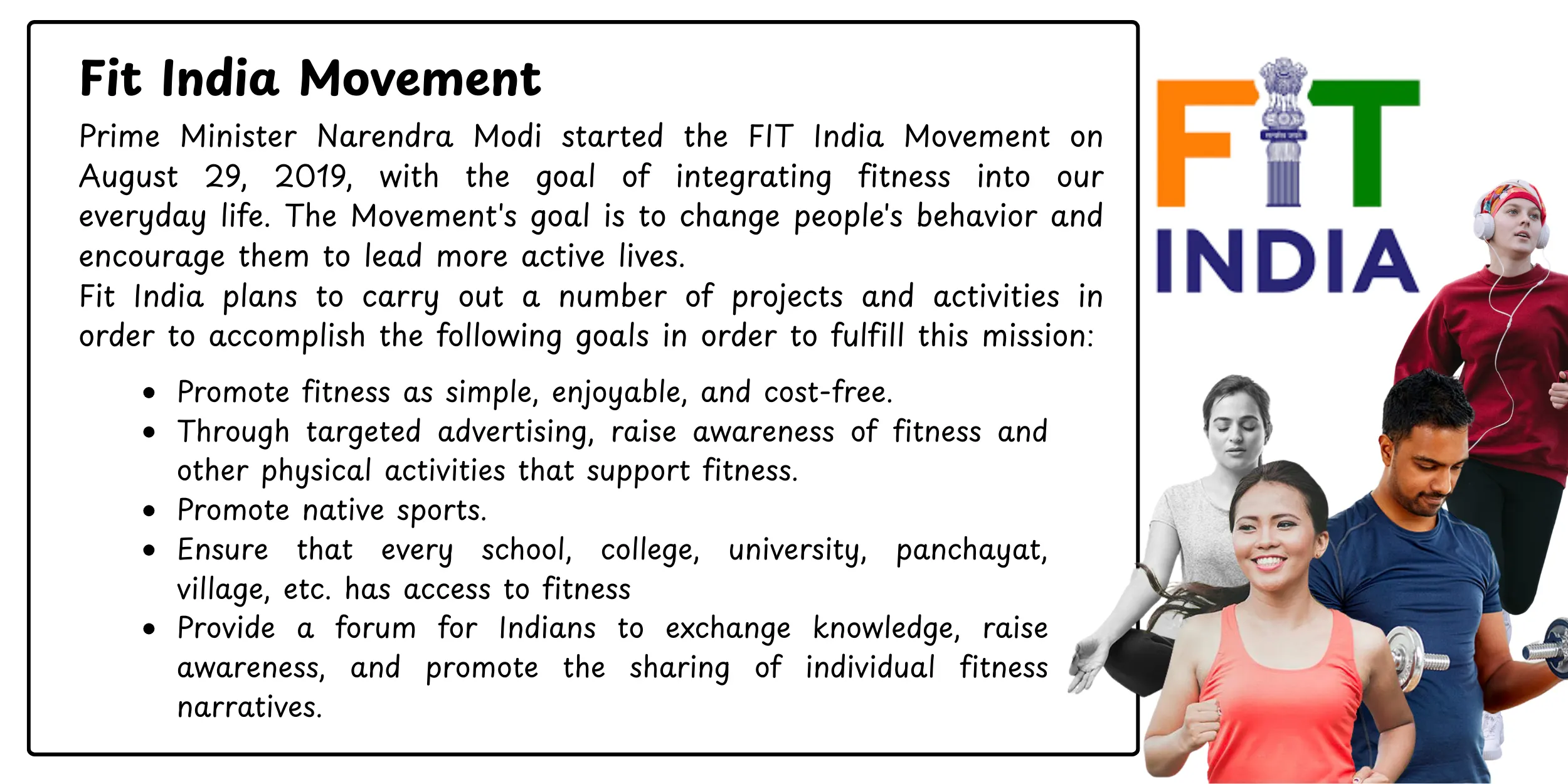
Introduced in 2019, the Fit India Movement is still one of the pillars of health awareness in the country. A recent note by PIB has mentioned that fitness campaigns have covered over 12 crore citizens, and schools and colleges have made fitness testing part of their yearly curriculum. The program promotes physical activity, healthy eating, and lifestyle-changing measures, thus incorporating fitness into the day-to-day activities.
Youth Centric Health Programmes
The National Service Scheme (NSS) contributes to the promotion of health by organising blood donation camps, health camps, and health education. NSS has around 3.9 million volunteers every year, spreading healthcare outreach to the rural and underserved areas. In addition, the Ministry of AYUSH has been involved in popularizing the practice of yoga and traditional wellness,which has enabled the practice to reinforce the practice of preventive healthcare among young people.
Integration with Civic Participation
Health is a national priority, being the foreshadowing of Viksit Bharat Young Leaders Dialogue 2026, which connects the factor of fitness to productivity and leadership. The dialogue, which will involve 3,000 youth leaders, focuses on the role of physical and mental well-being in maintaining civic responsibility as well as promoting innovation.
Conclusion
The National Youth Day 2026 is one example demonstrating the Indian desire and readiness to use the transformational potential of the young population. The government has put in place institutional mechanisms of provision of education, capacity building, entrepreneurship, health, and civic engagement through programs like the My Bharat, NSS, and the Viksit Bharat Young Leaders Dialogue. All these combined efforts support the vision of Viksit Bharat@2047, which makes the youth the major drivers of innovation, inclusiveness, and nation-building. The festival is therefore representative of the perpetuation of the ideals of Vivekananda and nation building of India.
Frequently asked questionsFrequently asked questions
Youth Engagement, Leadership and CivicInclusion?
The involvement of the youth in India has become one of the central pieces of nation-building because of the demographic aspect that almost 65% of the population is under 35 years of age. The National Youth Day 2026 is emphasising this possibility through the structured platforms of leadership and civic action. Various steps taken by the government in this direction include:
Education and Skills DevelopmentViksit Bharat 2047?
Education and skills development are the building blocks of the Indian dream of ViksitBharat2047 to reflect the intention of the government in equipping the younger generation with knowledge, employability and leadership abilities. This priority is emphasised by the government by...
When is National Youth Day Celebrated in India?
National Youth Day is celebrated in India on January 12thevery year. The National Youth Dayis marked as the birth anniversary of Swami Vivekananda , a great spiritual leader and youth icon of India. The Government of India observes this day to inspire young people to follow its ideals of courage, confidence, and self-discipline. Various programs, seminars, and cultural activities are organised nationwide to motivate young people to contribute positively to society and nation-building.
Business and Economic Development?
The culture of entrepreneurship has emerged as a keystone of the developmental course of India, the connection between the youth innovation and the development of the national economy.
Essential Aspects of Youth Empowerment?
Youth empowerment focuses on education, skill development, leadership opportunities, and access to resources. Encouraging participation in decision-making, promoting innovation, and supporting mental well-being help young people build confidence, become self-reliant, and actively contribute to social, economic, and national development.Fitness and health are essential aspects of youth empowerment, as one can be sure that physical health supports intellectual and civic participation.