Tribal Succession Laws in India is primarily governed by usual laws and traditional exercise, As the Hindu Succession Act, 1956 expressly excludes Scheduled Tribes from its limits. The recent judgments of the Supreme Court of India such as in Ram Charan v. Sukhram have highlight that challenge inheritance rights to members of Scheduled Tribes would be inconsistent with the constitutional principle of equality.
|
Key Highlights
- Historical Background of the Rights of Tribal Women
- Need for Inclusive Reform for Tribal Women
- Social Justice and Gender Dimension
- Towards a Separate Law for Tribal Inheritance
- Principles for Drafting Succession Laws for Tribals
- Policy and Governance Implications of Succession Laws
|
The recent ruling by the Supreme Court that the Hindu Succession Act, 1956, does not apply to Scheduled Tribes and therefore restates the prerogative of tribal customary law. It is significant because of the question of the rights of tribal women in inheritance that remains unresolved, which implies the necessity of a separate and extensive legal framework to ensure that tradition is consistent with gender justice
When the Supreme Court ruled that the Hindu Succession Act, 1956, is not applicable to Scheduled tribes, it rejuvenated the discussion on the legal framework of inheritance in the aboriginal communities. Despite the presence of folklore laws in the tribes governing succession, the fact that they are not found in the conventional jurisdictions raises an alarming issue over matters of equity, gender fairness, and the integrity of the constitution. Systemic barriers especially affect tribal women's access to property rights; hence, hindering their socio-economic empowerment and the ability to make communal decisions. The decision makes it even clearer that what is desperately needed is an independent, inclusive law that supports tribal independence and, at the same time, guarantees the constitutional provisions of equality.
Tribal Women Succession Laws in India
Tribal Succession Laws in India is primarily governed by usual laws and traditional exercise, As the Hindu Succession Act, 1956 expressly excludes Scheduled Tribes from its limits. The recent judgments of the Supreme Court of India such as in Ram Charan v. Sukhram have highlight that challenge inheritance rights to members of Scheduled Tribes would be inconsistent with the constitutional principle of equality. However, the Supreme Court of India has held that tribal women are entitled to equal inheritance rights in order to prevent gender discrimination.
|
Historical Background of the Rights of Tribal Women
The historical rights of tribal women in India have transitioned from reliance on restrictive patriarchal customary laws towards constitutional equality. The customary traditions, the colonial inheritance, and the constitutional protection co-create the rights of tribal women in the context of inheritance in India. These historical and legal aspects have opened up scholarly interest because of the latest decision provided by the Supreme Court.
Colonial Frameworks and Post-Independence Frameworks for Tribals
Under colonialism, the customary norm law, as opposed to individual statutes, was mainly used to govern the tribal communities. After independence, Scheduled Tribes were recognized in the Constitution of India in accordance with Articles 244 A, 244 and 342, and special protection was given to them under the Fifth and Seventh Schedules. However, the fact that they are not covered under the succession that prevailed as in the Hindu Succession Act of 1956 left them on the brink of the law and thus led to the need to decide on the inheritance cases based on traditions that were not written.
Judicial Developments and Modern-Day Challenges
Judicial interferences have increasingly brought out the conflict between tribal sovereignty and constitutional promises of equality. As an example, the 2025 decision made by the Supreme Court stated that all tribal women had the same rights as males to inheritance, which is a major step forward in terms of gender justice. However, empirical research reports that there are still more than 700 known tribal societies that still use varied customary practices, where most of them limit the access of women to assets and estates.
Need for Inclusive Reform for Tribal Women
The historical course of events highlights the need to have a special, inclusive law that upholds the identity of tribes and the equality of genders. A comparative study of the rights of the indigenous around the globe gives an indication that the only way to have sustainable reform is through participatory law-making, which is founded on community consultations.
Social Justice and Gender Dimension
Social justice and the gender dimension focus on achieving equity in rights, opportunities, and resources for all genders, dismantling patriarchal structures, and ensuring equal participation in political, social, and economic life. The argument on the right of tribal women to inheritance is not entirely a legal issue; it is a social issue of great concern. It involves the ideas of equality, dignity, and empowering the society that has been traditionally marginalized.
Customary Practices and Patriarchy in Tribal Societies
Most of the tribal customary laws deprive women of their property rights, which is a way of strengthening the patriarchal systems. Literature shows with empirical data that women are excluded from the inheritance process, hence remaining forever economically dependent and hindering their capacities to participate in community government. In research by Feminism in India, the tribal women are experiencing compounded disadvantages due to gender as well as socio-cultural marginalization, and thus, inheritance reform is considered a necessary measure of achieving equality.
Courts and Gender Injustice in Tribal Women
In July 2025, the Supreme Court made a breakthrough case stating that tribal women have equal rights to inheritances, and this was a milestone in the constitutional path of India. In the ruling, it was emphasized that women should not be denied their rights to property because this would be against the equality guarantee under Article 14. Law academics argue that this legislation has the potential to impact more than 700 tribal groups, where various practices have often hampered the rights of women to land and other resources.
Socio‑Economic Implications
The possession of property is synonymous with power and dignity. Studies show that women who have secure land rights are more likely to invest in education, health, and sustainable livelihoods. As stated in the empirical studies, reform in relation to inheritance is necessary as the area that will bridge the gender gap imbalance and ensure that tribal females are not left out of the consumerist developmental discourse of India.
Towards a Separate Law for Tribal Inheritance
The fact that the Supreme Court found that the Scheduled Tribes were not covered under the Hindu Succession Act has generated an immediate need to have a separate legislation. Such a law should balance between respect for tribal practices and constitutional provisions of equality.
Principles for Drafting Succession Laws for Tribals
Such an independent law on succession needs to be based on the principles of inclusiveness and gender equalities and at the same time, the power of tribal governmental structures. The legal experts also claim that consultations with tribal councils and women's groups through participatory law-making are necessary to make the bill legitimate and acceptable. The Aboriginal rights studies in Canada and Australia show that cultural identity and gender equity are made stronger through community-driven laws and regulations.
Judicial and Policy Context of Succession Law
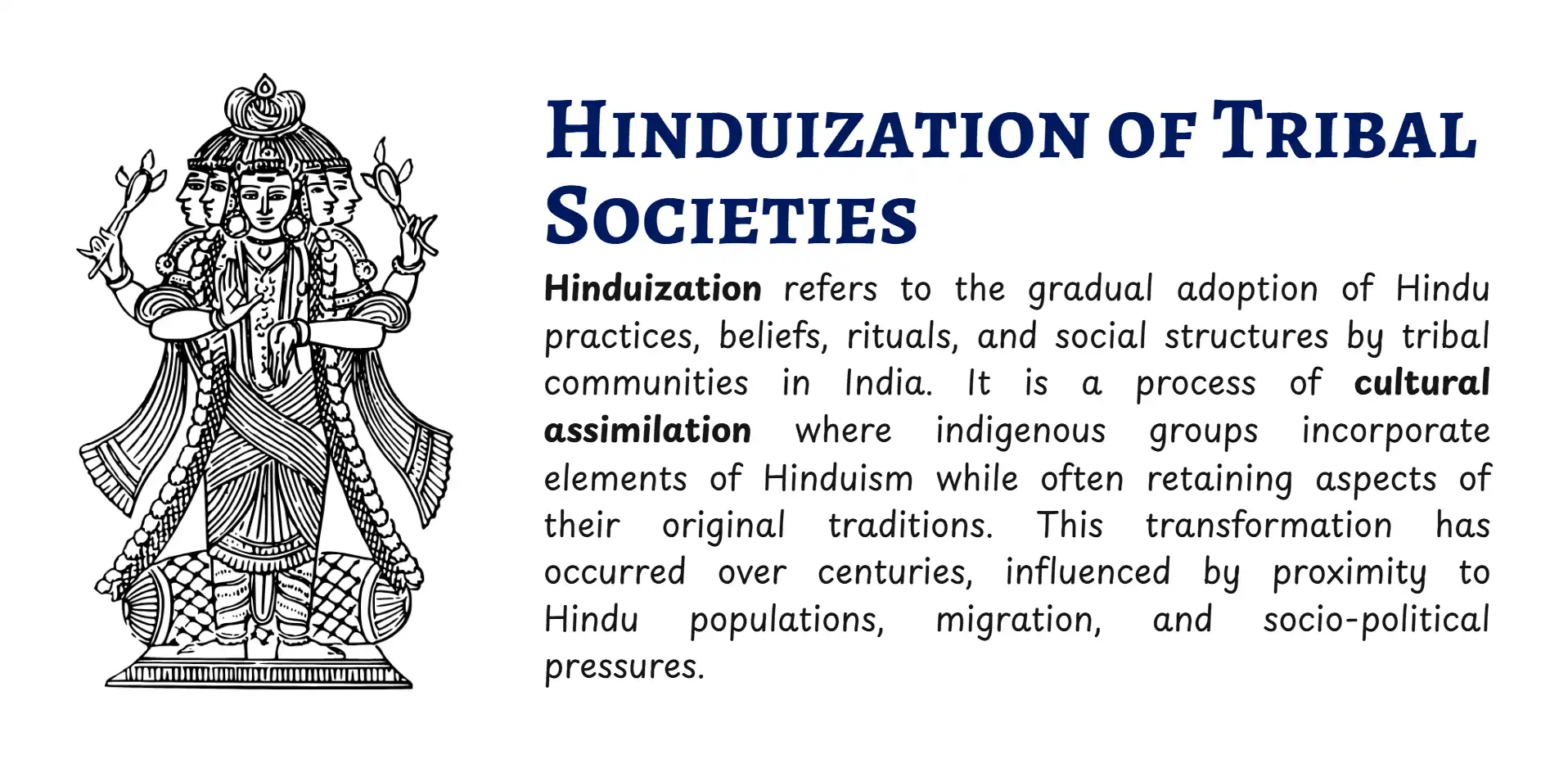
In the 2025 case, it was confirmed that tribal women had equal rights to inheritance as any other woman, and it was stated that only customary law could govern succession unless a particular law was passed by the Parliament. This omission has created confusion in the minds of people since tribal females are at times granted rights based on Hinduization but deprived of them by strict customary provisions.
Policy and Governance Implications of Succession Laws
Succession laws, which regulate the transfer of property and rights after an individual’s death, play a critical role in shaping social structures, economic equity, and legal systems. Intertwined with personal, religious, and customary norms, these laws function as mechanisms for wealth distribution, the promotion of gender equality, and the preservation of family stability. The judicial decision made by the Supreme Court concerning tribal claims to heritage has far-reaching policy and governance implications. It highlights the need for a regulatory framework to be adopted, which would be able to reconcile tribal self-determination with provisions in the Indian Constitution that ensure equality and justice.
Land Rights and Distribution of Resources in Tribes
The statutes of inheritance directly affect ownership of land, access to resources, and security of livelihood. The empirical study has shown that deprivation and dependency are facilitated by the exclusion of tribal women from the right to own property. The Hindu reports that there is uncertainty among tribal women due to the inconsistent application of the Hindu succession principles, which sometimes include the conferral of rights on the pretext of Hinduization, and sometimes give no rights pursuant to the application of the customary law.
Government and Institutional Arrangements
There are available policy frameworks like the Forest Rights Act 2006 and the Panchayats (Extension to Scheduled Areas) Act (1996), which focus on community involvement. However, research shows that there exist implementation gaps due to bureaucracies and poor consultations. Studies conducted on tribal welfare establish the fact that marginalisation is occurring systematically, even despite the existence of constitutional rights, an aspect that has underscored the need to have very strong governance tools.
Dispute Resolution and Legal Pluralism
An inheritance law should combine the customary norms and the statutory protection. According to legal scholars, ambiguity arises in legal systems that are plural and thus makes resolving disputes difficult. A specialised tribunal or community-based mechanisms may help to ensure fair adjudication without disrespecting the tribal identity.
Conclusion
This ruling of the Supreme Court presents a very crucial pathway in the re-conceptualization of inheritance rights among the tribal communities. Whereas the customary laws are meant to protect the identity of the indigenous, the laws often enhance gender inequalities, especially among women. A separate statute that is inclusive may overcome tradition and constitutional norms without unfairness towards property and resources. This kind of reform goes beyond legal modification and creates empowerment, social justice, and sustainable development of tribal women in the pluralistic democracy of India.
Frequently asked questionsFrequently asked questions
Historical Background of the Rights of Tribal Women?
The historical rights of tribal women in India have transitioned from reliance on restrictive patriarchal customary laws towards constitutional equality. The customary traditions, the colonial inheritance, and the constitutional protection co-create the rights of tribal women in the context of inheritance in India. These historical and legal aspects have opened up scholarly interest because of the latest decision provided by the Supreme Court.
Social Justice and Gender Dimension?
Social justice and the gender dimension focus on achieving equity in rights, opportunities, and resources for all genders, dismantling patriarchal structures, and ensuring equal participation in political, social, and economic life. The argument on the right of tribal women to inheritance is not entirely a legal issue; it is a social issue of great concern. It involves the ideas of equality, dignity, and empowering the society that has been traditionally marginalized.
Towards a Separate Law for Tribal Inheritance?
The fact that the Supreme Court found that the Scheduled Tribes were not covered under the Hindu Succession Act has generated an immediate need to have a separate legislation. Such a law should balance between respect for tribal practices and constitutional provisions of equality.
Policy and Governance Implications of Succession Laws?
Succession laws, which regulate the transfer of property and rights after an individual’s death, play a critical role in shaping social structures, economic equity, and legal systems. Intertwined with personal, religious, and customary norms, these laws function as mechanisms for wealth distribution, the promotion of gender equality, and the preservation of family stability. The judicial decision made by the Supreme Court concerning tribal claims to heritage has far-reaching policy and governance implications. It highlights the need for a regulatory framework to be adopted, which would be able to reconcile tribal self-determination with provisions in the Indian Constitution that ensure equality and justice.
Dispute Resolution and Legal Pluralism?
An inheritance law should combine the customary norms and the statutory protection . According to legal scholars, ambiguity arises in legal systems that are plural and thus makes resolving disputes difficult. A specialised tribunal or community-based mechanisms may help to ensure fair adjudication without disrespecting the tribal identity.