|
Key highlights
- Industrial Parks as Growth Engines
- Development of Smart Infrastructure
- Employment and Skill Development
- Governance and Policy Prospects
- Diversification in The Economy
|
Industrial parks are driving forces of economic prosperity by combining smart infrastructure with industrialization. They include digital technologies, sustainable utilities, and efficient logistics to increase competitiveness. They strengthen global value chains through investment attraction, providing assistance to small and medium enterprises, and diversification of the economies. With policy incentives, the future industrial parks are expected to become green and digital ecosystems that lead to resilient and inclusive development.
|
Tips for Aspirants
The article is highly relevant to UPSC CSE exam and State PSC exams, since it enhances the knowledge on industrial policy, infrastructure, and economic growth among the major themes in governance, development, and sustainable industrialization.
|
|
Relevant Suggestions for UPSC and State PCS Exam
- Industrial Parks as Growth Engines: Favorable economic growth in the region, investment, creation of job opportunities, and cooperation among industries.
- Development of Smart Infrastructure: A combination of the IoT, AI, automation, renewable energy, waste management, and optimal logistics boosts competitiveness and sustainability.
- Economic Diversity: The industrial parks have a diversified portfolio of industries, which is due to the inclusion of various industries in each industrial park.
- Employment and Skill Development: The activities inside the parks promote employment of the locals and the growth of small and medium enterprises (SMEs), as well as the socioeconomic empowerment of local communities living around the parks.
- Policy and Governance: Governmental structures such as the National Industrial Corridor Development Programme, the concept of public-private partnership (PPP), as well as fiscal incentives, have all been effective in promoting effective and sustainable operational results.
- Future Prospects: Future strategy envisages the transition to green, smart, and resilient industrial ecosystems, thus following the wider goals of sustainability and increased global competitiveness.
|
The industrial parks have turned out to be fundamental tools in determining the future path of modern industrialization. As a planned area of intensive economic activity, they provide an organized space in which industries are able to flourish due to shared infrastructure, simplified regulatory bodies and improved logistical connectivity. In the environment of globalization and a fast-evolving technological world, industrial parks are being rethought as smart systems combining digital innovation, sustainability measures, and a resilient supply chain. Their role is not confined to even the spatial clustering of enterprises; they play the role of catalysts in the growth of a region, the creation of employment and diversification. The integration of intelligent infrastructure into industrial parks, including renewable energy systems, intelligent waste management, digital monitoring, and automation, has significantly increased the number of functions that can support the growth of industry. Through bringing in both local and foreign capital, the parks help in the strengthening of global value chains as they equally stimulate innovation among small and medium enterprises. Moreover, their importance in the national development agendas has been enlarged in light of policy interventions, public or even private collaboration and the standard of governance. In the context of the global demand for sustainability, competitiveness and inclusivity, the industrial parks have taken the centre stage of infrastructure modernization and industrialization, which gives us a model of more intelligent, environmentally friendly and resilient industrial growth in the twenty-first century.
The Growth Engines: Industrial Parks
The industrial parks are centres of economic action, enabling the growth of industries by means of collective infrastructure, favouring policy regimes and endless design innovations, therefore identifying themselves as drivers of sustainable growth. Industrial parks act as powerful catalysts for innovation and economic strength by clustering businesses, sharing infrastructure, and creating ecosystems that boost productivity, attract investment, and foster job growth, thereby driving regional development, technology transfer, and competitiveness through agglomeration economies and focused policy support, though success requires careful planning to ensure sustainability and avoid negative impacts.
Vision of Viksit Bharat 2047
Industrial parks are special areas that are planned and developed to allow industrial power through the provision of infrastructures along with the facilitation of regulations and logistics opportunities. They are spatial clusters that give economies of scale, minimise transaction costs and provide common facilities to the enterprises. This not only increases productivity but also enhances inter-industrial cooperation, thus boosting the faster growth of the region and increasing industrial competitiveness.
The infrastructure and Investment Attraction
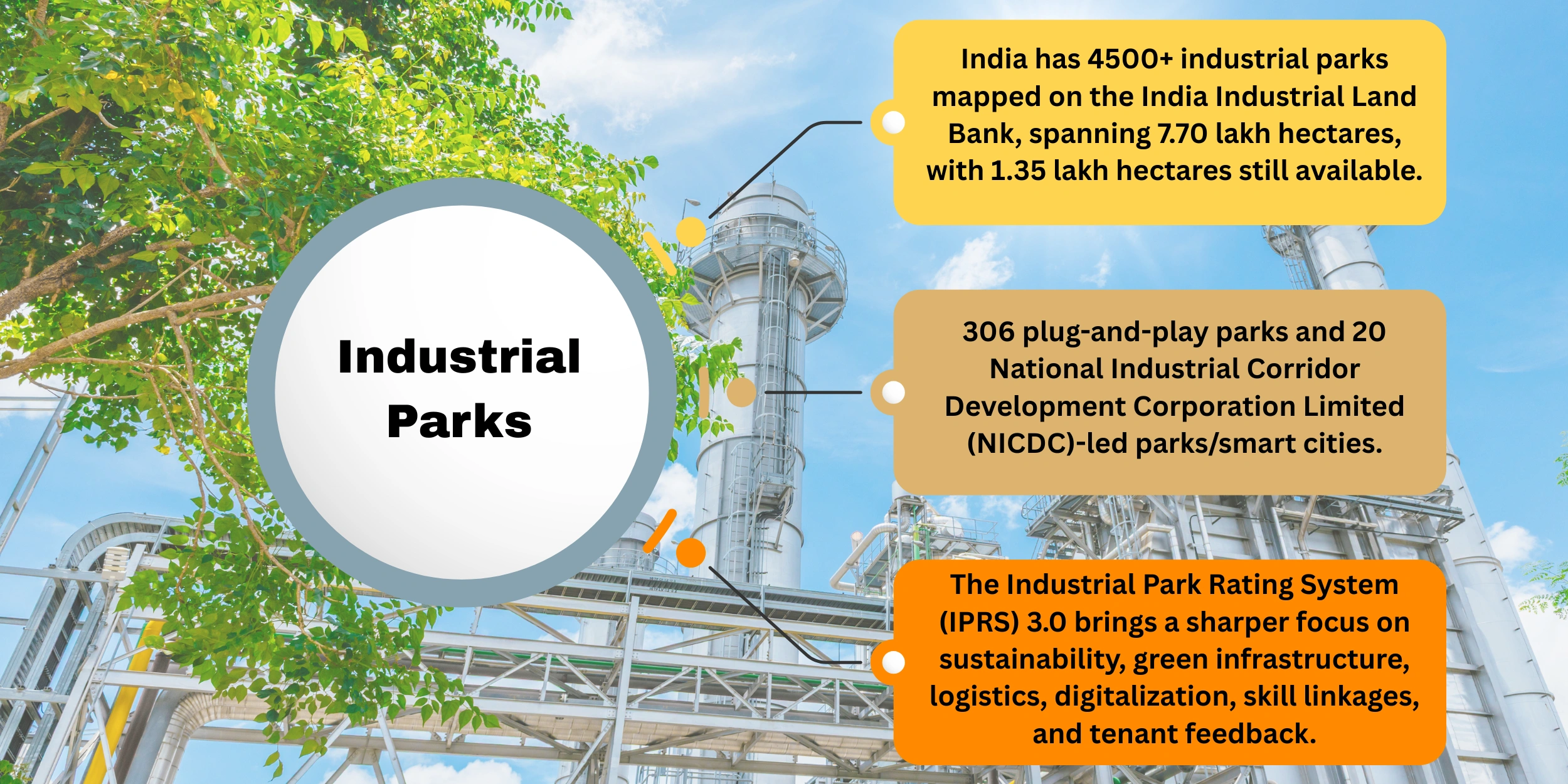
The other salient feature of industrial parks is the ability to attract both domestic and foreign investment through the provision of a ready-to-use infrastructural base. Ready-to-use models, such as the 306 operational parks in India, enable companies to be in operation in the shortest time possible without the hindrance of construction or approval delays. This type of infrastructure reduces entry obstacles of small and medium enterprises (SMEs), yet at the same time supports large-scale industries. Modern utilities, transport connectivity and digitalisation make these parks capital inflow magnets and thus strengthen national industry centres.
Employment Creation
The industrial parks play significant roles in terms of creating employment opportunities, with a wide range of industries, including manufacturing and logistics industries, among others. They encourage diversification of the economy since they contribute to other sectors like textiles, electronics and renewable energy, thus reducing dependence on the traditional industries. This diversification helps in making the supply chain resistant to global disruptions and provides opportunities to the local people to hone their skills. Industrial parks generate inclusive growth and enhance the surrounding communities by incorporating the SMEs into the value chains across the world.
Policies and Prospectus
The role of the government and government-sponsored programs between the government and the private sector cannot be underestimated in the sustenance of industrial parks as growth engines. The Delhi-Mumbai Industrial Corridor project and special budgetary allocations on industrial clusters by the state is an example of the government’s commitment. Among the prospective developments is the idea of green and smart industrial parks, which are a combination of renewable energy, waste, and digital ecosystems. These innovations will result in industrial parks continuing to spearhead sustainable economic growth, and in tandem with the global climate goals and competitiveness agendas.
Smart Infrastructure Development
The industrial parks are no longer the sources of basic services and territory where the businesses develop; they are moving towards the systems of smart infrastructure that combine the use of digital technologies and environmentally conscious energy resources, as well as advanced logistics systems. This development is in line with the current trends in the modernization of the industrialization of the world, whereby the infrastructure is designed in a manner that is flexible, robust, and ecologically friendly.
Digitization and Technology
One of the most vital aspects of smart infrastructure is the integration of digital technology that includes Internet of Things (IoT), artificial intelligence (AI), and automation. These devices allow real-time tracking of energy consumption, prediction of which machinery to maintain, and effective distribution of resources. Smart grids and intelligent transportation systems integrated into industrial parks contribute to the enhancement of operational efficiency and reduce downtime. With the introduction of the digital infrastructure, the industrial parks will turn into the service of making them innovation centres, which can facilitate Industry 4.0 practices and keep them competitive in the world.
Sustainability and Green Infrastructure
Smart industrial parks are based on sustainable development, which also means using renewable sources of energy, systems of waste-recycling and water-saving technologies. India, as an example, with the National Industrial Corridor Development Programme, features 12 smart industrial cities that will combine green energy and other environmentally friendly utilities in order to minimize carbon footprints. These measures are in line with environmental issues and also in accordance with the international obligation to reduce climate change, thus achieving a balance between industrialization and the environment.
Logistics, Connection, and Efficiency
The logistics and connectivity that are smooth and efficient are the main components of smart infrastructure. Smart industrial parks are designed to have plug-and-play facilities, innovative warehousing, and multimodal transport infrastructure that help in cost minimization and increase supply-chain resilience. Connection to the national corridors would help to move goods faster, which would strengthen the competitiveness of exports. Through smart logistics, industrial parks turn into focal points in the global value chains, and this provides industries with a competitive advantage.
Policy Support
Smart infrastructure development relies on government programs and the relationships between the government and the industry. The allocation of INR 2,500 crores by India in plug-and-play parks and the upcoming 11 smart industrial cities is an illustration of good policy support. The future of industrial parks depends on the development of digitally interconnected, sustainable, and resilient ecosystems that are able to withstand global disruptions and promote inclusive development.
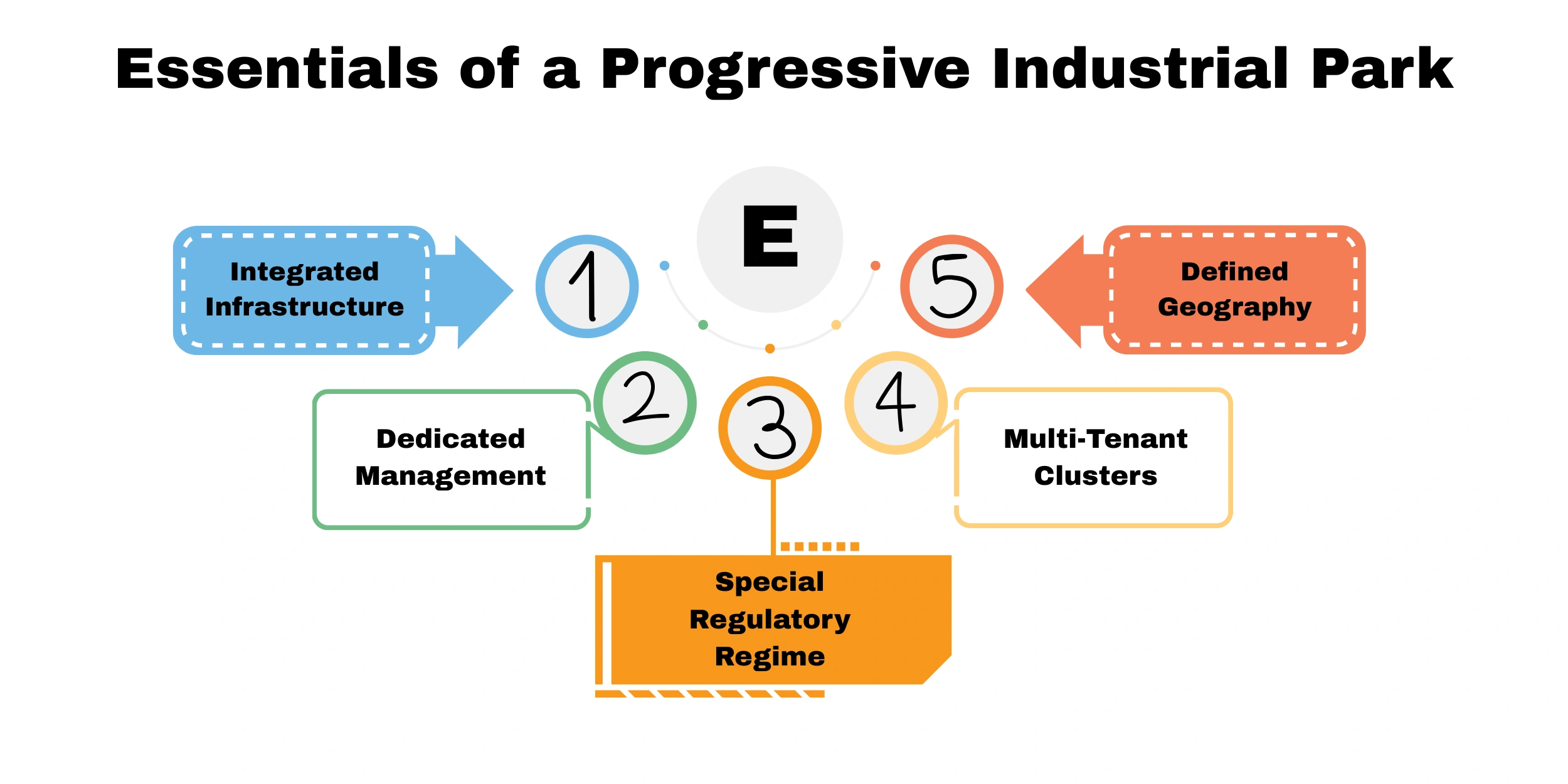
The industrial parks serve as the drivers of industrial growth and economic diversification and thus facilitate the enhancement of the competitiveness of the states, attract investment and inclusive development by providing the integration of infrastructure as well as support policy frameworks.
Growth Enablers
Industrial parks also provide organized environments in which companies have the advantage of common facilities, simplified regulatory processes, and facilitation in logistics. Through clustering of businesses, such developments lower the cost of transactions and increase productivity. This geographical concentration provides cooperation, innovation, and economies of scale that place industrial parks as the major driving force of industrial development. The ability to lure local and external investors further centralizes industrial bases within nations and increases modernization.
Diversity in Economic Activities
One of the main roles of industrial parks is the possibility to diversify the economic process. The parks reduce the dependency on the traditional industries because they host heterogeneous industries like textiles, electronics, pharmaceuticals, and renewable energy. Such diversification enhances resilience to disruptions in the supply chain due to supply-chain crises around the world and creates emerging market opportunities. As an example, the Indian industrial belts are multi-sectoral, which makes the growth of all regions equal. In addition, small and medium enterprises (SMEs) are also encouraged through diversification so that they can take part in global value chains.
Regional Development
The industrial parks give rise to massive jobs through a wide range of industries. They boost the growth in the region by boosting the neighbouring communities through the development of skills, ancillary industries and improved infrastructure. Creation of employment not only helps solve the pressures of migration to the urban areas but also helps in countering the local economies. There is an equal regional development between the urban and periphery regions because parks in semi-urban and rural areas help reduce the imbalance in development between the urban and rural regions.
Policy, Governance and Future Prospects
Policy frameworks, governance arrangements, and future-oriented strategies comprise the industrial parks and their ability to foster industrial expansion, their attractiveness to investment, as well as congruence with global sustainability initiatives.
Policy Frameworks
The policy of the government has a conclusive determination on the creation and growth of industrial parks. In India, programs like the National Industrial Corridors Development Programme and allocated budget have created enabling environments for industrial clusters. Such policies have focused on facilitating business, fiscal incentive and the development of infrastructure, which reduces the barriers to investment. Strategic planning is enforced to ensure the industrial parks not only act as the centre of production but also to enhance the development of the region, which entails the integration of the manufacturing industry with logistics, housing and trading infrastructure.
Institutional Mechanisms
The success of industrial parks in the long run is impossible without good governance. Public-private partnerships are now a model of choice, ensuring the combination of state control and efficiency. Government systems ensure that the rules surrounding environmental conservation are adhered to, land is distributed fairly, and resources are distributed appropriately. The experience of the previous Special Economic Zones highlighted the need to have a strong governance structure to ensure no land is mismanaged and that accountability is achieved. Institutional mechanisms also make coordination of various players to occur, such as the local governments, industry associations and foreign investors.
Future Prospects
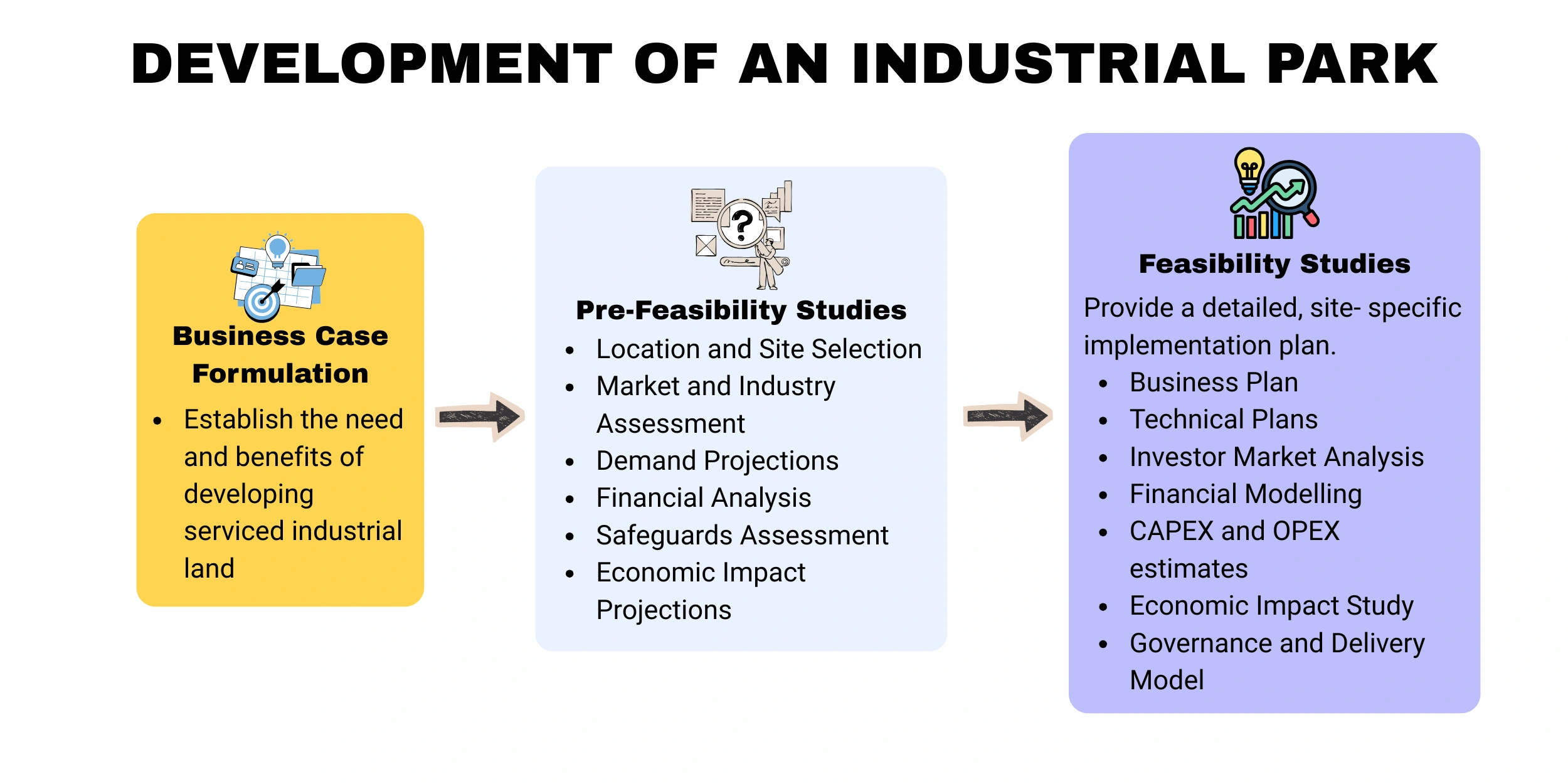
It is reported that India is coming up with parks that incorporate digital technologies, automation, and sustainable practices so as to transform traditional manufacturing. These parks will be characterized by smart grids, the renewable energy systems and intelligent waste management systems, which align with the climate commitments of the world. Besides, industrial parks will be expected to transform into industrial cities that combine residential, commercial, and industrial activities, and therefore develop holistic urban-industrial ecosystems.
Global Resilience
The industrial parks are becoming strategic locations in the global supply chains. The growing appeal of MNCs in India indicates the favourable geopolitical environment, low labour costs, and improved business environment in India. By diversifying its industrial foundation as well as by integrating resilience into its supply chains, the next generation Indian industrial parks will add to the competitiveness of India as compared to its established competitors like China and Korea. Their success will depend on the goal of balancing between growth and sustainability, where the industrial growth will not come at the cost of ecological and social priorities.
Conclusion
The industrial parks have been raised as a critical tool towards industrial modernity, the development of a region, and the diversification of the economy. These parks are growth engines because of their incorporation of smart infrastructure, investment promotion, and the practice of sustainability, which are aligned with global competitiveness and climate commitment. Good policy frameworks and governance systems also boost their ability to create jobs, draw in capital, and consolidate supply chains. The trends that the industrial parks are set to follow and are already occurring, namely the transformation of industrial parks to smart, green, and resilient environments, reinforce their continued presence in the strategic priorities of industrial futures that are focused on inclusive, sustainable development and strive to cement their status as essential strategic instruments in national and international developmental agendas.