|
Key Highlights
- Deep-sea Mining
- Impact on Ecology
- Biodiversity loss
- Global Ocean Health
- Governance Issues
- Common heritage of Humankind
- Ethical Issues
- Alternatives
|
The major threat to sensitive marine ecosystems is commercial deep-sea mining, which has been driven by the growing demand for rare minerals. Production of sediment plumes, discharge of harmful compounds, and anthropogenic noise violate and impair biodiversity, which puts taxa adapted to extreme marine conditions at risk. Along with local ecological damages, these extractive operations disturb the carbon sequestration activities, fish production, and the general well-being of the global sea. The fact that there are few high-level regulatory frameworks and patterns of corporate exploitation underscores the urgency of setting up moratoriums and seeking sustainable alternatives so as to protect marine biodiversity and, consequently, the future well-being of the human population.
|
Tips for Aspirants
The article has significance to the examinations of the UPSC CSE and State PSC as it combines environmental, governance, ethical, and sustainability aspects, which are critical themes of GS papers, essay writing, and interview discussions about existing policies on the ecological issue.
|
|
Relevant Suggestions for UPSC and State PCS Exam
- Deep‑sea Mining is a development of deep-seabed ferrous and aluminous nodules, cobalt-laden crusts, and sulphides.
- The growing need for rare-earth minerals is a result of the use of renewable-energy technology, electric cars, and digital infrastructure.
- Abyssal plains and hydrothermal vents are vulnerable to fragile ecosystems that are threatened by sediment, toxic releases, and noises that are acoustic noise.
- Slow recovery processes endanger the existence of undocumented species, reduce faunal diversity, and intensify permanent extinction.
- Carbon sequestration is undermined, food chains are shaken, and fisheries, which are important sources of human nutritious elements, are destroyed.
- Livelihood effects, coastal economy effects, and biotechnological opportunities are encountered.
- International Seabed Authority lacks enough regulatory control; there is an ethical issue of the reference of the seafloor to the common heritage of humankind.
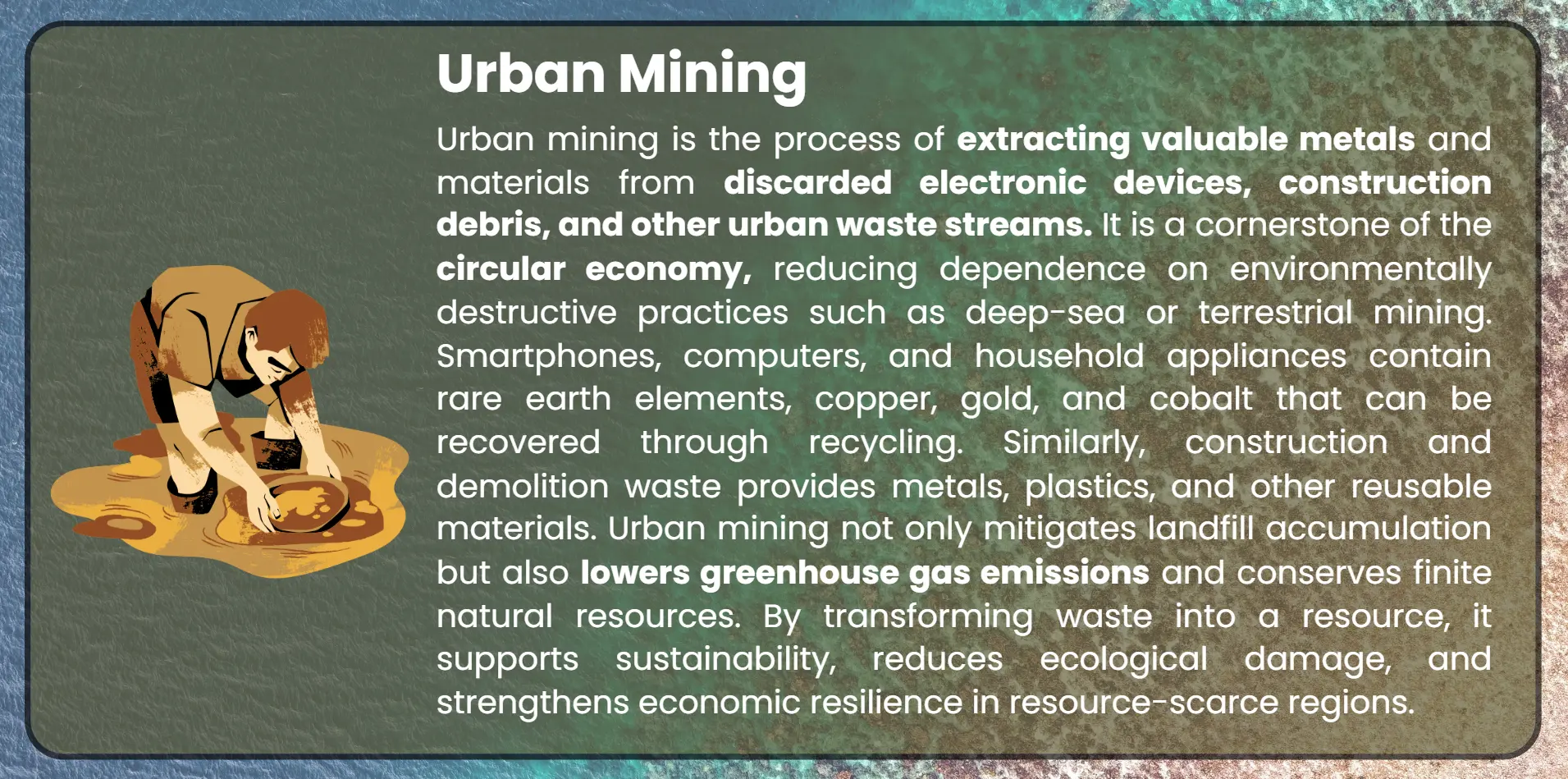
- Sustainable directions are recycling, urban mining, material substitution, and the alternative circular economy.
|
The growing need for rare earth minerals and metals, which are driven by the world switching to renewable energy technologies and digital infrastructure, has increased attention to commercial deep-sea mining. As the pioneer of resource extraction, the activity involves a process of collecting poly-metallic nodules, cobalt-enriched crusts, as well as sulphide deposits at the seabed, usually at a depth of more than 4,000 m. According to the proponents, deep-sea mining can adequately mitigate scarcity of resources on land; non-amber on the ecological cost, which is to a great extent irreversible.
Deep ocean ecosystems, such as hydrothermal vents and abyssal plains, which sustain unique species, are some of the most fragile and least comprehended ecosystems on earth. The mining activities generate plumes of sediments, toxic effluents, and distortive noises that degrade biodiversity, minimize carbon uptake as well and the disruption of marine food chains. Additionally, the absence of well-developed international governance systems increases the danger of uncontrolled exploitation, leading to serious ethical issues concerning the responsibility of humanity to take care of the world's inheritance.
This article will cast a critical question of the harmful effects of commercial deep-sea mining on marine life and place the discussion in broader contexts of environmental sustainability, climate stability, and global equity. It argues that putting economic interests in the short-term above ecological integrity in the long-term puts not only the marine biodiversity at risk, but also the long-term survival of human beings.The user's query highlights the significant environmental concerns surrounding deep-sea mining, which is a highly controversial topic currently under international debate. While no commercial mining has yet begun, the potential impacts are considered severe and potentially irreversible, leading to calls for a global moratorium from many scientists and conservation groups
The Rise of Deep-Sea Mining
Commercial offshore mining has become a contentious boundary in world resource exploration as it offers not only access to valuable minerals to present-day technologies, but also creates tremendous ecological and moral issues.Deep-sea mining is rising as nations seek critical minerals (nickel, cobalt, copper, rare earths) for green tech (EVs, renewables), driven by depleting land reserves and geopolitical concerns, despite significant unknown risks to fragile, unexplored deep-ocean ecosystems.
Motivations behind Expansion
The history behind deep-sea mining is quite intriguing, as the manganese, cobalt, and nickel poly-metallic nodules, which are found at the ocean floor today, were initially discovered in the middle of the twentieth century. The practice, however, became prominent in recent decades, addressing the depletion of the foundations of terrestrial minerals and the growing demand for vital substances used in the renewable energy infrastructure, electric cars, and the digital infrastructure. Deep-sea mining has become a response to the shortage of resource supply and acts as a geopolitical competition by making the seabed an asset of the strategic reserve of governments and corporations.
Technological Innovation and the Industrial Matter
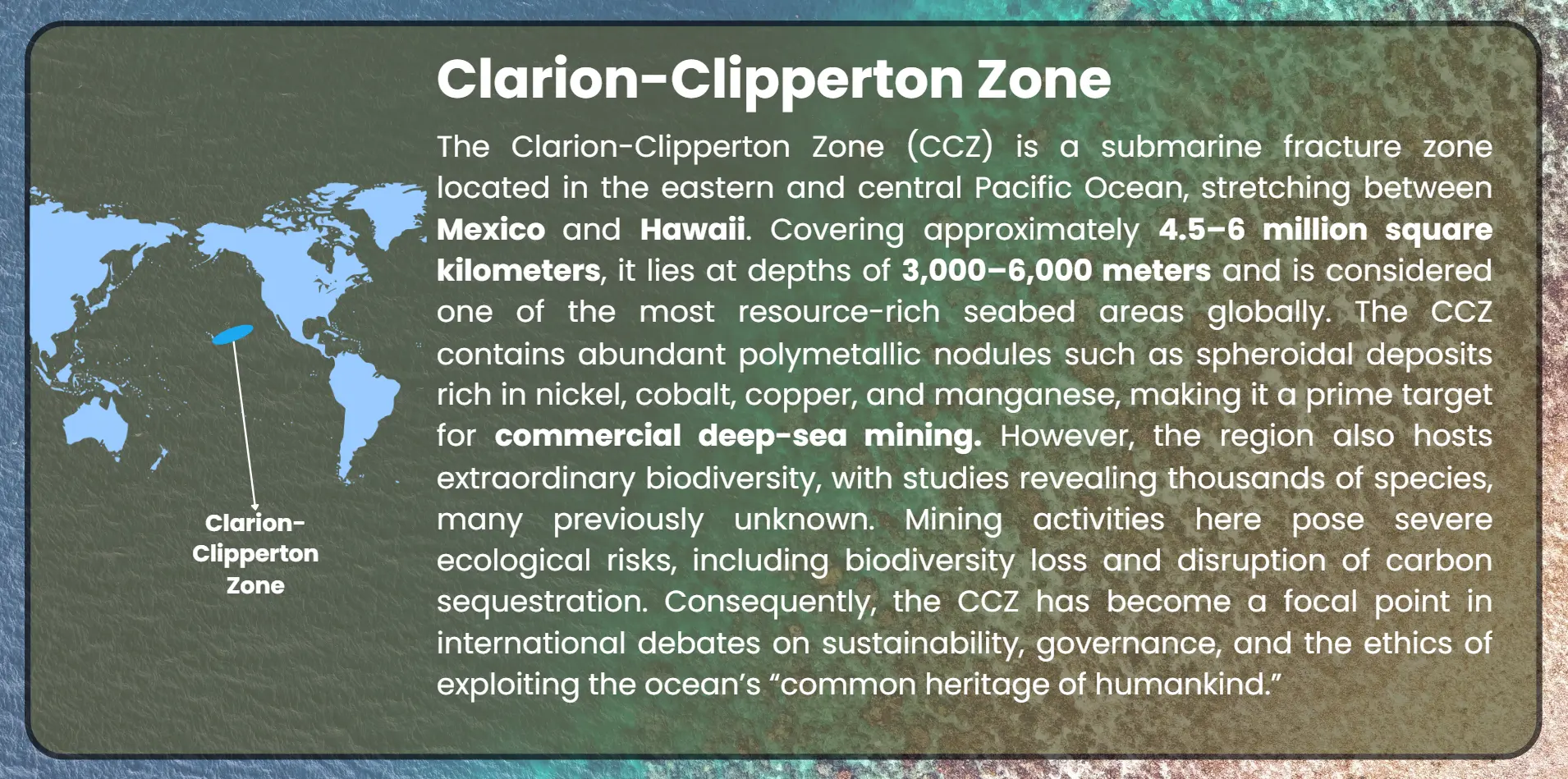
The innovation of submersible technologies, remotely operated vehicles, and high-pressure extraction systems has made massive mining activities, even up to 4,000 metres, viable. Industrial consortia are attacking poly-metallic nodules, cobalt-bearing crusts and hydrothermal vent deposits, with many of these proposals being in ecologically sensitive areas like the Clarion-Clipperton Zone in the Pacific Ocean. Such advances in technology have made deep-sea mining not only a possibility of deep-sea exploration but are now also a commercially practical venture, with both state-supported programs and non-government corporations investing in these ventures.
Ethical and Environmental issues
Though promising to the economy, deep-sea mining poses important threats to marine ecosystems. Benthic organisms are smothered by sediment plumes that are produced during extraction, noise, and chemical pollution destroys delicate habitats. Most of these ecosystems accommodate species of some very peculiar kinds, which suit them very well in extreme conditions, making them very susceptible to disturbance. What is more, the lack of international governance in an elaborate program is of ethical concern as to whether or not it is exploited in the guise of the common heritage of humankind. Researchers have argued that it is the shift in focus on short-term economic interests at the expense of ecological integrity that undermines global sustainable and biodiversity commitment.
A Critical Juncture
The emergence of deep-sea mining can be seen as a contradiction because, on the one hand, it provides a supply of minerals needed to address green technologies, and on the other hand, it poses a threat to the ecosystems that have been the pillars of planetary stability. With an ever-growing debate, it is hard to strike a balance between advancing technology and keeping the environment in good health. This conflict underlines the necessity to have more powerful governance, moratoriums, and to invest in other sustainable options like recycling and urban mining.
Ecological Destruction
The commercial deep-sea mining, although it is a potential source of essential minerals, has become one of the worst forms of industrial activities that trigger irreparable effects on fragile sea ecologies and biodiversity.
Habitat destruction and Sandy-plumps
The ocean bottom mining activities are physically cutting down poly-metallic nodules and disturbing accumulated sediments that have been deposited over geological periods of time. This turbulence causes long sediment-generated plumes that cover vast waters, suffocating benthic life as well as reducing dissolved oxygen. According to observations at the Clarion-Clipperton Zone (CCZ), it is found that biodiversity in mining tracks may decrease by almost one-third, and many species may not be able to inhabit anomalous ecosystems again. This degradation can destroy the ecological balance of abyssal plains, which support life forms adapted especially to harsh environments.
Extinction of Biodiversity and Species
Deep-sea life forms sustain thousands of species, some of which have not been discovered. Even as mining surveys are finding new taxa, they are also registering a severe decline in faunal diversity. This act of eliminating nodules destroys key substrata of sessile organisms that include sponges and corals, triggering cascades of perturbation within trophic webs. Since recoveries of species in deep-sea ecosystems are frequently sluggish, a lot of species are very likely to be lost forever, which is equivalent to the loss of genetic diversity and ecosystem stability.
Chemical Contamination and Pollution
In addition to physical damage, the mining activities release toxic metals and chemical residues into the surrounding waters. These pollutants accumulate in the bodies of sea life, causing interruption with its physiological functions and posing a threat to its survival, even at higher trophic levels such as fish species of commercial significance. A further disturbance of the ecological stress of marine mammals is noise pollution due to heavy machinery, which further disrupts the acoustic communication and orientation of marine mammals. The aggregate presence of these pollutants affects the health of the ocean and reduces the ability to control the global climate systems.
Impact over the Long Term
Deep-sea mining not only has local impacts as a source of devastation. The upset of the carbon-rich sediments reduces the ability of the ocean to absorb carbon, hence worsening climate change. There is also the issue that the death of deep-sea ecosystems poses a threat to fisheries and the global food security of millions of the world's population. Long-term consequences are not well known, but existing evidence confirms that environmental destruction is deep and irreversible and requires the global regulation of such actions and precautionary moratoria.
World Oceans' Wellbeing and Human Life
Although usually presented as a solution to the lack of resources, commercial deep-sea mining poses systemic risks, which are not limited to localized ecological areas affecting the global health of the ocean and jeopardizing human survival in the long run.
Carbon Sequestration is interrupted
The ocean serves as a climatic controller of the criterion to store huge quantities of carbon through its sedimentary and biological depositories. The mining processes alter these rich deposits of carbon, lowering the sequestration ability of the ocean, faster carbon discharge in the atmosphere, causing climate change, and deteriorating international efforts in pursuing sustainability goals. This disruption of this natural sink of carbon is also one of the most fundamental hazards to planetary stability.
Marine Food Chain Collapse
Deep-sea ecosystems support larger food webs in the sea; they are foundational ecosystems that sustain species, which cross both vertical and horizontal strata of the sea. Toxic discharges and sediment plumes produced through the mining process deter primary productivity and cause lower trophic levels to have low prey. These food chains directly cause the collapse of fisheries, which provide protein to billions of people. This forms the destruction of ocean biodiversity, which has been translated into food insecurity and economic instability along the coast globally.
Effects on Human Livelihood and Economies in Coasts
There are millions of people who depend on healthy oceans to earn a living, feed themselves, and identify their culture. Damage to the marine habitats disrupts the fisheries, tourism, and coastal economies, which are disproportionately experienced by vulnerable people in developing countries. Furthermore, the decrease in biodiversity reduces the chance of biotechnological advancement, such as the creation of pharmaceuticals obtained using marine living beings. Therefore, the social and economic expenses involved in mining are far-reaching beyond the actual areas of mining.
Ethical and Governance Issues
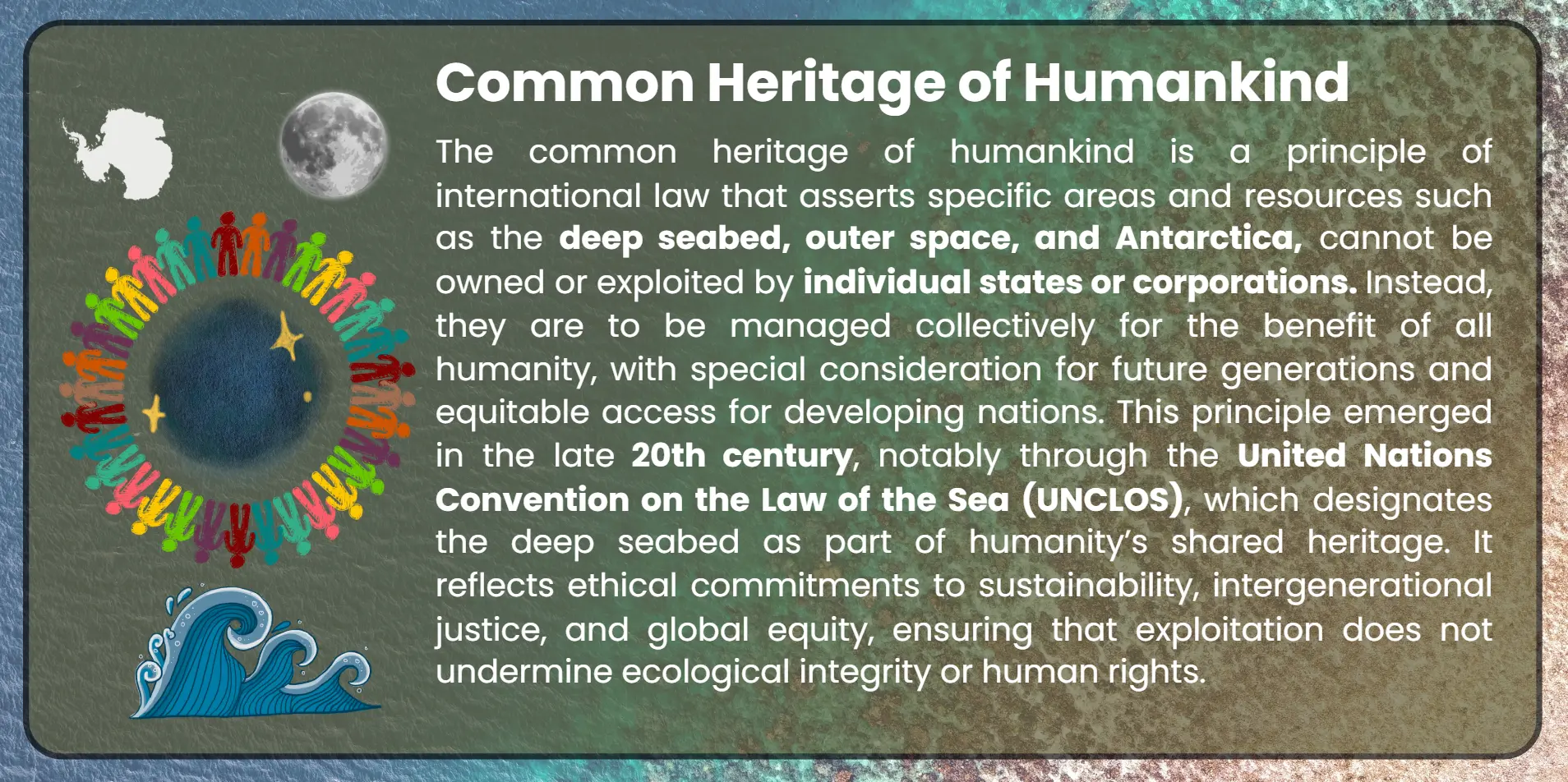
These ecological dangers are increased by the absence of stringent global governance. The lack of sound governance frameworks encourages corporate exploitation of deep-sea resources with the least accountability, where the organisation of the ocean as the common heritage of humankind is undermined. The lack of sufficient governance raises the question of ethics in terms of intergenerational equity because irreversible ecological damage is a violation of the rights of future generations to enjoy intact marine ecosystems.
A Global Responsibility
The risks that present the deep-sea mining go beyond marine biodiversity and scope to other aspects, such as climate stability, food security, and human well-being. These problems require moratoriums and more forceful governance and capitalization to address these issues by the use of alternative solutions that are sustainable, like recycling and circular economies. Conserving the health of oceans cannot be separated from the future of humanity.
Ethics, Governance and Alternatives
Corporate deep-sea mining comes in with huge challenges based on ethical considerations, deficiencies in its governance, as well as challenges of sustainability, and thus the need to swiftly globally deliberate on how to balance economic gain against ecological stewardship and equity across various generations.
Ethical Aspects of Exploiting the Oceans
The deep ocean is often designated as the common heritage of humanity; however, commercial mining is on the way to making it a training ground for corporate intrusions. The issue that is raised by ethical discourse is whether humans have the prerogative to cause irreparable damage to the largely unexplored ecosystems. The destruction of rare species and habitats raises ethical questions about the loss of biodiversity, as well as the need for modern societies to preserve natural heritage to pass it on to future generations. Scholars have argued that making a profit out of ecological sustainability is unjust and unsustainable.
Governance Issues and Regulatory Problems
To a great extent, deep-sea mining is controlled by the International Seabed Authority (ISA). However, observers declare that the current regulatory regimes are wanting, with the lack of openness and the absence of environmental protection. Many states and companies take advantage of such loopholes to further develop mining projects without carrying out extensive environmental analyses. The lack of any binding international laws creates the absence of governance, which allows short-term economic activities to override long-term planetary health. Therefore, it is impossible to strengthen international jurisprudence and establish strict accountability systems to prevent irreparable damage.
Alternatives
There are alternatives to seabed exploitation that can be made sustainable to reduce the dependence on the seabed. Electronic waste recycling and urban mining can significantly reduce the need to make new extractions as recovery of the key minerals becomes possible. Material science innovations also offer effective alternatives to rare metals, and hence reduce dependence on deep-sea sources. Furthermore, the implementation of the circular economy leads to greater efficiency of resources in terms of balancing economic growth with preserving the environment. The above options set out a general picture that technological advancement does not need to be environmentally harmful.
Being Good Stewards
The deep-sea mining concept and the ethical, governance, and sustainability issues arising indicate a pressing need for cautious moratoria and more international cooperation. Marine ecosystem conservation has not only been proven as a moral duty but also a critical requirement for climate tolerance and human prosperity. By implementing recycling, innovation, and circular economies, humanity will be able to ensure the necessary resources and, at the same time, maintain the integrity of the final frontier of the planet.
Conclusion
Through commercial deep-sea mining, the ongoing conflict between economic dreams and environmental conservation is a good example of the contradictory nature of the two. Though the mining of essential resources may bring a lot of technological development, the behaviour also has an irreversible effect on the sensitive marine ecosystems, the cycle of carbon sequestration, and the stability of the world's food resources is directly threatened by the activity. These dangers are also intensified by the lack of effective governance frameworks and a lack of unanswered ethical dilemmas, which compel people to think about intergenerational justice. Marine health protection can thus not be separated from human existence. Sustainable innovation, recycling, and a constant focus on the cycle are possible only with a cautious moratorium, which will provide an effective path. Finally, caring about the deep ocean is not only an ethical but also a practical task for the well-being of humanity.