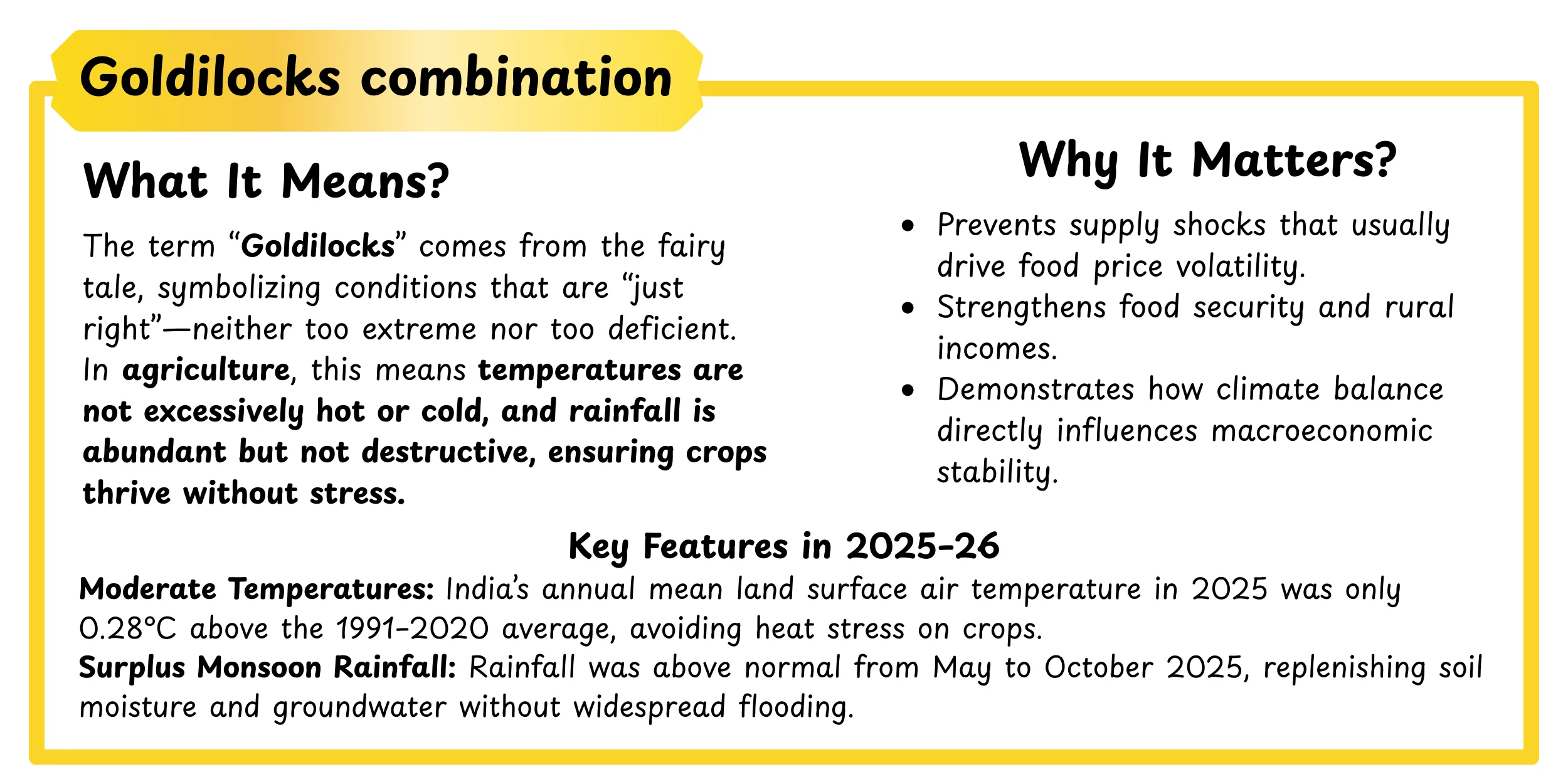
Food inflation in India has shown recent stability, even deflation in late 2025, due to strong harvests from good monsoons and improved agricultural practices, bringing relief after earlier volatility, though volatile items like vegetables and pulses still cause fluctuations, with projections for moderate increases in 2026 as stocks remain high. The year 2025-26has received a testimony of impressive crop harvest furnished by the combination of moderate temperatures and surplus of monsoon rain- a situation that has never been seen beforeand has been pointed out as a Goldilocks combination.
|
Key highlights
- Stable Food Inflation
- Higher Food-Gains Production
- Climate favouring low inflation
- Food Inflation Trend in India
- Policy and Market Support
- Challenges Ahead
|
During this agricultural year, climatic variables integration is in sync with agronomic ideals, which promote the best crop growth. Moderate temperature has been matched with the presence of monsoon rains in abundant supply, resulting in productive photo-thermal and hydric environments, which have provided massive yields in the form of cereals, pulses, and oilseeds. The ensuing increase in production has increased food security, as well as playing a role in consumer prices stabilisation, which has maintained food inflation in the lowest levels since historical times. The case highlights the very important interdependence of climate variability and economic results, and how a steady environmental situation can be used as a natural stabiliser to agricultural productivity as well as macroeconomic performance.
Climate Factors: Stabilising Food Inflation in India
Some of the important climatic inputs are consistent temperature regimes and surplus monsoon precipitation. With the average yearly mean air temperature of the land-surface only 0.28˚C above the baseline of 1991-20 average, heat stress in control, and grain-filling duration remains prolonged, which further boosts cereals and pulses yield. Along with this, monsoon rainfall during the months of May to October was higher than usual, replenishing the soil water and groundwater. This surplus rainfall decreased dependency on irrigation, especially in rain-fed regions, and lowered the risk of drought and eliminated massive flooding. A combination of all these climatic conditions led to bumper harvests, food prices and availability stabilised, and the core inflation rate of food remained low historically, showing how climate moderation acts as a natural stabiliser in environmental and economic resilience.
Bumper Production Reducing Inflation
The harvest year2025-26 is characterised by unusual productivity of crops, due to a Goldilocks combination of average temperature and surplus monsoon rainfall. The synergy between the two has changed the production patterns and stabilised food markets.
Record Production of Food-grains
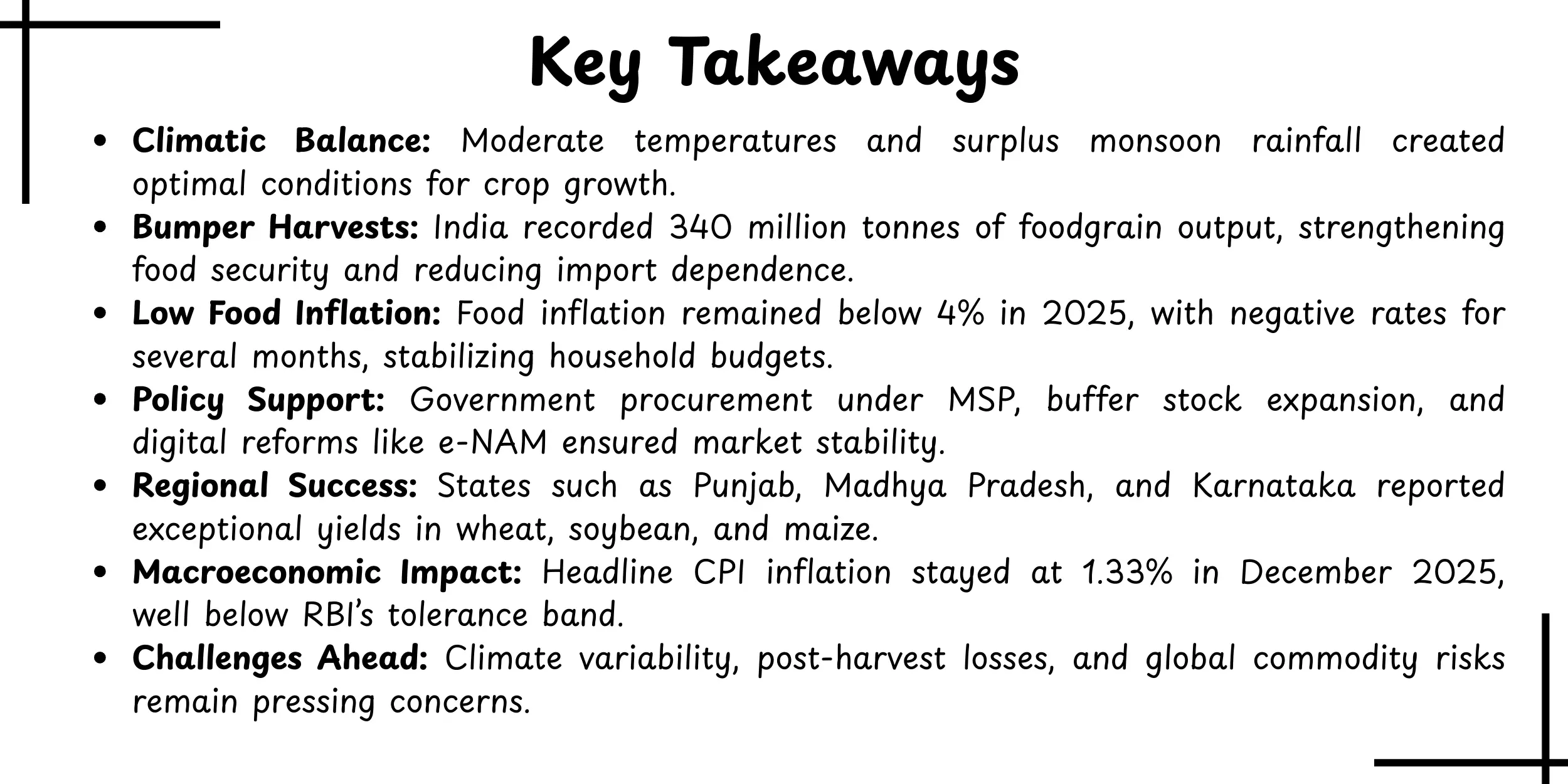
In 2025-26, a total of 340 million tonnes of food-grains were produced in India, which was even higher than the previous estimates. Rice and wheat were the advantageous cereals as they had longer grain-filling periods, whereas pulses and oilseeds had more acreage due to favourable moisture in the soils. This excess enhanced the food security of the nation and reduced dependence on imports.
Regional food-grain production
Such states as Punjab, Madhya Pradesh and Karnataka recorded unprecedented harvests in wheat, soybean and maize, respectively. Due to surplus rainfall, the traditional drought-prone rain-fed regions saw better productivity. Indian agriculture is resilient to both climatic conditions, as evidenced by such diversity on a regional scale.
Surplus Food-grains leading to Higher Incomes
This bumper harvest has resulted in a rise in procurement prices under the Minimum Support Price (MSP) system, which has granted incomes of the farmers at stable levels. Excessive production also created the prospects of exports, especially in rice and oilseeds, hence incorporating the rural producers in the international markets.
Inflationary Stability
The surplus supply had a direct influence on low food inflation levels, with the year 2025 in the single digits (below 4%) being compared to higher levels of being in the double digits observed previously. This phenomenon underscores the importance of the link between the climate balance, crop surplus, and the macroeconomic stability of the population.
Food Inflation Trend in India
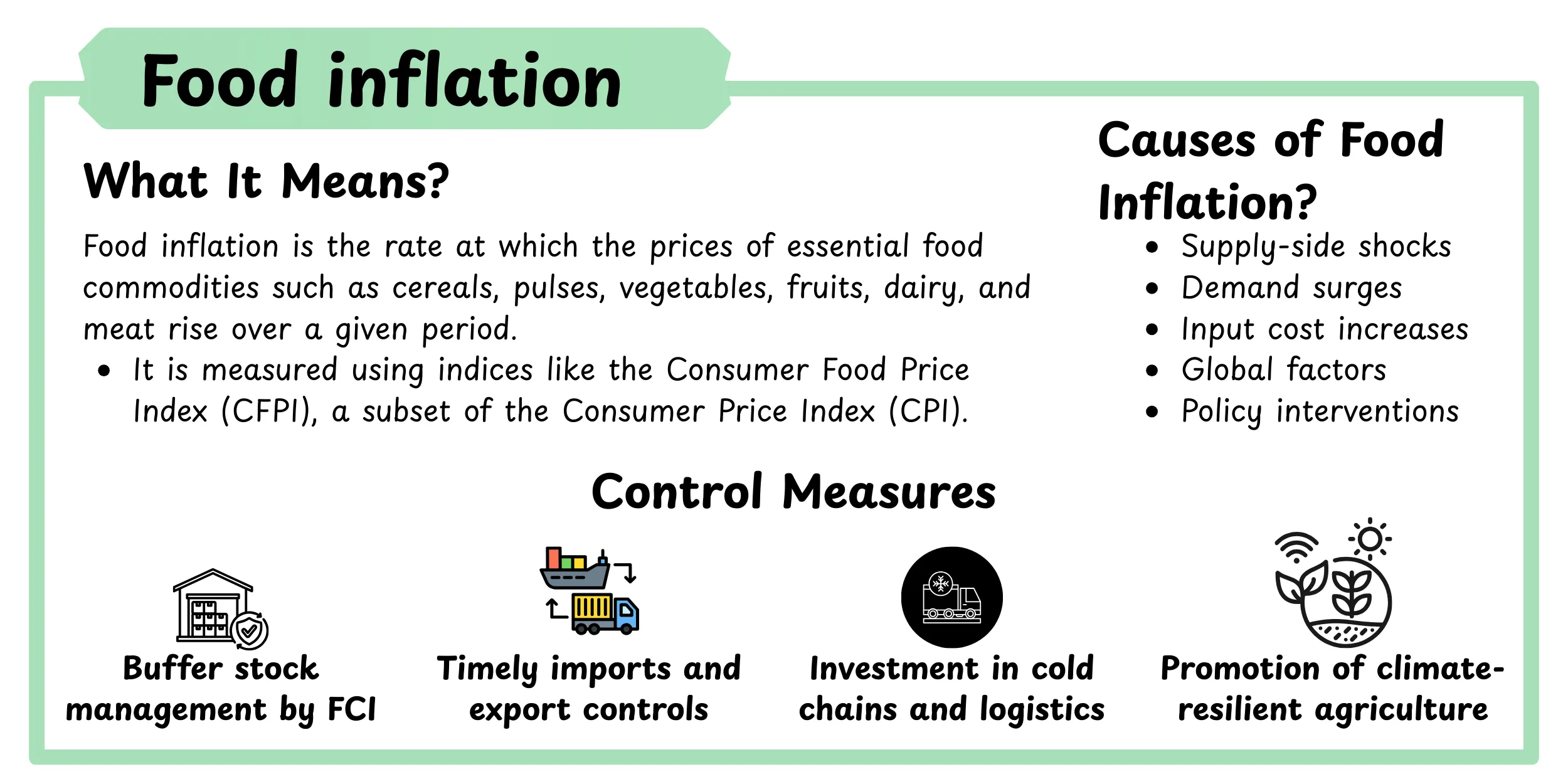
In India, the state of food inflation in 2025-26 has been exceptional since it is usually very high, to a large extent, because of the moderate temperatures and surplus rainfall during the monsoon. This has been a climatic balance that has guaranteed bumper harvests and stable consumer prices.
Food Inflation Stability
The resulting impact of the bumper crop year has been low inflation in food, falling at less than 4 percent around 2025, as opposed to spikes in the figures in the previous years of over ten percent. As per the National Statistics Office (NSO), food inflation stood at a negative value in seven months, with an average of -2.71 percent registered in December 2025, a significant improvement compared to the rate of -3.91 percent in November the same year.
Climatic Factors Reducing Food Inflation
Moderate temperatures and surplus rainfall prevented supply shocks, which normally cause price fluctuation. In contrast to the hot summer of 2024, which was the hottest year compared to 1901, 2025 had registered a 0.28˚C above the long-term average, guaranteeing crop resistance and high yields. This weather kept the import reliance down and smoothed supply chains in the nation.
General Food Inflation Trends
Headline Consumer Price Index (CPI) inflation increased slightly to 1.33 percent in December 2025, and this is still far below the tolerance range of 2-6 percent. The subdued food inflation cushioned the households against cost-push inflation, which also played a role in the stability of the macro-economy.Based on recent reports and analysis the Consumer Price Index (CPI) based headline inflation in India has experienced a significant, sustained decline, reaching multi-year lows by the end of 2025.
Controlling Inflation: Policy and Market Support
Divergent policy and market support have been crucial in influencing agricultural gains of 2025-26 to food price stability and provision of increased farmer welfare. These indicators reflect the mutual complementation between the system of government, the mechanisms of the market, and weather consequences.
MSP Lowering Inflation
Minimum Support Price (MSP) procurement for remarkable harvest ensured the purchases of wheat and rice, and the Food Corporation of India (FCI) registered some of the biggest purchases of the food-grains in the country. By the end of 2025, buffer stocks had crossed 60 million tonnes, thus providing buffers to the supply and averting the effects of speculative price hikes.
Reducing Food-gains Wastage
The post-harvest losses were mitigated by increasing the cold storage space and enhancing the logistics networks. The Ministry of Agriculture claimed that post-harvest wastage decreased by almost 12% in 2025 because of the expansion of warehouse facilities and the implementation of digital platforms where crops are sold. These actions helped the effective supply of excess production to the people, hence reducing inflationary activities.
Policy Innovations to Control Food Inflation
National Agricultural Market (e-NAM) has facilitated transparent price discovery by incorporating more than 1,200 mandis in the country. The introduction of exports of excess rice and oil seeds has made it possible to enter the global market, stabilized domestic prices, and increased the income of farmers. Additionally, tax incentives and credit that NABARD facilitates have strengthened the involvement of the private sector.
Food-grain Production Challenges Ahead
Although the agricultural results are impressive in the year 2025-26, there are a number of issues that pose a threat to the sustainability of the so-called Goldilocks combination and its stabilizing effect on food inflation.
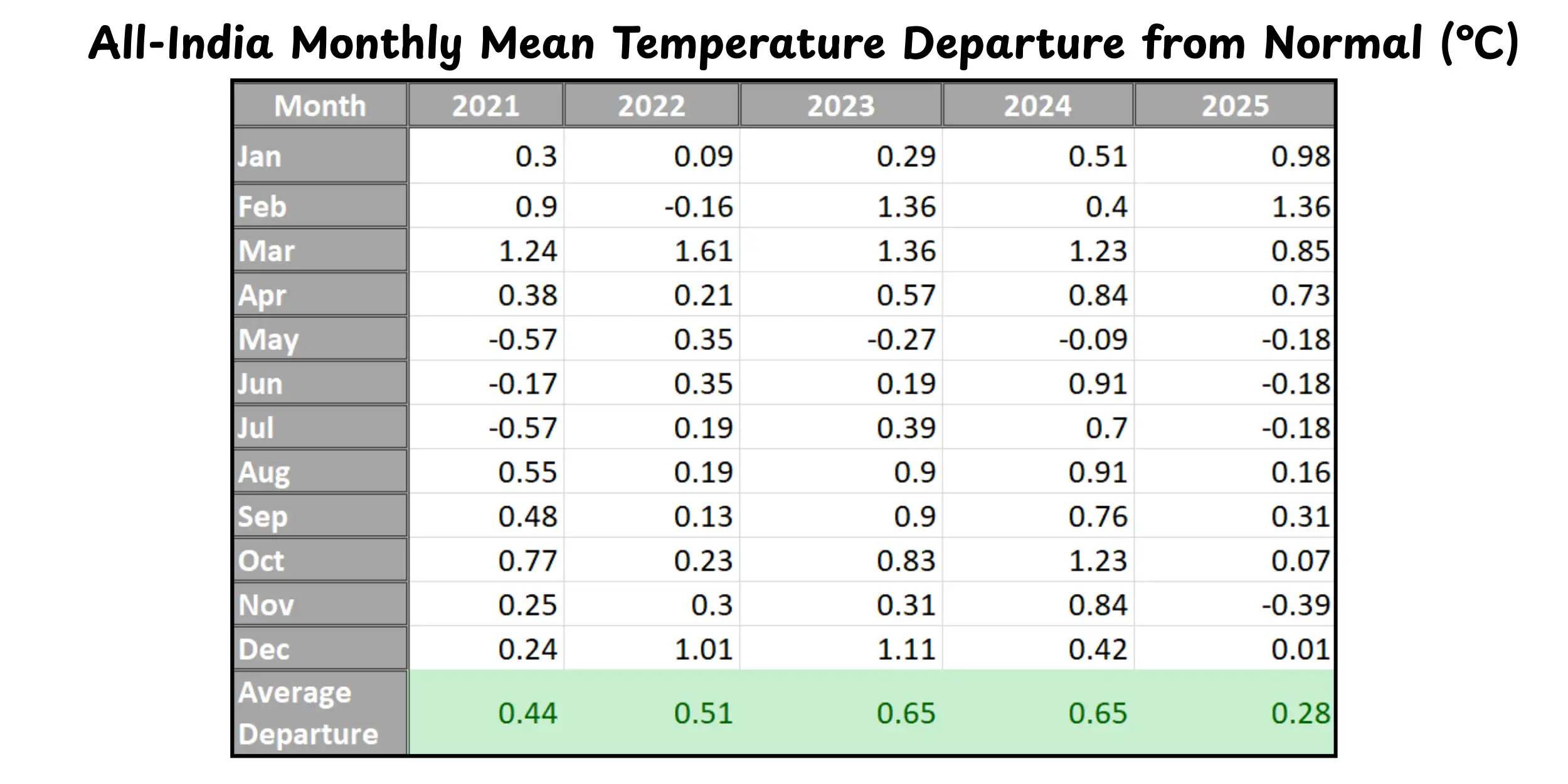
- Even though 2025 temperatures were moderate with above average precipitation, climate scientists anticipate that the average temperature in India has already risen by 0.7˚C during the period between 1901 and 2020, with more heatwaves and erratic monsoons expected to happen.
- Even after harvesting, losses are minimised, but nearly 10 percent of the food-grain production is lost after harvesting, as per the Ministry of Agriculture.
- Poor cold storage systems, lack of unified supply channels, and differences in irrigation across geographical regions remain challenges that pose a serious hindrance to resiliency in the long-term.
- International price fluctuation of goods and exports may pose a threat to farmers' earnings. Besides, a low inflation level also requires further assistance with the policies in procurement, logistics, and diversification, as well as climate-adjusting practices.
Conclusion
To conclude, the agricultural year 2025-26, the moderate temperatures and surplus amount of monsoon rainfall have stabilised production and prices in India. The resultant bumper harvests strengthened food security, boosted rural income, and ensured low food inflation levels. With policy interventions and the market infrastructure, such synergy highlights the importance of a close association between the climatic equilibrium and the economic resilience, which provides salient insights into the sustainable agricultural planning and inflation control in the future.
Frequently asked questionsFrequently asked questions
Climate Factors: Stabilising Food Inflation in India?
Some of the important climatic inputs are consistent temperature regimes and surplus monsoon precipitation. With the average yearly mean air temperature of the land-surface only 0.28˚C above the baseline of 1991-20 average, heat stress in control, and grain-filling duration remains prolonged, which further boosts cereals and pulses yield. Along with this, monsoon rainfall during the months of May to October was higher than usual, replenishing the soil water and groundwater. This surplus rainfall decreased dependency on irrigation, especially in rain-fed regions, and lowered the risk of drought and eliminated massive flooding. A combination of all these climatic conditions led to bumper harvests, food prices and availability stabilised, and the core inflation rate of food remained low historically, showing how climate moderation acts as a natural stabiliser in environmental and economic resilience.
Bumper Production Reducing Inflation?
The harvest year2025-26 is characterised by unusual productivity of crops, due to a Goldilocks combination of average temperature and surplus monsoon rainfall. The synergy between the two has changed the production patterns and stabilised food markets.
Food Inflation Trend in India?
In India, the state of food inflation in 2025-26 has been exceptional since it is usually very high, to a large extent, because of the moderate temperatures and surplus rainfall during the monsoon. This has been a climatic balance that has guaranteed bumper harvests and stable consumer prices.
Controlling Inflation: Policy and Market Support?
Divergent policy and market support have been crucial in influencing agricultural gains of 2025-26 to food price stability and provision of increased farmer welfare. These indicators reflect the mutual complementation between the system of government, the mechanisms of the market, and weather consequences.
Food-grain Production Challenges Ahead?
Although the agricultural results are impressive in the year 2025-26, there are a number of issues that pose a threat to the sustainability of the so-called Goldilocks combination and its stabilizing effect on food inflation.