|
Key highlights
- Plastic Pollution Urgency
- International treaty restrictions
- National‑level action
- The regional and local interventions
- Science and innovation
|
Plastic pollution is growing at a pace that is faster than world treaty talks can respond. Scientists thus argue that there is a need to intervene at the national, regional, and local levels instantly by governments, Since this could be in the form of bans, Setting up recycling facilities, technological development, and mobilization of the populace. Waiting for a new global plastics treaty can result in a disaster thus, Immediate policies, community-based efforts and scientifically proven policies and solutions should be implemented now to curb the crisis and prevent harm to the ecosystems and human life.
|
Tips for Aspirants
The article is relevant to the exams of the UPSC CSE and State PSC since it will help in increasing the understanding of environmental regulation, sustainable policy-making, and global-local relationships, which are some of the major themes in General Studies and essay writing.
|
|
Relevant Suggestions for UPSC and State PCS Exam
- Plastic pollution urgency: The problem of microplastic contamination of the environment, food chains, and the human body is becoming increasingly serious; delay worsens irreversible damage.
- International treaty restrictions: Multilateral negotiations are slow; waiting is dangerous to the ecological and economic stability.
- National‑level action:
- Laws against single-use plastic.
- Producer Responsibility Schemes (PRS).
- Investment in waste separation and recycling.
- On-awareness activities to induce behaviour change.
- The regional and local interventions:
- Waste segregation at the municipality.
- Transnational cooperation of common ecosystems.
- Locally-sponsored programs like Haritha Karma Sena in Kerala.
- Local innovation in favour of biodegradables.
- Science and innovation: Evidence-based policy, biodegradable, chemical-recycling, and a model for the circular-economy.
- Public mobilisation: Principle movements by the people, cleaning by people, and education lead to accountability and sustainability.
- Important for GS Paper III (Environment), essay writing, and Ethics (responsibility in government).
|
Plastic pollution has been noted as one of the most pressing environmental issues of the twenty-first century, which presents unimaginably dangerous impacts on the ecosystem, biodiversity, and even human health. Despite the global recognition of this crisis, talks over the creation of a Global Plastics Treaty continue to drag on, a fact that suggests the complexity of what multilateral politics is all about, as well as the diversity of national interests. Although the final agreement could offer a single approach to the issue of plastic waste, the time-scale of the negotiations is not fit to address the instant nature of the issue. Every year, millions of tonnes of plastic are discharged into the land and water, where they last centuries, break up into microplastics, and penetrate food chains, water systems, and even the human body. An accumulated scientific and policy literature also states that governments cannot wait until a global consensus is reached to take action. Immediate solutions to the crisis are national, regional, and local interventions that include legislative prohibitions of single-use plastic, building recycling infrastructure, and community-based efforts. Also, innovation in the field of science and public mobilization will help make the shift to sustainable alternatives and circular economies faster. This article argues that multi-tiered solutions are necessary to reduce plastic pollution and points to the fact that the delay because of a supposed treaty is dangerous since it can cause irreversible ecological and social consequences.
The Emergence of the Plastics Crisis
The plastics crisis is one of the most urgent environmental issues modern society faces, which should be immediately addressed by scholars and policymakers. The level of pollution goes beyond governance systems, thus threatening the ecosystems, economies, and human health at an alarming rate. Scientists are issuing urgent warnings that delays in tackling the plastic crisis are disastrous, as pollution accelerates, impacting health, ecosystems, and climate, urging immediate national/local action even as global treaty negotiations stall.
Increasing Scale of Plastic Pollution
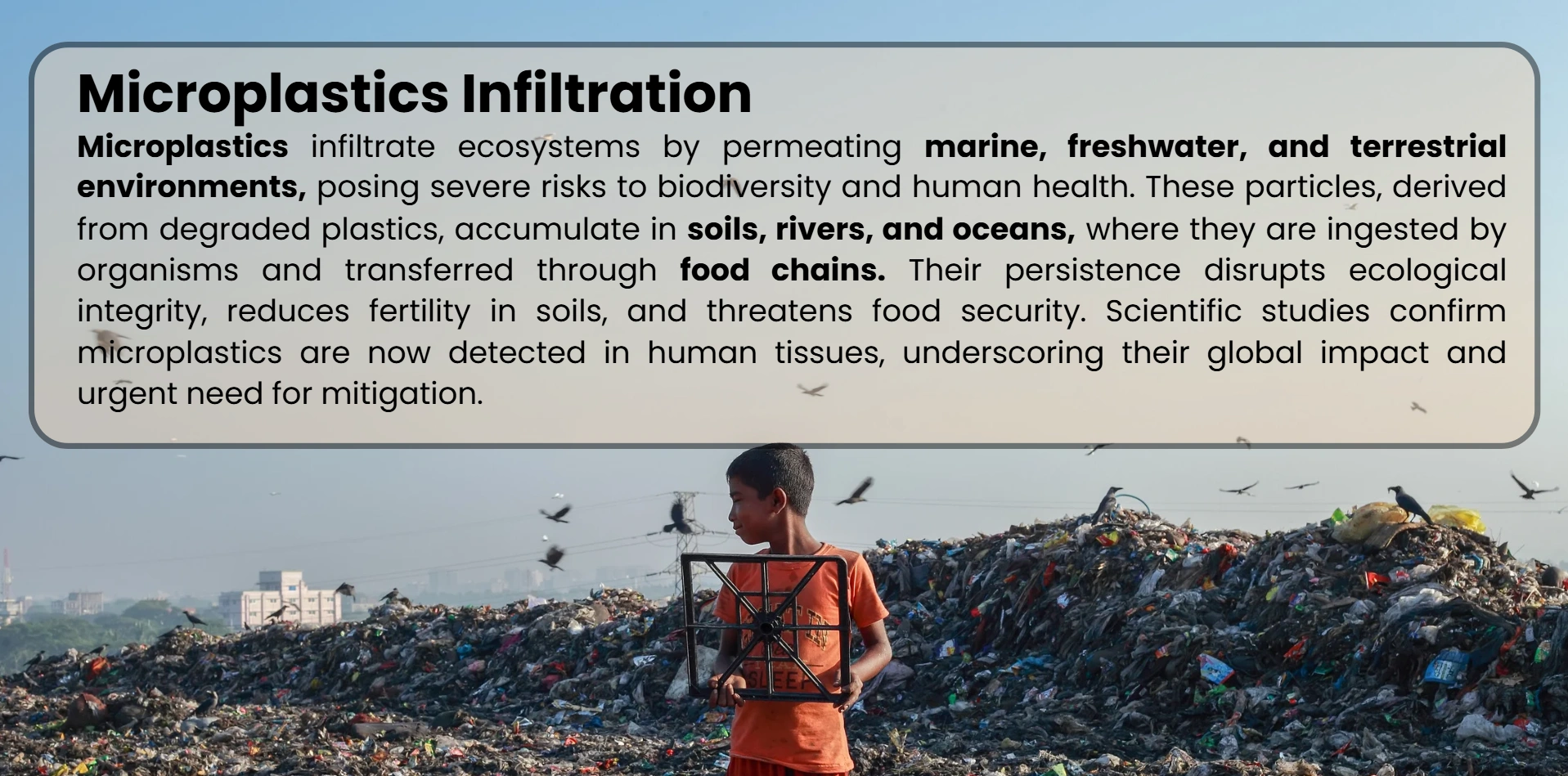
According to evaluations, there has been an alarming rate of increase in plastic pollution, and the world's forecasts of waste production will exceed the management abilities by the year 2025. Plastics have their persistence that stretches through centuries and breaks into microplastics that infiltrate the soil, rivers, and oceans. The particles are observed in the trophic chains as well as in human circulatory systems, which exacerbates the irreversible character of the contamination. The 2025 report by the Pew Charitable Trusts, “Breaking the Plastic Wave”, emphasises how the scale of the crisis is far greater than it has been previously estimated, and which has inexhaustible implications on biodiversity and human well-being.
Environment and Health
Plastic pollution has a complex effect on the ecological systems. Marine life suffers entanglement and disruption in habitat, and the terrestrial ecosystems are affected by the loss of soil fertility and degradation. Another side of the human health risk is equally affecting; exposure to microplastics and the chemical additives related to them has been linked to respiratory, endocrine, and developmental illnesses. These health outcomes, together with the degradation of the environment, highlight the need to enact interventions promptly, as opposed to the delayed treaty-based measures.
Global Negotiations
Even though a Global Plastics Treaty has its opportunities in long-term alignment, the progress of multilateral talks has been very slow and is often slowed by geopolitical and economic conflicts. Scientists have cautioned that the need to wait until a consensus is reached might be a worsened situation because plastic production is experiencing an upsurge yearly. The urgency of the problem is explained by the very idea of Plastic Overshoot Day, which is also referred to as the point in time when the amount of plastic disposed of surpasses the power of current trash disposal mechanisms. The slowness of international response is directly related to the increasing environmental degradation of the planet and the debts of future generations.
Immediate Action
Strong actions should be taken by the national, regional, and local governments to reduce plastic pollution. The main tools to curb the issue are legislative bans on single-use plastics, more funding for recycling facilities, and biodegradable alternatives. The shift to circular economies could be stimulated with the help of grassroots movements, regional co-operation, and science.
National-Level Action
The state response to plastic pollution is necessary on a national scale; the governments have the resources and the legislative, financial, and institutional power to initiate systemic changes that would quickly reduce the production and improper disposal of plastic.
Law and Regulatory Policies
Governments have been instrumental in the formation of binding policies that limit the production and usage of single-use plastics. Jurisdictional restrictions on lightweight plastic bags, straws, and packaging items have been seen to be effective in reducing litter and promoting alternatives. An example is the Plastic Waste Management Rules of India and their subsequent amendments, which have been gradually increasing the restrictions towards single-use plastics, requiring the manufactures to be responsible and better segregate waste. These frameworks show how national laws can provide enforceable standards that reduce economic activity to the standards of environmental sustainability.
Producer Responsibility
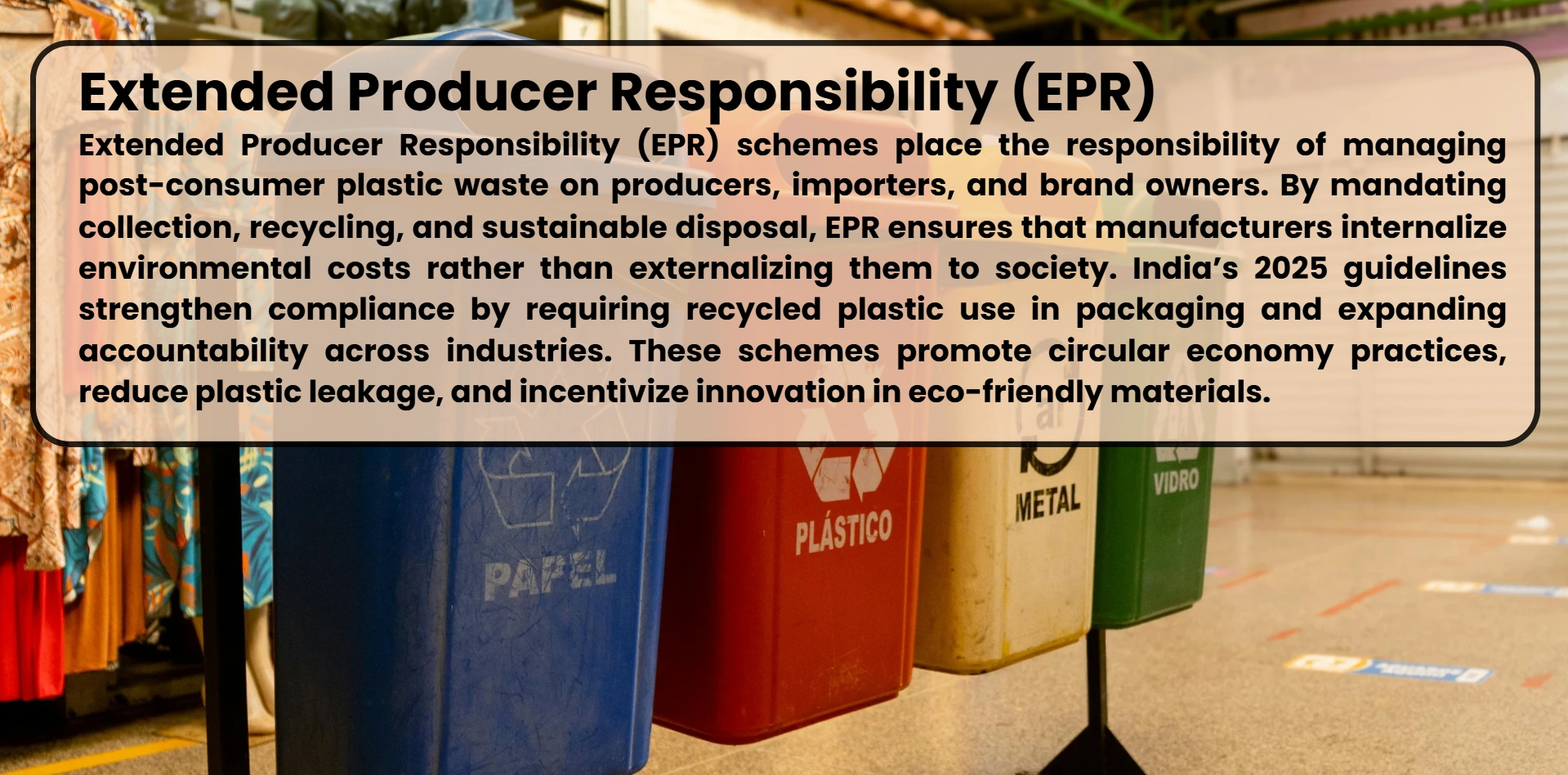
In addition to the prohibitive actions, governments of the countries should use fiscal tools to transform the dynamics within the market. Extended Producer Responsibility (EPR) schemes compel manufacturers to control after-sales waste, thereby internalizing environmental costs. The biodegradable substitutes can be fostered through subsidies, and the recycling industries can be encouraged by taxes, which can stimulate the introduction of new solutions and appropriate sustainability. The case of One Nation, One Mission -End Plastic Pollution campaign in India shows that national-level programmes can help bring together industry, civil society and research institutions to promote scalable eco-alternatives.
Waste Management Systems
Missing proper national infrastructure to collect, segregate, as well as recycling plastics is a key challenge in effective plastic reduction. The governments should invest in more up-to-date systems of waste management, and such accessible mechanisms to dispose of waste have to be available in the cities and in the countryside. On the national level, it is necessary to coordinate the recycling practices, reduce the leakages, and facilitate models of the circular economy. Another example of the role of nationwide awareness and infrastructural development in regard to the management of plastic waste in a sustainable manner is the End Plastic Pollution campaign by India.
Awareness and National Mobilisation
Education and advocacy are other means through which governments, at the national level, influence the discourse about a topic. Massive campaigns have the potential to mobilise citizens, schools, and industries to use sustainable practices. Governments, by integrating plastic cutback into national events like World Environment Day, can instil a sense of a whole-of-society, which integrates policy implementation with behavioural transformation. This type of initiative guarantees the fact that the national action goes beyond regulation and looks forward to transforming the culture and making sustainability a part of daily existence.
The Regional and Local Interventions
The local and regional interventions are essential in reducing the pollution of plastics since it helps in context-specific solutions, community engagement, and rapid measures to be taken, to supplement national and global efforts.
Garbage Segregation and Municipal Innovation
The cities are often the test grounds of new waste-management methods. Local governments can impose voluntary segregation of wastes at sources to ensure that plastics are segregated to be recycled or disposed of in a secure manner. Cities like Bengaluru and Pune in India have already shown that a system of waste-collection that was decentralized and supported by citizen involvement could significantly reduce the amount of plastic infiltration into the environment. Such localized measures highlight the importance of leading the municipalities in dealing with the crisis.
The International Co-operation
Plastic pollution has the tendency to cut across administrative borders, especially in common ecosystems like rivers, lakes, and coastal areas. Policies also need to be harmonized, and this can only be made possible by regional cooperation in the policies, as well as coordinating the clean-up operations. Efforts including the South Asian Cooperative Environment Programme (SACEP) have highlighted the need to work together with the neighbouring nations to deal with marine litter in the Bay of Bengal and the Arabian Sea. These regional programs can be used as an example of how the shared responsibility can be used to enhance resilience to plastic pollution.
Community-Based Campaigns
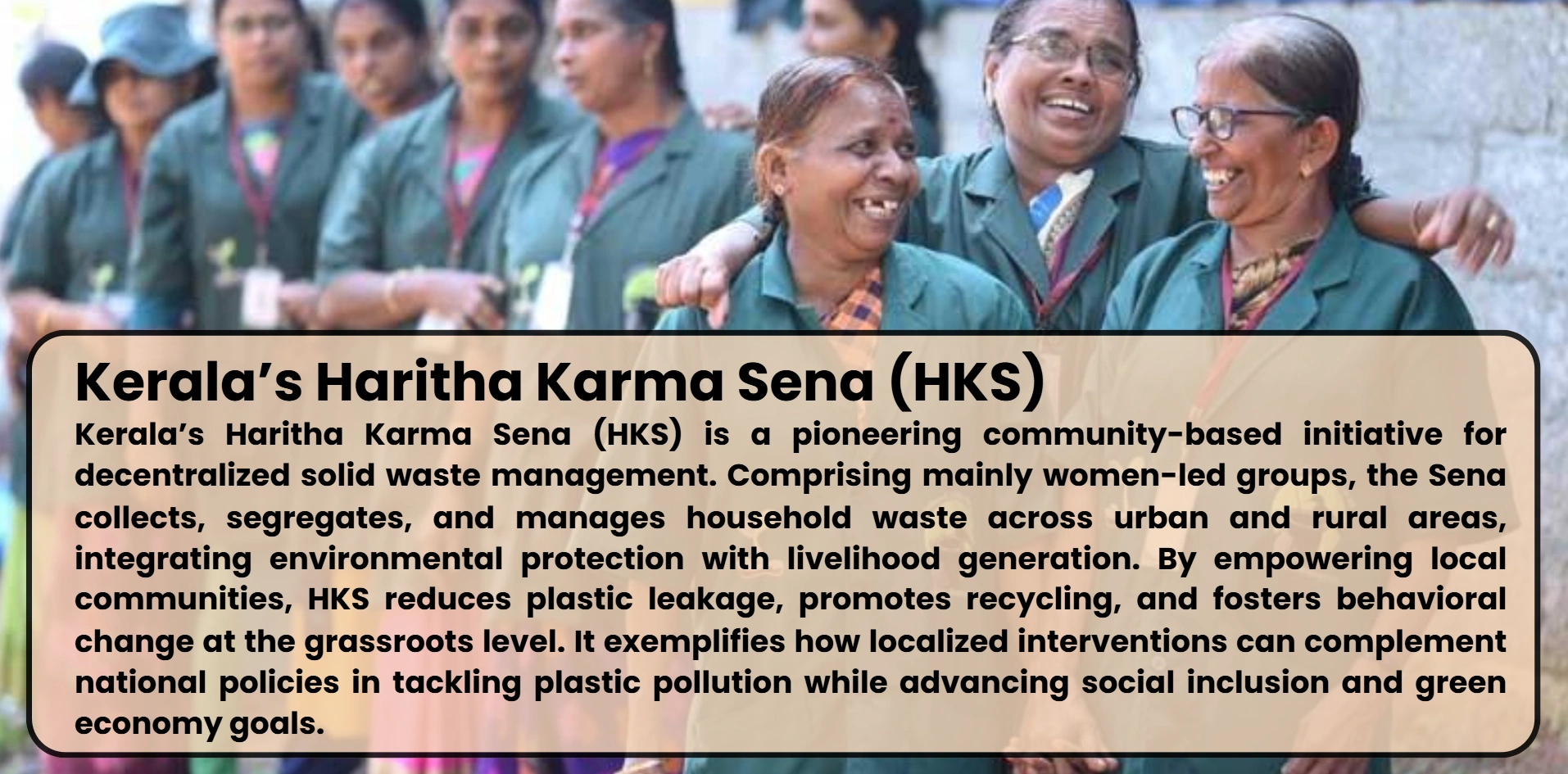
Communities become the most crucial when interventions at the local level are implemented. The neighbourhood clean-ups, school programs, and grassroots campaigns encourage behavioural change and bring up a responsible culture. As an example, Kerala Haritha Karma Sena organises women-led organizations to pick and treat household waste, combining social empowerment and environmental conservation. Such models of community-based interventions impress the ways in which the local involvement could be used to support the implementation of the policies and achieve sustainable results.
Local Innovation and Circular Economies
The local government can hasten the switch to the circular economy by enhancing small-scale industries and start-ups. Localized innovation in cities like Jaipur and Ahmedabad (which encourage compostable wrappings and plastic-free markets) can be used as an example of how local progress can be expanded into regional activities. The bottom-up strategy makes the interventions both culturally and economically feasible.
Science, Novelty, and Society
The main pillars of effective interventions in plastic pollution are science, innovation, and mobilisation to support evidence-based policymaking, technology, and social collective participation to change the world through a sustainable transformation.
Evidence-Based Policy and Scientific Research
Essential in identifying the extent and the effects of plastic pollution has always been scientific enquiry. Studies have proven microplastics are present in the marine environment, the soils of the terrestrial environment, and even the human circulatory system and hence the dire call to action. Plastic leakage pathways, ecological impact and health risks are quantitative data that are provided by research institutions to the governments and thus empower them to make policies that are based on empirical evidence. As an example, the United Nations Environment Programme (UNEP) has consistently argued that scientific evaluation is essential in designing national strategies that are consistent with the global sustainability goals.
Sustainable Alternatives and Technological Innovation
Innovation offers workable processes to reduce reliance on traditional plastics. Emerging technologies in biodegradable polymers, compostable packaging and chemical recycling can represent how science might help us shift towards circular economies. The use of resources in order to conduct research and make startups that use environmentally friendly materials encourages sustainable solutions to single-use plastics. The New Plastics Economy project by the Ellen MacArthur Foundation is an example of how innovation can remodel the production and consumption infrastructure, decreasing the environmental footprint in the process of economic viability.
Grassroots Engagement
The involvement of the population is also important when it comes to dealing with plastic pollution. Campaigning at the grassroots and educating, and other initiatives organised by citizens aimed at clean-up, help to change behaviours and create responsibility on the community level. The extent of mobilisation campaigns (including Break Free from Plastic) has been effective in pushing corporations and governments to implement much stricter policies regarding waste-management. Through sensitisation of education and civic culture, societies can develop permanent changes in the consumption trends and waste habits.
Trio
These interventions that combine scientific knowledge, technological advancement and citizen mobilisation work best. Governments should become facilitators using the results of the research in laws, in favour of innovation ecosystems, and give citizens a voice. Such synergy has made it possible to see that the reduction approach to plastic is not only technologically feasible but also socially inclusive and culturally resonant. The plastics crisis demands urgency, which requires such combined practices, when science educates, innovation revolutionises, and people mobilisation maintains the general activity. The "Trio" likely refers to a major report or scientific push connecting plastics to climate change, health impacts, and biodiversity loss, demanding action now. Climate change refers to long-term shifts in temperatures and weather patterns. Such shifts can be natural, due to changes in the sun's activity.
Conclusion
Plastic pollution is a complex crisis that cannot be delayed until the slow pace of treaty development in the world arena. New actions on the national, regional, and local levels are imperative in a bid to curb the mounting risks of ecological and health dangers. The program of legislation adjustment, creation of new infrastructure, scientific innovation, and mobilization of the population creates a holistic approach to a program of emergency intervention. Governments need to act as change agents by combining evidence-based measures with societal involvement to further speed up the process of adopting sustainable alternatives and circular economies. The call to action is clear: any further inaction waiting for the fate of a treaty on plastics on a global scale is a form of risk, but a determined multi-platform action offers ways to overcome and find a balance between the world and its substance.