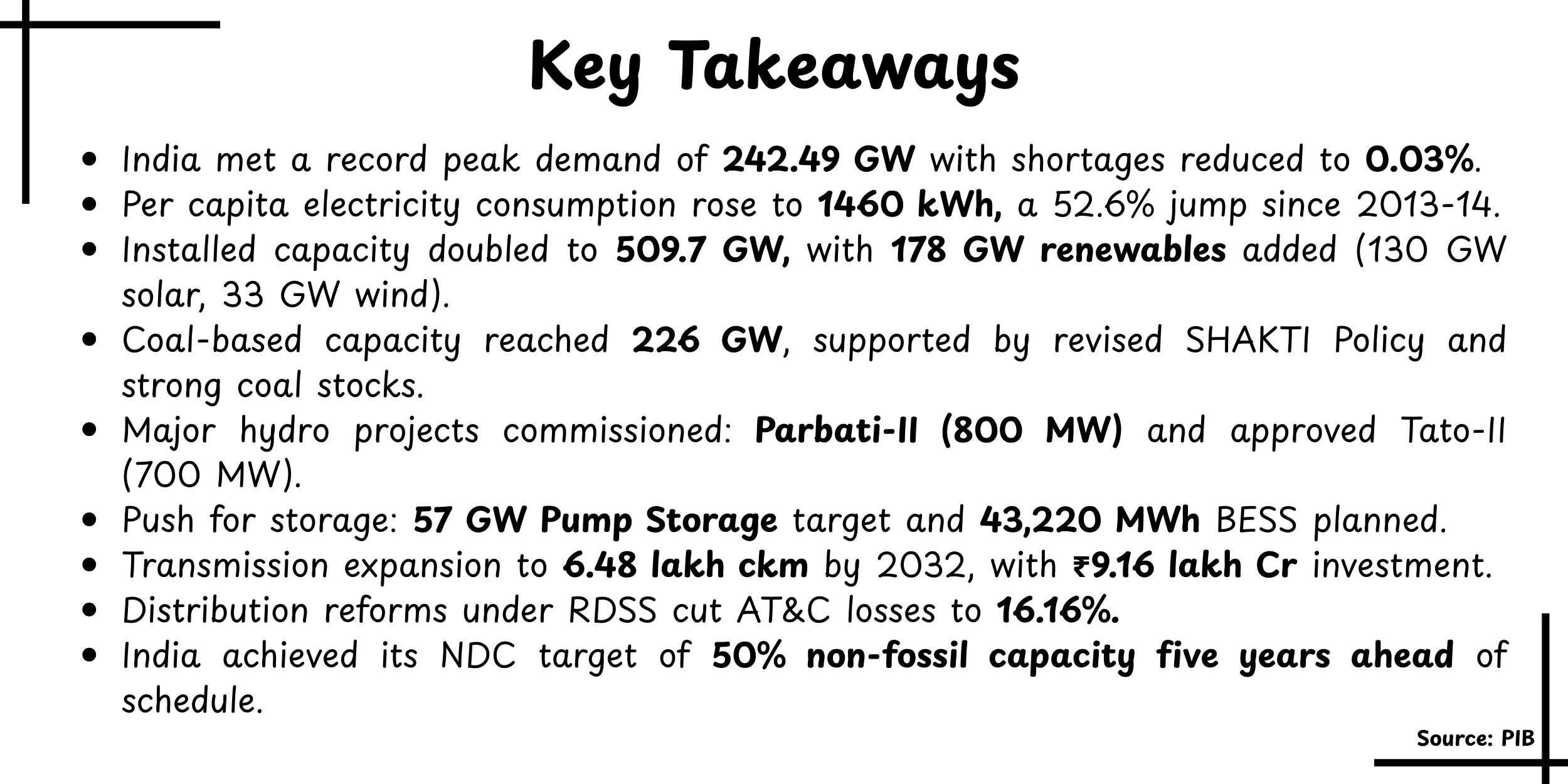
India has witnessed remarkable growth in its power sector, with total installed electricity generation capacity rising by 104.4%—from 249 GW on March 31, 2014, to 509.743 GW as of November 30, 2025. During January–November 2025 alone, an additional 55.57 GW of generation capacity was added. The 2025 Year-End Review published by the Ministry of Power in India has been widely discussed, as it has already proven its effectiveness: high electricity demand has been met, shortages have been reduced to the lowest levels in history, increasing renewable energy generation, improving transmission reform, and achieving clean-energy goals even faster. Together, these facts point towards the emergence of the pre-eminence of the Indian scene in the energy-related sphere globally.
|
Key highlights
- Year-End Review of Ministry of Power
- Achievements in Power Supply
- Growth in Power Generation
- Transmission Advances in the Power Sector
- Distribution Reforms in the Power Sector
- Energy Conservation in the Country and its Efficiency
- Policy & Reform Milestones in the Energy Sector
|
The Year-End Review by the Ministry of Power outlines a transformational period in the energy industry with historic demand fulfilment, an unprecedented reduction in power deficits, and a significant enhancement of renewable power. The report underscores the government’s commitment to provide reliable, cheaper, and sustainable electricity with all-inclusive reforms on generation, transmission, and distribution of the same.Some of the notable projects, such as solar and wind systems expansion, implementing sophisticated storage systems, and strengthening the national transmission grid, demonstrate the strategic intent of the Indian population on the energy security and climate aims, and this places India at the leading edge of the clean-energy revolution and the modernisation of its infrastructure.
Achievements in Power Supply
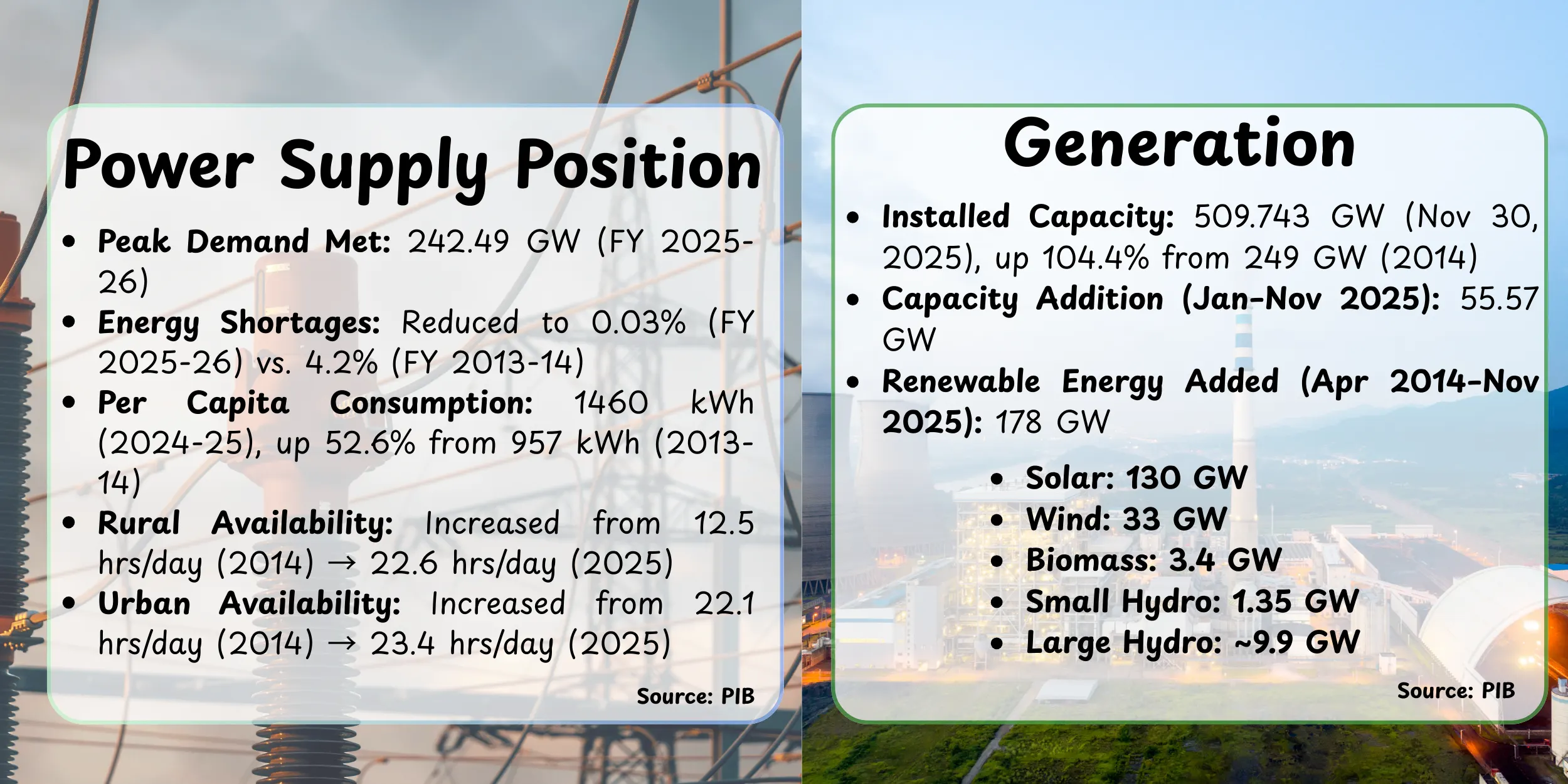
The power sector in India reported as being highly resilient and efficient during the fiscal year 2025, with the sector registering record milestones in satisfaction of demand, reliability, and accessibility. These achievements are the result of long-term concerns of governments related to energy security and socioeconomic development.
Record Demand fulfilment in the Power Sector
It was able to achieve a peak demand of 242.49GW, which is a record that testifies to the resilience of the generation and transmission network in the country. This has highlighted India's ability to stabilize the increasing consumption witha reliable supply.
Power shortages have been reduced
At the national level, energy shortages had dropped to an unprecedented 0.03% in FY 2025-26, a sharp decrease compared to 4.2% in 2013-14. This massive decrease is an increase in the capacity additions and operational efficiencies as a whole.
Rise in Per Capita Consumption of Power
Electricity consumption corresponded to 1460 kWh of electricity consumption in 2024-25 as compared to the previous decade (an increase of 52.6 percent). This increase is an indicator of increased accessibility, economic stability, and the quality of life of various areas.
Improvement in rural and urban power availability
There was asignificantprovision of electricity, with 22.6 hours in the rural locations and 23.4 hours in the city locations. The figures indicate that it has been improving at reducing regional differences and increasing energy resilience, both nationally.
Growthin Power Generation
The power sector in India saw a sharp increase in the generation capacity in the year 2025, which implies a balanced approach towards the renewable energy sources, the thermal project, and the innovative methods of storage. This development highlights the energy security and sustainability in the country.
Increase in Installed Generation Capacity
In addition to technical deficiency, institutional problems seem to be contributory factors. The rising rate of launches, combined with the commercial obligations undertaken by NewSpace India Ltd. through ISRO, could have been a burden on the resources and management. The negligence of 16 satellites, including the DRDO Anvesha and foreign payloads, clearly shows the dangers involved in putting schedules ahead of exhaustive testing. This accident implies that the project management and engineering controls should be reformed systemically in order to regain trust.
Renewable Energy Leadership
There was a significant contribution of renewable energy generation,and 178 GW has been added since 2014, 130 GW of solar and 33 GW of wind. The focus on clean energy places emphasis on the active attitude of India as part of global climate commitments.
Thermal Power Development
To remain economically robust, 13.32 GW of new coal-based capacity was awarded, and 7.21 GW had been commissioned in FY 2025-26. The stock management of coal strategies and the updated SHAKTI policy guaranteed the efficiency of operations and decreased reliance on imports.
Hydropower and StorageProjects
Given that projects like Parbati-II and Tato-II hydro plants and ambitious goals of pump-storage and battery-energy-storage indicate that India pays attention to the flexibility and resilience of the generation system, and can incorporate renewables and stabilise the grid.
Transmission Advances inthe Power Sector
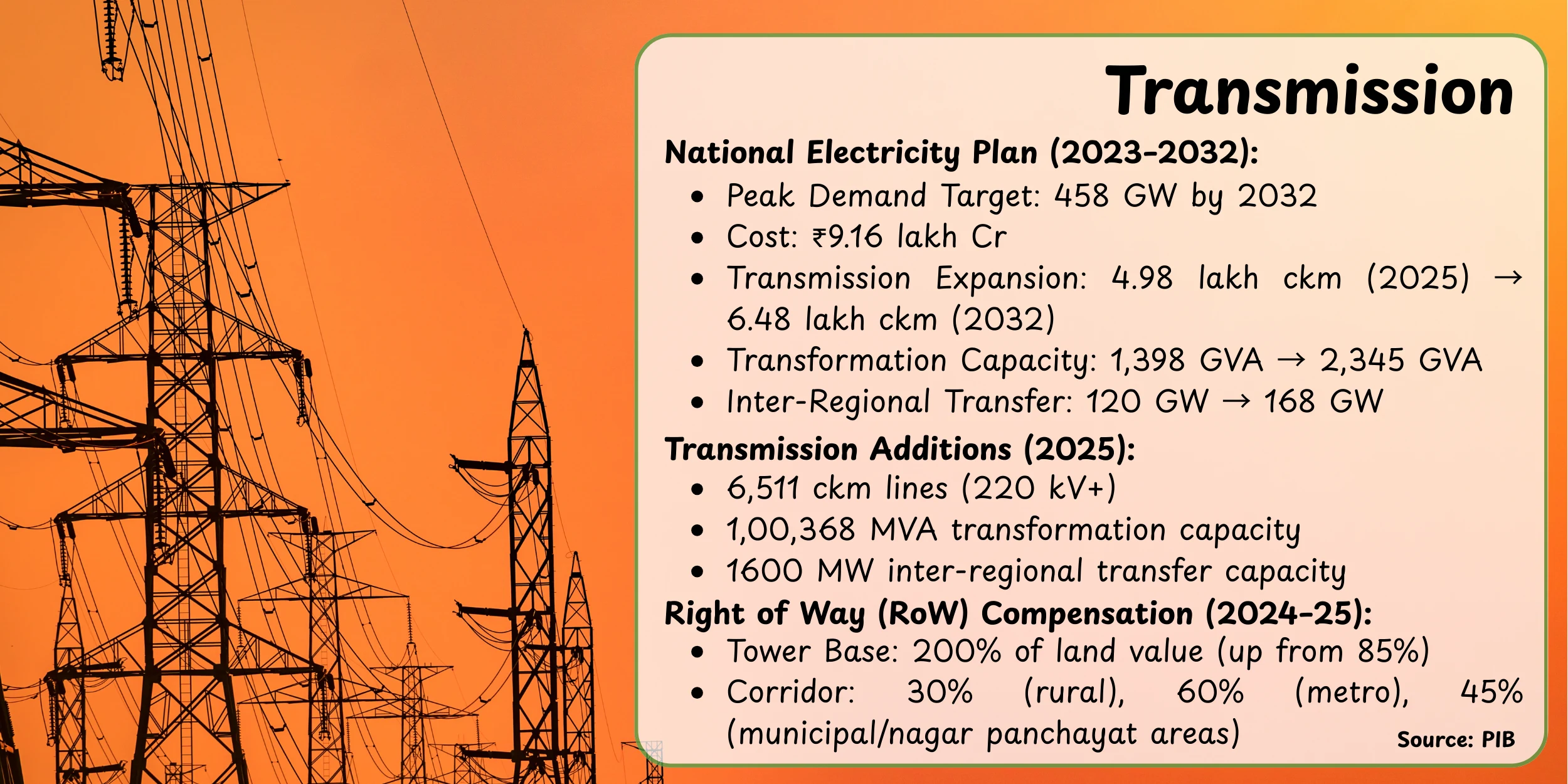
In the year 2025, the transmission sector went into a decisive stage of modernisation that ensured reliability of the grid, integration with renewables, and being future-ready. These developments highlight the strategic planning with an aim of addressing the increasing demand and sustainability targets.
Elaboration of the National Electricity Plan
The National Electricity Plan 2023-32 has an expansion plan of 6.48 lakh circuit kilometres and an increase in transformer capacity of 2345 GVA by 2032. This growth is expected to be able to serve a projected highest load of 458 GW.
Solar and Renewable Energy Integration
In order to promote a large-scale adoption of renewable energy, a 25.8 GW interstate transmission system was activated in 2025. The corresponding investment of INR 38,849 crore is necessary to expand the transmission system to have the ability to connect hundreds of energy sources, 280 GW of diversified renewable sources, to be interconnected by 2030.
System Expansion in 2025
In 2025, the network added 6,511km of full capacity transmission lines and a marginal increase in transformer rating of 100,368 MVA. This addition upgrades the ability of inter-regional transfer and ensures that the electric supply spreads more fairly in the geographically unequal areas.
Revamped Distribution Schemes in the Power Sector
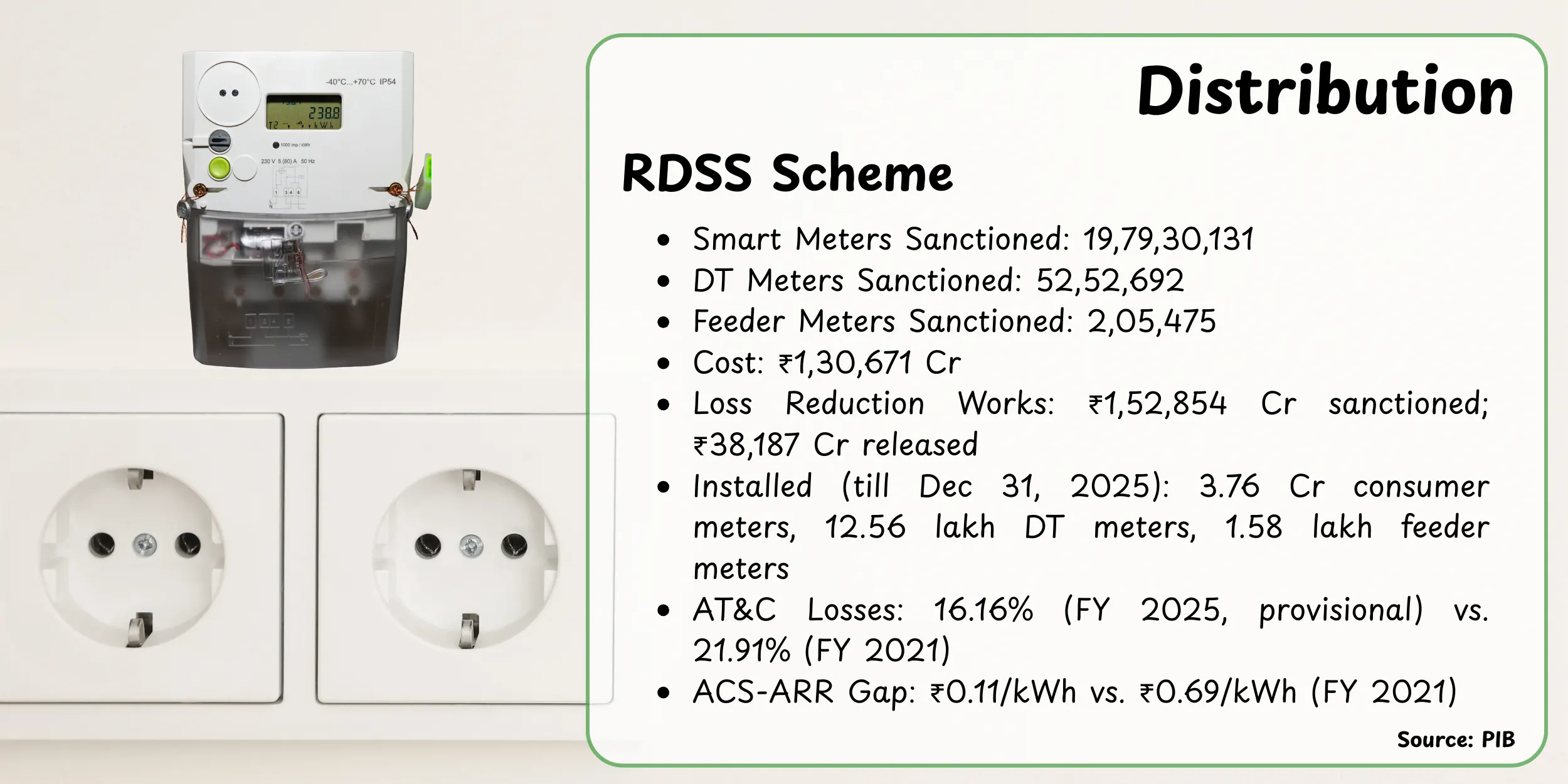
The Indian distribution sector also underwent significant reform in 2025 with the aim of adding greater efficiency to its operation and financial sustainability, as well as equitable access. These were a holistic plan to modernise the electricity transmission and distribution and strengthen consumer empowerment in the country.
Smart Metering and Efficiency Gains
Millions of prepaid smart meters, distribution transformer meters, and feeder meters were granted and placed under the Revamped Distribution Sector Scheme (RDSS). These interventions contributed to the enhancement of transparency, to the reduction of Aggregate Technical and Commercial (AT&C) losses to 16.16%, and to the decrease in the difference between the ACS and ARR, which made the distribution enterprises financially viable.
Electrification of households in the vulnerable Areas
Particular focus was placed on the provision of electricity to people who are marginalised. In the DA-JGUA scheme, on-grid connections were provided to identified households that constitute the Particularly Vulnerable Tribal Groups (PVTGs), dwelling in tribal settlements and Scheduled Caste families in the PM-AJAY scheme. This project enabled the inclusive growth and curbed the deep-rooted imbalances in the energy supply.
Implementation and Financial Support for the sector
Substantial Funds were sanctioned, with more thanINR 6,500 crore of which has been allocated to the electrification of households and the additional funds allocated to the loss-cutting measures. Such investments are representative of the governmental dedication to the creation of a strong system of distribution, which forms the basis of an inclusive supply and affordable energy provision.
Energy Efficiency in India: Challenges and Future Potential
India's energy efficiency faces challenges like low awareness, financing gaps, and regulatory enforcement issues, hindering progress despite massive potential in industries, buildings, and homes, but future potential is significant through government programs (PAT, S&L), technological adoption (smart grids, storage), and policy reforms, aiming to cut emissions and boost energy security as a fast-growing economy. The energy-saving and energy-efficient steps made in 2025 were an insightful move toward sustainable development, as the steps incorporated regulatory innovation, adoption of technology, and financial incentives to consolidate the national climate and energy promises.Energy conservation in countries like India involves major government initiatives (BEE, PAT scheme, CCTS) and public participation, focusing on industry, buildings, and appliances, leading to significant efficiency gains, reduced emissions, and economic savings, though challenges remain with rising demand.
Indian Carbon Market
The establishment of the Carbon Credit Trading Scheme created some form of a structured scheme that is friendly to the reduction of greenhouse gas emissions. There are obliged industries which have to meet emission-intensity targets, and there are voluntary participants who can register to get credits which will make the industries invest more in green technologies, and India will emerge as a leading player in the international carbon-fining market.
Standards and Expansion of Labelling
The Bureau of Energy Efficiency expanded under its Standards and Labelling programme to include 41 appliances and introduced new voluntary labels to the programme of electric-vehicle chargers and evaporative coolers. This project places the consumer in a position to make a wise choice, reducing the level of energy on both the business and the domestic level.
ADEETIE Scheme for MSMEs
The scheme Assistance in Deploying Energy Efficient Technology in Industries and Establishment (ADEETIE), launched with INR 1,000 crore outlay offers assistance to audit, counseling, and interest subsidy. The scheme includes 60 clusters in 14 sectors and allows increasing the competitiveness and incorporating the considerations of energy-efficiency into the Indian industrial ecosystem.
India's Power Sector Achieves Historic Milestones
In 2025, the Indian power industry also underwent some landmark policyreform measures that cemented financial discipline and the regulatory environment, as well as increasing the pace of changing the power sector to clean energy. All these measures enhanced reliability, helped to boost investor confidence, and enhanced sustainability along the electricity value chain.
Strengthening Financial Discipline of the Sector
Late Payment Surcharge Rules were adopted, which reduced the outstanding arrears beyond INR 1.39 lakh crore to as little as INR 8,005 crore. This reform improved the payment security, prompted settlements, and boosted the financial stability in the sector.
Regulatory Advancements
Electricity (Amendment) Rules, 2025 brought about the consumer-owned energy storage, which offered greater flexibility and eased the integration of renewable energy. This amendment was a step into the progressive process of decentralisation and the increased resiliency in the power system of India.
Hydro Project Revisions
There was a revision of capital expenditure limits on hydro projects, which was to be INR 3,000 crore with the Central Electricity Authority agreement. Further on, exemptions in off-stream closed-loop pumped-storage schemes eased the approval process and stimulated sustainable generation infrastructure investment.
Global Performance on Climate Change
India achieved its Nationally Determined Contribution of 50 percent non-fossil capacity more than five years earlier than expected. This is the first milestone of a faster process of the country to clean energy; its significant place in global climate action.
Conclusion
The Year-End Review of the Ministry of Power 2025 is a demonstration of the outstanding work of India towards its energy security, sustainability, and inclusivity. The sector has aimed at the future through reforms of distribution, modernisation of the transmission networks, record meeting of the demand, and expansion of renewable capacity, which has made the sector resilient. Innovations in policy, energy efficiency, and the fact that India has already met its climate targets are other factors that explain its leadership in energy transition across the globe. All these achievements can put the country on the path to having affordable, clean energy for all citizens.