|
Key highlights
- Upper Bhavani hydroelectric project
- Environmental vulnerabilities
- Conservationists issued warnings
- Threats on biodiversity
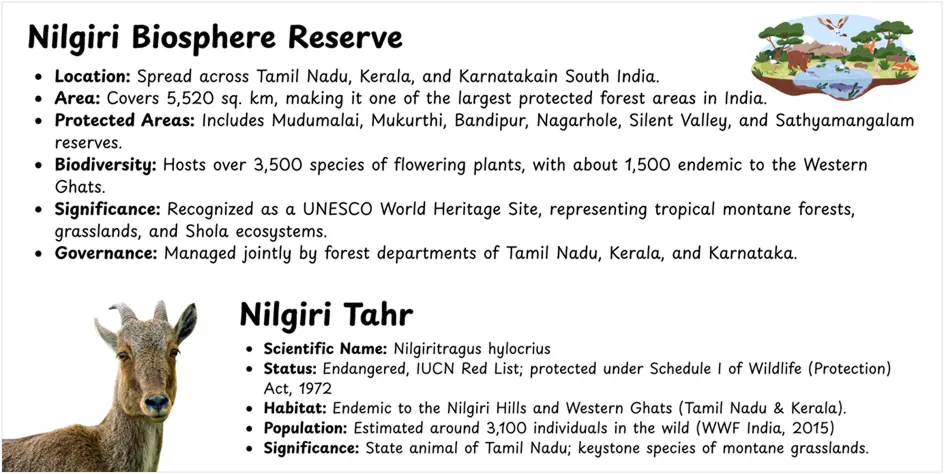
- Nilgiri Biosphere Reserve
- Mukurthi National Park
|
Why in the News?
Tamil Nadu Forest Department refused to allow the exploration tests in the Upper Bhavani hydroelectric project location on ground of environmental vulnerability as conservationists warned of extreme threats on biodiversity and pressure on the environment.
|
|
Why it is Important?
In this article, the conflict between development and conservation is depicted, which presents the decisions of governance, environmental ethics, and protection of biodiversity. In the case of UPSC CSE and State PSC exams, it provides the case-study content of sustainable policy, ecological vulnerability, and the development of environmental sustainability versus energy requirements.
|
The Tamil Nadu Forest department has denied permission to NTPC Tamilnadu Energy Company Limited (NTECL) to conduct tests at the proposed Upper Bhavani Pumped Storage Hydroelectric project site, located between the ecologically sensitive habitat. The recent refusal of the Tamil Nadu Forest Department to sanction further exploratory studies at the Upper Bhavani hydroelectric project site, despite the preselection of the site, is by way of example the interaction between developmental needs and conservation of the environment. The site, which is located in the Nilgiri Biosphere Reserve, is distinguished by the delicacy of ecosystems and great biodiversity. Conservation activists have raised concerns that these developments would increase environmental stressors, and this threatens the sustainability of the endemic species and the ecosystem. This occurrence prefigures time-related governance issues to do with balancing energy needs with ecologically viable conservation agendas.
Upper Bhavani Hydroelectric Project Background of the Project and Denial
The project has not been fully denied final approval, but its future is uncertain due to the ongoing regulatory hurdles and local opposition. The Upper Bhavani hydroelectric project has become a subject matter in the energy policy discussions in Tamil Nadu, especially with the Forest Department denying them the go-ahead to undertake further exploratory tests. The denial is a testimony to how the tension had intensified between the development of infrastructures and environmental preservation in the Nilgiri Biosphere Reserve. Despite the fact that the project can be described as beneficial, it has raised concerns among conservationists and scholars about its possible effects on biodiversity and delicate ecosystems.
Project Proposal
The project was to be designed as a 5,000 crore program by NTPC Tamil Nadu Energy Company Limited (NTECL) to produce 1,000 MW of electricity by using already available reservoirs.
Ecological Issues
The site covers ecological habitats of Nilgiri Tahr, the state animal of Tamil Nadu, and other species that are also endemic to the state, thus making the site ecologically sensitive.
Forest Department Decision
The exploratory tests were rejected, and the reasons were the ecological risks that would have been involved in the forest, the disturbance of the habitat, and a resulting localised ecological imbalance.
Research Findings
Although an expert panel recommended a minimum impact with some alignments, conservationists hold that it might only take preliminary activities to disrupt sensitive ecosystems, hence the necessity of conducting a stricter environmental review.
Environmental Sensitivity of the Region
The Upper Bhavani area in the Nilgiri Biosphere Reserve is one of the most sensitive places in India. It is a very sensitive area because of its special biodiversity, delicate ecologies, and historical value, which makes it very susceptible to the mega-infrastructure activities like the development of hydroelectric power generation. Conservationists, ecologists, have repeatedly pointed to the fact that any kind of disturbance in the area may be followed by irreversible ecological consequences.
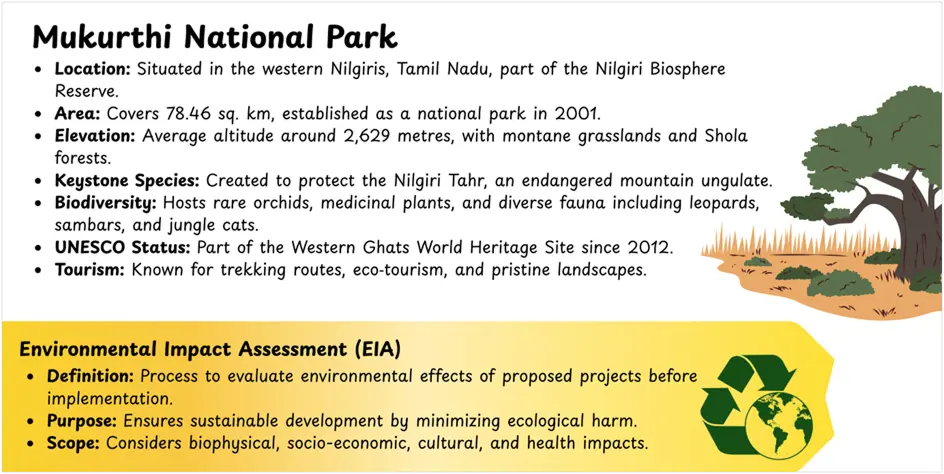
- Biodiversity Hotspot- It is near the Mukurthi National Park, which is a part of the Western Ghats, a UNESCO World Heritage site, and harbours Shola forests and endemic species like Nilgiri Tahr.
- Cultural Sensitivity–an explosion near Devar Betta Hill, which is the consecrated land of the Toda people, would be in jeopardy of infringing on the native history and home to animals.
- Environmental Hazards- Study shows that the pumped storage would cause changes in hydrological cycles, habitat fragmentation, and high strains on fragile ecosystems.
- Conservationist Concerns- Conservationists are alarmed that the fragile ecological balance can be put at risk, even by the exploratory tests, as flora and fauna are threatened, as well as traditional livelihoods.
Issues voiced by Conservationists
Detailed arguments have also been expressed by conservationists in opposition to the proposed Upper Bhavani hydroelectric project, with the ecological costs having much more weight than the energy benefits. In recorded reports and interviews, their apprehension points to the risks of biodiversity, indigenous communities, and vulnerable ecosystems.
- Endangered Species: At the Nilgiris Biosphere Reserve, the population of endemic species is large, such as the Nilgiri Tahr and some rare orchid species. The conservationists argue that the exploratory blasting and construction that follow these activities might lead to the fragmentation of habitats and blockage of wildlife corridors.
- Hydrological Impact: Observed experiments on similar pumped-stores of a similar nature have identified the change in river discharge regime and groundwater recharge patterns that can jeopardize the delicate hydrological balance of the Western Ghats.
- Cultural Sensitivity: The Toda people have expressed concern when it comes to developments that may happen near ecologically important sites like Devar Betta hill, and suggest a node of interaction between the degradation of the environment and the loss of the culture.
- Long-term risks: According to professional experts, the accrued effects of tourism, deforestation, and the development of infrastructure might create an increased speed in the loss of biodiversity, thus destroying conservation goals.
General Implications and Future
The Upper Bhavani hydroelectric project site denial of exploratory testing has much wider implications in terms of introducing environmental governance and sustainable development in India, as growing awareness of the need to balance the renewable energy goals and biodiversity preservation, including the Nilgiris Biosphere Reserve.
- Policy Implications: The decision lays much stress on the need to strengthen Environmental Impact Assessments (EIA) in order to ensure that renewable energy projects do not threaten vulnerable ecosystems.
- Alternative Energy: It has been found that decentralized solar and wind energy systems have the potential to meet regional energy needs with less ecological pressure, as given by the International Energy Agency (IEA).
- Participation of the community: According to the Toda community, the involvement of the indigenous groups helps in making sure that cultural and ecological issues are part of the deliberation of the policies in a well-structured way.
- Way Forward: The shift to low-impact energy options, accompanied by both the reinforced ecological protection and participatory forms of governing, has the potential to reconcile development with conservation concerns.
Which is the 2nd largest hydroelectric project in India?
The Koyna Hydroelectric Project in Maharashtra, with an installed capacity of 1,960 MW, is frequently regarded as India’s second-largest hydroelectric power station. However, some sources instead rank the Srisailam Dam, with a capacity of about 1,670 MW, as the second-largest—depending on classification criteria and the specific generating units considered—while the Tehri Hydroelectric Project is widely recognized as the largest overall.
Which is the largest hydroelectric project in Tamil Nadu?
The Kundah Power Houseis located in the Nilgiris, Tamil Nadu, India. It is one of the biggest electricity generating schemes in Tamil Nadu. The group of peaks Devarbatta, Karaikada, Koulingabetta and Porthimund, all over 2400 Metres ASL (above sea level) drain into two streams, Avalanche and Emerald.
Which is the first major Hydropower Project in India?
While the Sidrapong Hydroelectric Power Station (1897, Darjeeling) was India's first small hydro plant, the first major hydroelectric power station in India was the Sivasamudram Hydroelectric Power Station in Karnataka, commissioned in 1902, which supplied power to the Kolar Gold Fields and was significant for its larger capacity (4.5 MW) and commercial scale.
Conclusion
The denial of the exploration test permission in the Upper Bhavani hydroelectric project site forms a critical phase in the environmental management of Tamil Nadu since it highlights the necessity of the conservation of ecologically sensitive areas of the Nilgiris Biosphere Reserve against the developmental forces. Despite the fact that hydropower still forms a vital part of the renewable energy policy in India, the event highlighted the need to incorporate the aspect of biodiversity, the rights of indigenous people, and the long-term ecological viability in the policy formulation. In the future, it will be irreplaceable to consider a balanced solution that will be based on rigorous environmental evaluations, participatory decisions, and less-constraining energy alternatives.
Test your understanding
Questions from this article
Prelims practiceWith reference to Tamil Nadu Forest Department Stalls Upper Bhavani Hydroelectric Project, consider the following statements:
- In this article, the conflict between development and conservation is depicted, which presents the decisions of governance, environmental ethics, and protection of biodiversity.
- In the case of UPSC CSE and State PSC exams, it provides the case-study content of sustainable policy, ecological vulnerability, and the development of environmental sustainability versus energy requirements.
- The site, which is located in the Nilgiri Biosphere Reserve, is distinguished by the delicacy of ecosystems and great biodiversity.
View answer
Answer: 1, 2 and 3. The Tamil Nadu Forest Department has stalled the Upper Bhavani Hydroelectric Project, citing environmental and forest clearance concerns. Know the reasons and implications.
Mains practiceExplain the key features of Tamil Nadu Forest Department Stalls Upper Bhavani Hydroelectric Project and examine its significance, major issues and wider implications.
Answer in 250 words.
View answer approach
- Define and place Tamil Nadu Forest Department Stalls Upper Bhavani Hydroelectric Project in context.
- Examine Upper Bhavani Hydroelectric Project Background of the Project and Denial.
- Examine Project Proposal.
- Examine Ecological Issues.
- Conclude with a balanced assessment and an appropriate way forward.
Frequently asked questionsFrequently asked questions
Upper Bhavani Hydroelectric Project Background of the Project and Denial?
The project has not been fully denied final approval, but its future is uncertain due to the ongoing regulatory hurdles and local opposition. The Upper Bhavani hydroelectric project has become a subject matter in the energy policy discussions in Tamil Nadu, especially with the Forest Department denying them the go-ahead to undertake further exploratory tests. The denial is a testimony to how the tension had intensified between the development of infrastructures and environmental preservation in the Nilgiri Biosphere Reserve. Despite the fact that the project can be described as beneficial, it has raised concerns among conservationists and scholars about its possible effects on biodiversity and delicate ecosystems.