|
Key Highlights
- History of Vande Mataram
- Role in National Integration
- Opposition by the Muslim League
- Adoption as the National song
- National Song vs. National Anthem
|
Vande Mataram is a work that was published by a nationalist called Bankim Chandra Chattopadhyay. It was adopted as the national song by the Indian National Congress, and it is credited with its contribution to the revival of agitations towards freedom, but it chose Jana Gana Mana as the anthem to represent inclusiveness. The Muslim League, though, abrogated its mythopoetic representation at the cost of being exclusionary. This debate itself covered the tension between culture and secularism.
|
Tips for Aspirants
The article is especially relevant to UPSC CSE and State PSC examinations because it enhances the insight into the nationalist discourses, the symbolism of cultural elements, and inclusivity, which are the main aspects of preparation for history and polity modules, as well as essay writing.
|
|
Relevant Suggestions for UPSC and State PCS Exam
- Bankim Chandra Chattopadhyay wrote Vande Mataram in his work Anandamath (1882), which denotes devotion to the motherland.
- It was a call to nationalism, and a song they sang in Congress sessions and demonstrations during the battle for freedom.
- The Congress view incorporated the song as a historic one, though only the first two stanzas were used, so that there was no controversy about it being a religious song.
- Congress has made Vande Mataram the national song and has made Jana Gana Mana the national anthem to ensure inclusiveness.
- The reservations brought out by the Muslim League focused on the objections to goddess representations, which were considered to be isolating and against pluralism.
- The controversy has emphasized the conflicts between cultural heritage and a secular representation in nation-building.
- The compromise depicts the pluralist spirit in India, between tradition and inclusiveness in national symbols.
|
The controversy of Vande Mataram takes center stage in the intellectual and political history of modern India. The composition was createdby Bankim Chandra Chattopadhyay in 1882 in his novel, Anandamath, but quickly went beyond the literary origin as a symbolic representation of anti-colonial action. Its appeal to the mother country, in the devotional heroic terms, appealed to the nationalistic feeling and was borrowed by the Indian National Congress to act as a call to arms in the fight against British colonialism. However, the theological connotations of the song, especially the description of the country as a goddess, caused dissent among various groups of people. The Congress has tried to ensure that Vande Mataram remains the national song, as its historical impact of citing collective action, and tried, at the same time, to institutionalize Jana Gana Mana as the national anthem to ensure inclusiveness and secularism. Contrarily, the Muslim League made strong reservations and argued that the religious mythical imagery in the song was discriminatory against Muslim identity and undermined the cultural pluralism principle. The conflicting positions of these two main political actors help shed light on the wider conflicts in the process of establishing what national symbols entail: between the past and the present, whether neutral or emotive, devotion and secularism. A review of these arguments reveals a fundamental understanding of the issues surrounding the process of nation-building and negotiation of cultural identity in colonial India.
Origin and Literary Significance
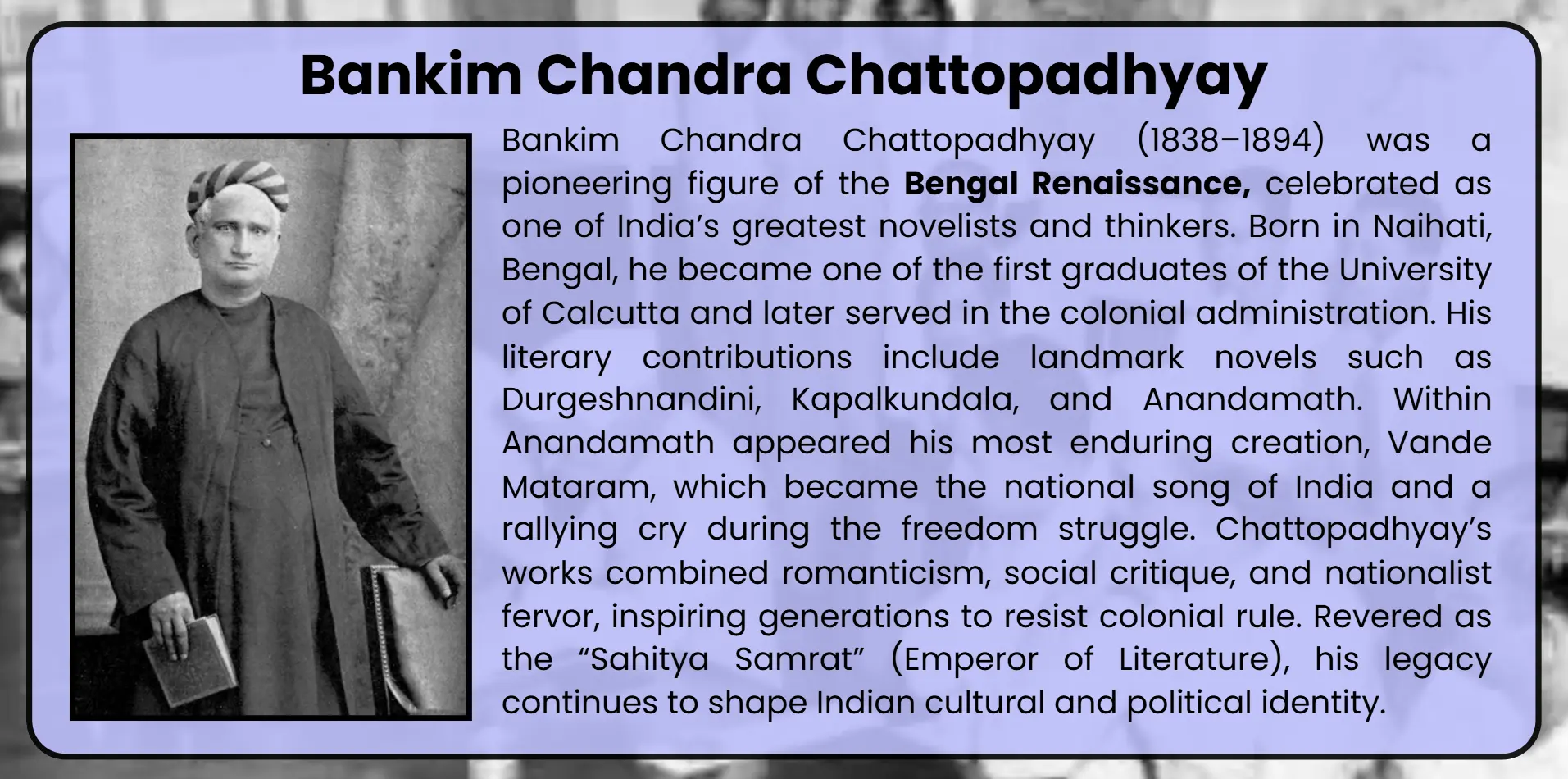
India has a cultural and political imagination that is centredon Vande Mataram. It started in Bengal in the nineteenth century, combining the qualities of literary art with the spirit of nationalism, thus posing as a hymn of devotion, and at the same time serving as a revolutionary anthem, a call to arms.Vande Mataram evolved from a 19th century literary work into a powerful symbol of Indian nationalism abroad. Its use by revolutionaries and students at India House London highlights the global nature of India's freedom struggle and continuing cultural relevance.
Historical Origin
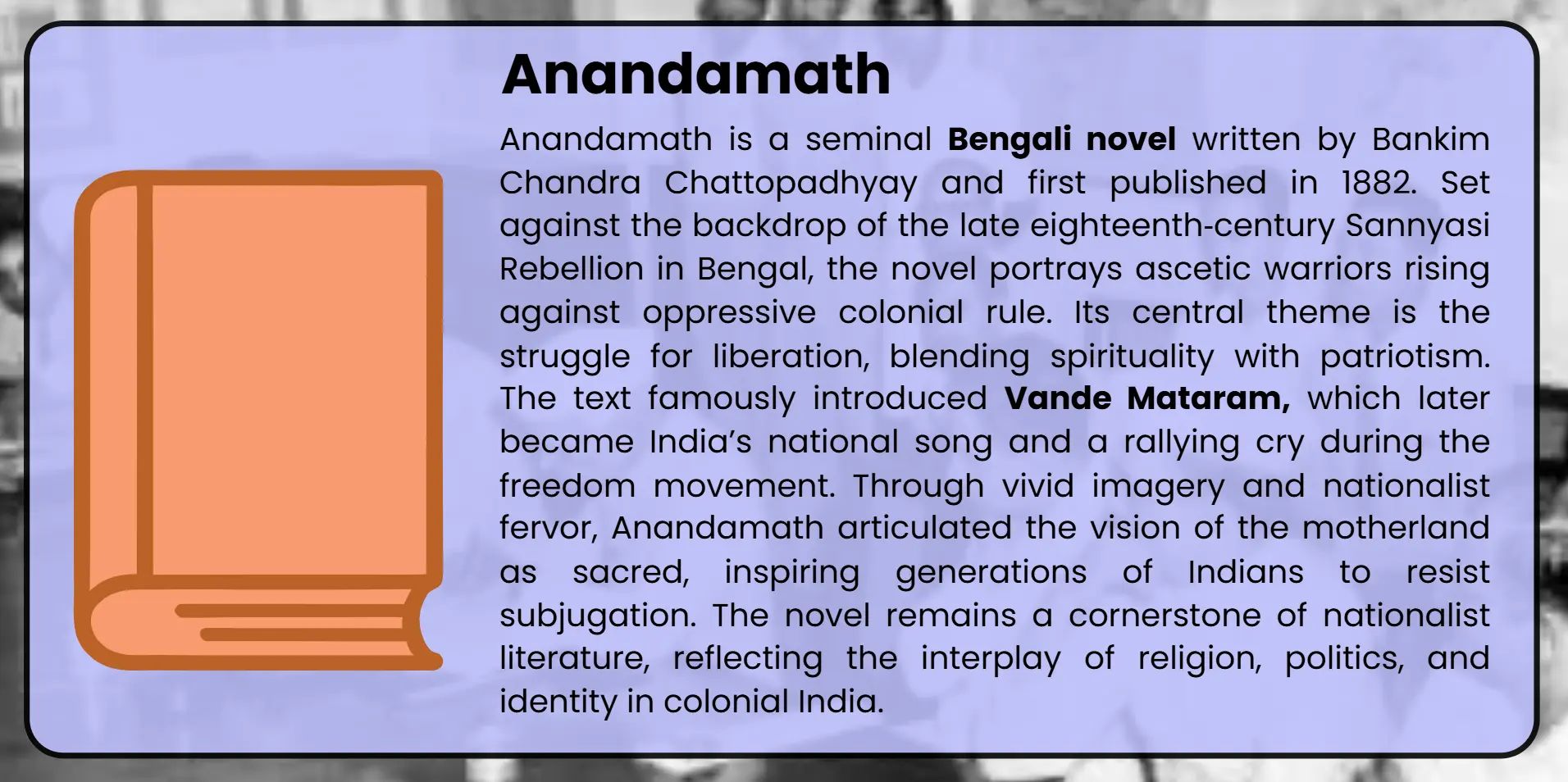
Bankim Chandra Chattopadhyay wrote this song, Vande Mataram, in the 1870s, and it was published in a literary periodical, Bangadarshan, in 1875. It was later integrated into his classic novel Anandamath (1882), which tells the plight of ascetics rebelling under colonial rule. It is in a Sanskritized version of the Bengali language, which refers to the motherland as a deity, a combination of spiritual respect and national symbolism. In its refrain, which says I bow to thee, Mother, it expresses a vision of India as a sacred place, hence requires reverence and sacrifice.
Literary Significance
In Literature, Vande Mataram is an example of romantic nationalism mixed with devotional poetics. Chattopadhyay uses striking language, descriptive imagery, a green field, rivers, and forests to create an attractive picture of India, both nurturing and divine. The rhythmic cadence and the diction push the motherland above the geographic coordinates, transforming it into a spiritual one. This literary element appealed to the reader as it connected the feeling of patriotism to the vernacular religious phraseology, therefore, instilling the sense of nationalism into the greater cultural subconscious.
Role in the Nationalist Movement
The political mobilization of the song was due to its literary influence. It was used in the late nineteenth and the first part of the twentieth centuries when it was sung during congress meetings and demonstrations, and it effectively served as a counter-cry against colonialists. Its songs united rulers and common people, as the spirit of unity and opposition. The expressive nature of the work was used to bridge the gap between literature and activism, and it clearly showed how the cultural writings could energize political movements.
Enduring Legacy
What made the impact of the song unforgettable in terms of its enduring importance is the fact that it doubles up as both a masterpiece of literature and a national icon. Even though the goddess images in it have been ridiculed with questions of inclusiveness later, one cannot deny its contribution to the growth of the nationalist consciousness. To reconcile between heritage and secular representation in 1950, the independent India adopted the work as a national song, but in doing so, recognized its historical significance without mirroring the national anthem.
The View and Takeover by Congress
The Indian National Congress became one of the central participants in the nationalisation of the symbolic value of Vande Mataram, both acknowledging the inspirational power of the concept in the freedom struggle and attempting to balance the cultural legacy with an ideology of cultural inclusivity. The Indian National Congress (INC) adopted an abridged version of Vande Mataram as the national song in 1937 to balance its historical significance in the freedom struggle with the need for religious inclusivity. This decision, made after objections from the Muslim League, remains a subject of modern political debate.
Nationalist Sentiment
At the end of the nineteenth century, Vande Mataram was adopted by the Congress and served as a symbol of resistance and unity. The song was sung at party meetings and mass meetings and was, thus, a form of agitprop against the power of the colonialists. It was seen by leaders as a cultural expression of patriotism across the regional borders, thus giving it ground in the wider nationalist expression of the Congress.
Concerns of Inclusivity
Despite the popularity of the hymn, Congress officials admitted to the fact of religious iconography depicted in the hymn, the deity of the motherland, in the forefront of which could have been pushed aside by some groups of people. By the 1930s, in-party wrangling highlighted the need to reconcile the nationalistic diligence with communal solidarity, and the Congress began to make a distinction between the emotional appeal of the piece and its realistic applicability as a national symbol.
Adoption as National Song
The Congress came up with a decree in 1937 that limited public recitation of Vande Mataram to the first two verses, which were regarded to be quite secular. The move resulted in this compromise, which showed that the party was making an effort to keep the anthem relevant to history without causing anxiety among the minority groups. After the indian constitution was prepared on the basis of the future post-industrial India, the Congress adopted Vande Mataram as the national song, alongside making Jana Gana Mana the national anthem; this divided recognition was the perfect compromise between tradition and demonstrative inclusiveness.
Position of Congress Legacy
The position of the Congress is a good example of objective mediation of signifiers of culture in a pluralistic polity. The party would make its role in the mobilisation against colonialism by promulgating Vande Mataram as the national song, and in doing so, by the choice of Jana Gana Mana as an anthem; it strengthened the position of the secular representation within a federated state. This policy has had a long-term impact on the modern discourses of national identity, as it reflects the attempt of the Congress to walk the fine line between affective heritage and democratic inclusivity.
Reservations by the Muslim League
The Muslim League's protests against Vande Mataram were indicative of general concerns about cultural representation in nationalist discourse. The piece was a call to arms of many followers, yet at the same time, the use of religious imagery raised questions relative to inclusiveness and belonging. The Muslim League, led by M.A. Jinnah, strongly opposed Vande Mataram in the 1930s, deeming it idolatrous and anti-Islamic due to its devotional language towards "Bharat Mata" (Mother India), which conflicted with Islamic monotheism, especially the later verses describing India as Goddess Durga. This opposition intensified in 1937, leading the Congress, under Nehru's influence, to compromise by accepting only the first two stanzas for national gatherings, sparking debate over appeasement and the song'snationalist spirit.
Exclusions
The League also disliked that the song recognizes the motherland as a Hindu goddess, especially in the subsequent stanzas of the Bankim Chandra Chattopadhyay song. This symbolism was in conflict with Islamic monotheism and was considered a threat to Muslim citizens among Muslim leaders. They argued that national symbols must avoid making reference to theology; therefore, all communities should contribute equally in the national struggle of gaining independence.
Opposition
The Muslim League more and more established itself as an advocate of the Muslim interests in colonial India in the 1930s and 1940s. In this context, Vande Mataram was understood to be the symbol of Hindu-majoritarianism in the Congress. The League argued that putting the song as a national anthem would discriminate against Muslims and, instead of encouraging unity, consolidate the cultural stratifications. This resistance was not simply literary but very much political, and it was connected to the issues of identity and representation.
Call for Alternative
The reservations of the League reached alternative demands of national symbols themselves, which might represent the ideals of secular and inclusive values. Those in power highlighted that though Muslims honoured the nationalistic movement, they needed some symbols free from religious connotations. This assertion highlighted the wider plan of the League of Cultural Pluralism, in which one national identity could no longer be absorbed into the single religious practice.
Impact
The criticism of the League greatly informed the ultimate compromise in the Congress of designating the name of Vande Matterram as the national song and making it the national anthem of adherence to Jana Gana Mana. This two-fold recognition was an effort to combine the historical heritage with inclusivity. Accordingly, the League's reservations were incredibly relevant in the formation of the symbolic structure of independent India and, hence, the significance of the minority standpoints to the nation-building process.
National Song vs. National Anthem
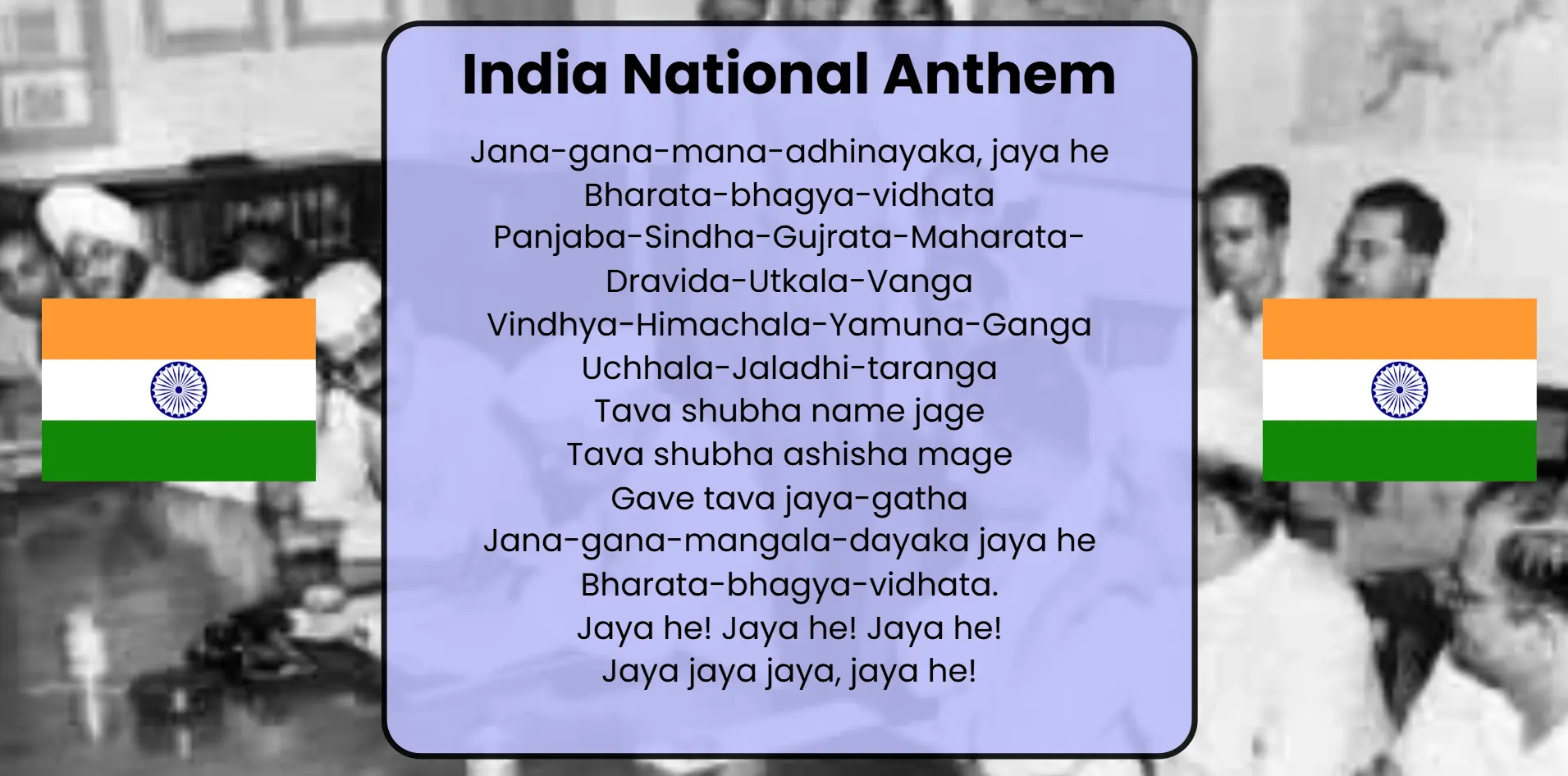
The controversy over the inclusion of Vande Mataram in the list of national songs and Jana Gana Mana in the list of national anthems is a boundary demarcation of the attempts by India to move forward to unite the cultural heritage and secular inclusivity in the freedom struggle and the constitutional draft. The composition consisting of the words and music known as Jana Gana Mana is the National Anthem of India, subject to such alterations in the words as the Government may authorise as occasion arises; and the song Vande Mataram, which has played a historic part in the struggle for Indian freedom, shall be honoured.
Background of the Discussion
As early as the first half of the twentieth century, Vande Mataram was turning into a powerful nationalistic emblem, being regularly sung during Congress conferences and anti-protest demonstrations. However, its religious overtures, especially the motherland as a deity, provoked fears among the Muslim leaders and other minority constituencies. This tension led to a greater discussion on what cultural figures would represent the Indian population without creating a sense of exclusion.
Congress's Compromise
Through these efforts, the Indian National Congress tried to make use of the emotional heritage of Vande Mataram and, at the same time, soothe the minorities. In 1937, the party ruled that only the first and second stanzas, which do not show any direct references to religion, would be used in official events. Later discussions of the constitution supported Vande Mataram as the national song; thus, accepting its historic value, but decided Jana Gana Mana as the national anthem, because of its secular and inclusive qualities.
Muslim League
The Muslim League opposed the raising of Vande Mataram as an anthem, contending that its theological icon was a marginalization of Muslims. In the case of the League, national symbols were needed to manifest cultural pluralism, not to be reminiscent of one religious tradition. Their criticism had a conclusive effect on prompting the Congress to differentiate the song and anthem and thus avoid having the issue of national identity being solely bound to the Hindu symbolism.
Symbolic and Constitutional Meaning
It was not just a question of semantics; the boundary that was set between national song and national anthem had serious political undertones. It marked an agreed compromise between their veneration of the affective legacy of the patriotic movement and their protection of their idea of secular inclusiveness in a heterogeneous polity. This concession reinforced that the contributions of minority views played a key role in the construction of the symbolic architecture of India, and enlightened that there were, in fact, difficulties of significance to the nation-building of having a unified national identity.
Conclusion
The controversy, which surrounded Vande Mataram, highlights the complications of the process of national identity formation in a pluralistic society. Even though the Indian National Congress also marked the song as a historic text of struggle, the Muslim League emphasized its exclusivist religious representation. The final compromise, which saw the use of Vande Mataram as a national song and Jana Gana Mana as the national anthem, was based on the conscious effort to strike a balance between the generations and secularism. This discussion shows that symbols of nationalism are not simply cultural objects but are objects of meaning which are being contested, hence determining the direction of the ethos of democracy in India and its diversity and unity.