Bal Vivah Mukt Bharat campaign received a lot of media coverage when the Ministry of Women and Child Development announced a focused 100-day awareness campaign (December 2025-March 2026), marking the first anniversary of the campaign. This campaign is a nationwide initiative that aims at mobilising citizens, institutions and community leaders in eliminating child marriage and consolidating the pledge of India to a child-marriage-free nation.
|
Key highlights
- Child Marriage
- India’s Fight against Child Marriage
- Bal Vivah Mukt Bharat (BVMB)
- 100 -Day Campaign
- Prohibition of Child Marriage Act, 2006
|
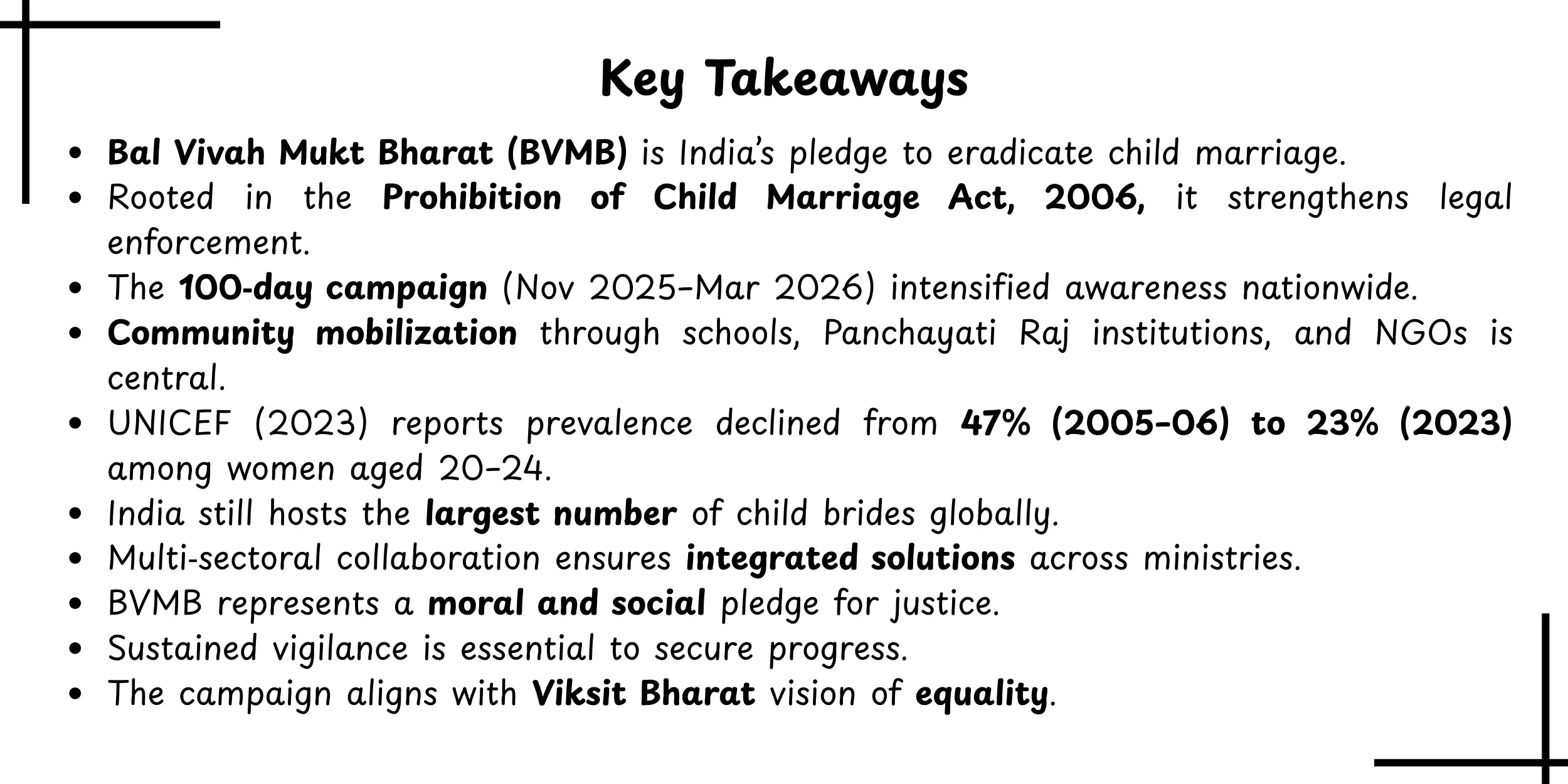
Child marriage has become one of the biggest challengesfaced by Indiansociety, and it has affected the constitutional provisions that guarantee equality, education and dignity. In spite of the laws like the Prohibition of Child Marriage Act, 2006, the issue has continued to go on in various areas, and a recurring cycle of poverty, ill-health, and gender discrimination has been perpetuated. As a reaction, the Government of India launched the Bal Vivah Mukt Bharat campaign that envisioned a nation without child marriage to be achieved by the joint awareness campaign, enforcement of legislation and community involvement. This initiative is not only a policy intervention, but it is also a moral commitment to protect childhood and empower the future generations to seek to change the society's attitude, and to rejuvenate India's commitment to justice and progress.
Historical Context of Child Marriage
In India, child marriage historically occurred due to patriarchal practices and economic insecurities and most of these were usually justified by the need to protect the honour of girls. Even though its incidence has diminished, according to UNICEF as of 2023, 23 percent of women younger than 20-24 years got married before they were 18, which highlights the socio-cultural aspects of poverty, dowry and gender bias that continue to form the barriers to any reforms.
What is Child Marriage?
Child marriage can be explained as the marriage between two people who are below the age of 18, and it can be described as a marital union that causes the violationof the rights of the child to education, health and even dignity. Nevertheless, in the country, the figures of child brides remain at 1/3 of the global level, which still indicates some socio-cultural issues.
India’s Fight against Child Marriage
The fight against child marriage in India is an indication of the constitutional rights, gender equality and a long-term curriculum to preserve childhood. Although some improvement was realised, the issue is still very rooted in the socio-economic realities.Let’s look at these one by one:
Legislative Measures:
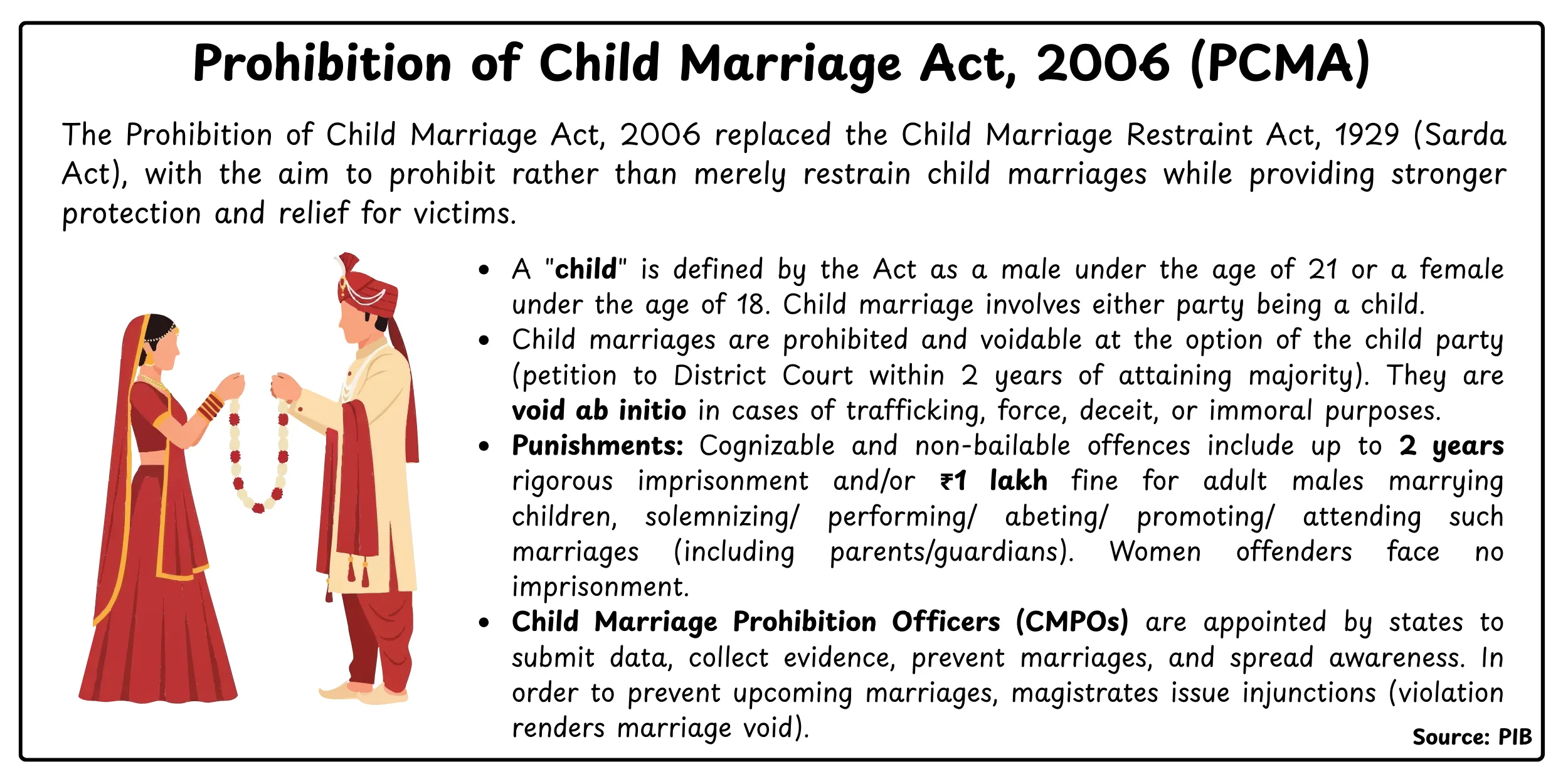
Child marriage is prohibited by the law in the Prohibition of Child Marriage Act, 2006, which provides the legal basis on which such marriages may be regarded as voidable, and offenders should be punished. Further, additional laws such as the Protection of Children from Sexual Offences Act (POCSO),2012, enhance protections.
Initiative by the Government:
To engage communities, schools, and civic society, in 2024, the Government of India initiated the Bal Vivah Mukt Bharat campaign and in 2025-26, organised a 100-day awareness campaign. Such campaigns focus on prevention, which requires education, empowerment and tough enforcement of laws.
Where we are at Present:
UNICEF (2023) reports that one-third of child brides in the world are in India, and its incidence decreased from 47% in 2005 to 23% 2023 among women who are between 20 and 24 years. This decrease directs the effect of long-term interventions but provides more evidence of the importance of being extra-vigilant.
Social Mobilization:
The role played by the civil society organizations, teachers, and other leaders among young people is central in transforming the attitudes of the people. Patriarchal norms have to be broken down through an awareness campaign, along with grassroots activism to support child rights.
Bal Vivah Mukt Bharat (BVMB)
Bal Vivah Mukt Bharat (BVMB) is the official flagship campaign launched by the MoWCD to eliminate child marriage, which is a social practice that violates constitutional provisions and perpetuates poverty and sex disparity. Introduced in November 2024, the project is a multi-level, whole-of-government and whole-of-society approach to transform the system.
Objectives of the Campaign
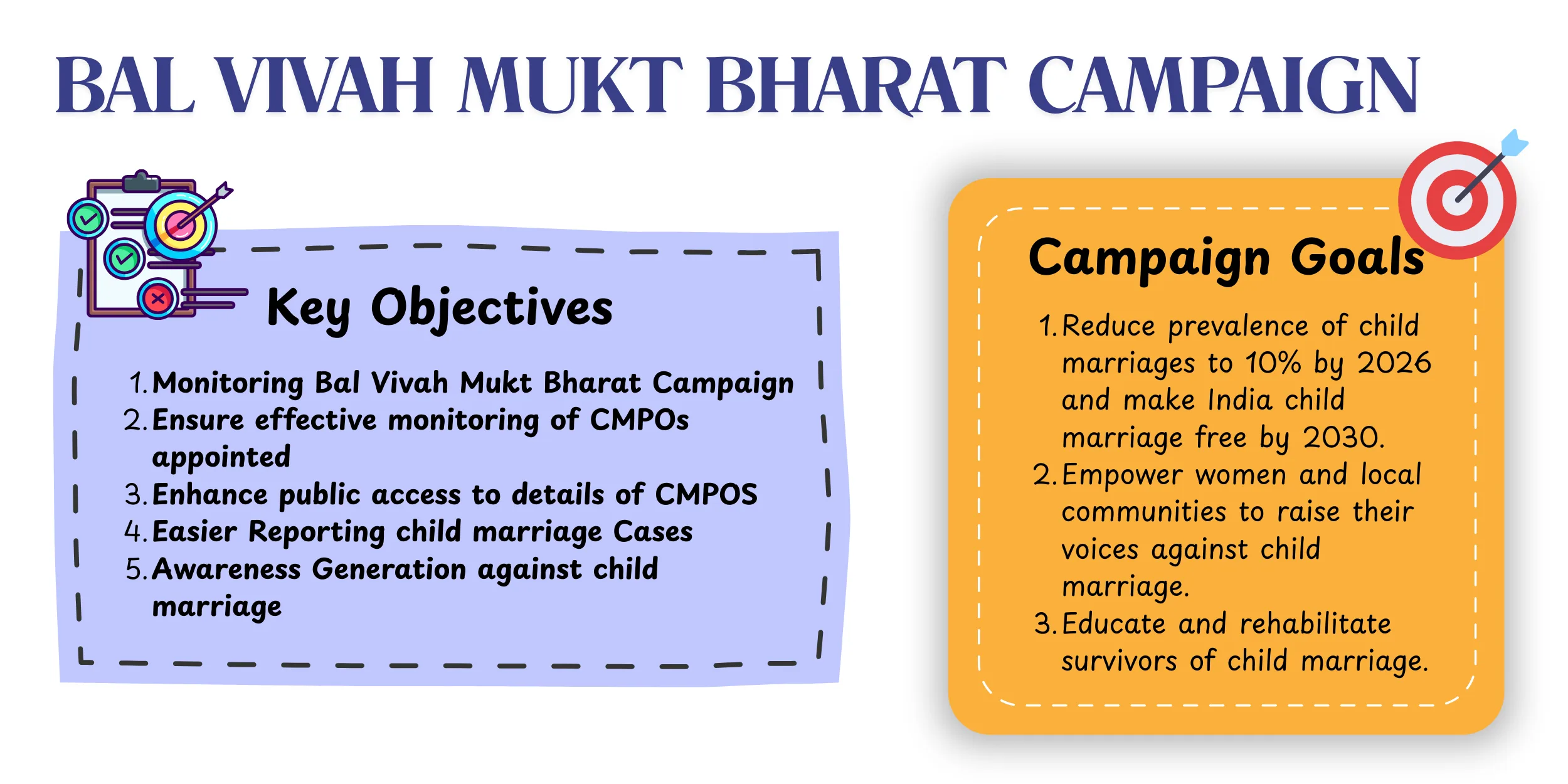
The main interest of BVMB is to have a child-marriage-free country by increasing the awareness of the public, strengthening the law, and enabling communities. The programme aims to be in sync with Viksit Bharat's vision, which recognises the fact that child marriage is a major challenge to holistic development.
Legal and Institutional Framework
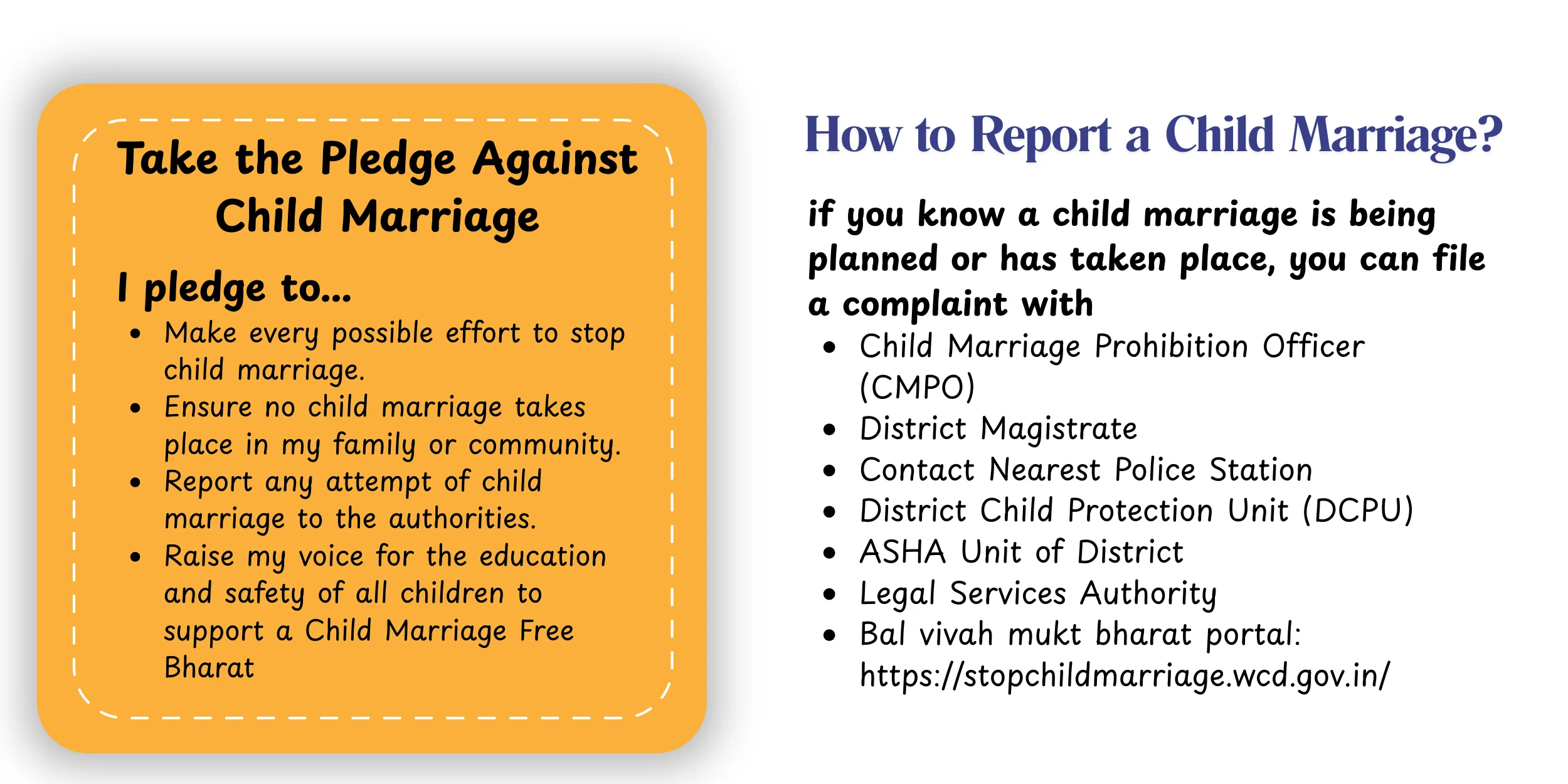
BVMB is based on the Prohibition of Child Marriage Act, 2006, which criminalises child marriage and gives power to the Child Marriage Prohibition Officers (CMPOs) to enforce the laws. The official portal is a collection of centralised CMPOs in interstate databases, thus ensuring accountability and also giving citizens a channel through which they can report any form of violation.
Awareness and Mobilisation
The Ministry launched a 100-day intense awareness campaign in December 2025 in order to honour the first anniversary of BVMB. It was inaugurated in Vigyan Bhawan, New Delhi, and the campaign was calling on citizens, institutional actors, and leaders of the community to join it. It emphasised on grass-root mobilisation via schools, Panchayati Raj Institutions and non-governmental organisations.
Multi‑Sectoral Collaboration
BVMB is implemented in collaboration with other ministries to reach as many people as possible in operation, namely Health and Family Welfare, Panchayati Raj, Rural Development and Education. This collaborative model emphasises the fact that child marriage is not only a legal problem but a social problem with many facets that need combined approaches.
The 100‑Day Campaign
The 100-Day Campaign under Bal Vivah Mukt Bharat is a momentum-building project aimed at stepping up the awareness and enforcement of child marriage in the country, which was initiated in December 2025.
Launch and Purpose
This campaign was initiated by the Ministry of Women and Child Development in Vigyan Bhawan, New Delhi, during the first anniversary of Bal Vivah Mukt Bharat. It wasstarted on 27th November 2025; it will end on 8thMarch 2026, on the occasion of International Women's Day, a symbol of empowerment and equality.
Implementation and Strategy
Since the mobilisation of communities, school-based awareness and involvement of Panchayati Raj are foreseen in the campaign, a simultaneous increase in monitoring abilities is achieved by providing CMPOs to create accountability at the grassroots level.
Conclusion
The Bal Vivah Mukt Bharat vision is a milestone which summarizes the determination of the Indian people to root out child marriage and protect the rights of children. The initiative, which involves legislative enforcement, awareness, and community involvement, aims at breaking the deeply rooted socio-cultural patterns that undermine education, health, and equality. As it is stated in statistical evidence by UNICEF, which states that the prevalence of child marriage has decreased to 23% in 2023, as compared to 47% in 2005-06, this is a positive sign that the problem can be controlled, but requires continuous attention. After all, the campaign is a legal and social reform as well as a moral commitment towards ensuring a just, equitable and progressive future.
Frequently asked questionsFrequently asked questions
Historical Context of Child Marriage?
In India, child marriage historically occurred due to patriarchal practices and economic insecurities and most of these were usually justified by the need to protect the honour of girls. Even though its incidence has diminished, according to UNICEF as of 2023, 23 percent of women younger than 20-24 years got married before they were 18, which highlights the socio-cultural aspects of poverty, dowry and gender bias that continue to form the barriers to any reforms.
Bal Vivah Mukt Bharat (BVMB)?
Bal Vivah Mukt Bharat (BVMB) is the official flagship campaign launched by the MoWCD to eliminate child marriage , which is a social practice that violates constitutional provisions and perpetuates poverty and sex disparity. Introduced in November 2024, the project is a multi-level, whole-of-government and whole-of-society approach to transform the system.
The 100‑Day Campaign?
The 100-Day Campaign under Bal Vivah Mukt Bharat is a momentum-building project aimed at stepping up the awareness and enforcement of child marriage in the country, which was initiated in December 2025.