|
Key highlights
- Health and Urbanisation
- Heart-Unfriendly cities
- Need for Heart Resilient Planning
- Policy Imperatives
- Inclusive Urban Development
|
Urban India is experiencing an acute epidemic of cardiovascular disease that can be attributed to the high levels of air pollution, high levels of sedentary lifestyles and the psychosocial stresses that are common within urban settings. The article argues that resilience in the heart of cities, or the street form that includes an extensive inclusion of green areas, the decline of streets, cycling, air-quality control interventions, and fair and reasonable access to medical services, is an effective prevention. This fundamentally aims to ensure sustainable and cardiac-friendly cities by integrating health factors into urban governance, thus protecting the well-being of citizens as well as mitigating the rising attack of cardiovascular disease.
Urban planning significantly impacts public health by influencing physical activity, social connection, and environmental factors like air quality and safety. The transition "From Concrete to Cardio" underscores the critical need for integrating health considerations into urban design to foster environments that promote cardiovascular well-being and overall vitality.
|
Tips for Aspirants
The article can be beneficial in the case of UPSC CSE and State PSC exams because it correlates urbanization, population health, and financially sound governance, important topics in the GS paper, essay, and policy elaboration.
|
|
Relevant Suggestions for UPSC and State PCS Exam
- Urbanization & Health: The increase in cardiovascular disease (CVDs) threat in India following the rapid urbanization has been caused by the lack of physical activity, pollution, and stress.
- Incidents of Unfriendly Cities to the heart:
- Urban heat islands, air and noise pollution.
- Shortage of green oases and inability to walk.
- Social-economic imbalance in access to health care.
- Resilient planning
- Arranged parks, cycling paths, and foot walks.
- Active movement and sustainable transportation.
- Fair access to health and good food.
- Environmental sustainability and control of pollution.
- Policy Imperatives:
- The approach of the WHO to health in all Policies.
- Prevention of healthcare by screening and awareness.
- Equitable urbanization that deals with inequalities.
- Relevance to Exam: Governance, public health, environment, and sustainable development are topics presented in the GS papers, essays, and case studies on ethics.
|
The tremendous urbanisation trend witnessed in the whole of India has spawned dramatic changes in the way of life, the nature of the environment, and health outcomes among people. Among them, the threatening increase of cardiovascular diseases, currently recognised as one of the leading causes of morbidity and mortality rates of the urban population, deserves immediate attention. Although they serve as drivers of economic development and a means of social mobility, metropolises often create living conditions that are harmful to the heart, i.e. they are more polluted, have an office-potato-chair workplace culture, suffer from chronic stressfulness, and have unequal distribution of health care. All these determinants together highlight the urgent need to transform the city planning with a resilient cardiac paradigm. Heart-resilient city design refers to proactive planning of health-affirming physical infrastructure and policy applications to the architectural and functional specifications of cities.
It places the emphasis on creating walkable neighbourhoods, the availability and proximity of green spaces, the effectiveness of the public transport systems, and the reduction of the environmental risks as stimuli for cardiovascular well-being. Such a strategy goes beyond aesthetic factors or simple convenience and signifies a public-health mandate, and is an inclusion of sustainable development aims and the general aim of inclusive growth. By integrating cardiovascular health strategies into the city administration, India can reduce the increasing rate of CVDs, promote healthier living, and make its urban landscapes the platforms of liveliness instead of vulnerability.
Urbanisation and Cardiovascular Health Crisis in India
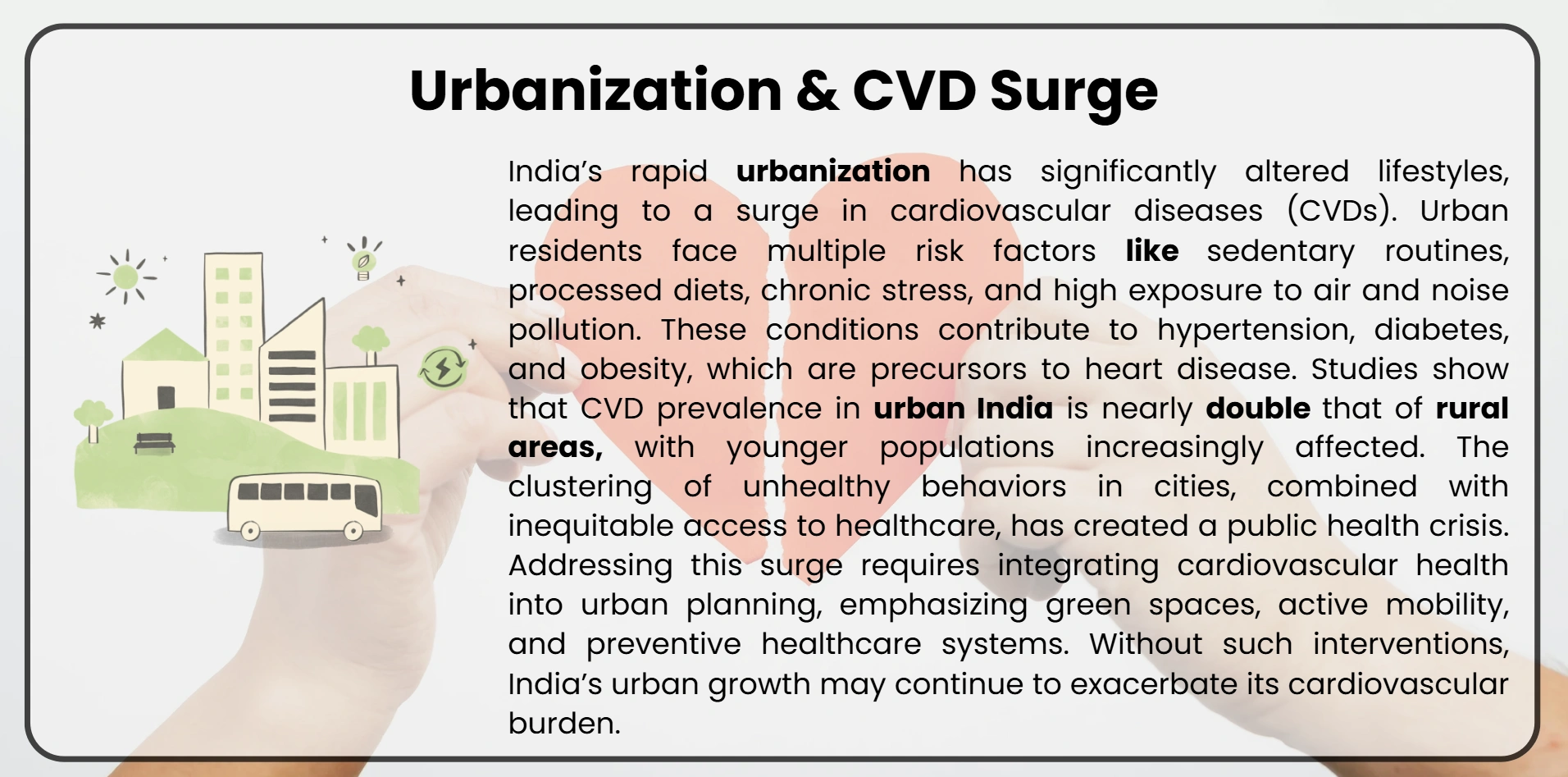
Rapid urbanization in India is a key driver of a cardiovascular health crisis, leading to a significantly higher prevalence of heart disease and associated risk factors in urban populations compared to rural areas. This trend, often referred to as the "Concrete to Cardio" issue, is driven by fundamental shifts in lifestyle and environment. The process of urbanization in India has significantly changed socioeconomic as well as social organization; at the same time, it has triggered a chain of public health issues, and the growing tendency of cardiovascular disease crisis.
Urbanization and Change of Lifestyles
The acute growth of Indian metropolises has drawn millions of people to city settlements of high density, which has led to major changes in everyday trends. Such transformations have led to heightened sedentariness, lack of physical exercise, and the uptake of unhealthy eating habits. City residents enjoy the comforts of consuming highly processed food and driving automobiles, a project that increases the exposure to the risks of obesity, hypertension, and diabetes, which are the main antecedents of cardiovascular pathology.
Environment and the Heart
Urban ecosystems subject their inhabitants to high air pollution levels, noise, and even thermal stress. Heavy metals (PM 2.5) and automobile emissions tend to be closely linked with increased blood pressure and heart disease. Traffic and construction noise pollution also cause chronic psychological stress, and urban heat islands lead to cardiovascular strain. These environmental stress factors burden the vulnerable populations disproportionately, such as the elderly population and the marginalised communities.
Health disparities
Urbanization has increased disparities in health. Wealthy populations usually gain access to personal medical care and live in less unhygienic conditions, and marginalized groups of people are usually trapped in overcrowded, polluted areas with minimal healthcare facilities. These disparities cause higher levels of premature CVD deaths in the underprivileged urban population. Empirical evidence has shown that cardiovascular epidemiology in urban areas is almost twice as high as in rural areas, and that the burden of disease is increasingly marked by younger populations.
Policy Requirements and Preventive Measures
The reduction of cardiovascular health crises demands the need to incorporate the concept of public health in conceptualizing urban planning. The priorities that must be highlighted in the policies should be the development of green areas, walking-friendly infrastructure, and fair access to healthcare. Such preventive strategies as mass screening through the Ayushman Arogya Mandir networks used in India are necessary to detect risks early. The collaborative governance model, making health, environmental and urban development goals coherent and aligning them, can reduce the burden of CVD and achieve urban robustness instead of fragility.
Determinants of Unfriendly Cities to the Heart
The Indian urban settings have also become associated with an increased risk profile of cardiovascular diseases. The factors causing cities to be unfriendly to the heart do not just lie in the behavioural factors of individuals, but also in the structural, environmental and socioeconomic aspects, which are integrated into the city planning design. The determinants of cities that are "unfriendly to the heart" are primarily rooted in urban design features and environmental exposures that promote sedentary lifestyles and stress while increasing exposure to pollutants.
Environmental Hazard and Air Pollution
Air pollution is one of the biggest factors that can determine cardiovascular disease in the Indian urban environment. Increased levels of particulate matter (PM2.5) and motor vehicle emissions are some of the causes of high blood pressure, irregular heart rhythms and heart disease. Empirically, it has been observed that the chronic effects of air contamination contribute to the enhancement of systemic inflammation and oxidative stress, and it has a direct detrimental impact on the health of the heart. Urban heat islands that are produced due to the close building density and the lack of vegetation compound cardiovascular risk, enhancing heat-induced cardiac distress.
Inadequacy of Green and Recreational Space
A city that does not incorporate green cover, as well as recreational centres, does not promote physical exercise and limits stress management options. Parks, walking and cycling paths, and pedestrian-friendly areas are necessary to promote active living and prevent the risk of cardiovascular diseases. Extensive development has been done in most Indian metros at the expense of natural landscapes, and people have little opportunity to walk down the road or do physical activities in a safe environment. Such a lack of restorative areas fosters inactive lifestyles and increases the risk of cardiovascular diseases.
Ineffective Mobility and Lack of Physical Exercise
City planners often give more priority to motorised transit systems rather than walking and bicycle paths. Traffic jams, dangerous walking routes, and poorly-built transportation systems do not support walking to work. Therefore, urban life is dominated by sedentary lifestyles, which increases the rates of obesity, diabetes and hypertension, which are proven antecedents of cardiovascular diseases. The burden of cardiovascular problems linked with the long commuting lifestyle and traffic jams also contributes to the increase in stress, thus creating a cycle of activity and ongoing stress.
Social Economic Inequalities
Strong socioeconomic inequalities also determine heart-unfriendly cities. Underprivileged populations are overrepresented in congested and contaminated neighbourhoods that have few healthcare provisions. On the other hand, the rich are able to afford their own healthcare and healthier lifestyles. The result of this disparity is the uneven distribution of cardiovascular morbidity among the poor communities. It has been shown that cardiovascular disease is almost twice as high in urban India as in rural environments.
Heart-Friendly Urban Planning
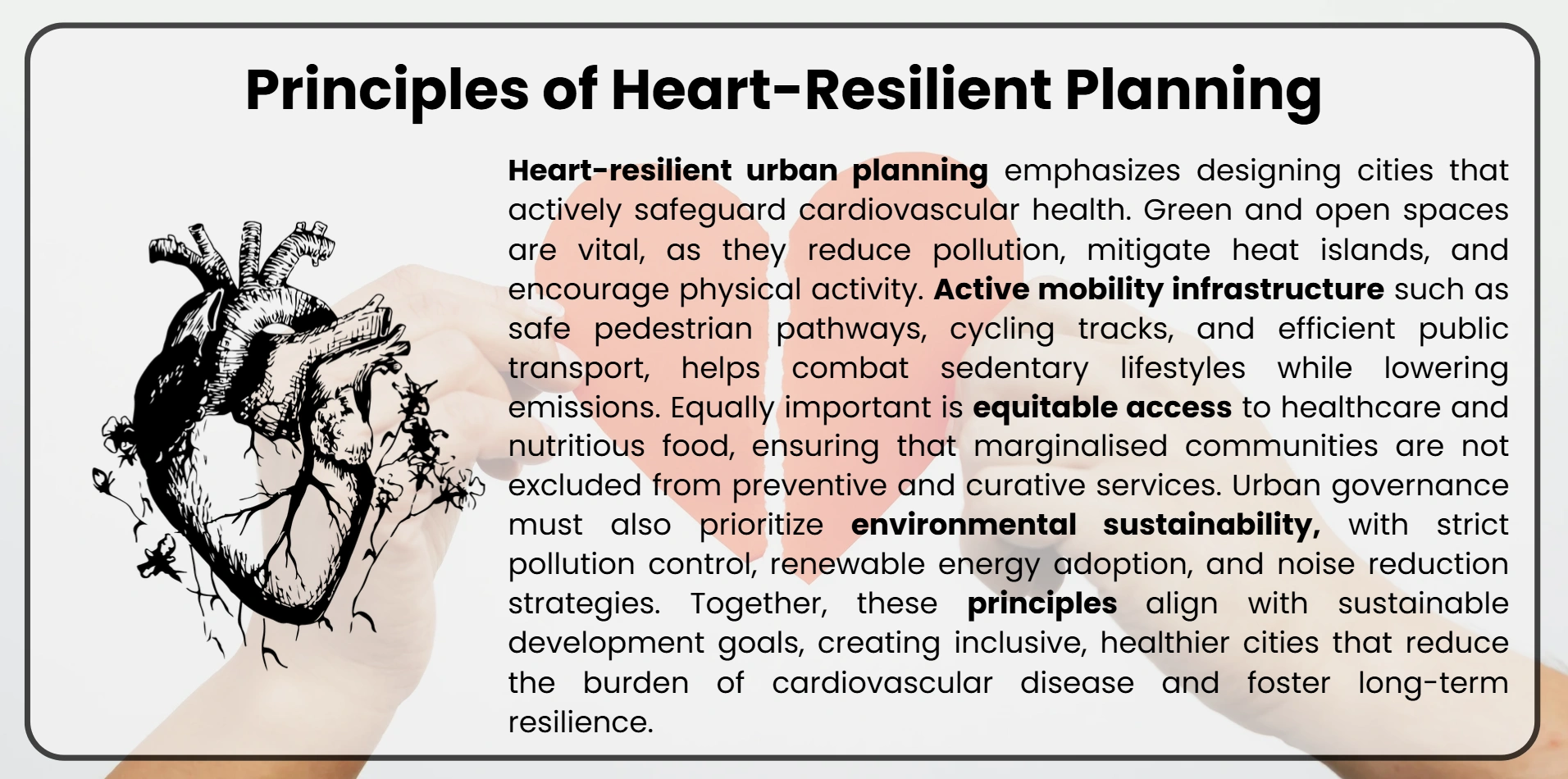
Urban planning in India should not remain the same with the conventional practice of focusing on infrastructure and economic development, but needs to take a different dimension that considers the health of the people. Cardiovascular diseases are increasing drastically in urban centres, and it is necessary to incorporate cardiovascular-friendly concepts in cities. "From Concrete to Cardiac" refers to a paradigm shift in urban planning that prioritizes human cardiovascular health by designing cities that encourage physical activity, reduce environmental stressors, and ensure equitable access to healthy resources.
Green and Open Spaces Incorporation
One of the main concepts of heart-resilient planning is the development and maintenance of green spaces. Gardens, parks, trees, and other green land cover help reduce air pollution, control heat islands, and allow people to exercise. It has been demonstrated that natural environments can result in a reduction of stress and enhance cardiovascular health. Open spaces in the city promote healthier lives and improve the well-being of the community.
Vitality of Active Mobility
Heart-strengthening cities will focus on walking and biking. Cycles, pedestrian routes and even vehicles which are friendly to pedestrians and cyclists decrease the use of motorised vehicles, leading to a reduction of emissions and subsequent exercise. The problem of active mobility would not only fight sedentary behaviour, but it would also prevent stress caused by traffic jams. The mixed-use neighbourhoods with compact designs will make the needful services reachable, thus encouraging healthier habits.
Non-discriminatory Access
The urban planning needs to deal with the imbalances among the socioeconomic groups in terms of fair distribution of healthcare amenities, healthy foods, and uncontaminated surroundings. Housing costs have the potential to decrease cardiovascular risk amongst the disadvantaged groups, which can be achieved by providing housing in or close to medical centres, community health hubs, and controlled food markets. Healthcare policies incorporated into urban governance make them resistant to long-term diseases and inclusivity.
Sustainability
The problem of air and noise pollution reduction is a key element of cardiovascular health. Effective planning of the cities should also include good transportation networks, clean energy, and emission laws. The noisy buffers, green belts and the sustainable waste management systems help in achieving healthier living conditions. Heart-resilient planning is an effective approach that can respond to the environmental and health issues, at the same time, by responding to climate goals.
Policy Requirements and Future Directions
The phrase "From Concrete to Cardiac" is a metaphorical framework used in health policy discussions, often linking urban planning and infrastructure (concrete) with cardiovascular health outcomes (cardiac). It emphasizes that the physical and social environment heavily influences public health. The growing pace of cardiovascular disease amongst the urban quarters in India demands an elaborate strategic change in governance. An urgent change is needed to the way the cities are planned, to incorporate health into the urban planning system and turn the cities into healthy, well-adapted environments, which actively reduce cardiovascular risk.
Health Urbanisation Mainstreaming
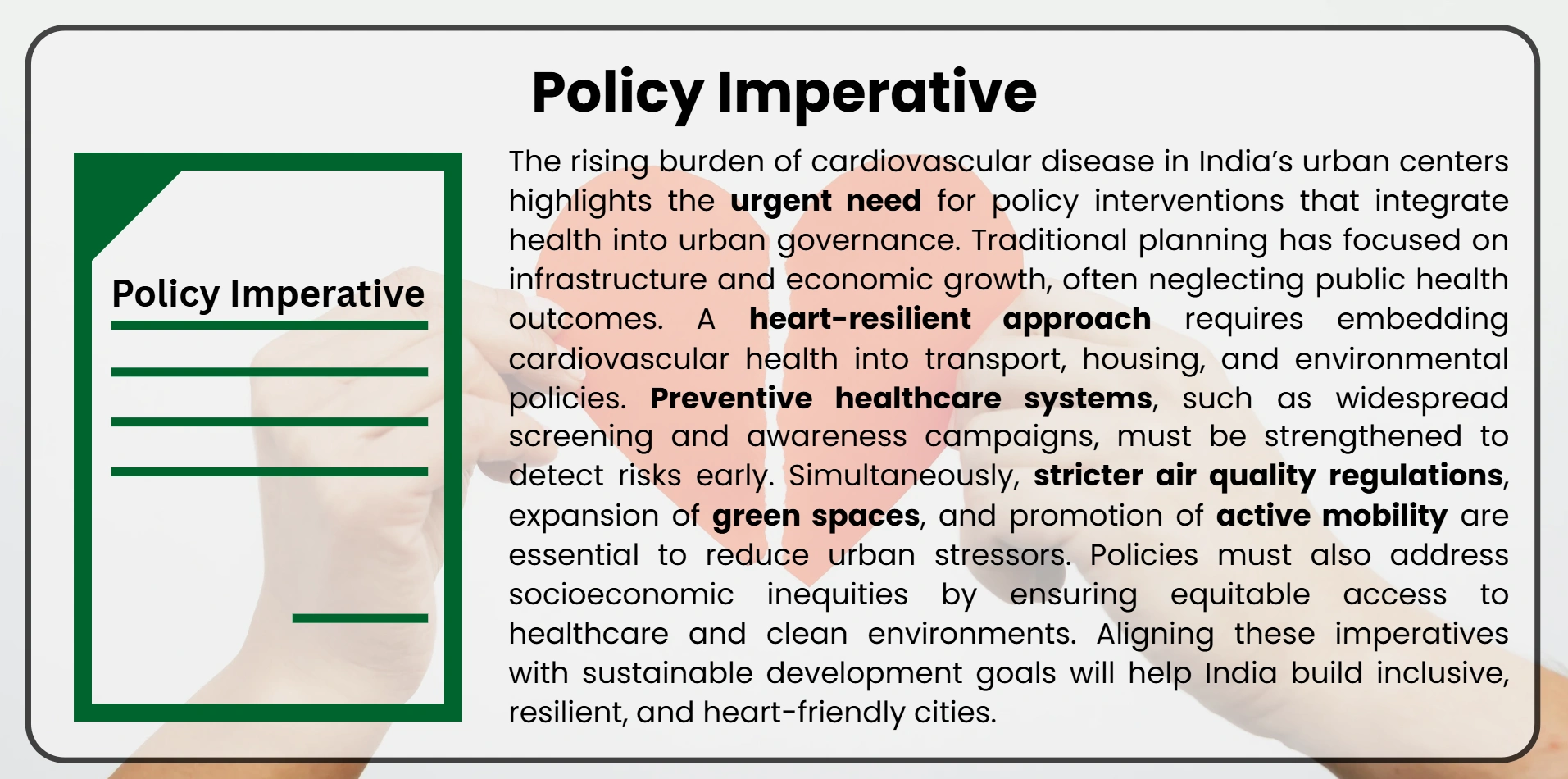
Incorporation of health in city politics is one of the essential requirements. Modern planning often focuses on economic growth and infrastructural development as the highest priority at the expense of the overall health status of people. The application of systematic meeting of the world health organisations' requirements through the implementation of their framework of Health in All Policies can help increase the relevance of transport, housing, and environmental regulations to the cardiovascular health needs, and thus make health a cross-sectoral objective instead of a marginal one.
Empowering Preventive Healthcare Systems
Stress on preventive healthcare by means of large-scale screening programs, social education, and community interventions can form the future directions of the policy. Early detection of cardiovascular risk factors may be facilitated by taking advantage of the national programs like Ayushman Bharat Health and Wellness Centres in India. The preventive measures will tend to reduce the long-term medical spending and also promote the quality of life, especially among the urban population who experience pollution, exposure to psychosocial stressors, and unhealthy lifestyles.
Green Buildings and Environmental Protection
There should also be health-oriented policy imperatives that concern sustainable urban infrastructure. Increased green areas, enhanced system of transport, and adoption of high air-quality standards are the tools that are inseparable from reducing the risk of cardiovascular problems. A city layout needs to be structured in a way that is pedestrian-friendly, build bicycle lanes, and institute noise mitigation measures. Environmental control that cuts down on the amount of vehicle emissions and industrial pollution still remains at the forefront of reducing the issue of urban health crisis that is on the rise.
Equitable Urban Development
Heart resilient planning would involve a targeted reaction to socioeconomic inequities. The marginalised communities are constantly faced with a lack of access to health care services, and even live in congested and polluted locations. There should be policies that provide equal distribution of healthcare facilities, affordable housing and clean environments. Tracks of inclusive development will decrease inequality in cardiovascular outcomes and cement social strength in a variety of urban societies.
Conclusion
The growing cardiovascular disease epidemic in urban India makes it clear that the need to incorporate health concerns into urban planning is urgent. Green spaces, active mobility, equal access to healthcare facilities, and sustainability of nature should be integrated as some of the key pillars of development in a heart-resilient city. This is not only a strategy of reducing cardiovascular risks but also serves more inclusive objectives of sustainable development. In its pursuit to remodel its urban environments, India can be able to redesign the city environments in a way that supports resilience, vibrancy, and wellbeing. Finally, the heart-friendly urban planning is a social health requirement, as well as a way toward greener city futures.