Contaminated water is water polluted by harmful substances like bacteria, viruses, chemicals, or radioactive materials, making the water unsafe for drinking, cooking, or bathing and posing serious health problems. Learn more details about the causes, crisis, affected regions, and solutions.
|
Key highlights
- Contaminated Water
- Causes of Water Contamination
- Extent of the Problem
- Government Initiatives on Contaminated Water
- Solutions for India’s Contaminated Water
|
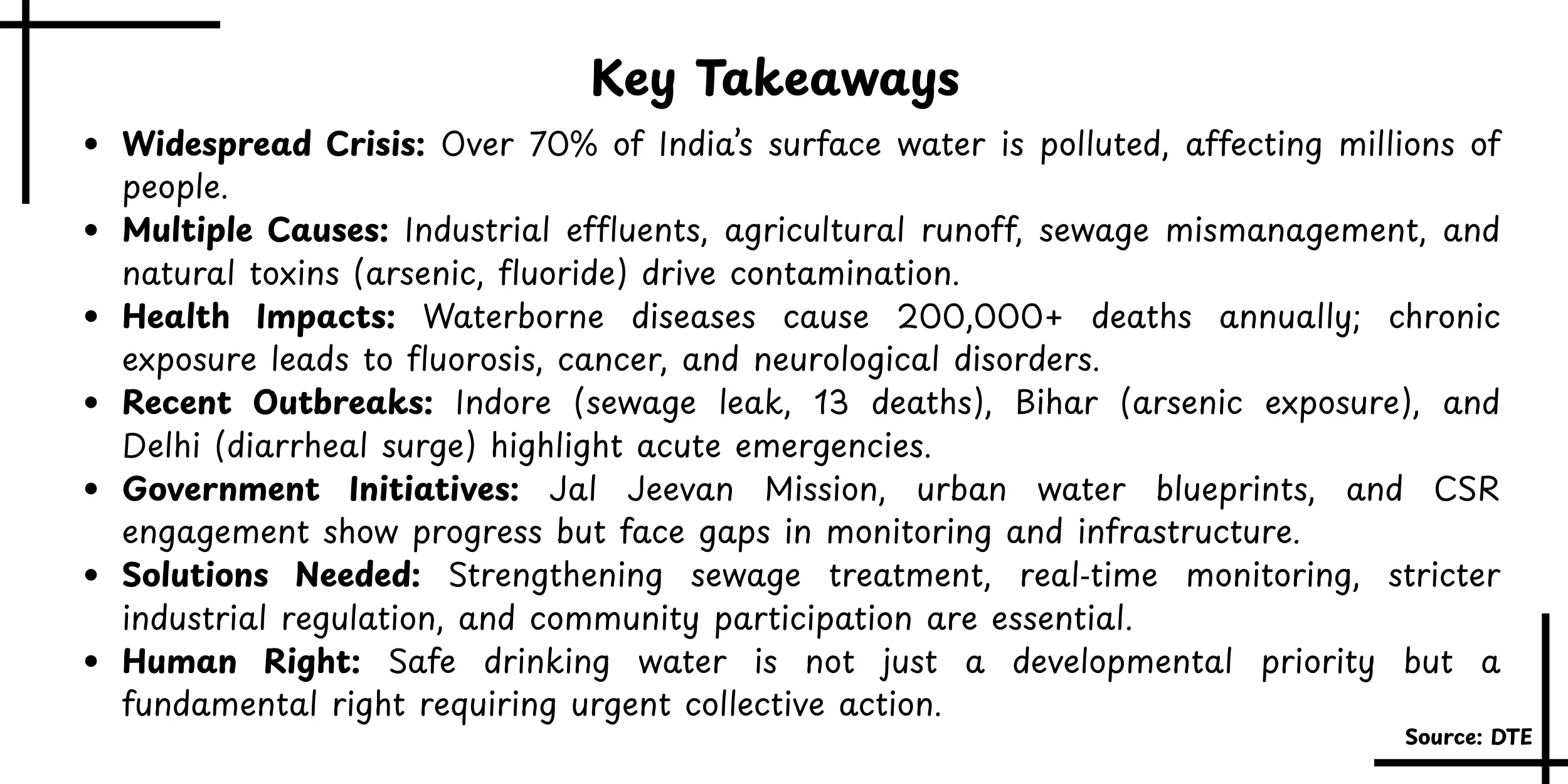
The availability of clean drinking water is one of the basic preconditions of civil health and eco-friendly development. Nonetheless, India is still struggling with a long-lasting problem of pollution in the rural and urban contexts. The quality of water is significantly reduced by industrial effluents, agricultural effluents, and poor sewage and naturally occurring pollutants like arsenic and fluoride. Its effects are extreme, including acute water borne diseases such as chronic health disabilities. This problem requires a very immediate concern, inasmuch as it has wider implications for governance, ecological, and social equity in the developmental trajectory of the country.
What is Contaminated Water?
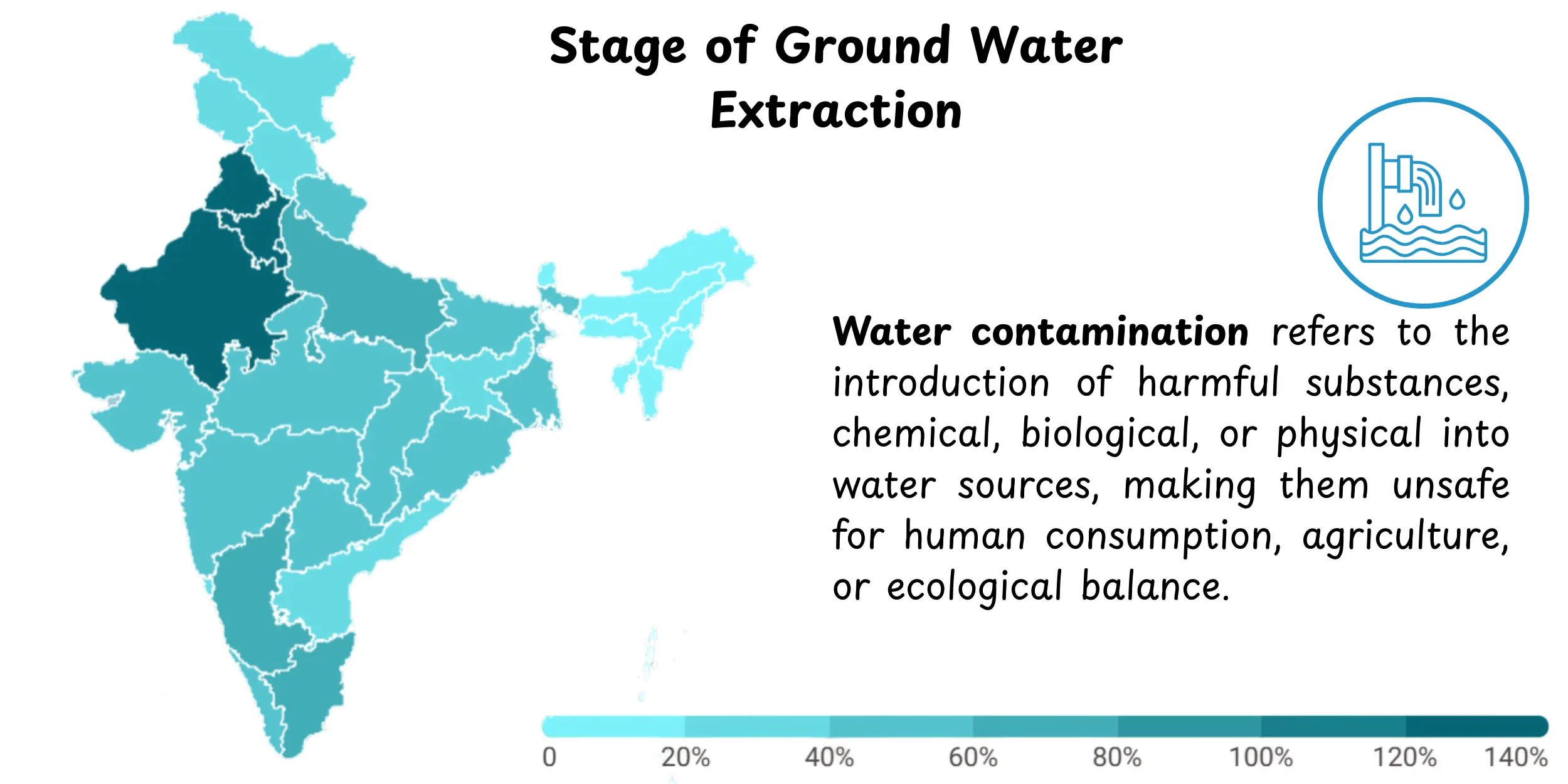
The meaning of contaminated water is water polluted by harmful substances like bacteria, viruses, chemicals, or radioactive materials, making the water unsafe for drinking, cooking, or bathing and posing serious health problems. These water contaminants, introduced by human activities (sewage, industrial/agricultural waste, runoff) or natural events, degrade water quality and harm aquatic ecosystems. Common waterpollutants include pathogens (bacteria, viruses), heavy metals (lead, mercury), pesticides, and industrial chemicals.
Causes of Water Contamination in India
The water contamination increasesmainly from human activities like agricultural runoff (pesticides, fertilizers), oil spills, industrial discharge (toxic chemicals and heavy metals), untreated sewage & wastewater, and improper disposal of plastics & solid waste, all introducing harmful microbes, chemicals, and pollutants into water bodies, alongside natural sources like mineral leaching. These water contaminants harm aquatic life and pose serious health risks to humans.The problem of drinking contaminated waterin India can be attributed to the interplay of both anthropogenic and natural elements, both leading to poor water quality and a grave threat to human health. We list below the key causes of water contamination in India-
Industrial Discharge
The rapid industrialization has caused the release of untreated effluents into rivers and underground water. The sample of water in the city often contains such heavy metals as lead and cadmium that are agents of long-term health risks.
Agricultural Runoff
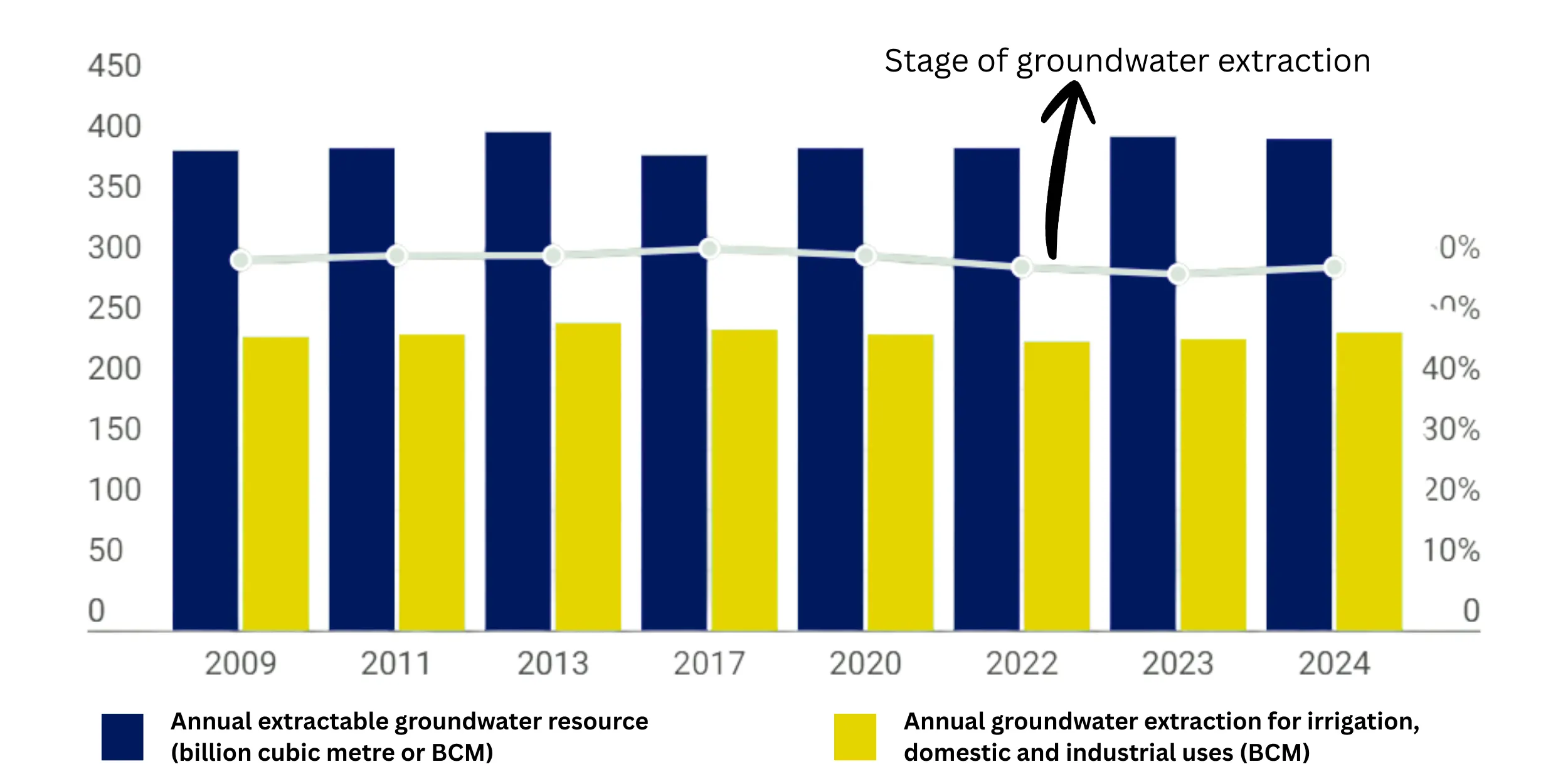
Fertilizers and pesticides pollute the aquifers of rural areas with nitrates and chemical residues. Studies also show that the agricultural belts can have higher nitrate levels than the known safety limits, thus increasing the possibility of methemoglobinemia among infants.
Urban Sewage and Solid Waste
Poor sewage treatment and poor waste management systems facilitate the entry of pathogens and organic pollutants into the drinking-water pipes. According to the Centre of Science and Environment (CSE), microbial contamination is one of the major causes of diarrheal outbreaks.
Natural Contaminants
In a number of states, there is a natural occurrence of arsenic and fluoride in groundwater. In a 2025 examination, it was revealed that the number of people being exposed to arsenic pollution is more than twenty million, specifically in Bihar and West Bengal.
Extent of the Crisisof Drinking Water Pollution
India is facing an extreme crisis of drinking-water pollution, with over 70% of the surface water bodies being polluted and almost one hundred and sixty million people having no access to safe sources. In a 2025 NITI Aayog report, it was highlighted that arsenic and fluoride exposure takes place in several states, and WHO estimates show that the number of deaths associated with waterborne diseases is more than 200,000 every year.
Present Emergency
The water infrastructure in the cities of India is under acute stress due to decay in pipes, a lack of sewage treatment, and a lack of leakages. A report conducted in 2025 by the Centre of Science and Environment demonstrated that more than 14% of municipal wastewater is not treated, giving rise to drinking supplies. Even the recent cases of sewage leaking through pipelines in Indore highlight the fact that the infrastructure has broken down all around and that the system requires governance changes.
Major Outbreaks
India had a sequence of severe episodes of drinking-water pollution in late 2025 and early 2026, which showed endemic weaknesses in urban contestation and the countryside's effective government. Such occurrences revealed the high level of vulnerability of many areas to water hazards.
- Indore Sewage Leak: In December 2025, there was a terrible crisis in the city of Indore, where sewage entered its drinking pipe systems. According to official reports, 13 deaths and over one hundred and fifty hospitalisations took place; the weakness of municipal water systems was highlighted.
- Bihar Arsenic Exposure: Parallel cases in Bihar involved increased levels of arsenic in groundwater in the various districts. A government survey in 2025 estimated a population of more than 10 million that was exposed, and the resulting long-term health effects were cancer and neurological disorders.
- Delhi Diarrheal Outbreak: TheState of Delhi registered a microbial contamination of piped water during January 2026, which again witnessed a high number of diarrhoeal cases in the state. Thousands of patients were reported in hospitals, and this has brought into the limelight the need to have better treatment facilities.
Chronic Water Contamination
The water crisis in drinking water in India is not merely a series of intermittent outbreaks but is lodged in chronic pollution of the groundwater reserves, where the levels of heavy metals and organically occurring toxins have remained for decades.
- Arsenic in Groundwater: Arsenic is at very high levels in such states as Bihar, West Bengal, and Uttar Pradesh. In the 2025 survey, the government estimated that more than twenty million people were exposed, which has long-term effects such as cancer and neurological disorders.
- Fluoride and Health Burden: The high levels of fluoride can be found in Rajasthan, Andhra Pradesh, and Telangana. Research has shown that fluoride levels of more than the allowable concentration of 1.5mg/L cause skeletal and dental fluorosis in rural societies.
- Industrial Heavy Metals:Lead, cadmium, and chromium are released into the aquifers by industrial centres. A study by the Centre of Science and Environment in 2025 found cadmium in 30% of the samples near industrial belts, and this causes a danger to kidney and skeletal health.
What are the Government Initiatives on Contaminated Water?
The Indian Governments have launched initiatives to address contaminated water through stricter regulations, improved wastewater treatment, regular water quality monitoring, and investments in safe drinking water infrastructure. Public awareness programs and partnerships with local authorities help reduce pollution and ensure access to clean, safe water for communities.The reaction of India to the contamination of drinking-water can be considered as a multi-layered policy framework, which includes expansion of infrastructure, monitoring of quality, and community involvement. The most recent budgetary allocations and national programmes prove the improvement as well as ongoing difficulties. Here are some government initiatives on contaminated water in India:
Jal Jeevan Mission
The Jal Jeevan Mission, which was rolled out in 2019, aims at supplying tap water to all rural households. The budget 2025-26 of the Union Budget allotted INR 67,000 croresto meet 100% coverage by 2028.
Urban Water Blueprint
The Ministry of Housing and Urban Affairs released a blueprint for clean urban drinking water by 2025, with priorities on sustainable treatment plants and a strong pipeline network within the scheme of Atal Mission of Rejuvenation and Urban Transformation.
Corporate Social Responsibility
The national monitoring agencies and corporate social responsibility (CSR) initiatives are being incorporated more into water safety programmes. According to evidence from 2025-26, the results of unequal improvement are observed, and the contamination incidents continue even with the increased access.
Solutions for India’s Contaminated Water
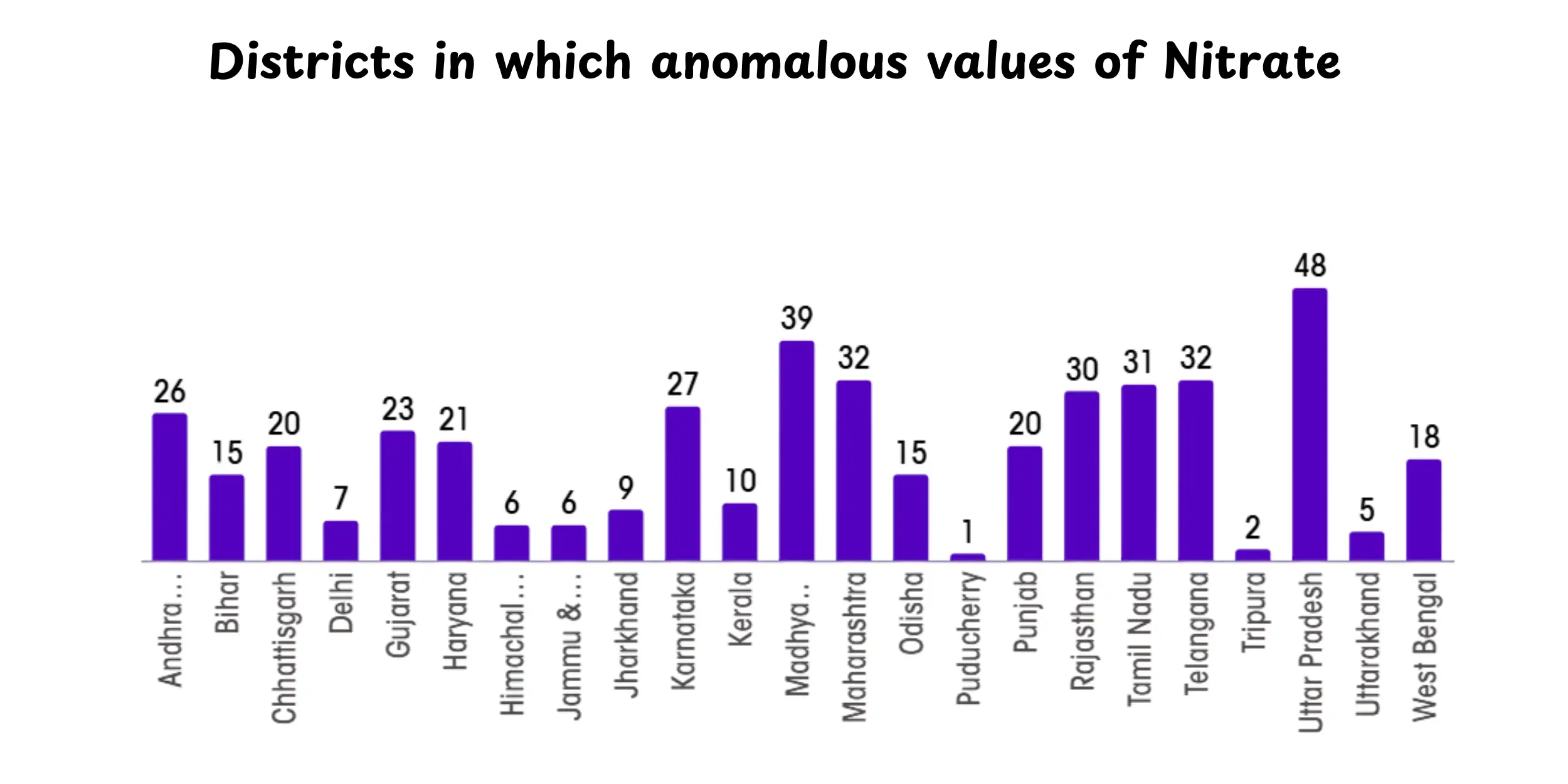
Solutions for India's contaminated water crisis involve a different approach: implementing advanced wastewater treatment (STPs), promoting rainwater harvesting & water conservation, upgrading household filtration (like RO/UV filters), improving agricultural practices, ensuring proper waste disposal, increasing public awareness, and developing innovative tech for decentralized treatment, real-time monitoring, and utilizing alternative sources like atmospheric water, all supported by strong policy and investment.The problem of drinking-water contamination in India requires a multidimensional approach to include the improvement of infrastructure, sound governance, new technologies, and participation of the communities. Green strategies should consider both the short-term needs of the population for health and the development of environmental resiliency in the long-term.
Strengthening Infrastructure
The growth and urbanization of sewage treatment facilities and pipeline networks are necessary. An assessment of NITI Aayog found that over 60% of the sewage has not been treated, in turn, contaminating water supplies in cities directly. The risks can be significantly reduced by investing in decentralized treatment systems.
Technological Monitoring
Professional mapping made with the use of digital sensors and GIS will allow tracking the hotspots of contamination precisely. A pilot trial developed in Gujarat in 2025 showed that real-time monitoring curtailed the incidence of microbial outbreaks by 30%, hence highlighting the critical role of technology in preventing outbreaks.
Awareness and Regulations
The adoption of certain educational programmes aimed at the population and the strict observation of regulations on the discharge of industrial waste into the environment are essential steps. The Centre of Science and Environment (2025) reports empirical evidence to demonstrate that the rate of compliance increased to 40% in the surveyed districts because of community-based water testing programmes.
Conclusion
Water pollution in India is one of the complex issues that affects individual health, environmental stability, and the government. Acid rain and constant eruption of outbreaks, as well as the contamination of groundwater, despite the interventions, which were organized on a variety of levels and with a number of tools, are signs of systemic defects in both the infrastructural models and regulations. The continuity of heavy metals, microbial pathogens, and natural toxins increases the need to adopt integrated and holistic mitigation measures. Therefore, more effective treatment capacity, followed by industrial responsibility and community interaction, is to be considered. Securing universal access to safe water is not just a developmental goal but also a human right that should be met by an immediate and concerted effort.
Frequently asked questionsFrequently asked questions
What is Contaminated Water?
The meaning of contaminated water is water polluted by harmful substances like bacteria, viruses, chemicals, or radioactive materials, making the water unsafe for drinking, cooking, or bathing and posing serious health problems. These water contaminants, introduced by human activities (sewage, industrial/agricultural waste, runoff) or natural events, degrade water quality and harm aquatic ecosystems. Common waterpollutants include pathogens (bacteria, viruses), heavy metals (lead, mercury), pesticides, and industrial chemicals.
Causes of Water Contamination in India?
The water contamination increasesmainly from human activities like agricultural runoff (pesticides, fertilizers), oil spills, industrial discharge (toxic chemicals and heavy metals), untreated sewage & wastewater, and improper disposal of plastics & solid waste, all introducing harmful microbes, chemicals, and pollutants into water bodies, alongside natural sources like mineral leaching. These water contaminants harm aquatic life and pose serious health risks to humans.The problem of drinking contaminated waterin India can be attributed to the interplay of both anthropogenic and natural elements, both leading to poor water quality and a grave threat to human health. We list below the key causes of water contamination in India-
Urban Sewage and Solid Waste?
Poor sewage treatment and poor waste management systems facilitate the entry of pathogens and organic pollutants into the drinking-water pipes. According to the Centre of Science and Environment (CSE), microbial contamination is one of the major causes of diarrheal outbreaks.
What are the Government Initiatives on Contaminated Water?
The Indian Governments have launched initiatives to address contaminated water through stricter regulations, improved wastewater treatment, regular water quality monitoring, and investments in safe drinking water infrastructure. Public awareness programs and partnerships with local authorities help reduce pollution and ensure access to clean, safe water for communities.The reaction of India to the contamination of drinking-water can be considered as a multi-layered policy framework, which includes expansion of infrastructure, monitoring of quality, and community involvement. The most recent budgetary allocations and national programmes prove the improvement as well as ongoing difficulties. Here are some government initiatives on contaminated water in India:
Solutions for India’s Contaminated Water?
Solutions for India's contaminated water crisis involve a different approach: implementing advanced wastewater treatment (STPs), promoting rainwater harvesting & water conservation, upgrading household filtration (like RO/UV filters), improving agricultural practices, ensuring proper waste disposal, increasing public awareness, and developing innovative tech for decentralized treatment, real-time monitoring, and utilizing alternative sources like atmospheric water, all supported by strong policy and investment.The problem of drinking-water contamination in India requires a multidimensional approach to include the improvement of infrastructure, sound governance, new technologies, and participation of the communities. Green strategies should consider both the short-term needs of the population for health and the development of environmental resiliency in the long-term.