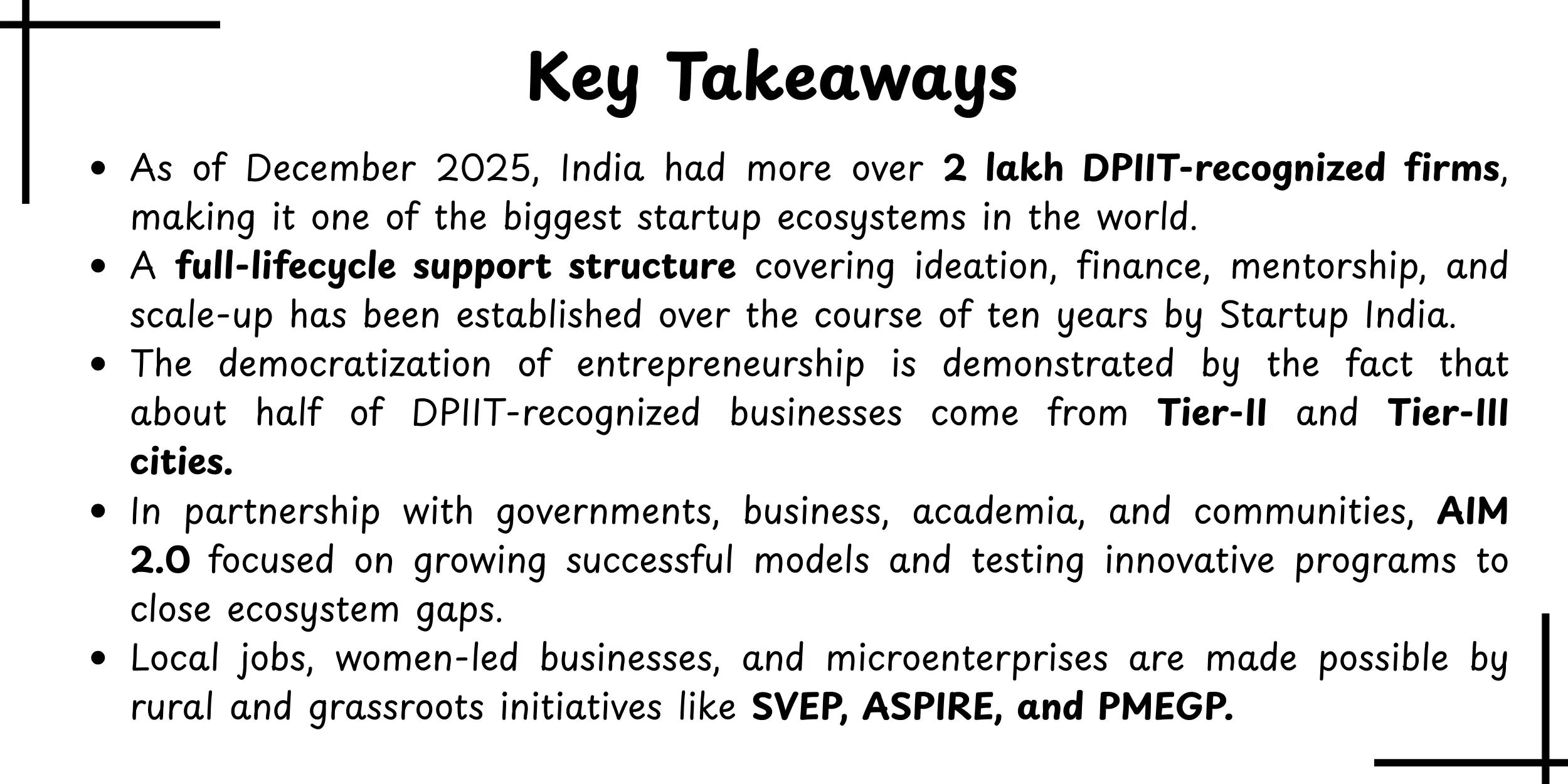
Startup India has recently been in the news because it is one decade into the mission after its introduction in 2016, with 2 lakh DPIIT-recognised startups and 120+ unicorns and inclusive growth across Tier-two and Tier-three cities, and India is being changed into a global hub of innovation.
|
Key highlights
- Startups: Leadership in Economic Change
- 10 Years of Building the Innovation Backbone of India
- Programs Empowering the Indian Startup Ecosystem
- Atal Innovation Mission (AIM)
- Future Visions for Startup India
|
The Startup India initiative is celebrating a decade of remarkable growth on January 16, 2026, solidifying India's position as the world's third-largest startup ecosystem. The movement has fostered innovation, generated over 2.1 million jobs, and driven sustainable economic transformation across the nation. The initial step in changing the economic and innovation conditions in India was the introduction of the Startup India initiative in January 2016. The programme, geared towards entrepreneurship, deregulation, and provision of financial and institutional resources, has come to be the bedrock of the growth story in India. In the last ten years, it has catalysed the origin of over two lakh DPIIT-recognised startups, the spread of entrepreneurial ventures to Tier-II and Tier-III cities, as well as the increase in more than 120 unicorns. This plan highlights how Startup India has become a factor in scaling innovation, democratising opportunity, and how this has outlined the path that India would take towards a knowledge-driven economy.
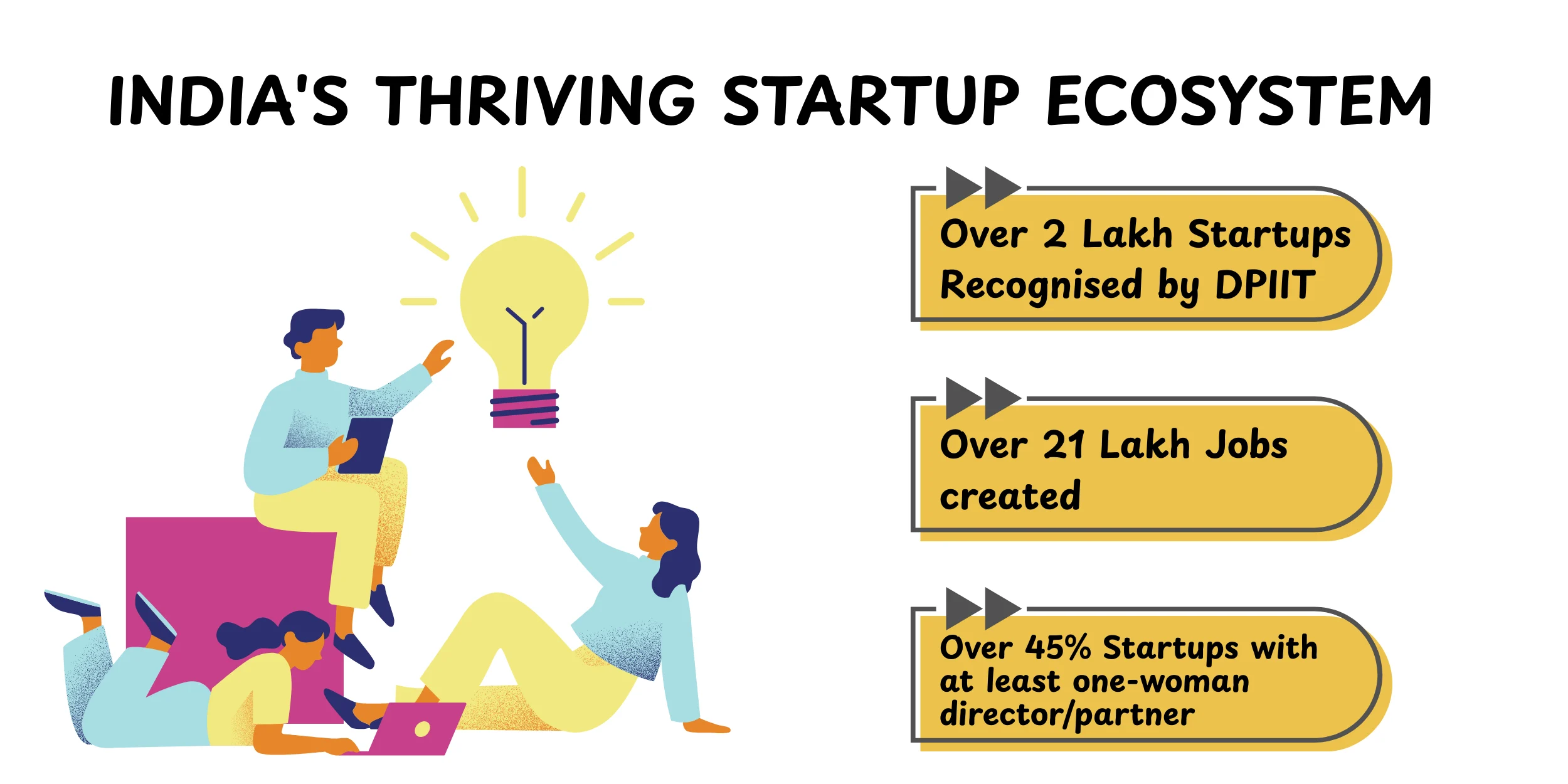
Startups: Leadership in Economic Change
Startups have become one of the vital drivers of Indian economic transformation. Startup India, over the last decade, has incubated over 2 lakh DPIIT-registered ventures, created over 21 lakh jobs and made India the 3rdlargest startup ecosystem globally. Startups have transformed the landscape of entrepreneurship in India by propelling technological innovation, productivity growth, as well as diversification of sectoral growth, agri-tech and clean mobility. The societal impact they have goes beyond wealth creation, and they contribute to inclusive development in Tier-II and Tier-III cities and are at par with the national vision of Viksit Bharat@ 2047.
Startup India: 10 Years of Building the Innovation Backbone of India
The Startup India Initiative was initiated in 2016 and has become the foundation of the entrepreneurial ecosystem of India, which has led to a rise in innovation, establishment of employment and the ability to compete on the global stage with the help of institutional and monetary assistance.
Evolution of the Startup Ecosystem
Startup India is a multi-dimensional platform that has undergone a conversion of the policy framework to enable startups from the idea to the scaling phase. Indian startup has grown to include more than 120 unicorns to date, from only four in 2014, all with a total valuation of USD 350 billion, underscoring the global relevance.
Employment and collaboration under Startup India
Startups use the demographic dividend of India to create jobs in technology, manufacturing, and services, and open up indirect opportunities based on gig work and supply chains. Partnerships with corporates and multinationals have enabled transfer of technology, scalability and integration in the global markets.
Sectoral Innovation through Startup India
The innovation has changed the classic industries: agricultural solutions such as the Hesacan improve the accessibility of the market to farmers, whereas clean mobility initiatives like Zypp can provide scalable EV-based last-mile services. These innovations generate a series of multiplier effects in the fields of finance, sustainability, and supply chains.
Flagship Platforms by Startup India
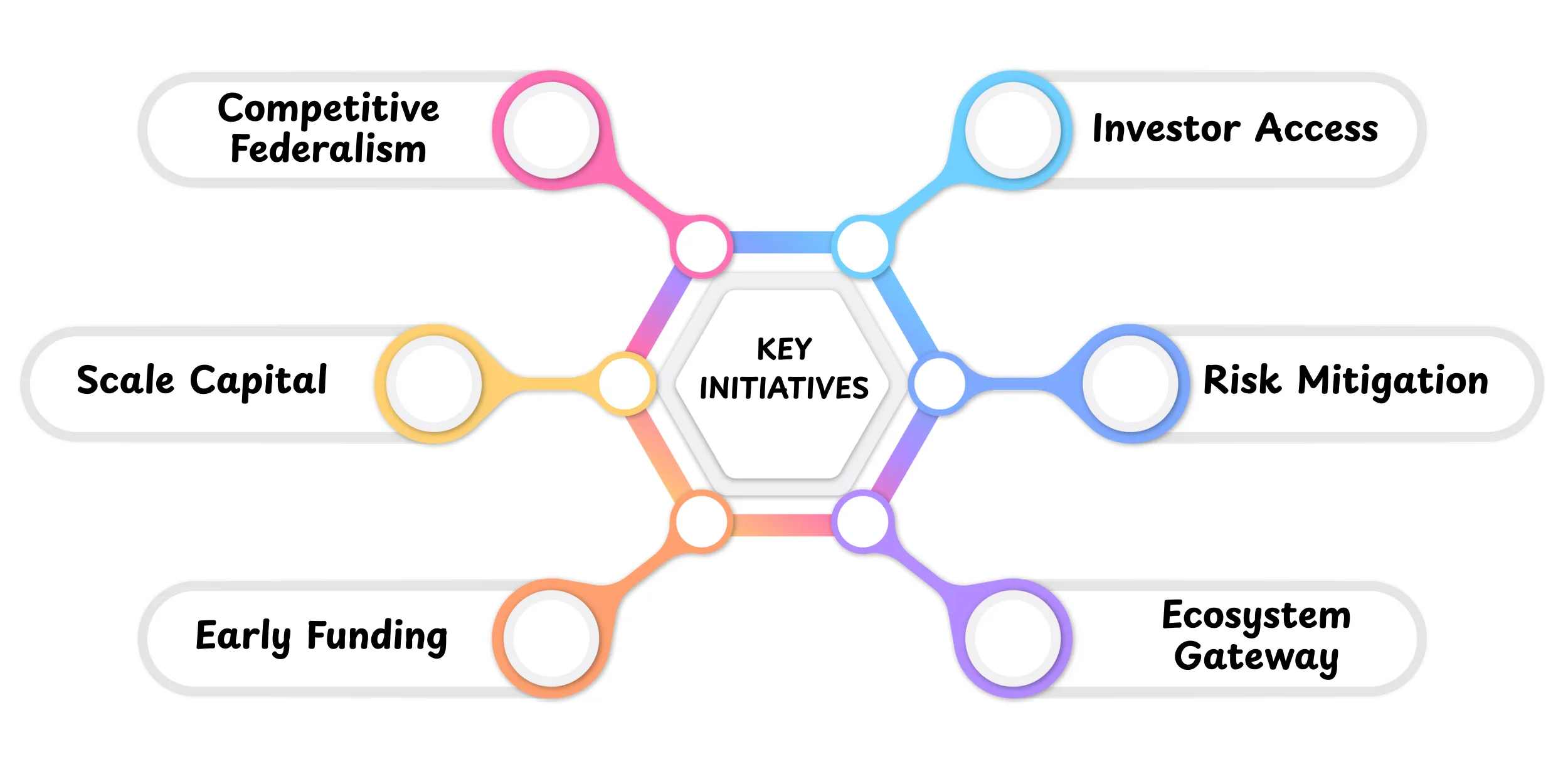
Mechanisms in place to support, such as the Fund of Funds for Startups (INR 10,000 crores corpus, 1370 plus startups funded), the Credit Guarantee Scheme (INR 800 crores loans guaranteed), and the Seed Fund Scheme (INR 945 crores, 215 plus incubators supported), have been institutionalised by the DPIIT. The Startup India Hub, MAARG mentorship portal and Investor Connect Portal are other digital platforms that reinforce this ecosystem, and moreover,the Startup Ranking Framework scheme promotes competitive federalism..
Programs Empowering the Indian Startup Ecosystem
The Startup India initiative has become institutional over the last ten years and has designed schemes to provide financial support, mentorship and structural advantages, which would unify the Indian growth path of innovations.
Fund of Funds for Startup (FFS)
To increase risk capital accessibility, the Fund of Funds for Startups was started by SIDBI with a corpus of ₹10,000 crore. So far, over 140 alternative investment funds (AIFs) have secured commitments, which in total invested INR 25,500 crore in more than 1370 startups, which has reinforced early-stage financing.
Credit Guarantee Scheme for Start-ups(CGSS)
CGSS was initiated by the National Credit Guarantee Trustee Company (NCGTC), and it enables collateral-free loans to startups. Over 330 loans with a total value of INR 800 crores have been guaranteed, and this has led to a lowering of financial barriers and risk-taking among entrepreneurs in different sectors.
Startup India Seed Fund Scheme (SISFS)
The SISFS contributes to proof of concept, prototype, and market entry with a corpus of INR 945 crores. More than 215 incubators have been sanctioned to direct funds to early-stage ventures which guarantee that innovation is backed with funds on a timely basis.
Online Collaboration and Mentoring Under Startup India
Beyond the schemes in place to support finances, the digital initiatives like the Startup India Hub, the MAARG mentorship portal, and the Investor Connection Portal offer networking, guidance, and access to investors. There is also the State Startup Ranking Framework (SRF) that promotes the concept of competitive federalism, which pushes the states to maximise local ecosystems.
Atal Innovation Mission (AIM)
Managed by NITI Aayog, the Atal Innovation Mission (AIM) is now a strategic pillar in the Indian innovation ecosystem, substituting AIM 1.0;AIM 2.0 is focusing more on scope and increased investment.
AIM 1.0: Flagship Programs
AIM 1.0 had been created to promote grassroots innovation and entrepreneurial ability. Its signature programs were the Atal Tinkering Labs (ATLs) that created an innovation factory in schools in order to develop problem-solving and design thinking capability in students. By 2024, more than 10,000 ATLs were established all over the country and reached out to millions of young inventors. In addition to the ATLs, the Atal Incubation Centres (AICs) offered formal assistance to startups, which included mentorship and infrastructure, as well as seed funding. Further,it gave a boost to the Atal New India Challenge (ANIC) that focused on technology-driven solutions to the national agenda, like health, agriculture, and clean energy.
AIM 2.0: Expansion and Deepening
AIM 2.0 is planned to increase the intensity and range of the Indian innovation ecosystem with a budget of INR 2750 crore approved in 2024 and up to March 2028. It boosts current programmes and launches new ones so as to expand entrepreneurial activity. ANIC 2.0 also promote the commercialisation of innovations in key sectors, and AICs are being extended to Tier2 and Tier3 cities. The AIM 2.0 also focuses on the global competitiveness, sustainability and alignment with Viksit Bharat@2047 of India.
Future Visions for Startup India
The trend followed over the last 10 years by Indian startups has created a solid road map to fuelled growth of innovation. The next step demands growth of the execution capacity, its greater sustainability, and global competitiveness.
- Innovation as a driverof Growth: Startups are expected to take a central role in achieving the projected economy of $7.3 trillion in 2030 in India, whereby innovation will drive productivity, digitalization and diversification of sectors. The inclusive development is going to be guided by emerging technologies, such as artificial intelligence, clean mobility, and agri-tech.
- Empowering the Ecosystem Implementation: The implementation will be essential, and it will include the development of access to finance, mentorship, and access to international markets. The readiness of the institutions to support scaling can be seen in flagship programs like FFS, (INR 25,500 crore invested in over 1,370+ startups and SISFSINR 945 crore corpuses.
- Towards Viksit Bharat@2047: With a convergence between innovation and execution, the startups will serve as agents of change that will help India transition into a knowledge-based economy. Their role in the creation of jobs, sustainability and competitiveness will play a major role in the realisation of the Viksit Bharat 2047 vision.
Conclusion
10 years of the Startup India initiative prove a strategic commitment of India to the development of innovative growth. The programme has transformed the entrepreneurial landscape through institutionalisation of financial assistance, mentorship and sectoral diversification, resulting in more than 200,000 DPIIT-known startups and over120+ unicorns with a total valuation of over $ 350. With India striving towards its Viksit Bharat@2047 vision, startups will continue to play a leading role in creating an inclusive yet strong and globally competitive economy based on innovation and sustainable implementation.
Frequently asked questionsFrequently asked questions
Startups: Leadership in Economic Change?
Startups have become one of the vital drivers of Indian economic transformation. Startup India, over the last decade, has incubated over 2 lakh DPIIT-registered ventures, created over 21 lakh jobs and made India the 3rdlargest startup ecosystem globally. Startups have transformed the landscape of entrepreneurship in India by propelling technological innovation, productivity growth, as well as diversification of sectoral growth, agri-tech and clean mobility. The societal impact they have goes beyond wealth creation, and they contribute to inclusive development in Tier-II and Tier-III cities and are at par with the national vision of Viksit Bharat@ 2047.
Startup India: 10 Years of Building the Innovation Backbone of India?
The Startup India Initiative was initiated in 2016 and has become the foundation of the entrepreneurial ecosystem of India, which has led to a rise in innovation, establishment of employment and the ability to compete on the global stage with the help of institutional and monetary assistance.
Programs Empowering the Indian Startup Ecosystem?
The Startup India initiative has become institutional over the last ten years and has designed schemes to provide financial support, mentorship and structural advantages, which would unify the Indian growth path of innovations.
Atal Innovation Mission (AIM)?
Managed by NITI Aayog, the Atal Innovation Mission (AIM) is now a strategic pillar in the Indian innovation ecosystem, substituting AIM 1.0;AIM 2.0 is focusing more on scope and increased investment.