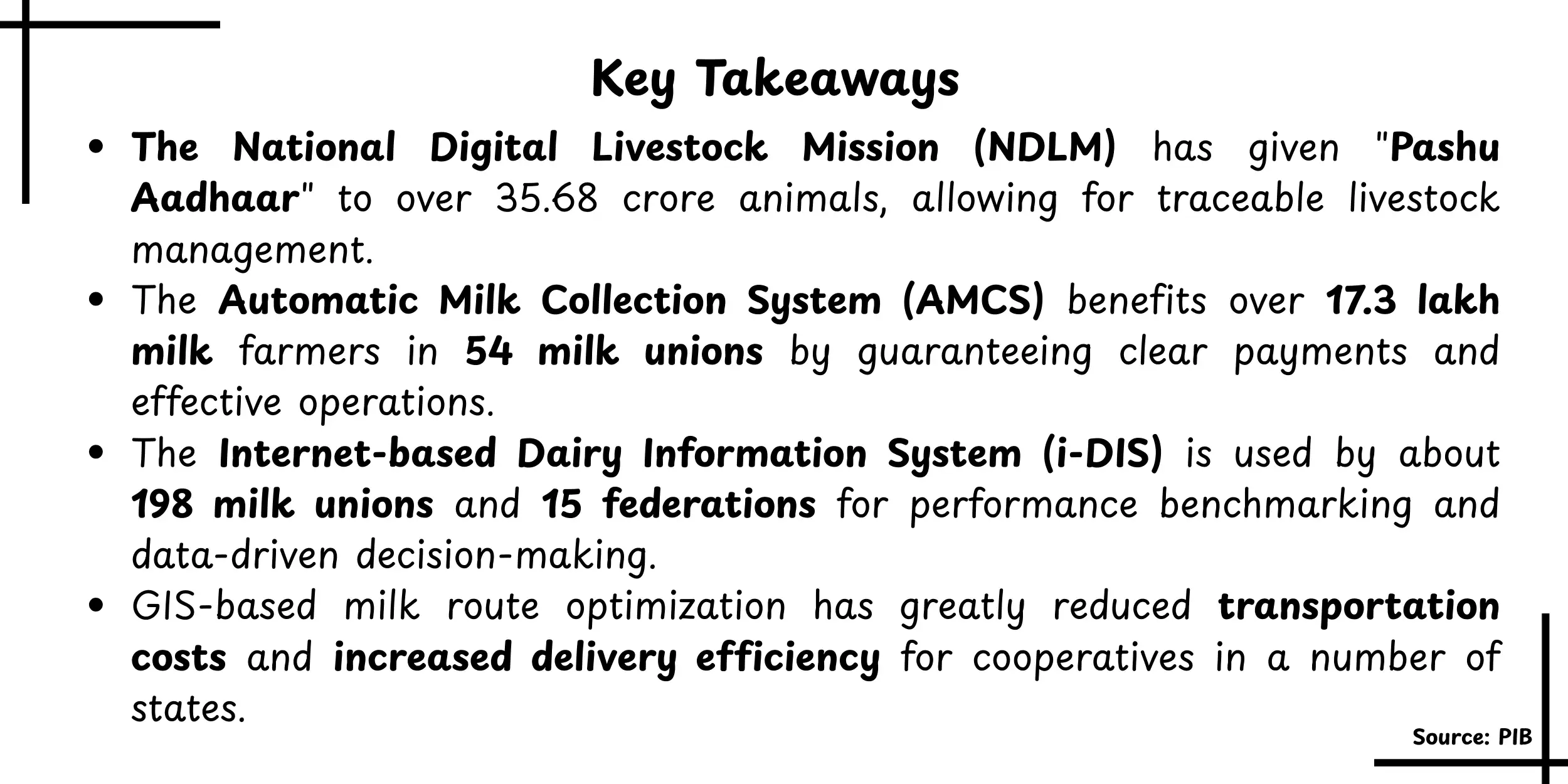
The dairy industry sector in India has found itself in the limelight of media coverage, catalysed by the increasing demand, limited supply and governmental efforts to transform the sector not only with the establishment of 11 crore Digital Farmer IDs by 2026, but also reinforced by initiatives through digitalisation, transparency and greater focus on the farmer-centric industry.
|
Key highlights
- Dairy Sector of India
- National Digital Livestock Mission (NDLM)
- Automatic System of Milk Collector
- NDDB Dairy ERP (NDERP)
- Semen Station Management System (SSMS)
- Milk Route Optimisation
|
The dairy industry of India remains the biggest in the world and is an important source of livelihood and national food security. Nonetheless, the impact and inclusiveness of the program are undermined by the current flaws in operations, such as diverse supply chain systems, unfocused pricing protocols, and the unavailability of technology. On the other hand, the current flow of the digitalisation process, which is enhanced by blockchain, mobile applications, and Internet of Things (IoT) technologies, has a strong amount of potential to cause transparency, traceability, and empowerment among agricultural producers. By digitally empowering systems, integrating new frameworks, and creating the structures to support policy, India could create a smarter, more farmer-oriented course of action, one that leads to higher productivity, more equitable distribution, and that fits into managed sustainable development purposes.
Dairy Sector of India
India’s dairy industry, the largest in the world by milk production, is a vital pillar of the rural economy, providing livelihoods to millions and making a substantial contribution to the national GDP. Over the past decade, the sector has witnessed remarkable growth, with milk production reaching 239.3 million tonnes in 2023–24. This expansion has been fueled by strong domestic demand, robust farmer cooperatives, and a growing emphasis on value-added products such as paneer and ghee, alongside sustained government support and increasing adoption of modern technologies.The dairy industry in India is the largest in the world, which contributes around 5 percent to the national economy and employs more than 8 crore farmers. This has proven to be crucial to the rural livelihoods and food security since milk production is expected to be bound at about 216.5 million metric tonnes in the year 2025 due to the increase in herds and the subsidies by the government.
Significance of the Dairy Sector to India
The dairy industry in India is a vital economic sector, providing livelihood and food security in rural regions, where millions of households are employed, and a huge part of the GDP is generated. Modernisation ultimately leads to the sustainable growth of the industry.
Economic Contribution
The dairy industry comprises about 5 percent of the national economic setup in India and is the most substantial segment of the agricultural products. It offers direct assistance to more than 8 crore farmers, the majority of them small and marginal farmers, which consequently brings about inclusive growth.
Production and Significance in the Market
With a continued growth in the number of herds and government encouragement, India is the largest milk producer in the world, and is expected to produce 216.5 million metric tons of milk in 2025. In 2024, the market size stood at INR 18,975 billion and is forecasted to increase at a growth rate of 12.35% to reach a mark of INR 57,001.8 billion by 2033.
Social and Nutritional Role
Other than being economic, dairy also guarantees nutritional security by providing affordable protein and calcium. The milk in the Sushruta Samhita is stated as a “Complete Food” because of its life-giving nature. Milk empowers women who live in rural areas by allowing them to participate through co-operations and this enhances social equity and resilience of society.
National Digital Livestock Mission (NDLM)
The National Digital Livestock Mission (NDLM) is a radical project by the Government of India, aimed at the upheaval of livestock management to the digital platform to achieve transparency, productivity, and empowerment of the farmers.
Objectives and Vision of Mission
NDLM was launched by the Department of Animal Husbandry and Dairying, and it is an endeavour to design a complete digital database on livestock and related services. Its key mission is to breed better animals, to monitor disease, to provide information on products and to deliver information that isfarmer-centric. The mission, through the incorporation of technology, seeks to boost productivity but at the same time ensuring sustainable livestock practices.
Implementation and Scope of Mission
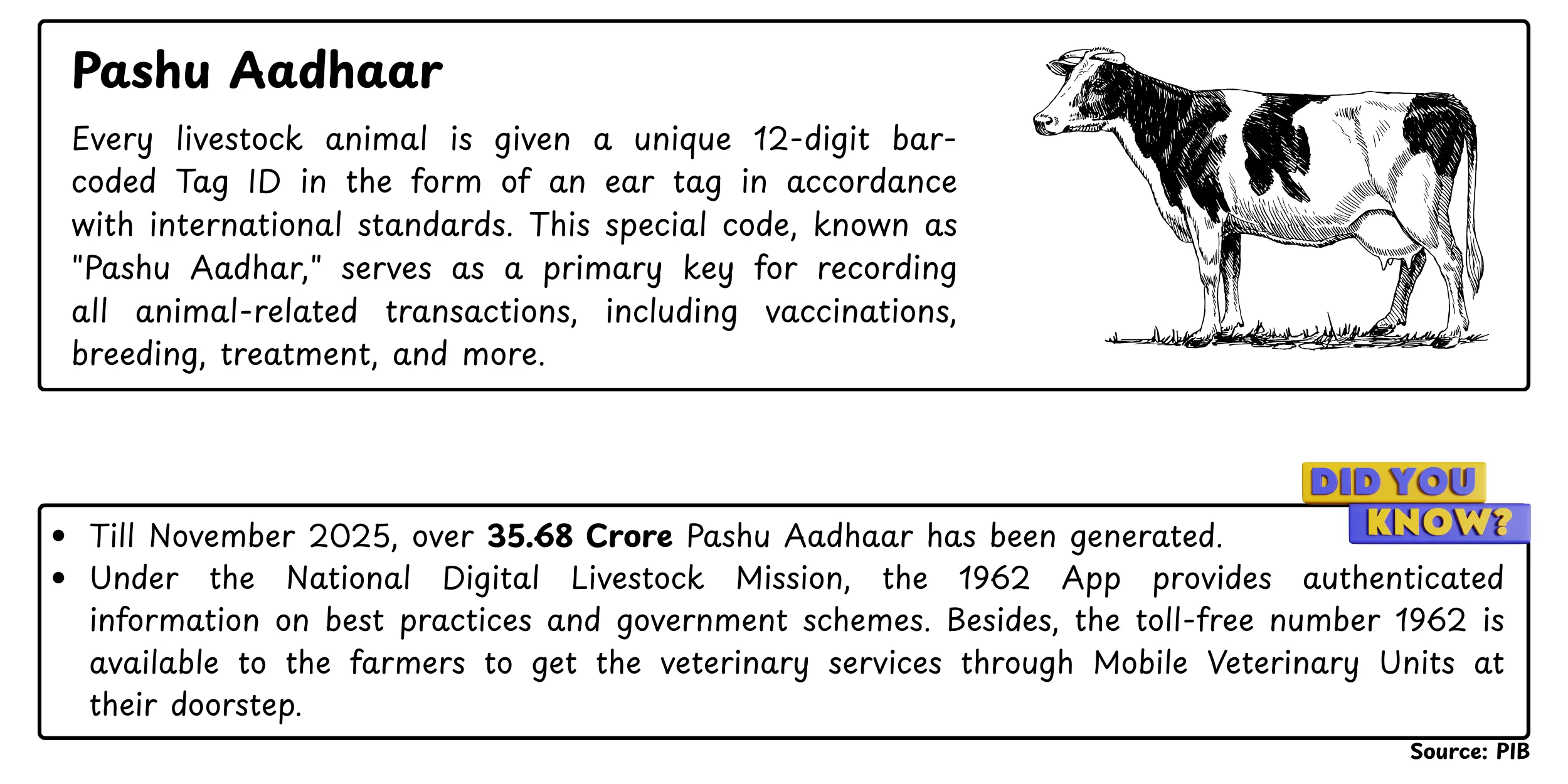
NDLM has been fully implemented within the states, covering the districts such as Etah, Kasganj, Etawah, Auraiya, Mainpuri, Kannauj and Aonla (Bareilly) in Uttar Pradesh. As of December 2025, 35.96 crore Pashu Aadhaar IDs had been issued, where livestock owners and their animals are registered in the system. This is a digital identity that guarantees proper monitoring of the health, breeding and productivity of animals.
Merits for Farmers and Sectoral Development
The mission also enables farmers by providing them with real-time access to breeding programs, veterinary services, and market information. It enhances the disease control measures, especially against Foot and Mouth Disease (FMD), and allows the Direct Benefits Transfer (DBT) linked to livestock records. The livestock sector in India is already worth 17 lakh crore, and it has almost 5 percent contribution to Gross Value Added (GVA). Thus, NDLM will make a tremendous contribution towards efficiency and inclusiveness.
Automatic System of Milk Collector
There is the Automatic Milk Collection System (AMCS) under the NDLM, which has a mix of advanced instrumentation and software to fully automate the process of milk collection at the village centres. It eradicates human errors, ensures the accurate determination of fat and solids-not-fat (SNF), as well as providing stakeholders with streams of data in real time.
Empowers Effectiveness and Transparency
This system monitors the amount of milk, quality parameters and remuneration is instantly calculated following the existing rate charts. It therefore eliminates exploitation, enhances the relationship of trust between the cooperatives and the farmers and simplifies the supply-chain logistics.
Data and Market Impact
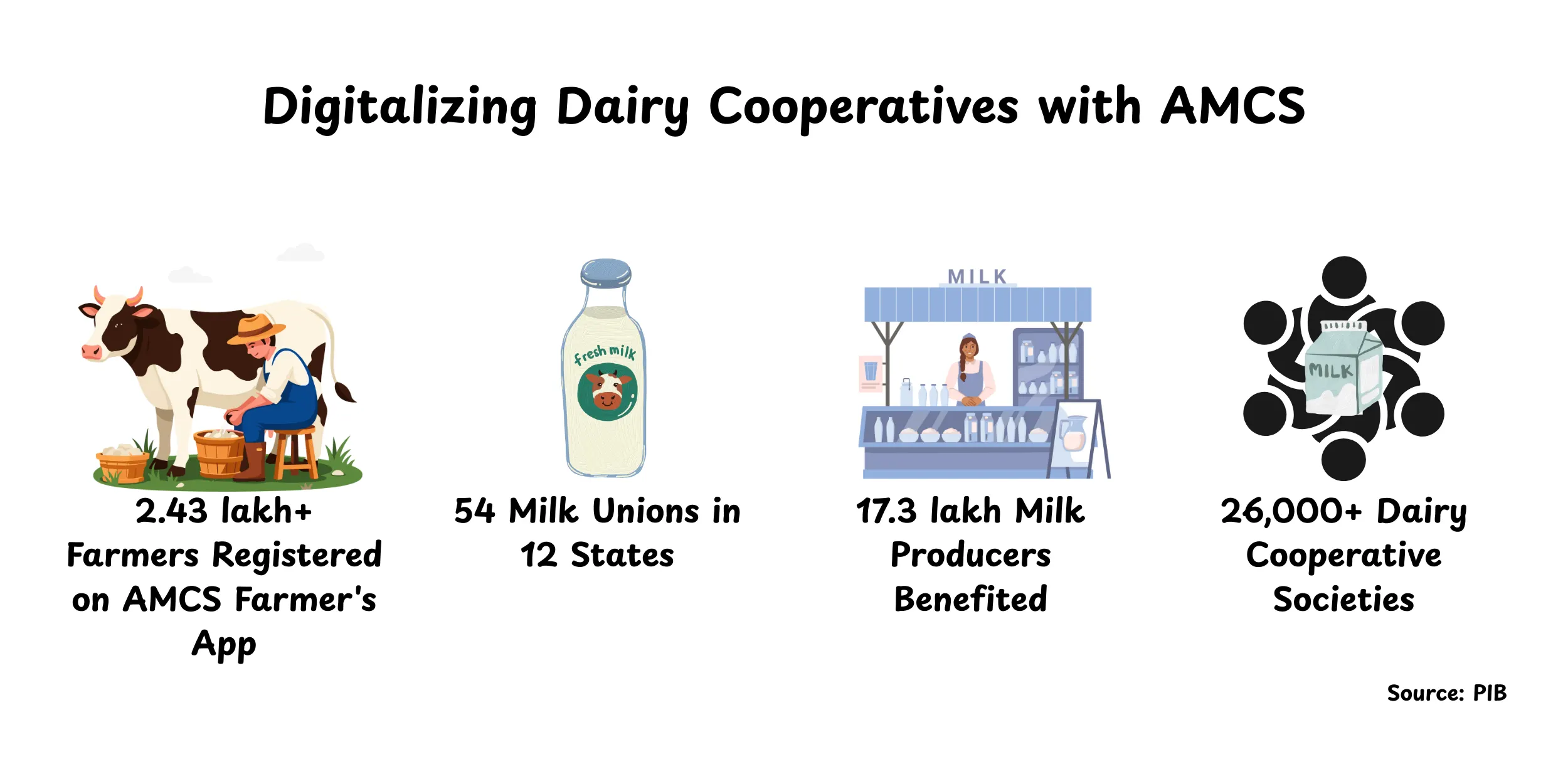
Reports on the industry point to AMCS platforms covering thousands of cooperating societies and the digitisation of transactions of millions of farmers. Cloudbased systems also produce analytics, thus allowing better decision-making and enhanced quality assurance in the dairy industry of India.
NDDB Dairy ERP (NDERP)
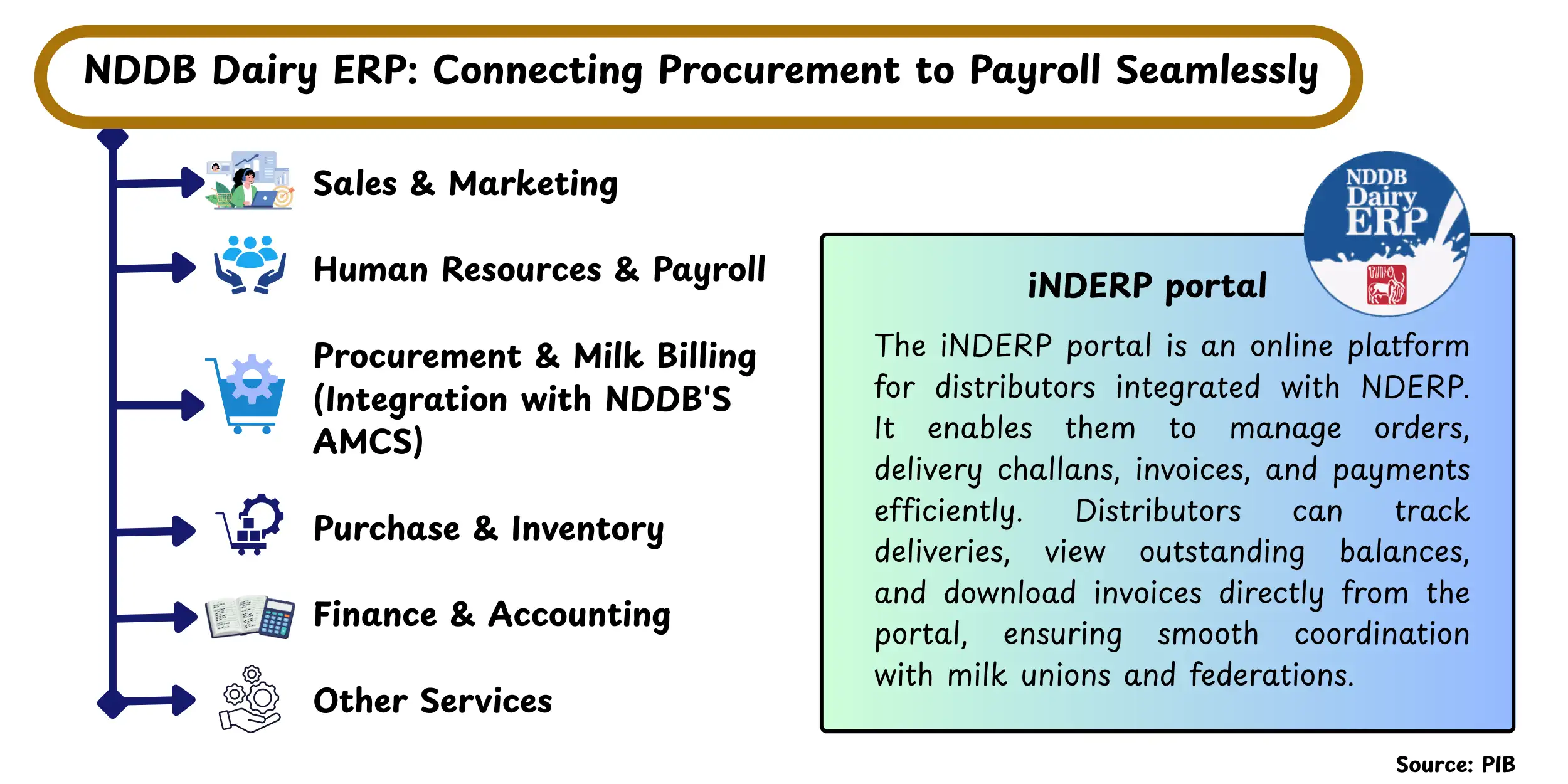
The National Dairy Development Board came up with the NDDB Dairy Enterprise Resource Planning (NERP) platform to automate the dairy activities. It combines procurement, processing, distribution and financial management, and hence this provides transparency and efficiency. For your better understanding lets understand it with the Sanchi Dairy, which has been operating NDERP, based on ERPNext, and is managing more than 300,000 litres of milk per day and has to cope with 11 districts, served by 22 chilling centres.
Semen Station Management System (SSMS)
The Semen Station Management System (SSMS) is adigital platform that was initiated by the National Dairy Development Board to supply uniformity and streamline the production of frozen semen doses,and ensure minimum standard protocol in the livestock industry of India.
Objectives and Framework
SSMS is provided to make sure that the Minimum Standard Protocols (MSP) and Standard Operating Procedures (SOPs) of the Government of India have been adhered to. It includes major processes like managing bull lifecycle, production of semen and quality assurance, therefore evidencing effectiveness and transparency.
Implementation and Integration
The system is combined with Information for Semen Production and Resource Management (INSPRM) of NDDB and INAPH (Information Network for Animal Productivity and Health). This integration assists in real-time capturing of data on breeding, nutrition and health service, and RFID tagging ensures all bulls are monitored without any errors.
Benefits and Impact
In semen stations, SSMS enhances biosecurity, environmental safety, and traceability. It is useful in genetic improvement programmes, increasing accessibility to high-quality breeding material to the farmer, and sustainable livestock productivity through the digitisation of semen production and distribution.
Milk Route Optimisation
Milk Route Optimisation (MRO) is a strategic project of the national dairy development board, which uses geospatial technology to make the procurement and distribution of milk efficient.
Concept and Application of MRO
The NDDB has provided the cooperatives with the ability to visualise alternative route choices through the digitisation of the milk collection routes using Geographic Information System (GIS) technologies, and thus, minimise the transport costs. This information-intensive approach replaces the manual planning approaches with planned maps that are systematically produced out of GPS data, which is empirically collected.
Efficiency and Impact of MRO
Optimisation minimises the purchase and distribution expenses per litre, strengthens the cold-chain management and is used to deliver milk and dairy items on-time. It also reduces the amount of fuel used, thus decreasing the environmental effects.
Data and Implementationof MRO
According to NDDB, GIS-based route planning has been embraced in various states and has been able to enhance the logistics of cooperatives, as well as increase the income of farmers due to a decrease in operational inefficiencies.
Conclusion
Digitisation of the dairy industry in India is a whole new change towards being transparent, efficient and empowering the farmers. The sector can overcome structural challenges and secure equal distribution of values by combining technologies that may help reduce the issue, like blockchain, IoT, ERP systems, and route optimisation. Government efforts such as NDLM and AMCS highlight the efforts by the government to develop a farmer-focused ecosystem. To sum up, the digital transformation process not only makes the people working in industries more productive and sustainable, but it also makes the Indian dairy industry a paradigmatic case of inclusive development and technological advances in the world arena.
Frequently asked questionsFrequently asked questions
Dairy Sector of India?
India’s dairy industry, the largest in the world by milk production, is a vital pillar of the rural economy, providing livelihoods to millions and making a substantial contribution to the national GDP. Over the past decade, the sector has witnessed remarkable growth, with milk production reaching 239.3 million tonnes in 2023–24. This expansion has been fueled by strong domestic demand, robust farmer cooperatives, and a growing emphasis on value-added products such as paneer and ghee, alongside sustained government support and increasing adoption of modern technologies.The dairy industry in India is the largest in the world, which contributes around 5 percent to the national economy and employs more than 8 crore farmers. This has proven to be crucial to the rural livelihoods and food security since milk production is expected to be bound at about 216.5 million metric tonnes in the year 2025 due to the increase in herds and the subsidies by the government.
National Digital Livestock Mission (NDLM)?
The National Digital Livestock Mission (NDLM) is a radical project by the Government of India, aimed at the upheaval of livestock management to the digital platform to achieve transparency, productivity, and empowerment of the farmers.
Automatic System of Milk Collector?
There is the Automatic Milk Collection System (AMCS) under the NDLM, which has a mix of advanced instrumentation and software to fully automate the process of milk collection at the village centres. It eradicates human errors, ensures the accurate determination of fat and solids-not-fat (SNF), as well as providing stakeholders with streams of data in real time.
NDDB Dairy ERP (NDERP)?
The National Dairy Development Board came up with the NDDB Dairy Enterprise Resource Planning (NERP) platform to automate the dairy activities. It combines procurement, processing, distribution and financial management, and hence this provides transparency and efficiency. For your better understanding lets understand it with the Sanchi Dairy , which has been operating NDERP, based on ERPNext, and is managing more than 300,000 litres of milk per day and has to cope with 11 districts , served by 22 chilling centres.
Milk Route Optimisation?
Milk Route Optimisation (MRO) is a strategic project of the national dairy development board, which uses geospatial technology to make the procurement and distribution of milk efficient.