A graviton is a hypothetical, massless elementary particle that carries the force of gravity in theories of quantum gravity, acting as the quantum equivalent to the photon for electromagnetism, mediating gravitational interactions as discrete packets of energy. The plan to build the first graviton detector in the world by scientists at Stevens Institute of Technology and Yale has been in the news because of its importance for modern day Science.
|
Key highlights
- What is a Graviton?
- Gravitons and Quantum Gravity
- The Challenge of Graviton Weakness Forces
- Technological and Experimental Obstacles
- Prospects and Significance of Gravitons
|
A graviton is a hypothetical, massless particle that carries the gravitational force, acting as the quantum messenger of gravity, much like the photon carries light. One of the most unsolved mysteries of the quantum scale is gravity, despite it being one of the four fundamental forces of nature. Although electromagnetism and the strong and weak nuclear forces have been effectively integrated into quantum field theory, gravity has been resistant to such integration. The hypothetical particle that is believed to mediate the gravitational interaction is the so-called graviton, but researchers have not been able to detect it because gravity is incredibly weak compared to the rest of the forces. The design of a graviton detector is a recent attempt to explore this frontier, and has the prospect of making breakthroughs in the reconciliation of the theory of general relativity with quantum mechanics and the progress of fundamental physics.
Gravitons and Quantum Gravity
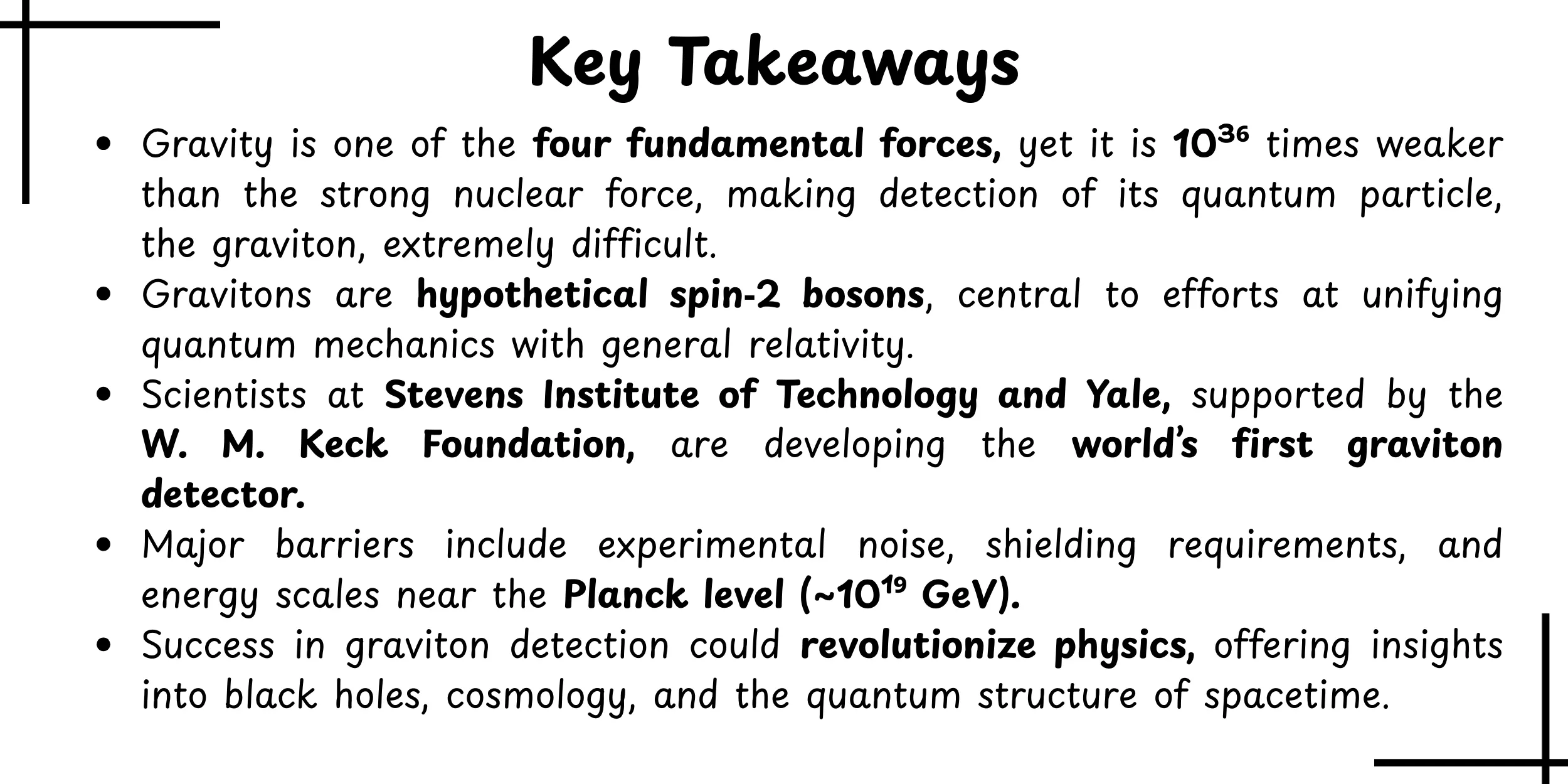
One of the most elusive aspects of the physics of the present day is gravitons, which are postulated to be quantum carriers of gravity. Their research exists at the cross-point between general relativity and quantum mechanics, the general aim of which is to bring together two theories that are basic but mutually irreconcilable.Quantum gravity is a theoretical framework in physics that aims to unify Einstein's general relativity (describing gravity and large-scale structures) with quantum mechanics (describing the microscopic world of particles and forces).
Gravitons Hypothetical particles
In theory, gravitons are the massless spin-2 bosons according to quantum field theory that are responsible for the interaction of gravity. Gravitons are so weak that they have not been detected experimentally, as are experimentally confirmed particles such as photons, gluons, or W/Z bosons. Theoretical predictions have it that gravitons would travel at a speed equal to that of light, and therefore, it would be consistent with general relativity as proposed by Einstein.
Quantum Gravity and Graviton Unification
In quantum gravity, the attempt is made to make the macroscopic (general relativity) framework of theory coincide with the microscopic laws of quantum mechanics. This unification is required where both effects are important, like near black holes or in the early universe. According to recent theoretical models, such as loop quantum gravity, string theory, and effective field theories, it is argued that gravitons are the mediators of the gravitational interaction.
Gravitons Research and Findings
Modern research in graviton physics has given attention to quantum field theory formulation, quantum graviton noise, and quantum gravitational decoherence. As an example, Hsiang et al. (2024) highlight how the discovery of gravitational waves in 2015 opened new directions of studying strong-field dynamics, thus, in some way, encouraging graviton studies. Although gravitational waves only follow classical predictions, the observation of single gravitons would require greater sensitivity of instruments currently available.
Significance of Gravitons to Fundamental Physics
The discovery of gravitons is not just a case of some theoretical interest; it is going to open up the mysteries about the structure of space-time, what singularities are all about, and the desired answers to the questions about the quantum origins of the universe. Effective discovery would establish the fourth fundamental force carrier and remake the discipline of physics.
The Challenge of Graviton Weakness Forces
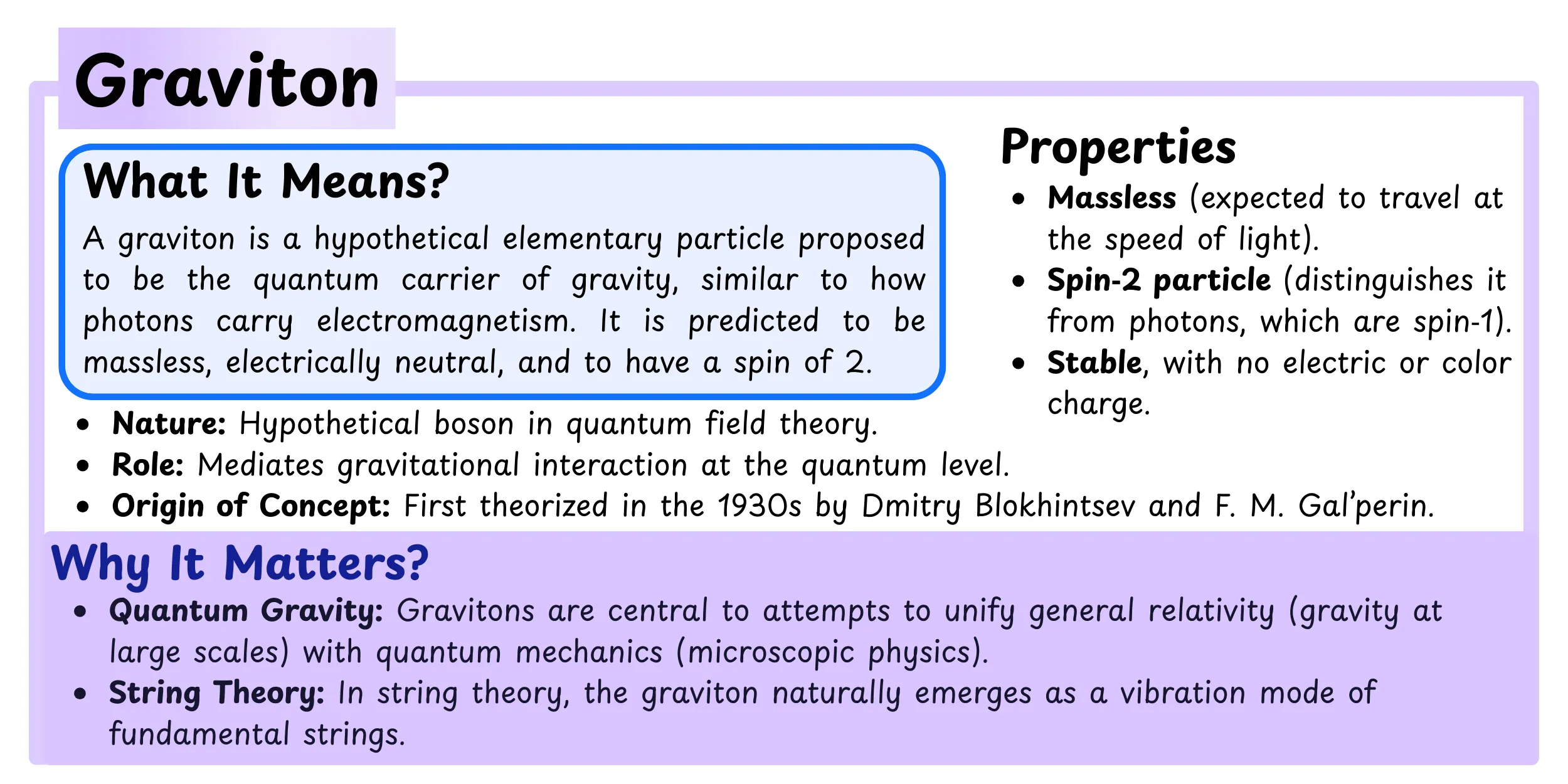
The unprecedented weakness of gravity as compared to all other interactions that are considered fundamental is one of the greatest inconveniences to modern physics, as it requires unprecedented sensitivity and technology to detect gravitons.
Comparative weakness of Gravity
It is believed that it is the gravitational interaction and it is estimated that it is about 〖10〗^36times weaker than the strong nuclear force and about 〖10〗^42weaker than the electromagnetic force between the two electrons. This severe inequality explains the observed fact that a large refrigerator magnet can easily overcome the pull of a paper clip, or any quantum signal that can be attributed to gravitons will obviously be easily drowned out in the background noise and therefore can’t be simply detected by existing equipment.
Experimental Challenges to Detect Gravitons
In contrast to photons or gluons, gravitons weakly interact with matter with any strength and so require detectors of enormously large size or highly sensitive capabilities. Even more advanced devices like LIGO, which made the historic discovery of gravitational waves in 2015, use macroscopic scale measurements and do not have the ability to measure single particles of quantum matter. Recent suggestions by scientists at the Stevens Institute of Technology and Yale to use agravitational detector using phononic systems can be helpful, but expected signals may be vanishingly small.
The Hierarchy Problem with Gravitons
Physicists describe this disparity as the hierarchy problem, highlighting the enormous distance between the Planck scale of order 〖10〗^(-19)GeV, which is where gravity is expected to unify to the other forces, and the electroweak scale of order 100 GeV. Closing this vicious cycle requires theoretical innovations, as well as experimental models and designs that are in a position to explore energy regimes that are far beyond the abilities of existing experiments.
Technological and Experimental Obstacles for Detecting
Gravitons
The observation of gravitons is faced with huge technological and experimental difficulties since the signals that could be expected are very weak and require instrumentation in order of the sensitivity beyond the reach of the quantum and gravitational wave detectors nowadays.
Limitations of Current Methods to Detect Gravitons
Currently used instruments, including LIGO and Virgo, which were able to detect gravitational waves in 2015, work at macroscopic scales, and their purpose is to detect distortions of space-time that occur due to the large astrophysical events. However, those detectors do not have the ability to detect individual gravitons, which have extremely weak interactions with matter. There is a major challenge in raising sensitivity to the quantum scale without becoming de-noised by the environment.
Noise Hindering Gravitons Detection
The graviton signals are assumed to have been drowned by the thermal vibration, the electromagnetic interference, and the quantum fluctuation. Scientists at the Stevens Institute of Technology and Yale, with the support of the W.M.Keck Foundation, emphasise that unprecedented shields and a cryogenic environmentare essential to isolate such faint signals. Even in this case, the problem of distinguishing true graviton interactions and noise is a detrimental challenge.
Energy Constraints in Gravitons Detection
Theoretical predictions show that a single graviton would require a planetary detector or an energy supply comparable to the Planck energy (GeV). Current experimental technologies are way below such requirements. The constraints can be reduced by the proposed “graviton traps” based on phononic systems or quantum resonators, but these are not yet created.
Prospects and Significance of Gravitons
Gravitons are crucial because they represent the hypothetical quantum particles that carry the force of gravity, potentially bridging quantum mechanics and general relativity to create a unified theory of everything. The effort to observe gravitons is a frontier in physics, and could redefine our space-time and our basic theories, create revolutionary technology in quantum science and cosmology.
Gravitons Research Can Advance Fundamental Physics
Direct empirical evidence of the existence of quantum gravity would be obtained through the observation of gravitons, which would close the gap between the Einstein theory of general relativity and principles of quantum mechanics. Experimental initiatives have been established by researchers at the Stevens Institute of Technology and Yale with the support of the W.M. Keck Foundation in an attempt to achieve this goal. An environmentally sound discovery would mean a paradigm shift in theoretical physics.
Gravitons helping in Technological Innovation
The development of quantum resonators, phononic systems, and cryogenic shielding to construct graviton detectors is on the rise in the quest to advance them. Such innovations are parallel to events happening in gravitational-wave observatories, which, since 2015, have provided new windows to the universe. New optical technologies, including future developments, can extend the detection limits and indirectly enhance the research on gravitons.
Cosmological Significance of Gravitons Detection
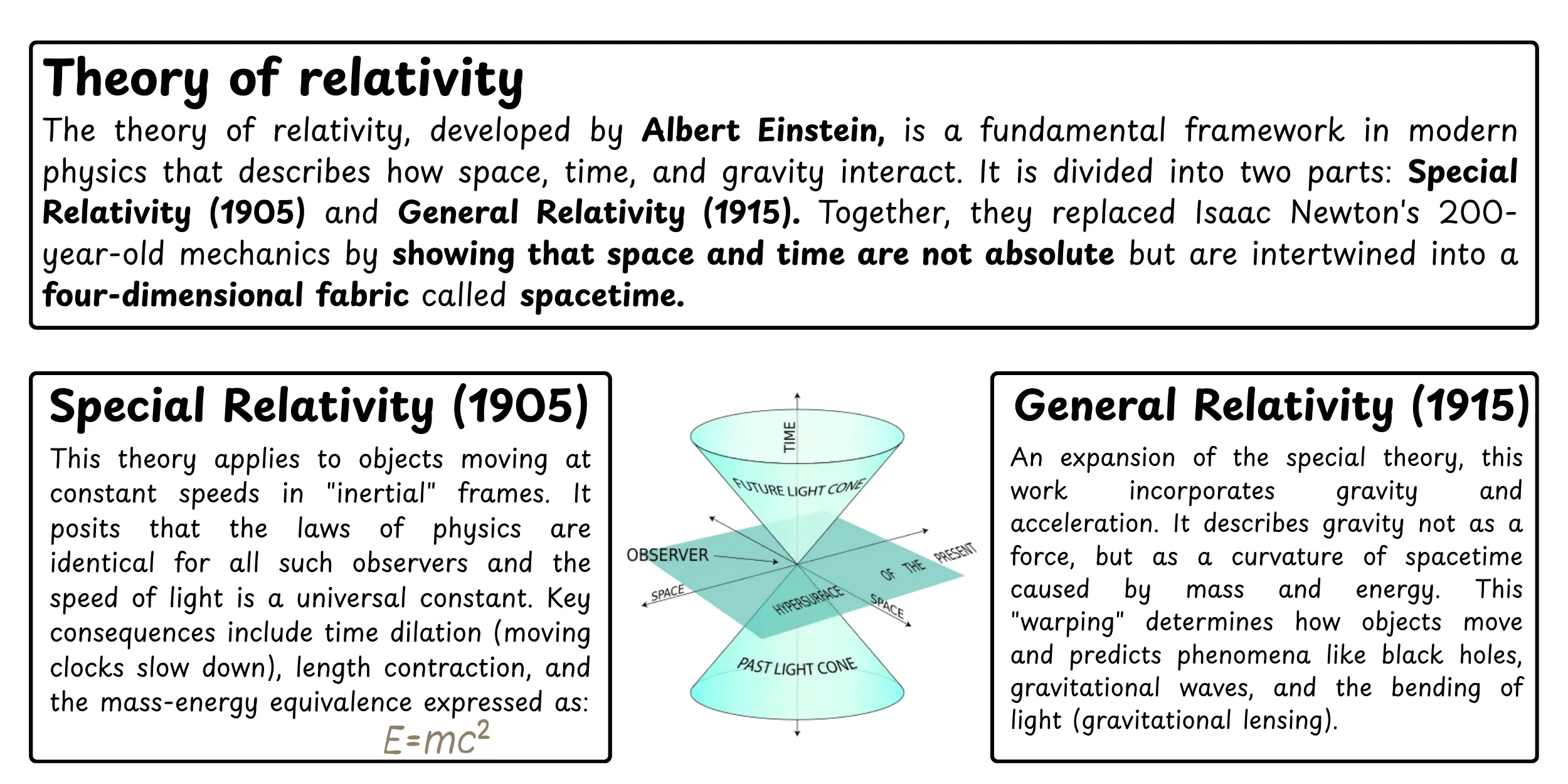
More generally, the observation of gravitons would help unveil the quantum physics of the universe, black hole dynamics, and the behaviour of Planck scale (〖10〗^19GeV). The technology of gravitational-waves already helps in cosmological studies, and the research of gravitons would enhance the study.
Conclusion
To sum it up, the quest to build a detector of gravitons can exemplify the scientific depth of the problem that investigates gravity on the quantum level. Despite the theoretical and technological challenges in the field, continued research is a reminder of the importance of the endeavour in general relativity in order to be combined with quantum mechanics. The discovery of gravitons would not only support quantum relativistic true-to-life theory content, but also provide a deep understanding of the quantum structure of the temporal filters, with discovery results purely revolutionary to cosmology and to the fundamental physics of our universe. In its turn, the quest drives the progress in knowledge, pushing the limits of human understanding of the universe.
Frequently asked questionsFrequently asked questions
Gravitons and Quantum Gravity?
One of the most elusive aspects of the physics of the present day is gravitons, which are postulated to be quantum carriers of gravity. Their research exists at the cross-point between general relativity and quantum mechanics, the general aim of which is to bring together two theories that are basic but mutually irreconcilable.Quantum gravity is a theoretical framework in physics that aims to unify Einstein's general relativity (describing gravity and large-scale structures) with quantum mechanics (describing the microscopic world of particles and forces).
The Challenge of Graviton Weakness Forces?
The unprecedented weakness of gravity as compared to all other interactions that are considered fundamental is one of the greatest inconveniences to modern physics, as it requires unprecedented sensitivity and technology to detect gravitons.
Technological and Experimental Obstacles for Detecting Gravitons?
The observation of gravitons is faced with huge technological and experimental difficulties since the signals that could be expected are very weak and require instrumentation in order of the sensitivity beyond the reach of the quantum and gravitational wave detectors nowadays.
Prospects and Significance of Gravitons?
Gravitons are crucial because they represent the hypothetical quantum particles that carry the force of gravity, potentially bridging quantum mechanics and general relativity to create a unified theory of everything. The effort to observe gravitons is a frontier in physics, and could redefine our space-time and our basic theories, create revolutionary technology in quantum science and cosmology.