With the visit of the EU delegation to India on the Republic Day, the talks between India and the European Union, which is going to make a historic free-trade deal after nearly 20 years, are to be concluded in New Delhi and have been labelled as the” mother of all deals”. India has revived its global standing by transitioning from ideological non-alignment to pragmatic multi-alignment, leveraging geo-economics to blend economic tools with foreign policy. One of the prime reasons for India-EU to restart negotiations in 2022 was China’s growing trade surplus. The strategic pivot focuses on diversifying supply chains, with the EU looking beyond the US and India seeking alternatives to unilateral trade actions.
|
Key highlights
- India-EU Trade Stalemate
- India-EU Economic Stakes
- Realignment between India and the EU
- Impact of US Trade Policy on India-EU
- India-EU Breakthroughs and Future Progression
|
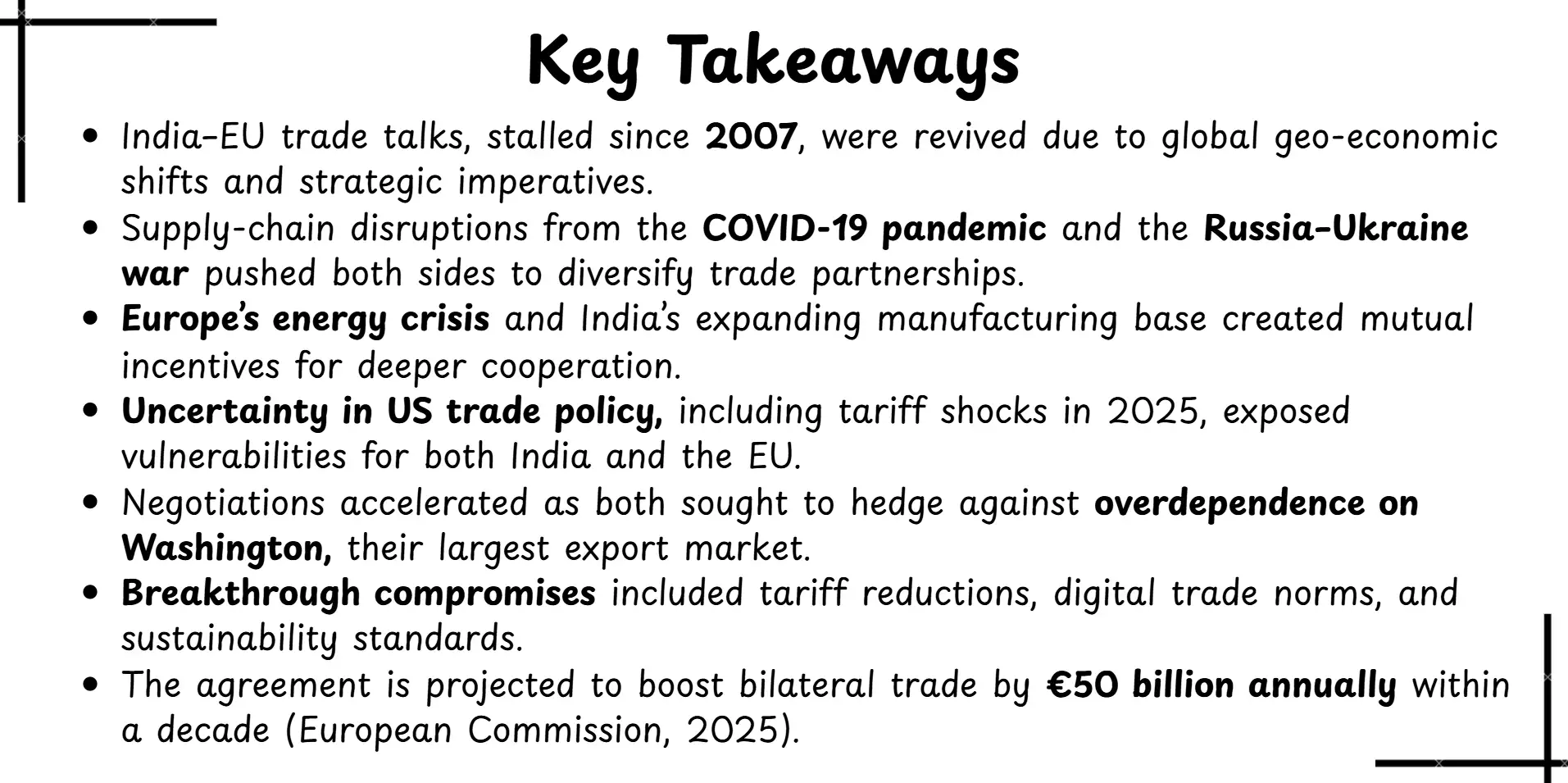
Uncertainty in US trade policy has impacted both India and the EU as Washington remains the largest export market for both New Delhi and Brussels.The renewal of trade talks between India and the European Union is a significant development in contemporary geo-economic affairs. After more than two decades of frozen cooperation, the changing global trade landscape and uncertainty surrounding strategic policy have created a new spirit of collaboration. The irregularity peg of the trade policy of the United States, especially its protectionist intentions and its focus on re-shoring back to its home country, has proven to be a weakness to both India and the EU, considering they rely on Washington as one of their main export markets. In this respect, a nexus of interests consisting of supply-chain shocks, energy insecurity, and a need to diversify has led the India-EU Trade and Technology Council talks into a historic solution.
Why India–EU Trade Talks Stalledand What Changed
The India- EU trade talks that were initiated in 2007 were still stuck on its feet after a period of nearly twenty years due to differing priorities, tariff differences, and regulations. This stalemate reflected general geo-economic uncertainties and contradictory nation-states' demands.The EU Commission sealed a free-trade agreement with India on Tuesday, cutting tariffs on EU goods while leaving out sensitive sectors.
History of India-EU Negotiations
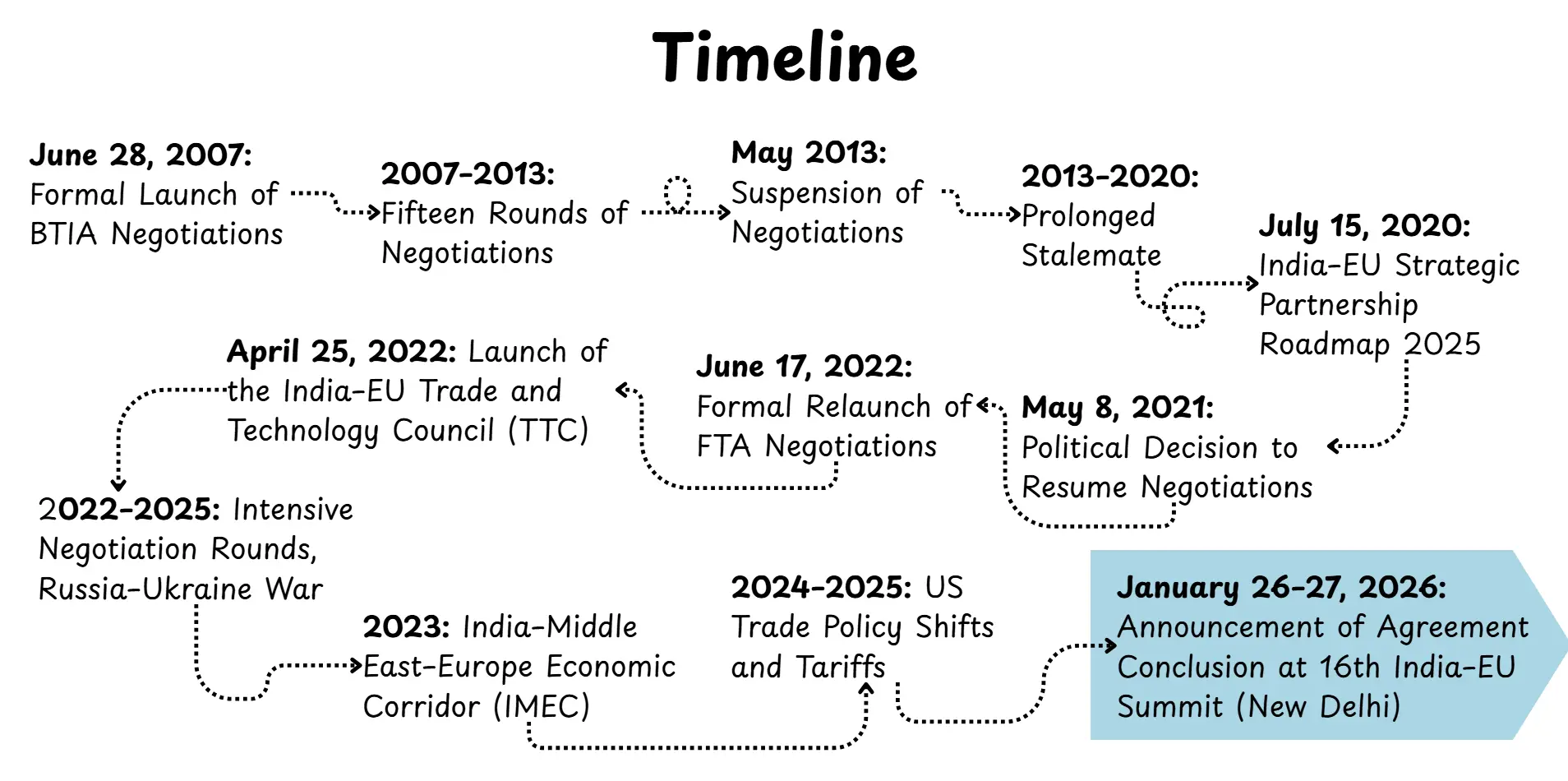
Efforts to discuss a Broad-Based Trade and Investment Agreement (BTIA) relationship between India and the European Union began in the year 2007 with a view to further integrating both economies. Nevertheless, this was done slowly, with the substantive progress interrupted by disputes on tariff cuts, intellectual property, and labor mobility. The unwillingness of India to lower its duties on sensitive goods like automobiles and wines went against the demand by the EU to have greater access to the market.
Divergence and Barriers between India and the EU
In India, the high importation tariffs, which touched as high as 150 percent in the transport and chemical industries, were a major barrier to the EU exporters. Within the context of reciprocity, India sought to receive services concessions, especially on information technology and the movement of skilled labor, which the EU would not give based on the political implications within the domestic context. It is these asymmetries that created a system of terminal stalemate that persisted over the years, regardless of efforts to revitalise communication.
India-EU Economic Stakes
As of 2024, both goods and services trade between India and the EU reached over EUR 120 billion and EUR 66 billion, respectively, which is an indication of unexploited potential. More than 6,000 Indian companies are in the European Union, but an overall framework was lacking to further integrate. The analysts have observed that the long stalemate did not allow diversification other than China and limited the competitiveness of Indian exports.
Effects of Stalemate on India-EU
Inability to achieve a conclusive consensus was not just a technical issue but also a change in the politics of trade in the world. With protectionism on the rise in the global arena, the India-EU standoff stood as the best representation of the dilemma between national needs and multilateral goals.
Geo-Economic Change and Realignment between India and the EU
The geo-economic changes throughout the last ten years have restructured the world trade relations, thus requiring the adjustment in the strategic positions of both India and the European Union. Such changes have created a sense of urgency for new involvement and eventually the alignment of trade talks between the two.India and the European Union (EU) are undergoing a significant geo-economic realignment, shifting from a traditional donor-recipient relationship to a strategic partnership driven by supply chain diversification, technological collaboration, and de-risking from China.
Global Trade Disruption Affecting India-EU
The COVID-19 pandemic has highlighted the flaws in the global supply chain; many countries began to diversify their trade associations. India and the EU were able to recognize the dangers of over-reliance on single markets, especially China and the United States. The leaders of the industry argued that a holistic trade agreement was needed to strengthen supply chains' resilience and spur long-term investment as uncertainty continued to rise.
Energy Crisis in the EU
The Russian-Ukrainian conflict triggered the energy crisis in Europe, which boosted the effort to find reliable partners. The growing energy and manufacturing hub in India is one of the alternatives that Brussels had to offer to reduce risk. The Confederation of Indian Industry estimated bilateral trade between India and the EU in terms of goods and services to surpass EUR 120billion and services to surpass EUR 66billion already, and this suggests that integration can be more intensive.
Trade Uncertainties affecting India-EU
The vulnerable situation of both India and the EU was caused by unpredictable tariff regimes that Washington has presented, such as high tariffs on Indian exports in 2025. This was a source of confusion that led the two actors to respond to the US-centric risk by strengthening bilateral institutions.
Impact of US Trade Policy on India-EU
India's exports have been negatively impacted by the US imposing 25% tariffs on Indian goods (as well as a 25% tariff to punish India for its purchases of Russian oil), and by delays in finalising the BTA due to political factors and the complexities of concluding such a comprehensive agreement.As of January 2026, India–US trade policy is defined by a high-stakes standoff involving record-high tariffs and intense negotiations for a first-phase bilateral trade agreement.US trade policy under a Trump administration is characterized by aggressive, protectionist "reciprocal tariffs" designed to counter trade deficits, notably imposing 25% tariffs on Indian goods.
Export Vulnerabilities for India and the EU
In 2025, Washington put tariffs up to 50 percent on a few Indian exports, including textiles and gems, thus preventing its largest export market. Similar problems were experienced in the EU, where steel and machinery exports were facing repressive charges. Such actions interfered with normal trade routes and created uncertainty for the business partners dependent on a stable connection to the US market.
India-EU Countering US-Centric Risks
The unpredictability of US trade policy, which is exemplified by sudden changes in tariffs and similar steps in return, has motivated both India and the EU to seek insurance. Experts noted that the India-EU Trade and Technology Council agreement did escalate negotiations after the 2025 American tariff shock, and Indian ministers are visiting and holding technical rounds, stepping up to get negotiations to close early by 2026.
India-EU Market Diversification
KPMG 2025 trade update says that mutual US tariffs have provided a 90-day window of diplomatic involvement, but the lack of clarity supported the need for diversification. In the case of India, the EU found a stable partner that presents an opportunity to a market with a population of close to 1.4 billion consumers, as the EU felt that India is an up-and-running manufacturing and services importer and exporter.
India-EU Trade and Technology Council talks implications
The US trade policy held an uncertain position and served as a catalyst, pushing India and EU agreement on some of the controversial areas like digital trade and sustainability. This new strategic alignment is part of a practical reflection of the global trade volatility, so that when this is done, they are sure of the resilience attributed to bilateral cooperation.
India-EU Breakthroughs and Future Progression
India and the European Union (EU) achieved a historic milestone by concluding negotiations for the India–EU Free Trade Agreement (FTA) at the 16th India–EU Summit in New Delhi. This breakthrough marks a transition from a decades-long dialogue to a comprehensive strategic and economic partnership. The India-EU trade agreement is a historic move, which is going to be concluded after almost twenty years of frozen negotiations. This conclusion will be an expression of pragmatic compromise, as well as urgency created by global geo-economic turbulence.
Key Areas of Compromise between India and the EU
Concessions on contentious matters, consisting of digital trade, the sustainability standards, and cuts in tariffs, contributed to the breakthrough. India has made the commitment to gradually reduce its duty on automobiles and wines, whereas the EU gave the country an opportunity to do the same with labor mobility and services. The European Commission estimates that the agreement would increase the degree of bilateral trade to the value of more than EUR50 billion annually within a decade.
India-EU strategic benefits
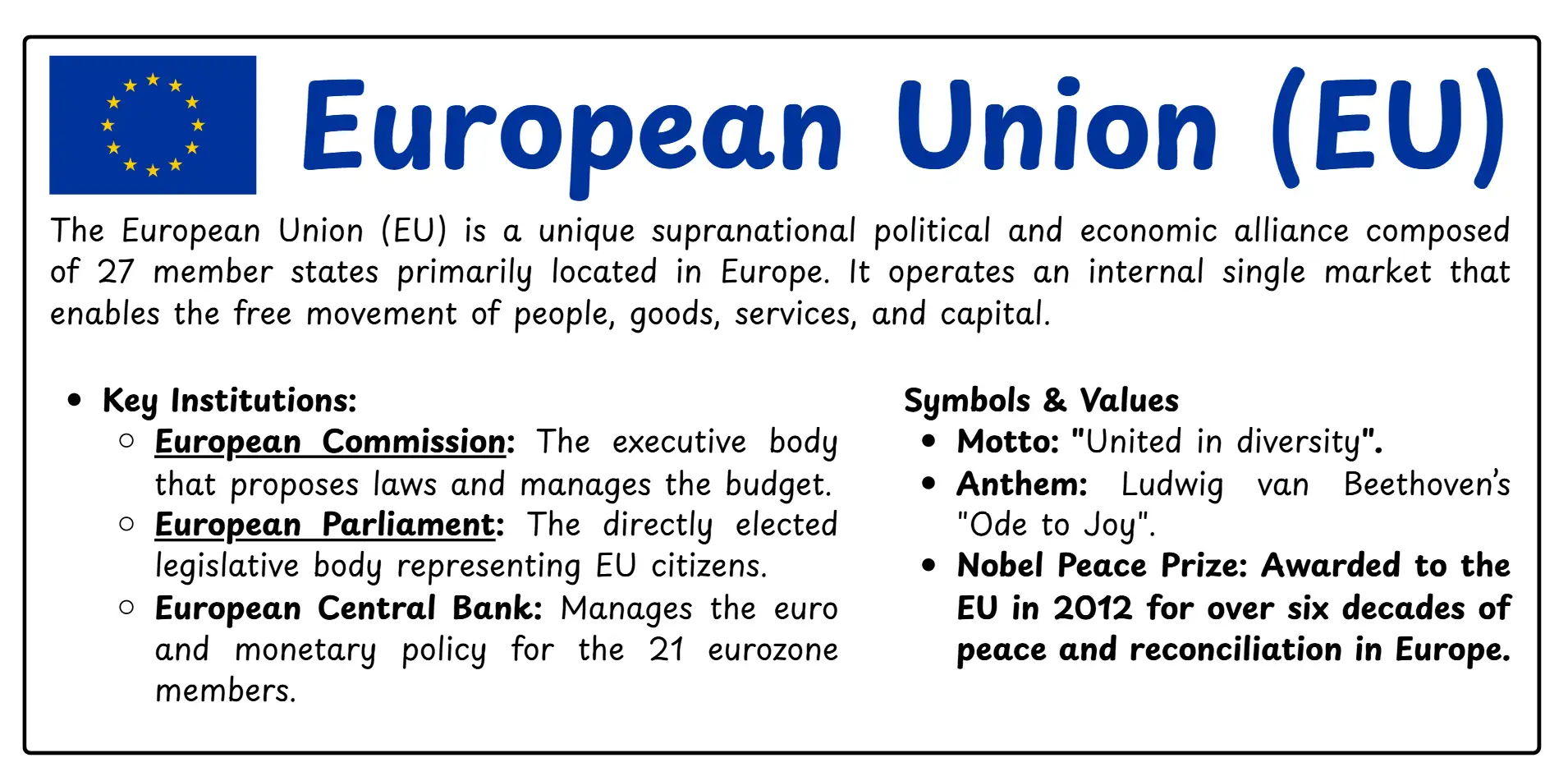
In the case of India, the agreement enhances its integration into the value chain of Europe, thus boosting its competitiveness in the pharmaceutical industry, information technology, and renewable energy. To the EU, the consumer market of 1.4billion in India is an urgent diversification challenge, with the declining trade with Russia and uncertainty in the US markets.
Future Trajectory for India-EU
Analysts estimate that the agreement will act as a model for how India carries out its full trade diplomacy, which will strengthen its standing in world supply chains. The EU considers the agreement as a part of the platform of Indo-Pacific planning, in which economic collaboration goes hand in hand with geopolitical interests.
India-EU Long‑Term Outlook
The India-EU free trade agreement is not merely transactional, but it is a strategic realignment. Through a careful balancewith the US and an effective European relationship, the two parties seek to achieve resilience, sustainability, and economic growth in the long run.
Conclusion
The triumph of the culmination of India and EU trade agreement highlights the transformative effect of geo-economic changes and strategy reorientations in world trade. Old obstacles were overcome when both parties realized the dire need to stop relying on US-specific weaknesses and focused on improving supply-chain resilience. The agreement does not merely mirror realistic trade reconciliation, but it also portends a greater reorientation of trade diplomacy, by making India and the EU major actors in the development of progressive, sustainable, and forward-looking economic relationships in the context of an increasingly unpredictable world order.
Frequently asked questionsFrequently asked questions
Why India–EU Trade Talks Stalledand What Changed?
The India- EU trade talks that were initiated in 2007 were still stuck on its feet after a period of nearly twenty years due to differing priorities, tariff differences, and regulations. This stalemate reflected general geo-economic uncertainties and contradictory nation-states' demands.The EU Commission sealed a free-trade agreement with India on Tuesday, cutting tariffs on EU goods while leaving out sensitive sectors.
Geo-Economic Change and Realignment between India and the EU?
The geo-economic changes throughout the last ten years have restructured the world trade relations, thus requiring the adjustment in the strategic positions of both India and the European Union. Such changes have created a sense of urgency for new involvement and eventually the alignment of trade talks between the two.India and the European Union (EU) are undergoing a significant geo-economic realignment, shifting from a traditional donor-recipient relationship to a strategic partnership driven by supply chain diversification, technological collaboration, and de-risking from China.
Impact of US Trade Policy on India-EU?
India's exports have been negatively impacted by the US imposing 25% tariffs on Indian goods (as well as a 25% tariff to punish India for its purchases of Russian oil), and by delays in finalising the BTA due to political factors and the complexities of concluding such a comprehensive agreement.As of January 2026, India–US trade policy is defined by a high-stakes standoff involving record-high tariffs and intense negotiations for a first-phase bilateral trade agreement.US trade policy under a Trump administration is characterized by aggressive, protectionist "reciprocal tariffs" designed to counter trade deficits, notably imposing 25% tariffs on Indian goods.
India-EU Breakthroughs and Future Progression?
India and the European Union (EU) achieved a historic milestone by concluding negotiations for the India–EU Free Trade Agreement (FTA) at the 16th India–EU Summit in New Delhi. This breakthrough marks a transition from a decades-long dialogue to a comprehensive strategic and economic partnership. The India-EU trade agreement is a historic move, which is going to be concluded after almost twenty years of frozen negotiations. This conclusion will be an expression of pragmatic compromise, as well as urgency created by global geo-economic turbulence.