|
Key Highlights
- Indian Maritime Industry
- Issues in Sustainability
- Technological Advancements
- Initiatives by India
- Funding Mechanism
- International Cooperation
|
The Green Maritime Odyssey envisions an ecologically based economy of the ocean, together with the expansion of the sea. Being supported by the policy tools of Sagarmala and the Maritime India vision 2030, the project focuses on the renewable sector, green ship, biodiversity, and smart port. India is aiming to play a leading role in ocean governance using worldwide alliances as well as cooperative financing schemes in order to balance the growth of trade and environmental protection.
|
Tips for Aspirants
The current article is relevant to the examination of the UPSC CSE and State PSC because it combines the governance, sustainability and maritime policy, hence offering in-depth information on the Blue Economy of India and its hegemony in ocean governance.
|
|
Relevant Suggestions for UPSC and State PCS Exam
- India's maritime industry occupies 95% of total trade in volume and cannot be ignored in economic growth and energy security.
- The issues of sustainability are marine pollution, biodiversity reduction, and shipping carbon.
- Maritime India Vision 2030, the Sagarmala Programme, and the Amrit Kaal vision 2047 are the main policy frameworks, which focus on modernisation, green shipping, and restoration of the ecosystem.
- The technological advances are LNG, hydrogen, electrification of vessels and smart ports with digital logistics and waste management.
- The green infrastructure includes offshore wind, tidal and solar energy, and mangrove and coral recovery.
- The funding sources include green bonds, public-private, and blended finance based on maritime sustainable projects.
- International cooperation, which includes the IMO, IORA, and regional states, is needed to develop ocean governance and the Blue Economy.
- India aims to become an ocean leader and strengthen its maritime diplomacy in the world.
|
The maritime industry in India is strategically located in the economic and strategic environment of the country, as it works as a channel of trade and energy security, as well as international interconnectedness. The ocean resources possessed by the country have great potential to be used in sustainable development because of its long coastlines and a large exclusive economic zone. The growing troubles, such as marine pollution, loss of biodiversity, and the carbon intensity of shipping, confront the urgent need to shift to an environmentally sustainable paradigm. The vision of a Green Maritime Odyssey summarises the Indian dream to combine the goals of economic growth with environmental management, coordinate the domestic policy with the Sustainable Development Goals and the Paris Agreement.Government policies in recent years, including the Maritime India Vision 2030 and the Sagarmala Programme, can be seen as an indication of government commitment to port modernisation, promotion of renewable energy, and the development of new shipping technologies. Such steps are supplemented by measures to restore the coastal ecosystem, improve marine governance, as well as international cooperation.
As a development-sustainability nexus, the maritime vision of India aims to set the country on the task of developing a robust, inclusive, and sustainable ocean economy.As a result, a sustainable ocean economic agenda goes beyond the infrastructure to include policy frameworks, technological innovations, and the use of financial instruments, such as green bonds, and partnerships between the government and the business sector. India's "Green Maritime Odyssey" is a national strategy under its Amrit Kaal Vision 2047 to transform its maritime sector into a sustainable, low-carbon hub by 2047, focusing on green ports, clean fuels (like green hydrogen/ammonia), electrified equipment, renewable energy, and green shipping corridors.
Sea Significance and Sustainability Necessity
The Indian maritime industry is a source of both an economic lifeline and an ecological frontier. The long coastline and the resources of the ocean require a balanced strategy to promote the development of trade and, at the same time, preserve and protect the environment to ensure the sustainability of resources in the long run.Seas are vital for life, producing half our oxygen, regulating climate, providing food/jobs for billions, and holding economic/cultural value, but face severe threats like pollution and overfishing, making sustainability crucial through responsible management (UN SDG 14) to protect these ecosystems for future generations, balancing human needs with marine health.
Maritime Importance in the Indian Development
The Indian sea geography, with over 7,500 kilometres of coastline and a 2.3-million square-kilometre Exclusive Economic Zone, makes the country a core in world trade. India’s maritime trade i.e. 95 percent by volume and 70 percent by value of its entire trade, making it very important to the economic growth and energy security of the country. The ports include Mumbai, Chennai and Visakhapatnam, which are the terminals of commerce and efforts like the Sagarmala Programme are directed to modernise the port infrastructure and eradicate inefficiencies of logistical procedures.
Environmental, Contemporary and Sustainability
There is a growing ecological pressure faced bythe maritime industry of India despite its economic potential. The increasing shipping greenhouse gas emissions, marine pollution, and overfishing of fisheries endanger biodiversity and the lives of coastal populations. Climate change only increases the vulnerability, and the coastal communities are being impacted by rising sea levels and cyclones. Such issues require a maritime agenda that is based on sustainability, which balances ecological protection with economic growth.
Policy Frameworks and Strategic Vision
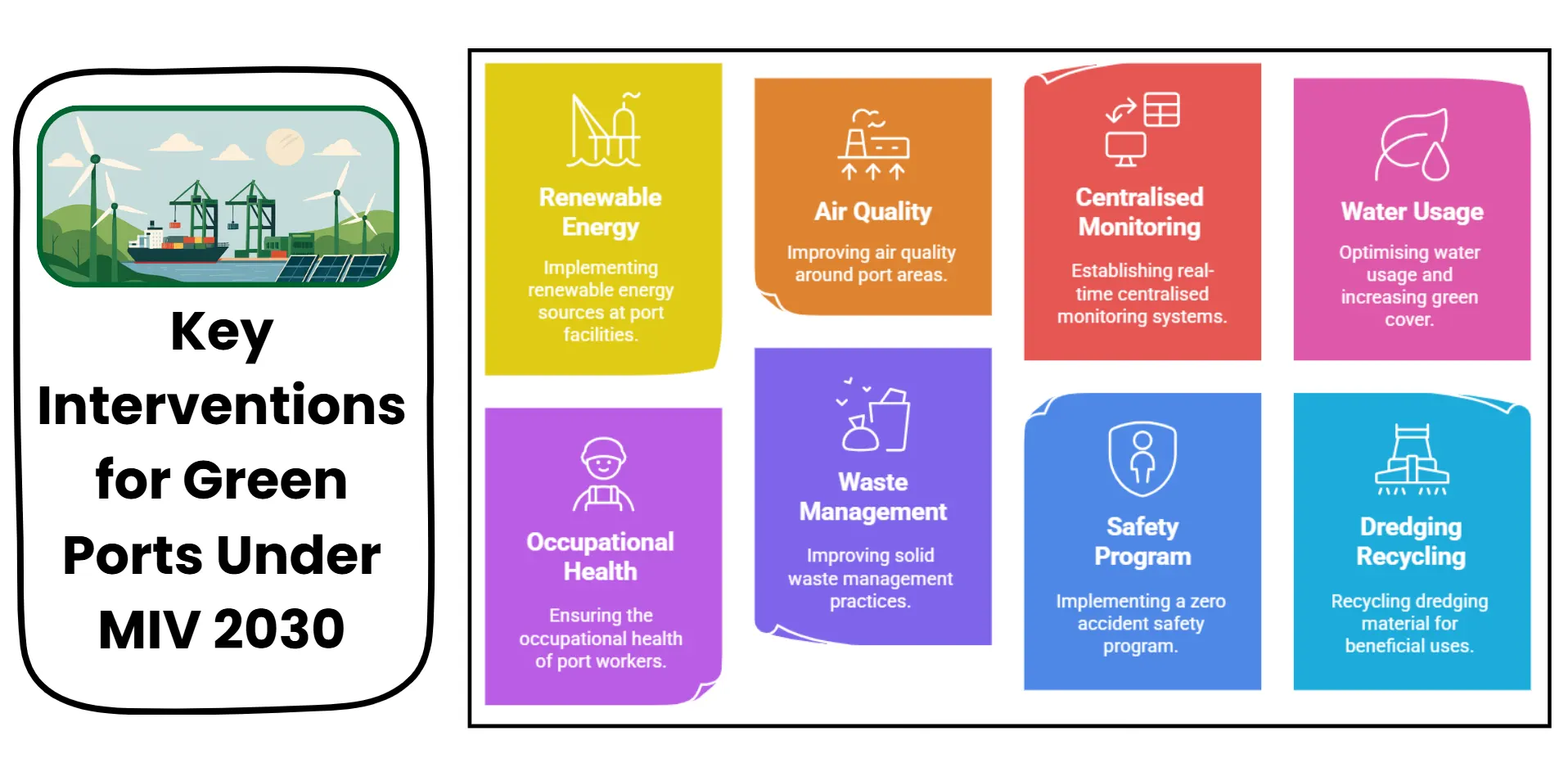
India has expressed grandiose plans to make maritime expansion sustainable. Maritime India Vision 2030 and Amrit Kaal Vision 2047 focus on green shipping, adoption of renewable energy and restoration of ecology. The 800-plus projects of the Sagarmala Programme involve port modernisation along with community development. These interventions reflect the spirit of India adopting compatibility of trade competitiveness with the consciousness as part of the international trade commitments, as seen in the decarbonisation targets of the International Maritime Organisation.
Ocean Governance and Global Leadership
The sustainability agenda of India, as far as the maritime sector is concerned, is beyond national borders. The country is promoting ocean governance as cooperative and inclusive of the Indian Ocean by encouraging the sharing of the region as a shared formation. The development of renewable energy resources, marine studies and sustainable fisheries are collaborative endeavours involving India in the writing of the Blue Economy. This leadership brings out the need to make it clear that maritime sustainability is not just a domestic agenda but an issue to be addressed internationally.
Policy Framework and Institutional Initiatives
Indian maritime sustainability agenda is based on an integrated policy framework and a set of institutional initiatives aimed at harmonising the national priorities with the international commitments, that is, the combination of economic development and ecological responsibilities.A Policy Framework is a structured system of principles, goals, and guidelines that organizes how policies are made and applied, while Institutional Initiatives are the specific programs and actions taken by organizations (like governments, UN bodies, universities) to implement these policies, build capacity, integrate goals across sectors (e.g., environment, health), and drive change, often using tech for better governance and impact assessment.
National Policy Frameworks
The Blue Economy Draft Policy Framework (2020) by India emphasizes the sustainable exploitation of marine resources as an economic diversifier, livelihood improver, and environmentally responsible approach. Parallel to this, the Maritime India Vision 2030 outlines the strategic guidelines in the areas of port modernisation, digitalisation, and integration of renewable energy into the operations of shipping. All these structures can give a systematic channel through which the competitiveness of the trade can be reconciled with environmental sustainability.
The Institutional Initiatives and Programs
The Sagarmala Programme is a flagship project, with its focus being on port-based development in terms of over 800 projects, which are to reduce logistics expenses, enhance community wellbeing in the coastal environment, and promote green infrastructure. At the same time, the Maritime Amrit Kaal Vision 2047 expresses the long-term goals, which include decarbonisation, smart ports, and the restoration of the ecosystem. These institutional programmes highlight the determination of India to instil the idea of sustainability in the institutions of the maritime governing set-up.
Regulatory and Technological Measures
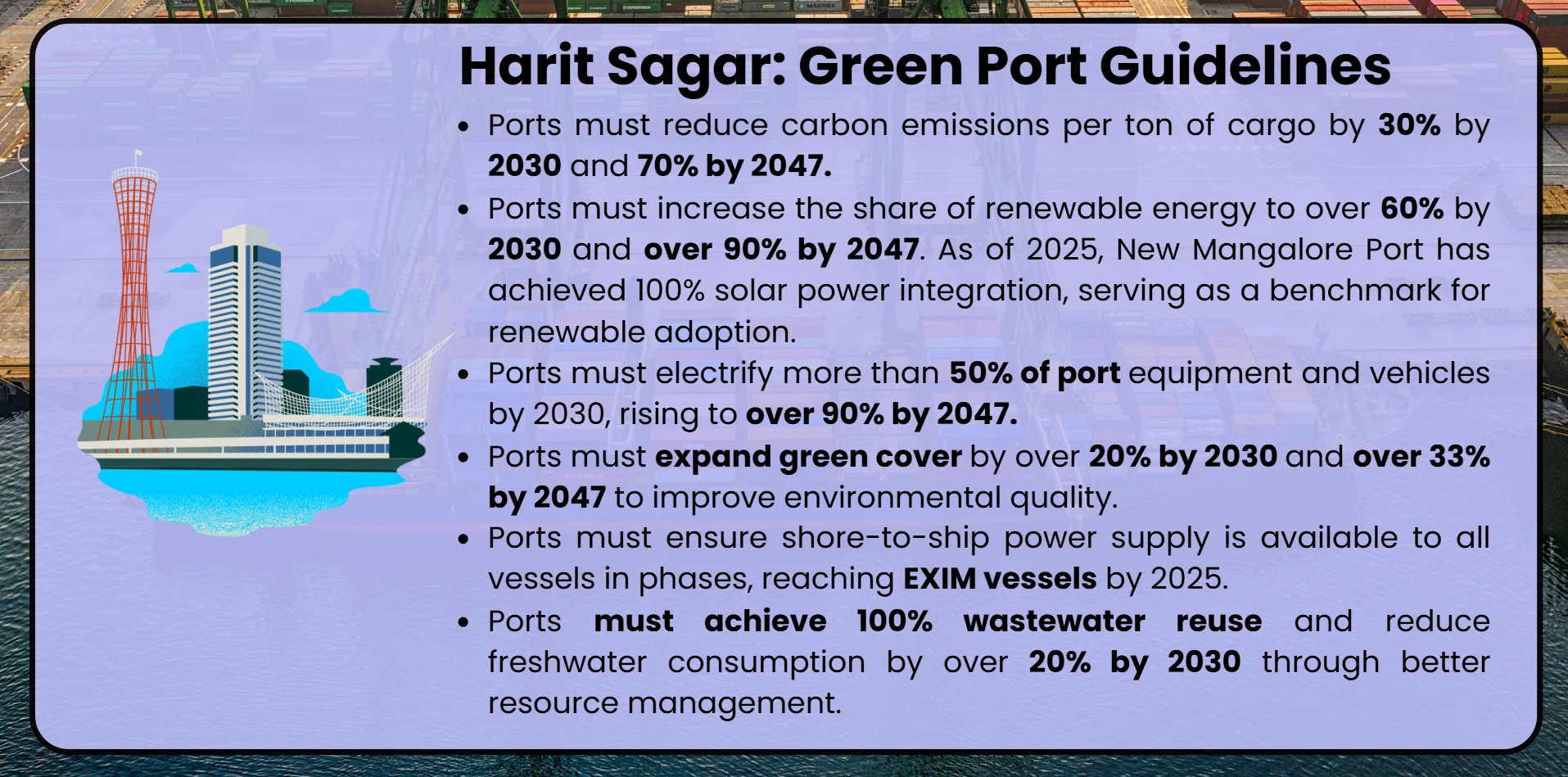
The policy frameworks are strengthened by regulatory mechanisms that are in line with the international conventions. The example of India in adhering to International Maritime Organization (IMO) rules on decarbonisation and ballast-water management is an indication of its global accountability. The technological efforts, including the utilisation of LNG, the research of hydrogen fuel, and the digitalisation of ports, are supported by governmental initiatives and partnerships between the government and the industry. Such interventions can make sustainability go beyond the aspirational rhetoric and operationalize sustainability in the maritime infrastructure.
Global Partners and Financing System
Organisational effortextends to global partnerships and new funding schemes. India also engages with regional players under the Indian Ocean Rim Association in sustainable fisheries and renewable energy. Green bonds, as well as blended public-private investments, are financial mechanisms that are being resourcefully utilized in order to support maritime sustainability projects. Such collaborations and financial solutions enhance the dominance of the India ocean economy.
Green Infrastructure and Technological Innovation
Digital transformation, green energy, and ecological restoration define the future and present of developing a technology-driven and sustainable maritime agenda that further depends on its implementation across India and the development of a resilient and future-oriented ocean economy.
Decarbonisation of Shipment
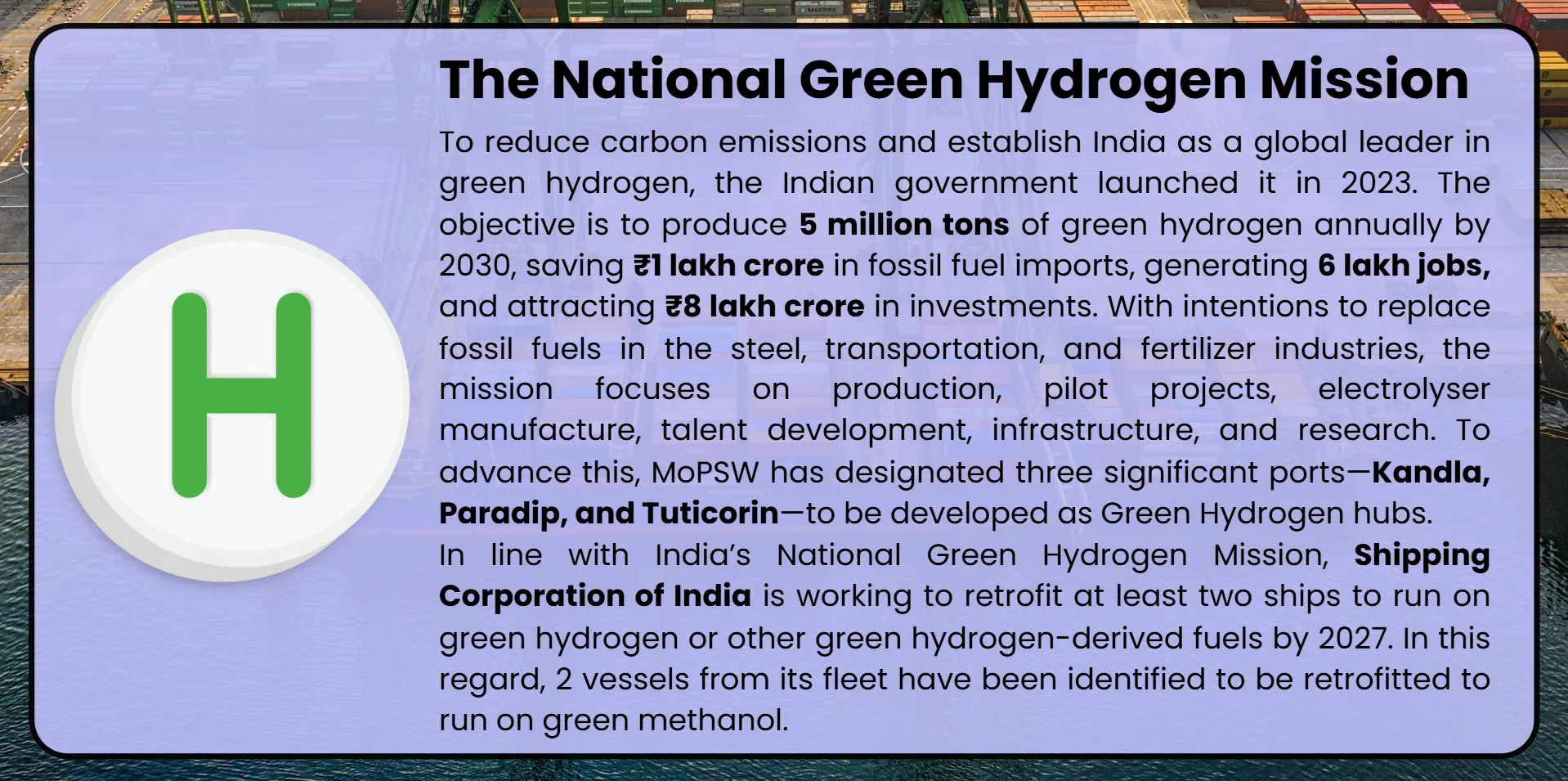
Shipping is one of the main causes of global greenhouse gas emissions, and decarbonisation has been one of the priorities of India in terms of alternative fuel and energy efficiency. The program encourages the use of liquefied natural gas (LNG), hydrogen, and electrification accordingto the Maritime India Vision 2030. Introducing hydrogen-powered ships and hybrid propulsion into the pilot programme is a sign of India working on lowering the carbon intensity of shipping.
More Digital Infrastructure and Smart Ports
The green maritime approach of India is basically centred on the modernisation of the port facilities. Automated, digital-tracked, and artificial-intelligence-empowered logistics will reduce congestion and emission levels by establishing smart ports. The projects of the Sagarmala Programme focus on waste management, the adoption of renewable energy sources, and electronically tracked flows of cargo. Besides increasing efficiency, the innovations are also in line with international health, safety and environmental standards.
Renewable Energy and Coastal Ecosystem Restoration
India is developing offshore wind, tidal and solar energy to be used in Ports and coastal industries. Amrit Kaal Vision 2047 devotes significant funds to the use of renewable energy in maritime infrastructure. Similar initiatives engage in the revival of mangroves, coral reefs, and wetlands as they have been found to provide benefits of carbon reduction and storm protection. Such ecological infrastructure is useful as a supplement to technological innovation because it protects biodiversity.
Funding and Institutional Backing
Green infrastructure needs strong funding as well as institutional support. The use of green bonds, blended finance, and public-private partnerships is one of the mechanisms that are being increasingly used in facilitating sustainable port and shipping projects. It is reported that the blue economy in India already accounts for close to 4% of the GDP, and therefore, an investment in green infrastructure would be both economically viable and extremely necessary.
Global Partnering & Future Pathway
Maritime sustainability vision in India is progressively explained by the concept of connectivity, which includes global mutual relations and a visionary strategic plan combining environmental management, technological progress, and shared governance or global governance to enhance the sustainability of the ocean economy.
Enhancing the Global Maritime Partnerships
India has been on the initiative to interact with the international bodies, including the International Maritime Organisation (IMO) and the Indian Ocean Rim Association (IORA), to promote sustainable shipping and ocean governance. Joint ventures are aimed at carbon emissions reduction, maritime security increase and encouragement of uptake of renewable energy. These associations indicate the importance of maritime sustainability to India because this is a collective international duty that requires concerted efforts among sovereign nations.
Regional Cooperation
The strategic location of India at the Indian Ocean has enabled it to develop regionally in a relationship with littoral states. Programs such as, Sustainable fisheries, marine biodiversity safeguarding and disaster preparednesshighlights India’s role as a regional leader. With its promotion of fair resource use and open governance of the oceans, India establishes itself as the master of the Blue Economy in South Asia and beyond.
Funding and Future Finance
Future roadmap predicts the innovative financing processes, i.e. green bonds, blended finance, and the public-private partnerships to support green shipping and port infrastructure. The Amrit Kaal Vision 2047 of India has allocated around 80 lakh crore for maritime growth and a focus on decarbonisation and renewable integration. These investments are an indication of the long-term commitment towards aligning economic growth with environmental responsibility.
Roadmap to Sustainable Ocean Economy
In the future, India sees a technologically high and ecologically sustainable maritime industry and a globally competitive one. The roadmap includes the use of hydrogen-powered and LNG-powered ships, increasing the offshore renewable energy constructions, and restoring coastal ecosystems. Through instilling sustainability in administrative systems and the infrastructural setups, India intends to make itself a global leader in ocean relations and sustainable ocean development.
Conclusion
The green maritime journey by India provides the articulation of a new wave of vision that combines economic growth with ecological oversight. Having a firm-rooted policy framework, technological advancement, and cross-border working efforts, the agenda of a sustainable ocean economy describes the commitment of India to balance trade competitiveness and environmental protection. Future progress of the renewable energy system, decarbonised shipping, smart port centre and restoration of coastal ecosystems sets India in the status of a pioneer of ocean governance. The potential roadmap focuses on inclusive growth and innovative financial approaches, and collaborative diplomacy and hence makes sure that maritime development promotes resilience, sustainability, and global justice. This holistic model determines India as the leader of sustainable maritime innovation.