|
Key Highlights
- India’s Traditional Medicine
- Ayurveda, Siddha, Unani, Yoga, and Naturopathy
- Cultural Significance
- Access and Equity
- Global Potential and Collaboration
- Scientific Acceptance
|
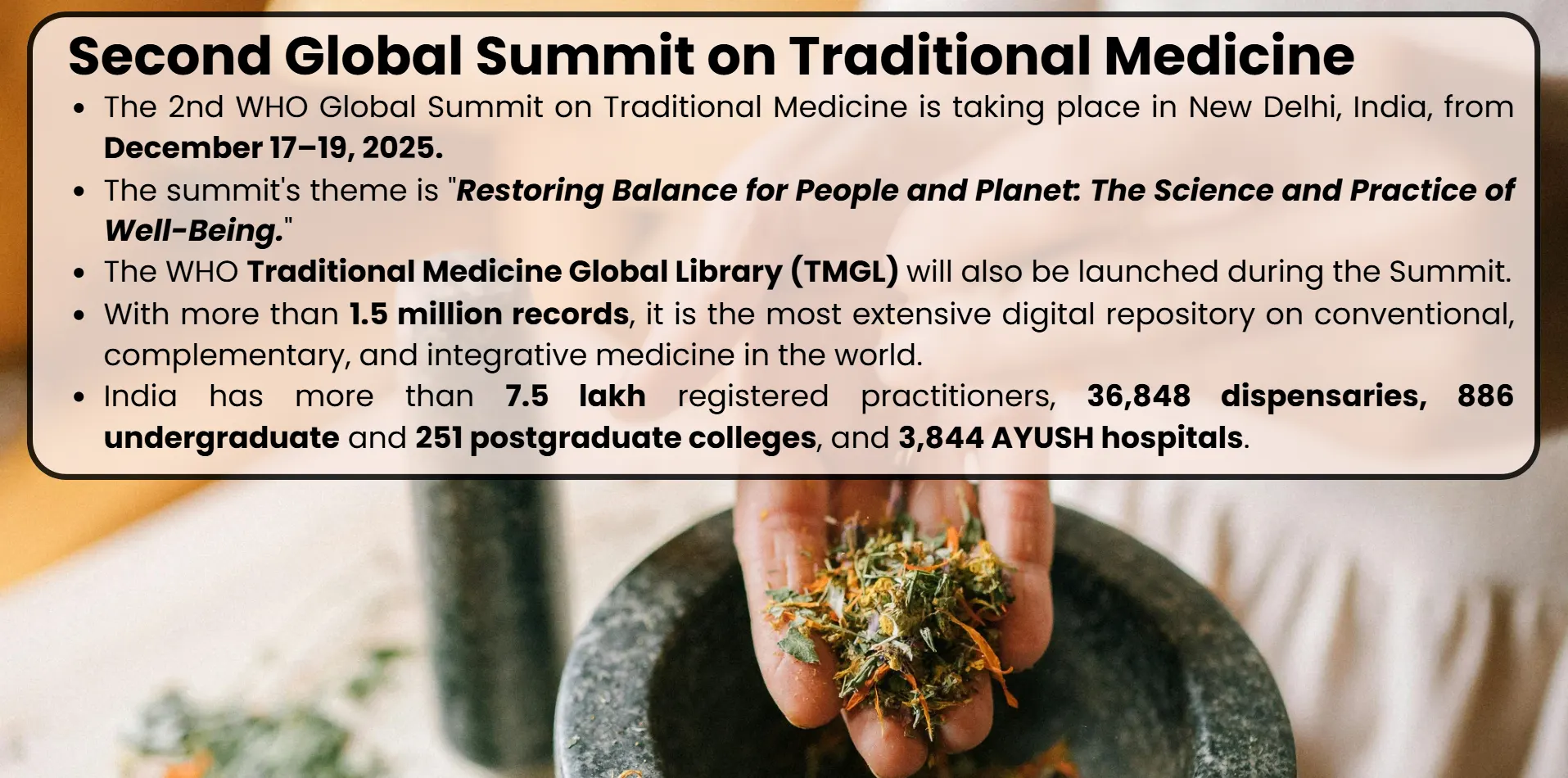
The second Global Summit on Traditional Medicine by the World Health Organization was held in New Delhi (17-19 December 2025), where Ayurveda, Yoga, Unani, Siddha, and other native systems were presented in the Ayush Expo. The summit highlighted the importance of scientific validation, high standards of quality, and international partnerships whereby the WHO encouraged the combination of traditional knowledge and modern science as a way of generating confidence, equity, and sustainable healthcare within the world.
|
Tips for Aspirants
The article is very relevant to the examination of UPSC CSE and State PSC, as it interconnects the concepts of governance, the policy of health, cultural heritage, and international relations -topics of the General Studies curriculum and the essay writing.
|
|
Relevant Suggestions for UPSC and State PCS Exam
- Historical Foundations: Ayurveda, Siddha, Unani, Yoga, and Naturopathy, finding their roots in Vedic, Tamil, and Greco-Arabic traditions and having proven their sustainable survival during the colonial upheavals.
- Cultural Significance: These are cultural traditions incorporated in the everyday lifestyle, ritualised life and community health models, which provide a comprehensive emphasis on the interdependence of body, mind and environment.
- Quality Assurance: The Drugs and Cosmetics Act, pharmacopoeias development and standardisation efforts led by the AYUSH ministry all regulate this facet.
- Scientific acceptance: Conducted Clinical trials, backed by research councils, and evidence-based medicine all add up to the credibility of these systems.
- Access and Equity: The creation of AYUSH Health and Wellness Centres, the supply of low-cost herbal therapy, the telemedicine service, e.g. e-Sanjeevani and gender-based policies all contribute to greater access.
- Global Confidence: The Ayush expo, international partnerships, the WHO’s recognition, and wellness tourism promotion are all increasing the soft power of India in the world system.
- Market Potential: The increasing exports of herbal products, nutraceuticals and integrative wellness services have common targets with the overall sustainability goals.
|
It is one of the oldest and most comprehensive approaches to health and well-being in the world, though comprising Ayurveda, Yoga, Unani, Siddha, and Naturopathy, Indian traditional medicine systems are known as the oldest and most complete. Based on principles of holistic philosophy, that focuses on balancing body, mind, and environment, these systems have called forth easy-to-access culturally head-dressed healthcare to large populations throughout the past. However, the current resurgence of interest in natural and integrative medicine in the world has given India an enhanced status as a key participant in the global health debate. However, the validity and growth of these mechanisms depend on quality assurance mechanisms, strict scientific testing, and scientific accessibility.
Role of Ayurveda in Shaping India’s Global Health Identity
The Ministry of AYUSH in the Government of India has undertaken substantial initiatives to standardize formulations, encourage evidence-based research, and integrate traditional practices in mainstream medical care delivery. At the same time, the cooperation of the countries on the international level, in particular, the acceptance of Indian traditional medicine by the World Health Organization has increased the world's trust in Indian traditional medicine. The major problem will be the possibility of balancing the maintenance of indigenous knowledge with the current regulatory base and demands of the global market. The article discusses historical, quality-building, access, and international position disciplines of traditional medicine systems in India in terms of their capacity to promote sustainable, inclusive, and reputable healthcare in the global arena.
Historical foundations
The Indian systems of traditional medicine are centuries old, and are a combination of philosophical, spiritual, and empirical aspects. Practices in history demonstrate how the three areas, cultural practices, scientific investigation, and communal health paradigms interact dynamically.
Vedic and Philosophical Traditions
The science of life, Ayurveda, may be traced back to the period of the Vedic era, where the idea of health was different in its content, as it implied the harmonious way between corporeal, mental, and environmental layers. Initiating textbooks such as the Charaka Samhita and the Sushruta Samhita formalised medical theory, making preventive medicine, food, and diet therapeutics. Influenced by the Tamil cultural Siddha medicine reach the pinnacle in South India, whereas the Greco-Arabic thought incorporated in the Indian context affected Unani medicine. Taken altogether, these systems bear witness to the openness of Indian culture to heterogeneous intellectual cultures.
Cultural Embeddedness
Traditional medicine not only has an influence on clinical functions, but it had a pervasive niche in everyday life. Ritualistic practices, agricultural rhythms, and communal rules were also intertwined. The holistic wellness was also enhanced by yoga and naturopathy that combined body practices with spiritual practices. These modalities provided conveniently available medical care, particularly in rural areas where reliance was placed on local botanical materials and practitioners as a source of hard continuity in therapies. The cultural significance is experienced in their ability to stay healthy, as they also reinforce communal identity and cohesiveness.
Historical Resilience
Despite foreign intrusions and colonial destabilization, Indian traditional medicine systems were characterized by a high level of resilience. Ayurveda and Siddha were adaptive to the arising exigencies, with extrinsic inclusion being made without abandoning the fundamentals of the indigenous teachings. When colonialists took control over the region, Western biomedicine systematically marginalized Aboriginal tradition; however, it survived through the loyalty of the community and advocacy by scholars. This tendency offers them cultural value as the guardians of native epistemology and as the shield against the homogenization of cultures.
Modernity and International Revitalization
In the modern world, these systems have not been considered as a legacy only; they are viewed as living and breathing traditions that indeed work towards global health. Their focus on environmental sustainability and natural medicine, and a focus on integrative care, are in line with the current fears about lifestyle morbidity and environmental balance. The World Health Organization's recommendation of Ayurveda and its Indian orthodoxies precedes their continued cultural and medical relevance.
Quality and Scientific Validation
The traditional medicine systems in India lack such rigorous quality assurance and scientific validation mechanisms, as traditional medicine systems need to be assessed with and integrated into the mainstream healthcare systems to build their credibility, safety, and full integration.
Rules and Measures of Quality
Ayurveda, Siddha and Unani medicines are controlled under the Drugs and Cosmetics Act, 1940, and in such cases, standards of their product manufacturing, labelling, and distribution are set. The growing importance of quality control and consumer safety is a priority of the National AYUSH Mission (NAM), which includes the adoption of the latest advances in regulating drugs in the sphere of the global arena to facilitate the introduction of traditional medicine to international standards. These regulatory policies ensure that formulations meet safety and efficacy standards before they can be used by patients.
Pharmacopoeia Development and Standardisation
One of the most important aspects of validation is that of standardisation of classical formulations. Pharmacopoeias and formularies of AYUSH systems have been published by the Government of India, defining composition, dosage and therapeutic indications. This is a codification method which minimises variation in preparation and improves uniformity of clinical outcomes. This effort to make traditional remedies a part of the conventional references empowers the confidence of the domestic population and helps to win international acceptance by India at the same time.
Clinical validation and research
Scientific validation is an organised research that consists of clinical trials, laboratory research, and pharmacological research. Both basic and applied research is supported by the AYUSH Research Councils and other programs, including the Ayurgyan scheme, and it has focused on safety, efficacy and development of new drugs. Recent studies reiterate the importance of combining the conventional methods with the modern approaches in an attempt to build upon evidence-based integrity. This multi-disciplinary methodology will bring together the indigenous knowledge and the current science, and make traditional medicine more acceptable to the free market of the world.
Global Collaboration
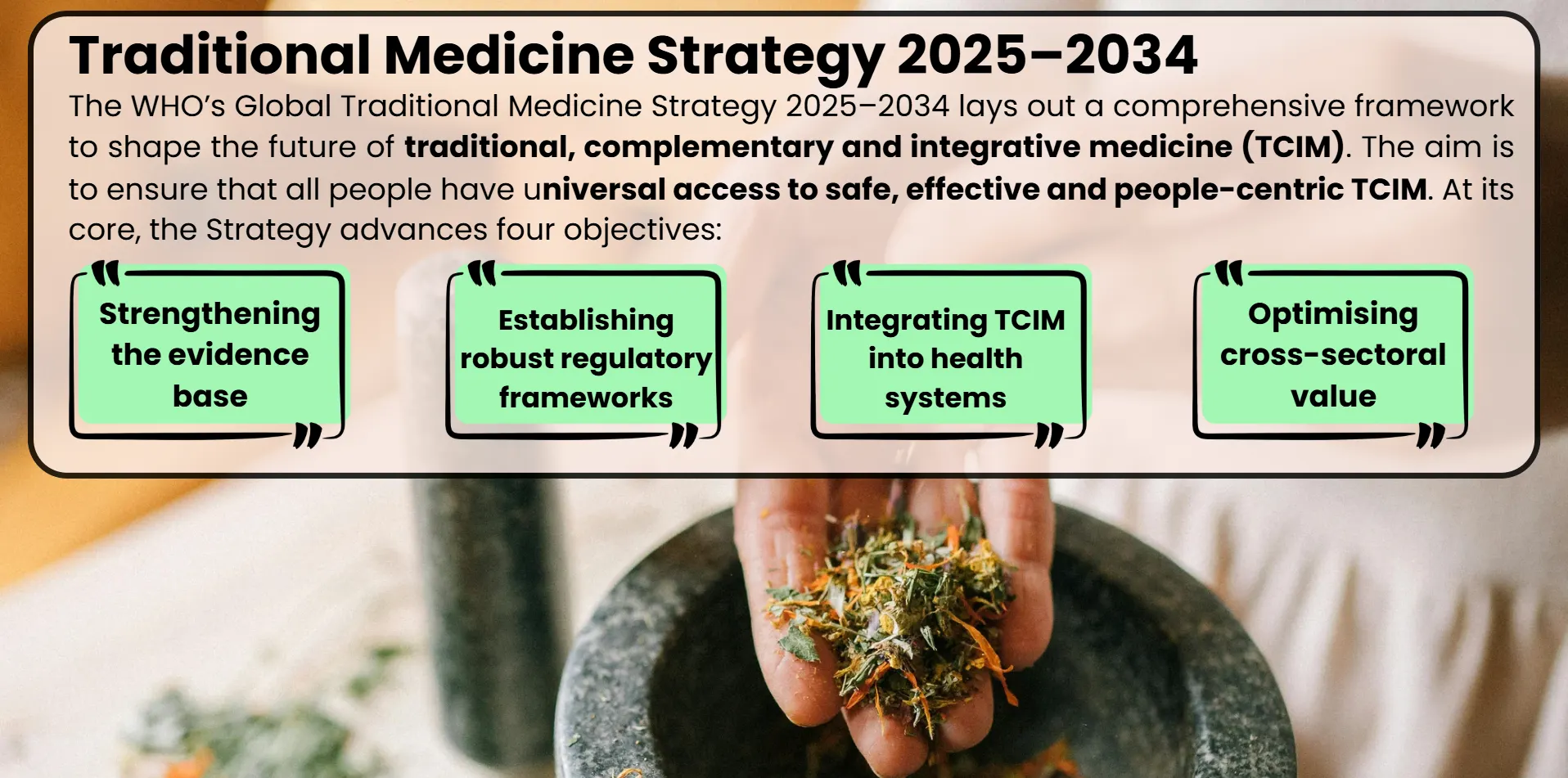
The business of system validation in India has been enhanced by international awareness, especially via the Traditional Medicine Strategy by the World Health Organisation. Joint practice together with universities and other research institutions around the world leads to transparency and credibility. It is through adaptation to the international standards that India will be able to establish its traditional medicine as a reliable partner towards health globally, hence building trust among professional practitioners, policy-makers and consumers throughout the world.
Access and Equity
The Indian traditional systems of medicine should give much emphasis on equitable access as well, so that the benefits cut across various population groups. The increased access would require the strengthening of infrastructure, affordability, expansion, and inclusiveness establishments in rural and urban areas.
Enhancing Primary Healthcare
The AYUSH services have been incorporated in the primary healthcare provided by the Government of India via efforts like the National AYUSH Mission (NAM). AYUSH Health and Wellness Centres provide both preventive and curative care, particularly in underserved areas. This synchronization reduces the dependence on the use of pricey biomedical procedures and achieves a role for traditional medicine in universal health coverage.
Affordable Solutions
The traditional medicine systems focus on using locally found and community-based medicine, therefore making it more affordable to the rural population. The availability of remedies that are affordable and accessible to the marginalized groups is ensured by encouraging the use of herbal gardens, village dispensaries and the training of local practitioners in India. This action plan reduces unfairness in the provision of health care through reducing the cost factors and enhancing the involvement of the community.
Telemedicine Outreach
The AYUSH access has been extended to the distant regions through digital health programs like the e-Sanjeevani telemedicine services. The patients can interface with certified practitioners with the help of online consultations, mobile applications, and computer-mediated repositories of medicinal knowledge. These platforms are democratizing healthcare as they help overcome the barrier created by geographic barriers and continue to make traditional medicine relevant even in the digital age.
Inclusivity and Gender Equit
Gender equity is also made possible through traditional medicine systems. Women as primary caregivers are benefiting from the available AYUSH services on maternal and child health. Women, as community health workers, strengthen the idea of inclusivity and enable them to hold onto indigenous knowledge. As such, equity in access is not only about affordability, but also social empowerment.
Developing International Trust and
The ancient Indian medicine systems have become increasingly taken into consideration as assets to the world. To improve confidence, it is necessary to conduct scientific validation, create an open regulatory framework, and collaborate with other countries, whereas the perspective of the market is based on its innovativeness, ability to export products, and its integration of wellness.
Policy Partnerships and International Recognition
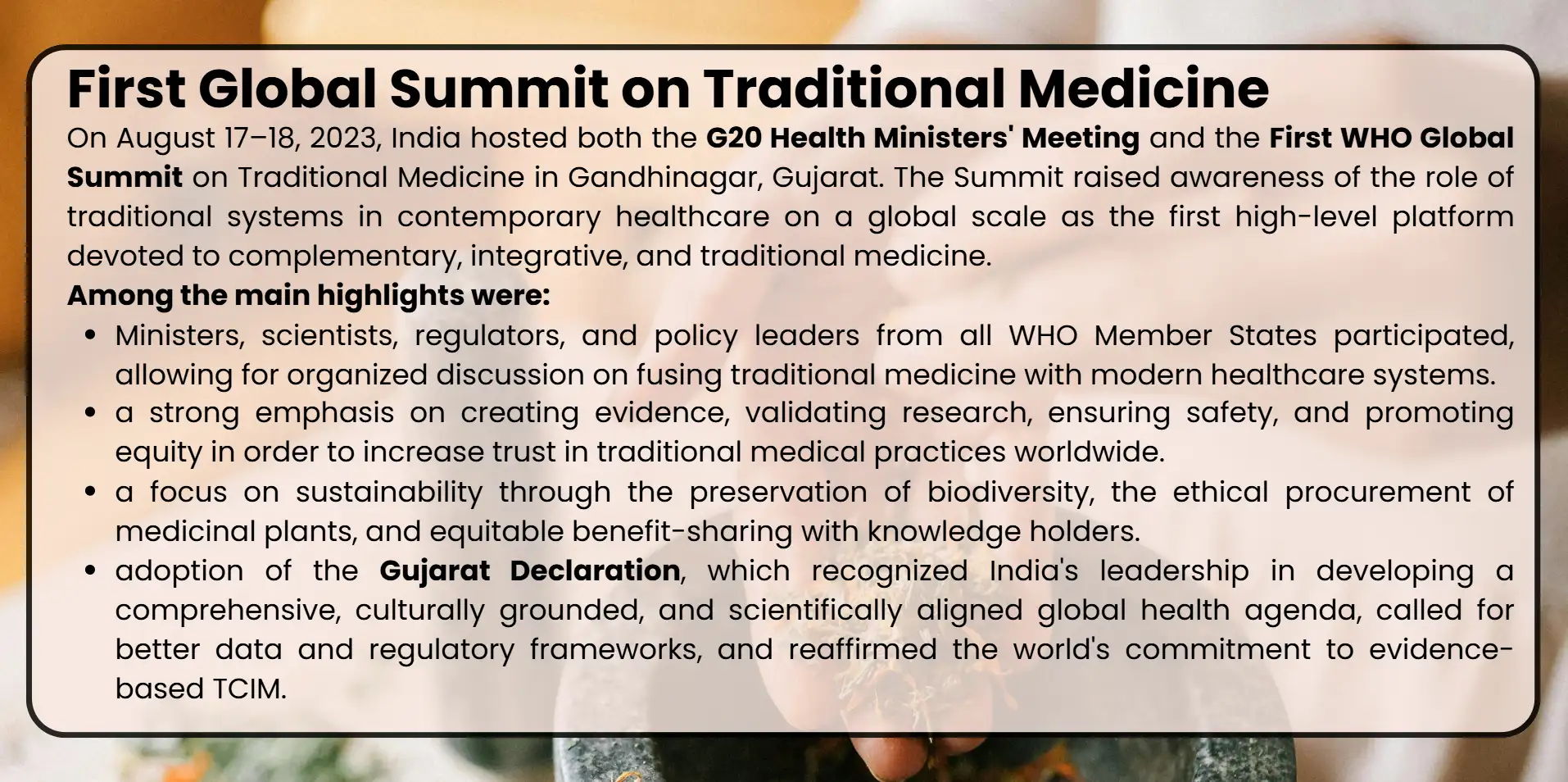
The numerous international platforms, like the second WHO Global Summit on Traditional Medicine (2025) in New Delhi, have strengthened Indian traditional medicine leadership. The summit highlighted evidence-based practices, sustainability, and the application of Ayurveda, Siddha, Unani, and Yoga in mainstream healthcare, thus highlighting the global application of the therapies. The close cooperation with the WHO and more than one hundred countries involved accentuates the role of India in the work on standards and policy frameworks on the international level.
Validation and Trust
Trust in the world depends on intense scientific testing. India has made sufficient investment in clinical trials, pharmacopoeia development, and digital health records to provide transparency and reproducibility. In keeping the traditional medicine in line with international regulatory standards, India's skepticism and credibility improved. This science base can convince the global consumers and policymakers that AYUSH systems are safe, effective, and can be included in the modern health system.
Potential Market and Export
The variety of nutraceuticals, wellness services, and herbal products offered by India is also a fast-growing market. Ayush Expo 2025 had virtual experience and digital interfaces that were meant to appeal to consumers all over the world and investors. Increase in demand of natural remedies, preventive health care, as well as integrative wellness has accrued the export potential of India, especially in the markets of Europe, North America, and Southeast Asia. Ayurvedic and Yoga retreat-based wellness tourism also supports the soft power and economic opportunities of India even more.
Sustainability and Global Health Integration
The traditional medicine systems of India are resonant with the modern-day ecological issues and lifestyle diseases. The fact that they focus on plant-based solutions and overall health is in line with global sustainability goals. Through the promotion of AYUSH, as a complement to biomedicine, India is contributing to stronger health systems in the global system. The integration is not only able to boost market potential but also is able to make India one of the leaders in sustainable healthcare innovation.
Conclusion
Finally, the Indian traditional medicine system, one of Ayurveda, Siddha, Unani, Yoga, and Naturopathy, enables us to witness the perpetual applicability of the indigenous epistemologies in the realm of modern healthcare. With the strengthening of quality standards, the encouragement of the validation process, and the extension of equitable access, India has put in place AYUSH as a domestic source and in the international processes of sustainable well-being. The involvement or interconnection in international relations, especially with the World Health Organisation, creates the reputation and business potential of such systems. In the end, the integration of the cultural heritage with the modern scientific paradigm attests to the ability of India to draw the confidence of the world, so that traditional medicine continues to be an anchor of unity, evidence-based, and culturally relevant healthcare.