The growing Indian participation in the worldwide energy transformation has received significant attention in India Energy Week 2026, an event organized to highlight these Indian achievements in blending ethanol, the development of gas pipelines, and the use of renewable energy, thus making it possible to term India as a major contributor to sustainable development in the global sphere.Natural gas pipelines exceed 25,400 km, enabling near-100% CGD geographical coverage nationwide. Ethanol blending reached 19.05% in ESY 2024–25, approaching the 20% national target
|
Key highlights
- Renewable Energy Imperative of India
- Enablers of Indian Renewable Energy Transition
- Ethanol Blending Success in India
- Pradhan Mantri Ujjwala Yojana (PMUY)
- Renewable Technology Advancements in India
- Global Engagement and Future Outlook for India
|
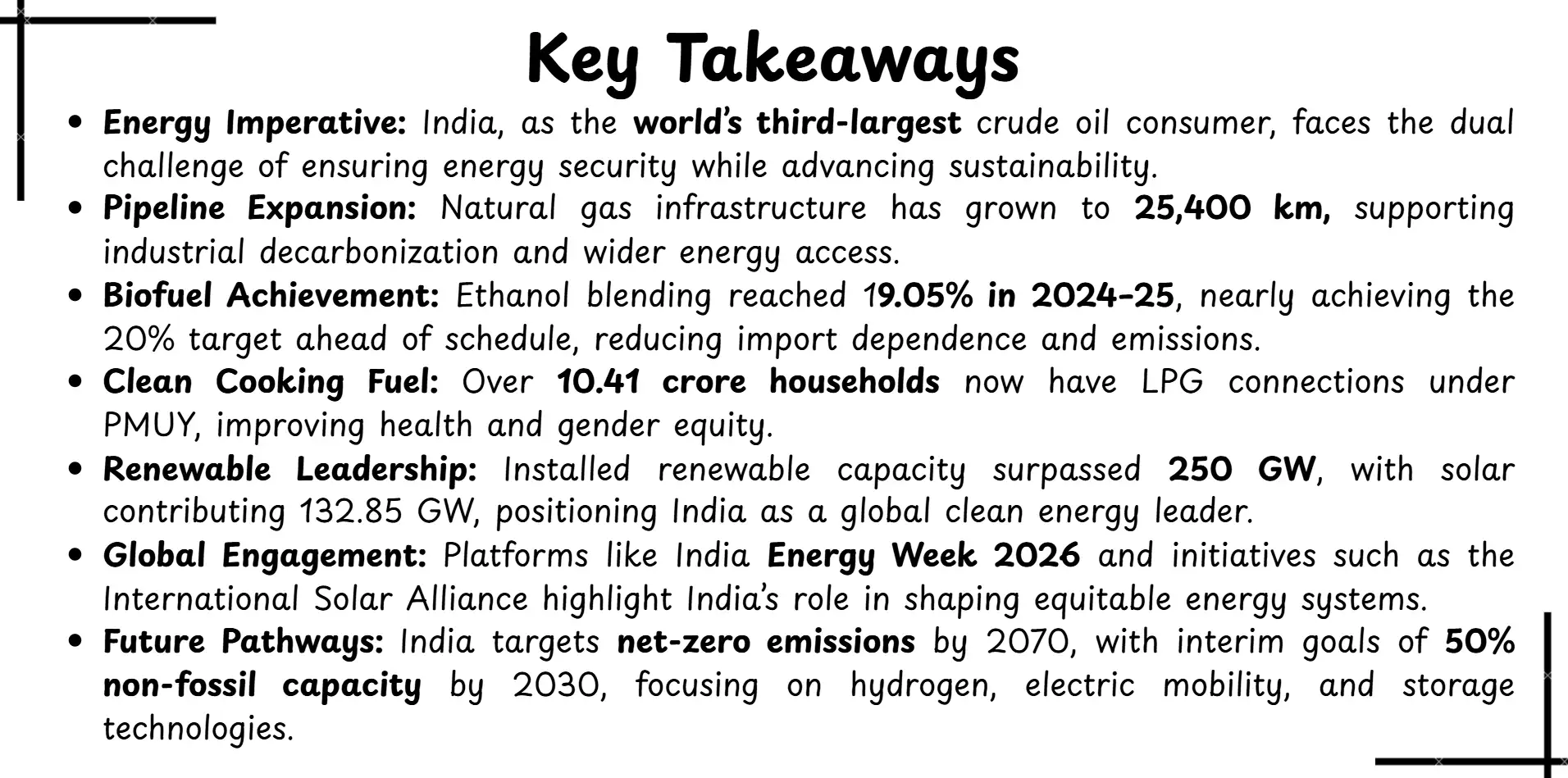
The growing leadership of India in the world energy transformation can be seen in its home and world commitments. India is a fast-growing economy with the third-largest consumer of crude oil in the world, hence facing the challenge of providing energy security and achieving sustainability simultaneously. New developments, such as faster ethanol blending, gas infrastructure development, and significant investment in renewable energy, demonstrate an interest in energy source diversification and reducing carbon intensity. India Energy Week 2026 is another platform that promotes the role of India as an extensive figure in the global decarbonisation process by showing its leadership in designing equitable and secure energy systems.
Renewable Energy (RE) Imperative of India
The future of energy in India is determined by the twin challenges of maintaining a high rate of economic growth and, at the same time,promoting environmental sustainability. It is important to note that it must change the current energy situation across the world as its role in this global energy transition grows, thus its national and international needs.
RE Development Imperatives of India
India is already the third-largest crude oil consumer, and one of the rapidly expanding economies, making energy security an important factor in industry growth, agriculture, and digital infrastructure. The International Energy Agency (IEA) estimates that 85% of electricity demand growth in the world over the next three years will come about in emerging economies, with India leading the pack. This fact highlights the need to diversify energy sources to ensure a reduction in the susceptibility to oscillation of the global prices and disruptions in supply chains.
Development of Indian RESources
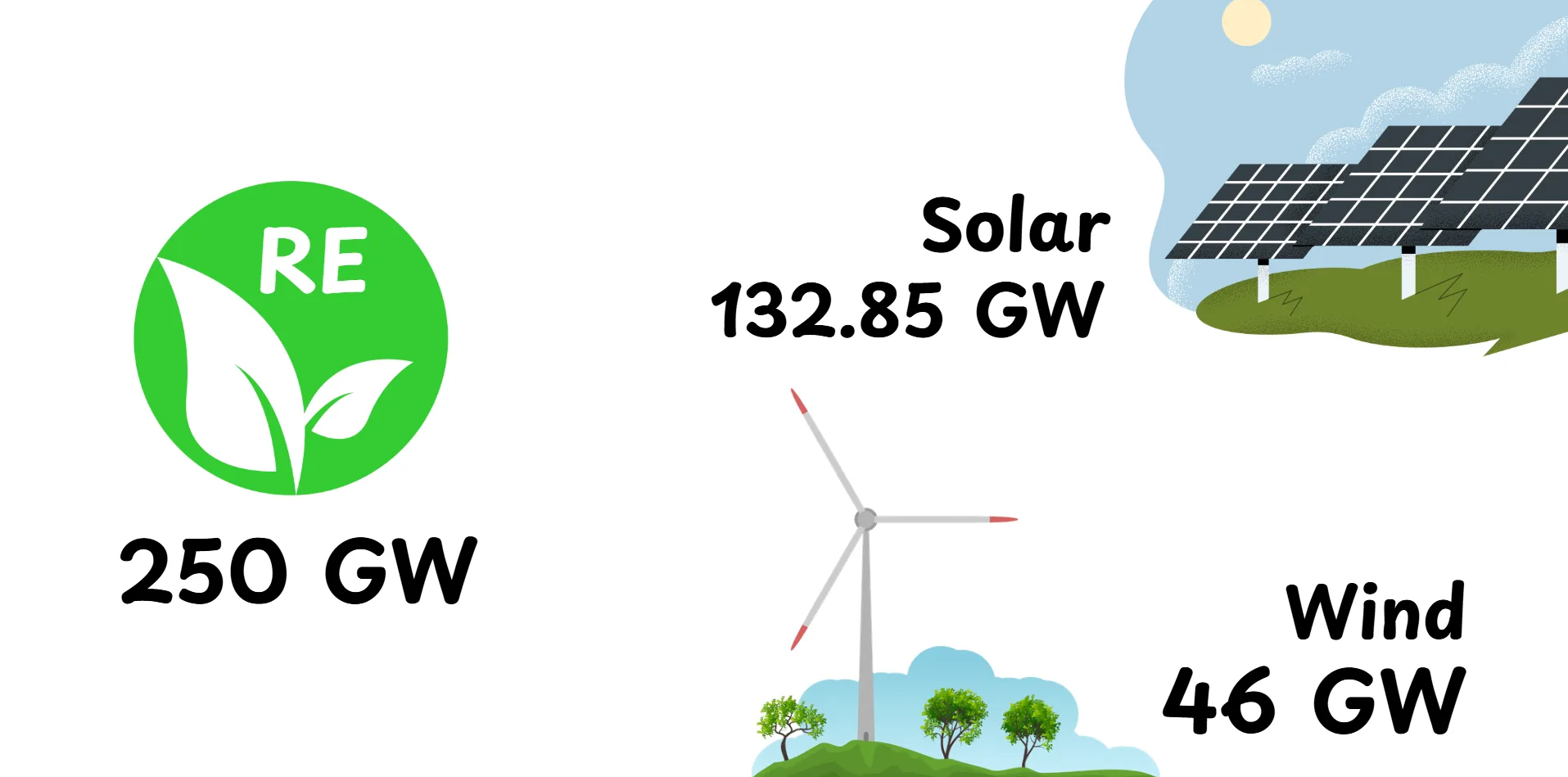
India has recorded phenomenal advancement in clean energy. In June 2025, half of its installed electricity production was based on non-fossil fuels, five years earlier than its commitment in the Paris Agreement. In August 2025, India had installed RE capacity of over 250 GW (with solar 132.85GW and wind 46 GW). These successes depict the ability of India to keep pace with the increasing electricity demand and the sustainability goals.
Global Context and Indian Leadership in Re
The process of energy transformation in India reverberates throughout the whole world, which confirms the country as a leader in climate action. The achievements of its work are demonstrated through such platforms as India Energy Week 2026, which allows it to collaborate with the whole world. Enhancing renewable energy, building more natural gas facilities, and encouraging biofuels, India is not only able to meet the national demands, but also to influence the world discussion on the issue of fair and safe energy systems. This dual role shows the central role of India in the transition of energy in the world.
Enablers of IndianRenewable Energy Transition
The process of energy transition in India is carried out in a coordinated plan that aims to strike a balance between macro-economic growth and environmental sustainability. The experience of recent years confirms the significant positive achievements in terms of diversifying the energy mix, increasing physical infrastructure, and increasing the utilization of renewable technologies. These achievements, allied together, reinforce the emerging new status as the global frontrunner in the modernization of energy systems within India.
Indian Natural Gas Infrastructure Development
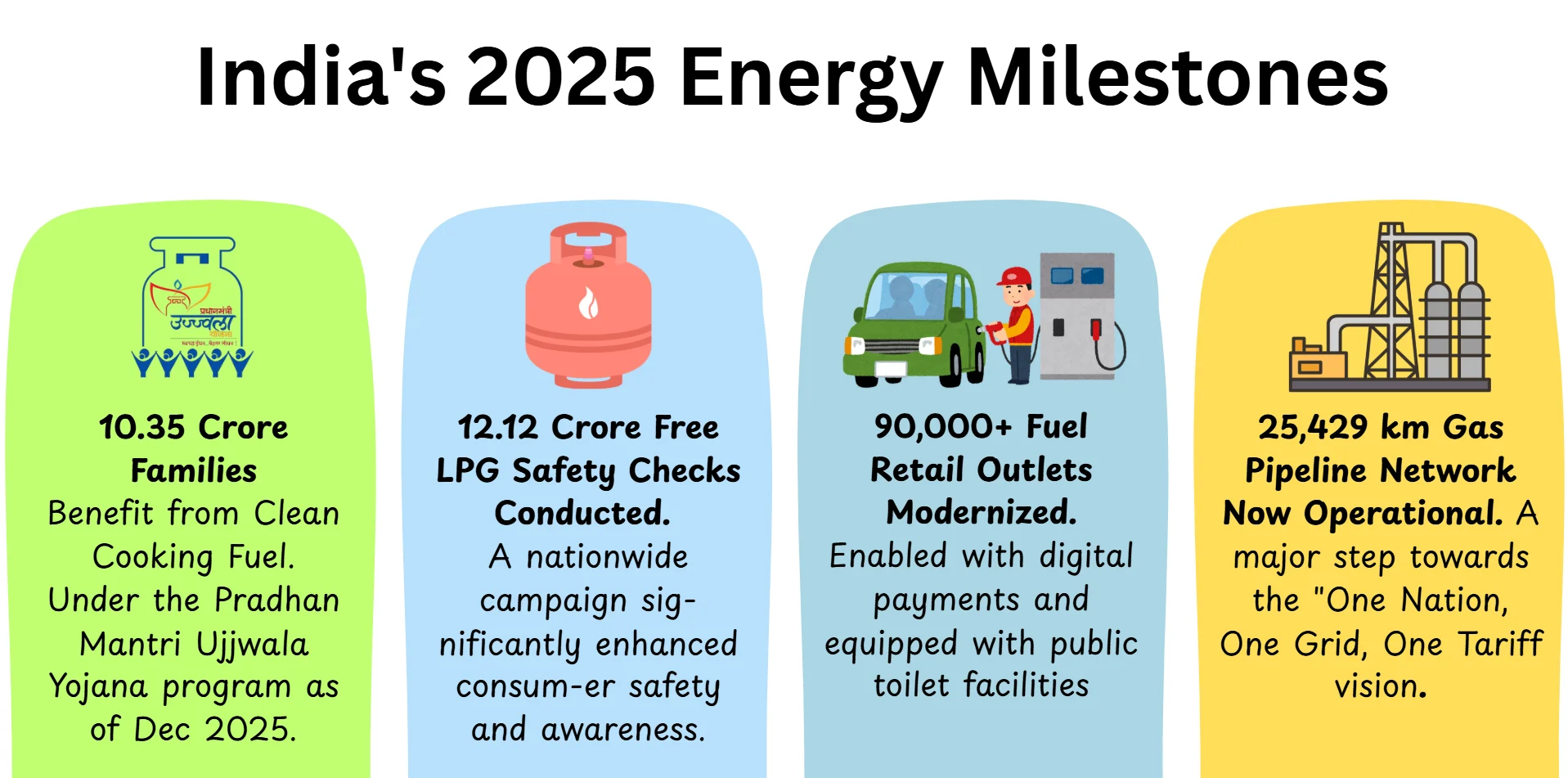
India has expanded its natural-gas pipeline network significantly,reaching 25,400km in 2025, and with plans of further expansions to include every administrative district. This growth makes energy more accessible, coal dependence less crucial and industrial decarbonisation easier. According to the Ministry of Petroleum and Natural Gas, the augmentation is expected to triple the share that natural gas has in the country's national energy mix to 15% by the year 2030.
Ethanol Blending Success in India
In the year 2024-25, India has reached a status of 19.05 percent ethanol blending and is approaching their 20 percent mark. This policy also helps in decreasing the level of imports of crude oil, the level of greenhouse-gas and has created a market for farm crops. Analysis by NITI Aayog has indicated that an increase in the blend fraction would result in an annual saving of about USD 4 billion, subject to foreign exchange savings, and reduce emissions.
India’s Cooking Fuel Cleanliness via Universal Access
In the context of Pradhan Mantri Ujjwala Yojana (PMUY), 10.41million households have liquefied petroleum gas (LPG) connections, hence making clean cooking fuel available to rural and urban jurisdictions. This initiative addresses the issue of indoor air pollution, improves the overall results in the healthcare sector, and diminishes gender inequalities by lowering the energy costs consumed by households.
What is the role of India in the global energy transition?
India has pledged to achieve net-zero emissions by 2070 and aims for 50% of its total energy capacity to come from renewables by 2030. This commitment underscores India's determination to lead the way in adopting clean energy solutions and mitigating climate change.
India’s RenewableTechnology Development
The goal of renewable energy development in India is a local strategic goal and also stipulates a global standard. This change has been driven by policy incentives and technological means, especially those relating to generation, storage, and grid integration, and has made India a leader in sustainable energy solutions.
India’s increasing RE Capacity
In 2025, India had emerged as the third-largest market in the world regarding renewable-energy capacity, with over 250 GW in installed capacity, with 132.85 GW of solar and 46 GW of wind energy. This move is an indication that India is compliant with the Paris accord and determined to realise 50 percent of electricity production through non-fossil fuels by 2030. According to the Ministry of New and Renewable Energy, renewable energy has become a quite significant source of electricity to the national grid, reducing the dependence on coal and reducing carbon emissions.
Indian Technological Innovation in RE
The trend of technological advances is the key to future scaling of renewable adoption, and smart grid designs, digital monitoring systems, and AI-assisted predictive systems optimize the effectiveness of operations, as well as grid stability and resilience. India has been simultaneously investing in green-hydrogen projects, with the aim of producing 5 million tonnes of green hydrogen each year by 2030; this effort is estimated to decarbonise other downstream industries of the country, such as steel manufacturing and fertilizer.
Global Engagement and Future Outlook for India
The growing contribution of India to the world energy transition is not just restricted to national achievements. India, with its international activity and active policy structures, is capable of persuading the creation of just, safe, and sustainable energy systems around the globe.
India as Global RE Leader
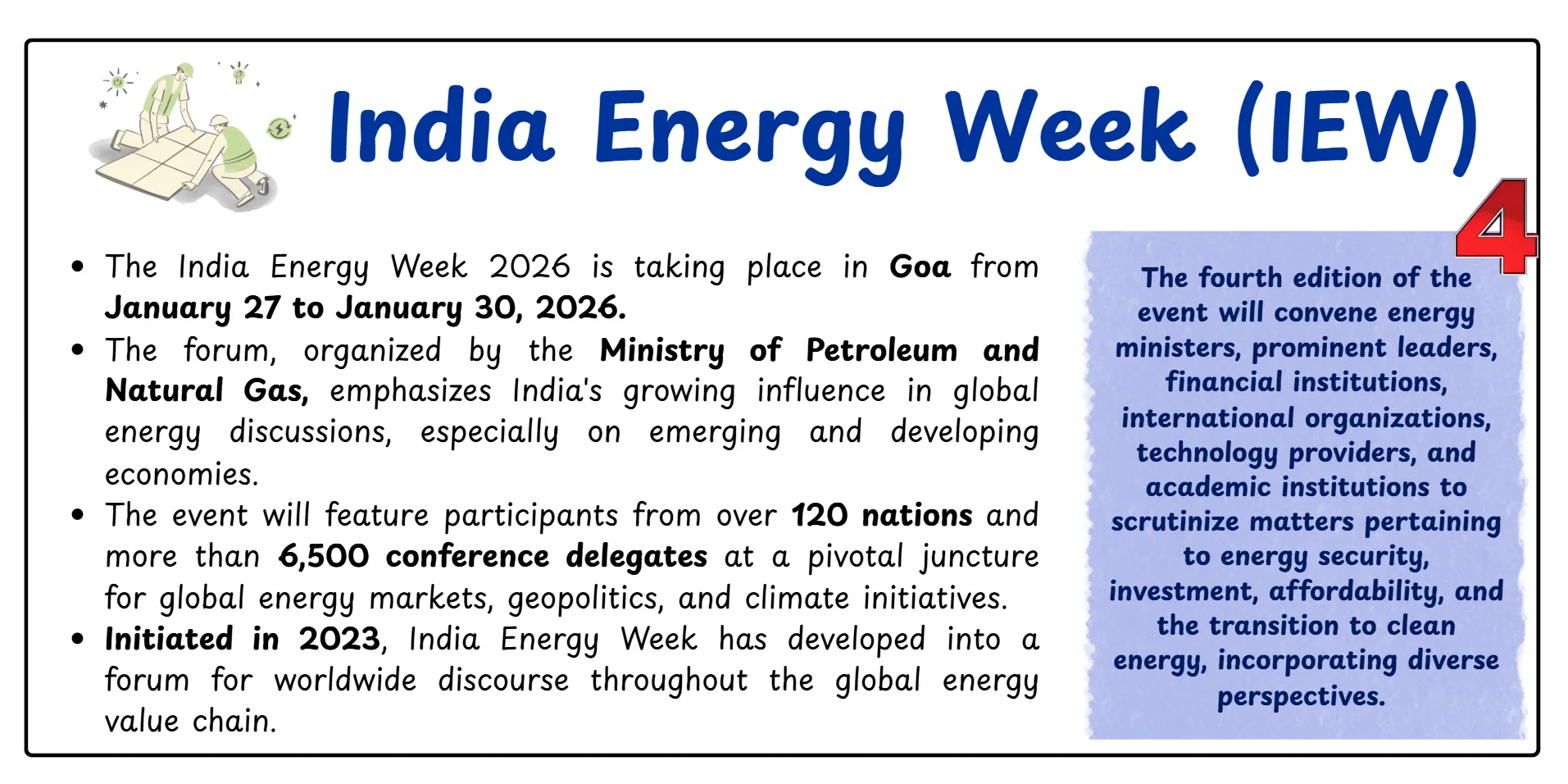
India is playing a significant role in energy negotiations on the Global Level. The India Energy Week 2026 is one of the events that serve as an arena of cooperation for policymakers, industry leaders, and innovators. The leadership of India in the International Solar Alliance (ISA), which it co-founded with France, has gathered more than 120 member countries to speed up the deployment of solar in the rest of the world. These measures highlight the Indian commitment towards group climate action.
Strategic Partnerships by India in RE
Green hydrogen, biofuels, and renewable technology are the areas where India's energy diplomacy focuses on collaborating. There are joint projects with the European Union, Japan, and the United States, which help in the transfer of technology and investment in clean energy infrastructure. As identified by the International Energy Agency (IEA), the Indian renewable energy market has the potential of USD 250 billion of investment by 2030, thus strengthening its status as an innovation and sustainable development center.
India’s Net-Zero Ambitions
The prospective planning puts India on the path of net-zero emissions by 2070, but in between, there is a goal of 50 percent non-fossil fuel capacity targets by 2030. The main features of this direction are the extension of electric mobility, an increase in the capacity of battery storage, and the development of hydrogen production. These plans not only secure the energy future in India, but also make it a stronger player in the global responsibility of the energy transition.
Conclusion
The increasing role of India in the global energy transition can be used to demonstrate a strategic balance between the imperatives of growth and the sustainability commitments. India has shown some tangible improvement in terms of carbon intensity reduction walking along with future energy security, through its achievements in terms of renewable capacity, blending of ethanol, and provision of clean fuel. Its pre-eminence in the international platforms and in joint ventures only underscores its role in the formation of fair energy systems. With prospects of the future, India's direction to net-zero in 2070 makes it a central figure in ensuring decarbonisation and sustainable development globally.
Frequently asked questionsFrequently asked questions
Renewable Energy (RE) Imperative of India?
The future of energy in India is determined by the twin challenges of maintaining a high rate of economic growth and, at the same time,promoting environmental sustainability. It is important to note that it must change the current energy situation across the world as its role in this global energy transition grows, thus its national and international needs.
Enablers of IndianRenewable Energy Transition?
The process of energy transition in India is carried out in a coordinated plan that aims to strike a balance between macro-economic growth and environmental sustainability. The experience of recent years confirms the significant positive achievements in terms of diversifying the energy mix, increasing physical infrastructure, and increasing the utilization of renewable technologies. These achievements, allied together, reinforce the emerging new status as the global frontrunner in the modernization of energy systems within India.
India’s RenewableTechnology Development?
The goal of renewable energy development in India is a local strategic goal and also stipulates a global standard. This change has been driven by policy incentives and technological means, especially those relating to generation, storage, and grid integration, and has made India a leader in sustainable energy solutions.
Global Engagement and Future Outlook for India?
The growing contribution of India to the world energy transition is not just restricted to national achievements. India, with its international activity and active policy structures, is capable of persuading the creation of just, safe, and sustainable energy systems around the globe.