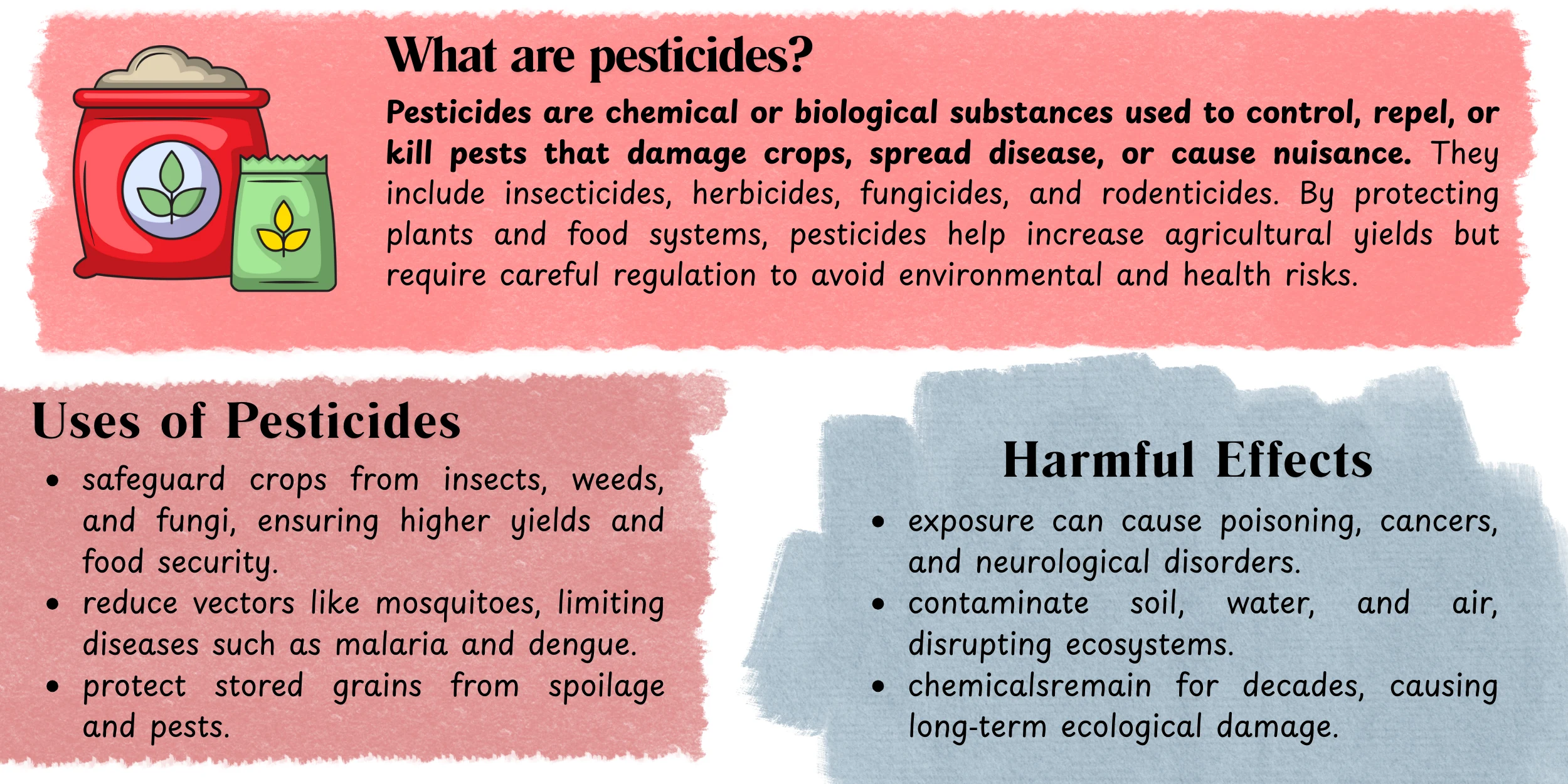
The draft Pesticides Management Bill, 2025 is a farmer-centric legislation with key features. The revised Bill introduces measures such as transparency and traceability to improve service delivery to farmers and promote ease of living.A revised draft, which was published on 7 January by the Union Ministry of Agriculture and Farmers Welfare, the Pesticide Management Bill, 2025, was in the news because of its relevance to Indian agriculture and effects on the farming communities in India. The draft aims to enhance regulatory control over the production, importation, trade, and use of pesticides in an attempt to increase agricultural security.
|
Key highlights
- Pesticide Management Bill, 2025
- Significant clauses of The Draft Bill
- Impact of Bill on Farmers and Industry
- Challenges associated with the bill
- Way Forward
|
A new Draft version of the Pesticide Management Bill, 2025, was published on 7 January 2025 by the Union Ministry of Agriculture and Farmers Welfare. This legislative proposal is aimed at controlling all aspects of pesticide use in India, including not only its production and importation but also its sale and usage, at a time when the issue of pesticide abuse, environmental degradation, and risk to farmers is on the increase. The government, in enacting strict licensing, labelling, and monitoring regimes, is expected to bring about transparency, accountability, and sustainability in agricultural practices. The draft also focuses on consumers' health and environmental protection as it tries to balance the interests of farmers and industrial stakeholders. The discussion below outlines the key points of the bill, implications, problems and suggests ways in which Indian agriculture can be enhanced in the future.
Significant Clauses of The Pesticides Management Bill, 2025
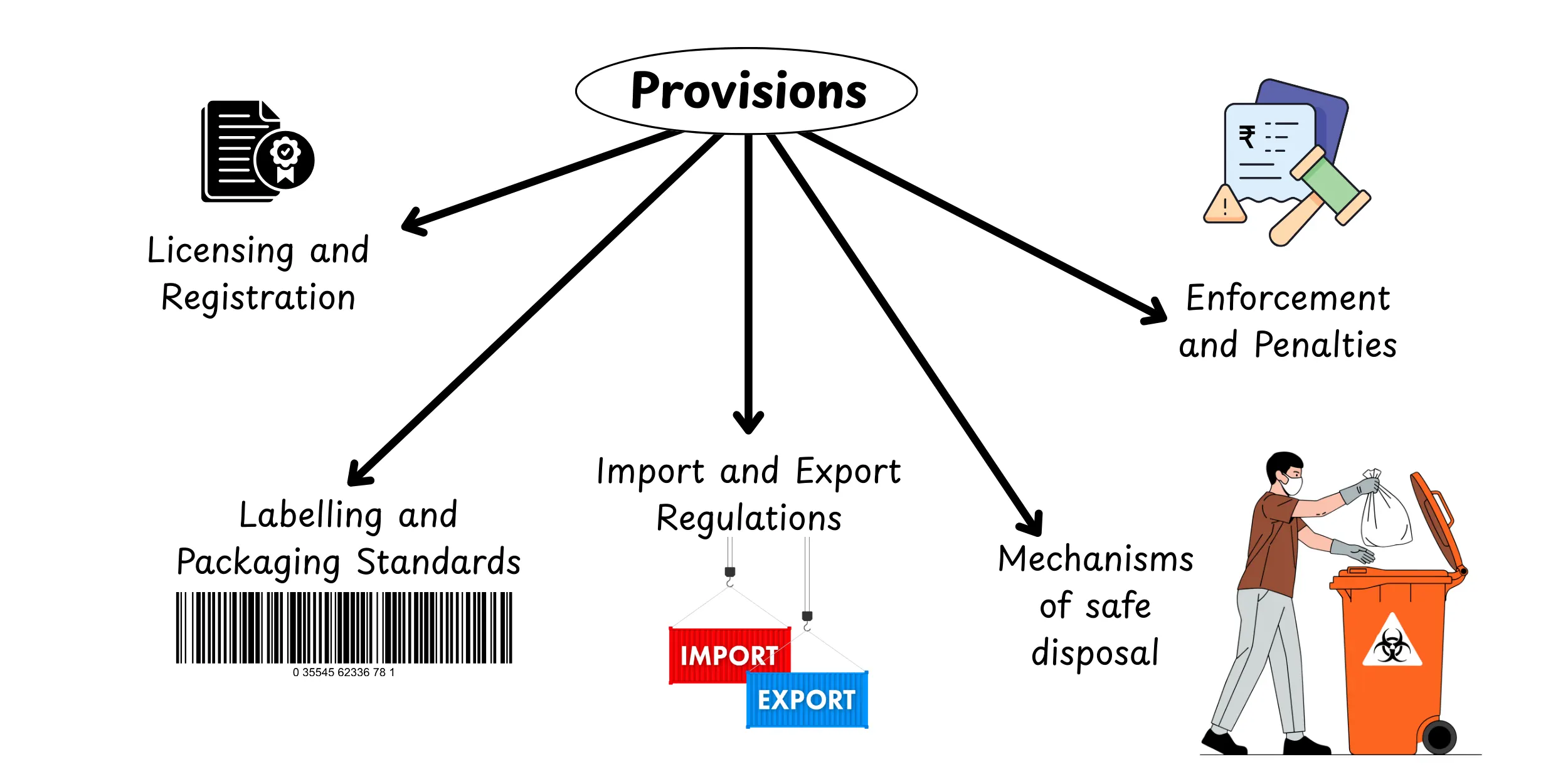
The Draft Pesticide Management Bill, 2025 seeks to replace the Insecticides Act, 1968, modernising pesticide regulation through digital transparency and provisions for worker welfare. Its key features include the establishment of a Central Pesticides Board, a Registration Committee for digital scrutiny, and a framework for reporting poisoning incidents.The proposed bill presents a broad set of actions to control the use of pesticides, making it more focused on licensing, labelling, safe disposal, and punitive measures. Its core aim is to have a clear regulatory regime that protects the agricultural producers, consumers, and the environment.
Licensing and Registration
The bill mandates manufacturers, distributors, and retailers to be under compulsory licensing. Pesticides have to be registered before entering the market; only those that have been found to meet certain specifications will be distributed in the market. This provision aims at preventing the spread of false or dangerous chemicals that are otherwise harmful to both crop varieties and farmers.
Labelling and Packaging Standards
There is encouragement of clear labelling and standardized packaging to provide accurate information to the farmers about the use, dosage, and safety measures. This is aimed at reducing careless use and promoting sensible uses hence safeguarding the farm output and human health.
Import and Export Regulations
The draft bill increases the enforcement of the pesticides imported to India, as it states that they have to comply with Indian standards on the safety of those pesticides. Exporters also have to meet international standards, and therefore, they maintain the image of India as a good agricultural producer in the international markets.
Mechanisms of safe disposal
The disposal of pesticides that are either expired or unused is also provided to guarantee that it does not pollute the environment. The farmers and distributors will be informed on how to dispose of themselves in a friendly ecological manner, thus reducing threats to soil, water, and bio-diversity.
Enforcement and Penalties
It suggests a series of penalties to be followed for breaches, such as fines and revocation of the licence. There are enforcement mechanisms that are aimed at giving authorities the power to check compliance, discourage malpractice, as well as ensuring accountability within the pesticide supply chain.
Impact of Drafted Pesticide Management Bill on Farmers and Industry
The drafted Pesticide Management Bill, 2025, has a major implication on the farmers as well as agrochemical industries, re-aligning the regulatory practices in an attempt to balance safety, productivity, and sustainability.
Protecting the Interests of the Farmers
The bill is designed in such a way that farmers will be protected against unauthorised pesticides, which have caused significant financial losses in the past. Reportedly, almost a quarter of the pesticides marketed in India are of poor quality, leading to crop losses and health hazards. The legislation would guarantee farmers get access to genuine products, hence increasing the farm output and reducing the use of harmful chemicals, as the legislation requires strict licensing and traceability.
Improving Industry Responsibility
To the manufacturers and distributors, the bill brings in stringent compliance provisions. Standardised labelling and packaging norms, as well as disposal norms, are obligatory for companies to follow. This will increase the cost of operation; however, this also brings about credibility and transparency. The stakeholders in the industry are expected to invest in computerised monitoring equipment and certified testing laboratories, hence aligning with the international best practice.
Consumer and Environmental Benefit
The regulation has an indirect gain of reducing the pesticide content in food products. Also, safe disposal and friendly environmental practices promote environmental sustainability, which is consistent with India's obligations under the biodiversity and climate change conventions.
Biodiversity
Biological diversity or what is biodiversity, is the incredible variety of all life on Earth, encompassing the different species (plants, animals, microbes), the genetic variations within them, and the diverse ecosystems (like forests, reefs) they form, all working together to make our planet resilient and provide essential services like clean air, water, and food.
Implementation Challenges
Although promising, there exist challenges in the area of awareness of the farmers, affordability of stringent alternatives, and the infrastructure that may be required to enforce it. Strong training programmes with government and Industry cooperation will be critical to guarantee a smooth adoption process.
Challenges Associated with the Pesticide Management Bill
The enforcement of the Pesticide Management Bill, 2025, is met by several obstacles that may cause resistance to the bill,which are in the form of assumptions of awareness, implementation, and cost.
Awareness among Farmers
One of the key issues is the sharing of knowledge of new norms of licensing, labelling, and disposal. Research indicates that more than 60 percent of farmers in India, individually owning less than 5 hectares of land, rely on unofficial sellers of pesticides without proper advice, thus increasing the risks of pesticide misuse.
Implementation and Infrastructure
The effective monitoring demands a strong institutional infrastructure. Currently, India has few certified labs and officials to check, which makes the process of keeping an eye on the whole country a difficult task. The poor infrastructure would cripple the aim of the bill to contain efficient pesticides.
Affordability of Safer Alternatives
Green pesticides and bio-inputs are usually quite expensive compared to traditional chemicals-based pesticides. Producers might not be able to switch to safer means without subsidies or incentives, in which case the dependency on cheaper, yet detrimental products will remain unaffected.
Industry Concerns
The lack of regulations in the protection of data has been observed by manufacturers and, therefore, may discourage investment in research and innovation. It is a sensitive task to balance the welfare of the farmers and the viability of the industry.
Way Forward for the Pesticide Management Bill 2025
The only way ahead for the Pesticide Management Bill 2025 is strengthening the mechanisms of implementation, creating awareness among farmers, and balancing industry innovation and environmental sustainability.
Stakeholder Consultation
This indicates an inclusive manner of enacting policy because the Ministry has welcomed public comments regarding the draft bill up to February 4, 2026. This participative approach lets the farmer groups, industry and the civil society take refinements on what is to be practically adopted.
Monitoring and Transparency in a Digital Form
The bill highlights the application of the systems of digital traceability to prevent the sale of spurious pesticides. One of the studies indicates that in pilot zones, digital platforms will help cut agrochemical counterfeiting by close to a quarter, which indicates the significance of enforcement based on technology.
Farmer Awareness and Training
The level of awareness campaigns and extension should be increased, as well as to sensitise farmers on the use, disposal and greener alternatives. It is stated in the studies that more than 60% of the smallholders are untrained, which highlights the necessity to have a systematic outreach.
Rewarding Green Alternatives
Government subsidies and industry incentives on bio-pesticides and regenerative farming practices may help achieve the goal of policy support and therefore encourage their use. In accordance with the climate intentions of India, the shift will alleviate the ecological risks, and the agricultural output will be curbed.
Conclusion
To conclude, the Pesticide Management Bill, 2025, is an important step that can be made in achieving safer and more environmentally friendly farming practices in India. The Bill is aimed at protecting the farmers, consumers, and the environment by setting regulatory systems on the manufacture, importation, sale, and usage of pesticides.Although the provisions are elaborate, the ultimate success of the bill will still be determined by good enforcement, specialized education for the farmers, and active collaboration with the industry. The solution to the problems regarding affordability and awareness will be critical in ensuring that the entire implementation process is smooth. Finally, the bill demonstrates the intention of India to balance the production system with the ecological accountability issues, thus opening the path to healthier food systems and a stronger farming community.