The proposal of a data embassy in the United Arab Emirates has elicited much academic interest owing to a meeting between Prime Minister Narendra Modi and President Sheikh Mohamed bin Zayed during the latter's recent state visit to New Delhi. This project is especially worth mentioning, being the first attempt at exploring the digital embassy concept by India, the purpose of which is to protect citizens high-level national information during cyber-attacks, natural and man-made disasters, and geopolitical risks as well as to consolidate digital relations between India and the UAE.
|
Key highlights
- Indian Data Embassy
- Concept of Data Embassy
- Strategic interest of India in the UAE
- Potential Positions and Advantages for India
- Implementation Challenges for India
- Way Forward for India
|
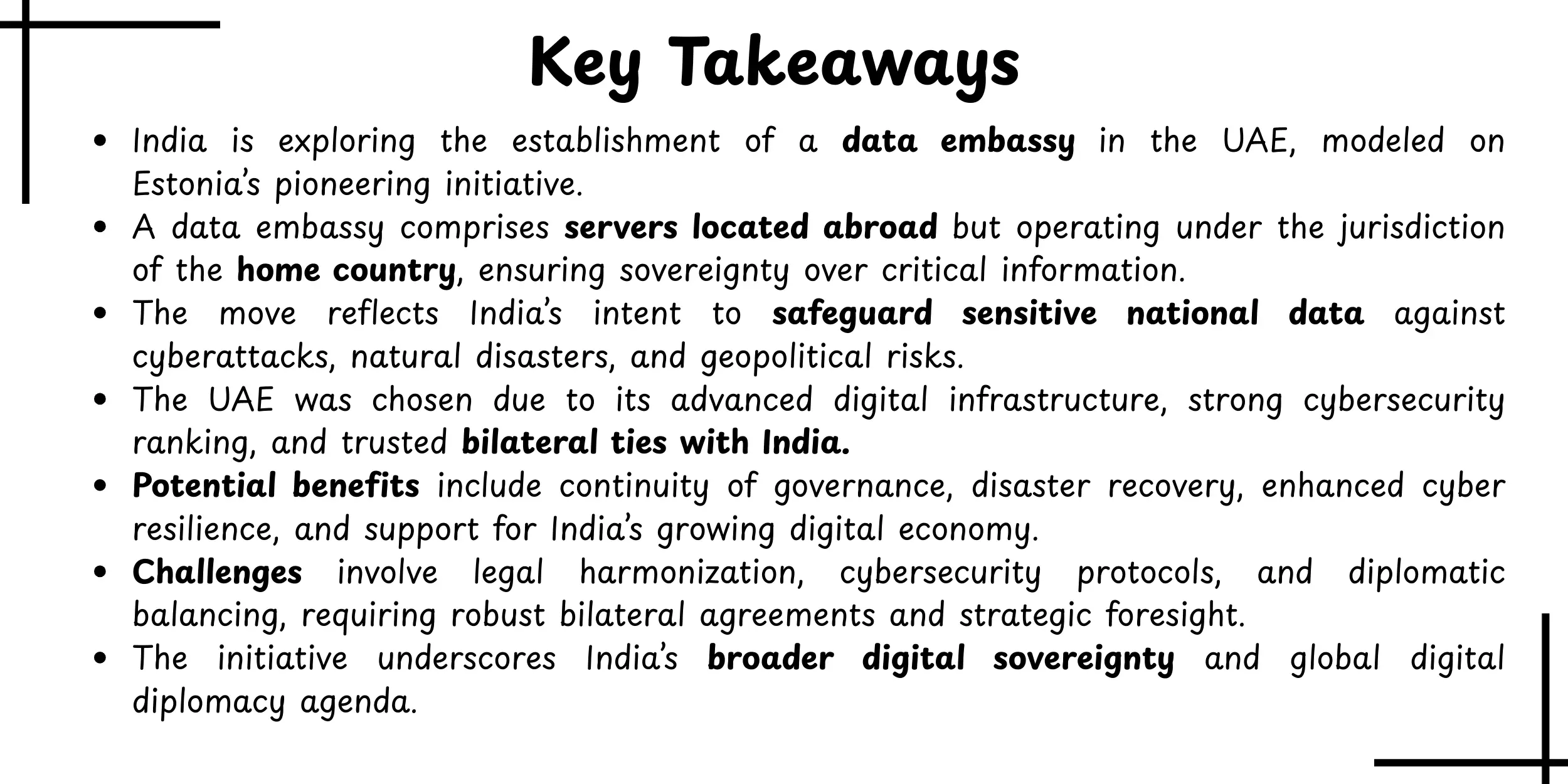
The initiative of India to develop a “data embassy” in the United Arab Emirates can be viewed as one of the landmark decisions in the discourse of digital sovereignty and international cooperation. A data embassy refers to a secure cluster of servers placed in foreign countries but under the governance of the home country, thus providing a consistency of policy and securing important information. It represents an Indian calculated manner of securing its sensitive national information against cybersecurity threats, natural disasters, or geopolitical upheaval, with the simultaneous boost of its technological relations with the UAE. The project emphasizes the existing wider discussions of resilience, jurisdiction, and digital diplomacy on the international level.In January 2026, India and the United Arab Emirates (UAE) formally agreed to explore the establishment of "Digital Embassies" (or Data Embassies), marking a significant shift towards enhancing cybersecurity, ensuring digital sovereignty and securing critical, state-owned data.
Concept of a data embassy in India
In simple terms, a data embassy comprises a set of servers that store a country's data under its jurisdiction while being located in another country. The concept of a data embassy is a new development aimed at addressing the issues of digital sovereignty, cybersecurity, and governance continuity in the more interdependent world.A Data Embassy is a secure, offshore digital facility where a nation-state stores its critical data, ensuring digital continuity and sovereignty even if its physical territory faces threats like cyberattacks, natural disasters, or conflict, operating under its own jurisdiction through diplomatic agreements with a host country, much like a physical embassy.
Origins of Data Embassy
A data embassy is a secure collection of servers that are located in another country but are controlled by the home country. This model was first developed by Estonia in 2017, when it opened its first data embassy in Luxembourg, after the country experienced major cyber-attacks in 2007. The setup also places an assurance that essential national information is inaccessible yet secure even when the institutional infrastructure is compromised.
Strategic Importance of Data Embass
The main purpose of a data embassy is to ensure the security of sensitive data, including the records of citizens, state databases, and the financial system of a country, against a cyber-threat, natural disasters, or political instabilities. State localisation of servers in foreign countries creates a state-level backup and resiliency in its digital system. An example is the model by Estonia, which ensures continuity of governance in times of crisis by ensuring there is continuity in state registries.
India's Interest in the UAE
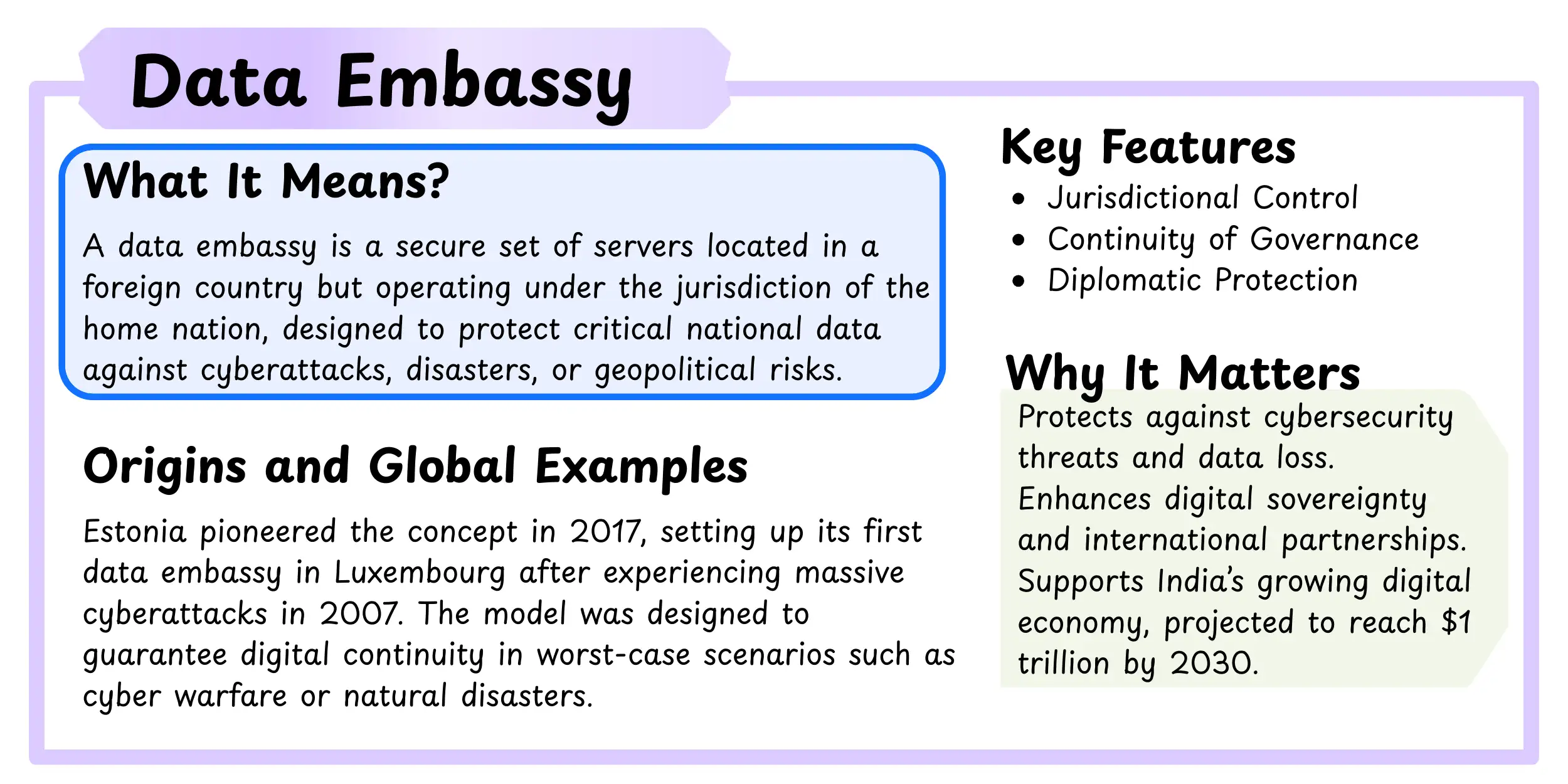
The idea of a data embassy in the United Arab Emirates is an informed move by India, which has been devised both strategically and technologically. The UAE has a well-developed digital infrastructure and bilateral relations, which make it a reliable partner. The project, as stated by the Foreign Secretary Vikram Misri, would involve the establishment of repositories of data of national value and strategic significance, which is in line with the overall agenda of India in relation to digital sovereignty.
Global Relevance of Data Embassy
Even though very few nations have implemented such embassies, the practice is becoming more imminent as nations realize the dangers of cyber warfare and data breaches. Data embassies, therefore, represent a combination of diplomacy, technology, and national security, which in turn recreates the concept of sovereignty in the digital generation.
Strategic interest of India in the UAE
India has plans to have a data embassy in the United Arab Emirates (UAE), which can be viewed as an example of the introduction of the spirit of technology with desire, geopolitical confidence, and economic expediency to ensure national information is preserved.
India’s Geopolitical Partnership
The UAE and India have a stable strategic relationship, which is supported by the regular exchanges of high-level communications and the existence of formal agreements. Bilateral trade reached over $85 billion in 2022-23, which places the UAE as India's third-largest trading partner. Such a high level of economic interdependence provides a reliable anchorage of collaborative efforts in extremely sensitive fields such as digital sovereignty. In its turn, the establishment of a data embassy in the UAE indicates that India trusts the political corporation of the Gulf state and its role as a reliable partner.
Strengthening India’s Tech-Infrastructure
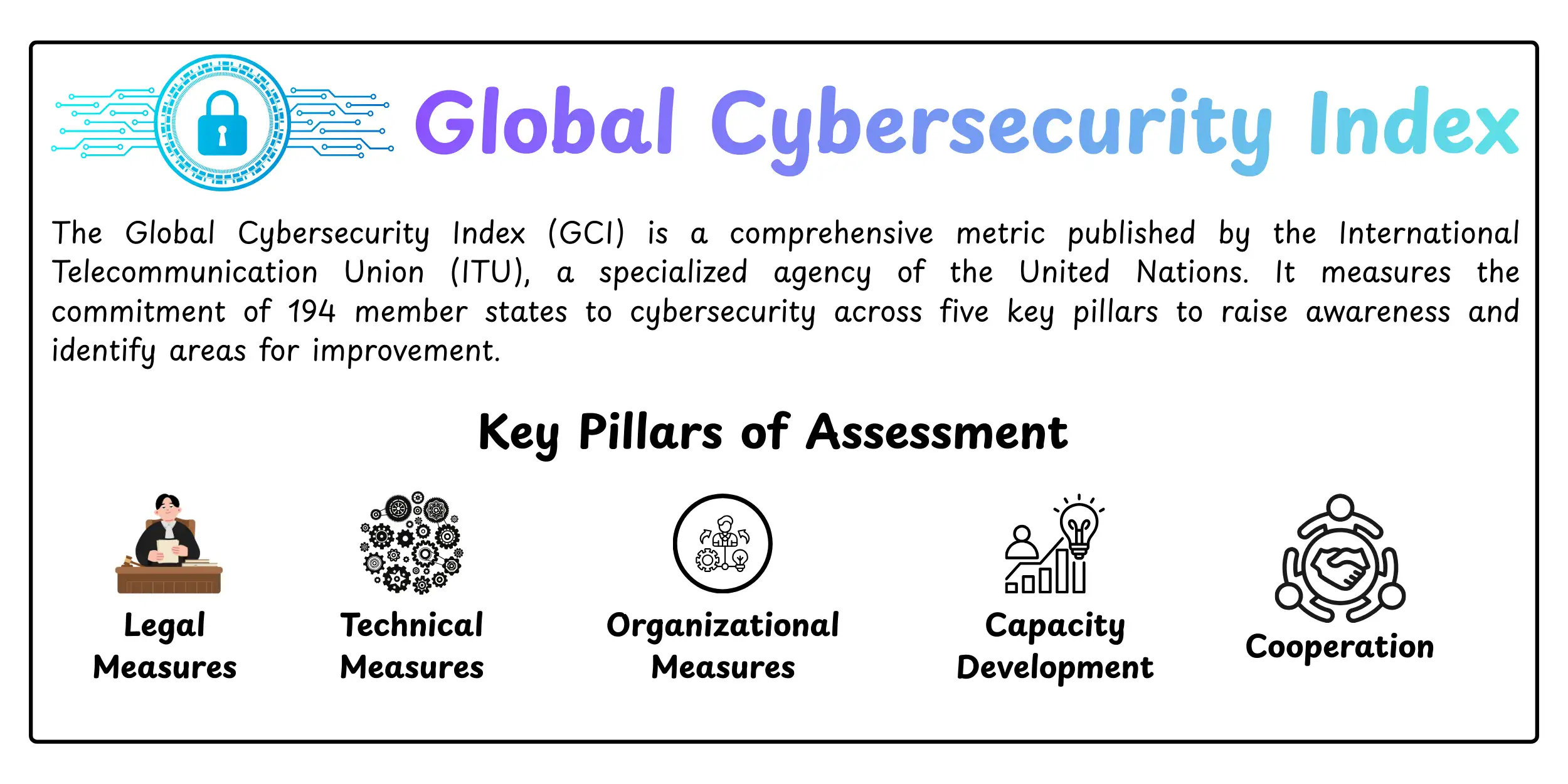
The UAE has already invested in high-level digital infrastructure, making the country one of the most prepared countries in cybersecurity. The UAE scored 0.891 in the 2021 Global Cybersecurity Index, which was in the top category of the world. Through this infrastructure, India will be in a position to guarantee that important governance information, including citizen registries and financial records are stored safely so that it can also be retrieved even during such domestic emergencies.
Strategic Continuity for India
Foreign Secretary Vikram Misri explained that the project would entail developing repositories of data that are considered important in the national interest and strategy. This goal is related to the broader vision of India to strengthen its ability to fight back against cyber-attacks, natural disasters, or other geopolitical threats. India, by putting servers in the UAE, has its redundancy and governance continuity, hence conforming to international standards of good practices.
Broader Implications for India
In addition to making India more resilient, the initiative strengthens digital diplomacy in India and makes it a participant in the shaping of the norms of cross-border data-governance. Moreover, it complements the Indian internal system of data protection and thus strengthens sovereignty as well as bilateral relationships with a key Gulf partner.
Potential Positions and Advantages for India
The implementation of a data embassy by India in the United Arab Emirates is being planned as a radical action of strengthening digital sovereignty and independence, and collaborating with other states, in response to cyber weaknesses in the modern world.
Ensuring Continuity of Governance in India
A data embassy is used to provide backup to very important national databases, ensuring that citizens' files, financial systems, and other governance systems remain accessible in times of disaster in their countries. In Estonia, empirical evidence shows that these embassies have the ability to protect registries even during a cyber-attack or system failure, and thus ensure continuity in administration.
Improving Disaster Recovery in India
Many servers at overseas locations in the domain of India will create a safe backup that will withstand cyber intrusion and natural catastrophes. The Global Cybersecurity Index 2021 has officially confirmed that the UAE is one of the top countries in cyber preparedness, and it may therefore provide India with a trustworthy setup of disaster recovery and cyber resilience.
Intensifying Indian Digital Diplomacy
The campaign is also a demonstration of the Indian commitment towards digital diplomacy. By cooperating with the UAE, India simultaneously protects its information and enhances the bilateral relations in the newest technologies. This alliance can be used as a guide in other states that are considering cross-border data governance options.
Promoting Indian Strategic Objectives
Outside the security aspect, data embassies have the ability to drive innovation in artificial intelligence, cloud services, and fintech. The digital economy of India will have a valuation of $1 trillion by 2030, and the hardy data infrastructure abroad will be essential in making the growth curve continue.
Implementation Challenges for India
The plan by India to have a data embassy in the United Arab Emirates has its opportunities and challenges; the success of this plan in the long run will be subject to events of good manoeuvre within legal, technological, and diplomatic aspects.
Jurisdictional and Legal Complexities for India
The first issue is to balance the legal systems between the UAE and India. Though the data embassies are governed by the home country jurisdiction, cross-border setups often pose some questions of sovereignty, privacy, and observation of international treaties. This has been confirmed by official statements that there are the needs to have clear frameworks to prevent confusion around ownership and access rights.
Infrastructure Concerns for India
Another major barrier is to ensure the high standards of cybersecurity. UAE scores high in the Global Cybersecurity Index 2021 (0.891); however, India should ensure that its sensitive information is not exposed to a foreign danger. It will be imperative to provide safe encryption to the network, multi-layered firewalls, and disaster backup and recovery to avoid attacks and retain confidence.
India needs a Diplomatic and Strategic balance
There is also a need in the initiative to balance the diplomatic sensitivities. Although the UAE is a reliable partner, India should make sure that its dependence on the foreign infrastructure does not diminish its independence. Overdependence risks can be eliminated by diversifying data embassies in several allied countries.
What India can do
The path forward for India would be to work out all-inclusive bilateral deals, invest in sophisticated cybersecurity infrastructure, and align the project to the Digital India vision. Combining resilience and diplomacy will make India lead as a model of secure and sovereign data governance on the international stage.
Conclusion
The exploration of the concept of a data embassy in the United Arab Emirates is an important move by India in consolidating its own digital sovereignty and resilience in the region. Recent developments are expected to curb cyberspace attacks, disasters, and all other uncertainties in the geopolitical sphere by keeping its sensitive data in other countries and putting it under its jurisdiction. Although the efforts continue to harmonise the legal framework and problem of cybersecurity, the initiative highlights how India is keen on protecting digital infrastructure and developing synergistic relationships. After all, this project makes India an active participant in the evolution of the international regulations of cross-border data regulation.
Frequently asked questionsFrequently asked questions
Concept of a data embassy in India?
In simple terms, a data embassy comprises a set of servers that store a country's data under its jurisdiction while being located in another country. The concept of a data embassy is a new development aimed at addressing the issues of digital sovereignty, cybersecurity, and governance continuity in the more interdependent world.A Data Embassy is a secure, offshore digital facility where a nation-state stores its critical data, ensuring digital continuity and sovereignty even if its physical territory faces threats like cyberattacks, natural disasters, or conflict, operating under its own jurisdiction through diplomatic agreements with a host country, much like a physical embassy.
Strategic interest of India in the UAE?
India has plans to have a data embassy in the United Arab Emirates (UAE), which can be viewed as an example of the introduction of the spirit of technology with desire, geopolitical confidence, and economic expediency to ensure national information is preserved.
Potential Positions and Advantages for India?
The implementation of a data embassy by India in the United Arab Emirates is being planned as a radical action of strengthening digital sovereignty and independence, and collaborating with other states, in response to cyber weaknesses in the modern world.
Implementation Challenges for India?
The plan by India to have a data embassy in the United Arab Emirates has its opportunities and challenges; the success of this plan in the long run will be subject to events of good manoeuvre within legal, technological, and diplomatic aspects.