Start your UPSC preparation after graduation with the right UPSC Foundation Course. Learn how to choose a UPSC Foundation Course, build a study plan, Cover the UPSC Syllabus, Strengthen basics, Practice UPSC Previous Years Question Papers (PYQs) and Prepare effectively for Prelims and Mains.
Preparing for the UPSC Civil Services Examination after graduation usually requires 1-2 years of focused preparation. Start by downloading and understanding the official syllabus. Build your basics with Class 6-12 NCERT books, read a reliable newspaper like The Hindu or The Indian Express and choose your Optional Subject early. After completing graduation, you become eligible to appear for the UPSC Civil Services Examination and pursue your dream of joining the civil services. While many aspirants aim to become IAS officers, others target services such as the IPS, IFS, and other prestigious services.
The next big question is- How should you start UPSC preparation after graduation? Here are some simple and practical steps to help you begin your preparation. Thousands of graduate students begin their UPSC preparation with great enthusiasm and confidence. Some join coaching institutes, while others prefer self-study. However, in both cases, following the right direction is important. Without proper guidance, many aspirants lose focus. They collect too many study materials, follow multiple Best YouTube Channels for UPSC Preparation, and visit different coaching websites without fully understanding the syllabus and exam pattern. That is why the first six months of preparation are crucial. A well-planned strategy during this period helps build a strong foundation and improves your chances of clearing the UPSC CSE.
What is the UPSC Foundation Course?
A UPSC Foundation Course is a long-term program designed to help aspirants prepare for the Civil Services Examination in a structured way. It usually runs for 10 to 36 months and covers the complete UPSC syllabus for both Prelims and Mains.
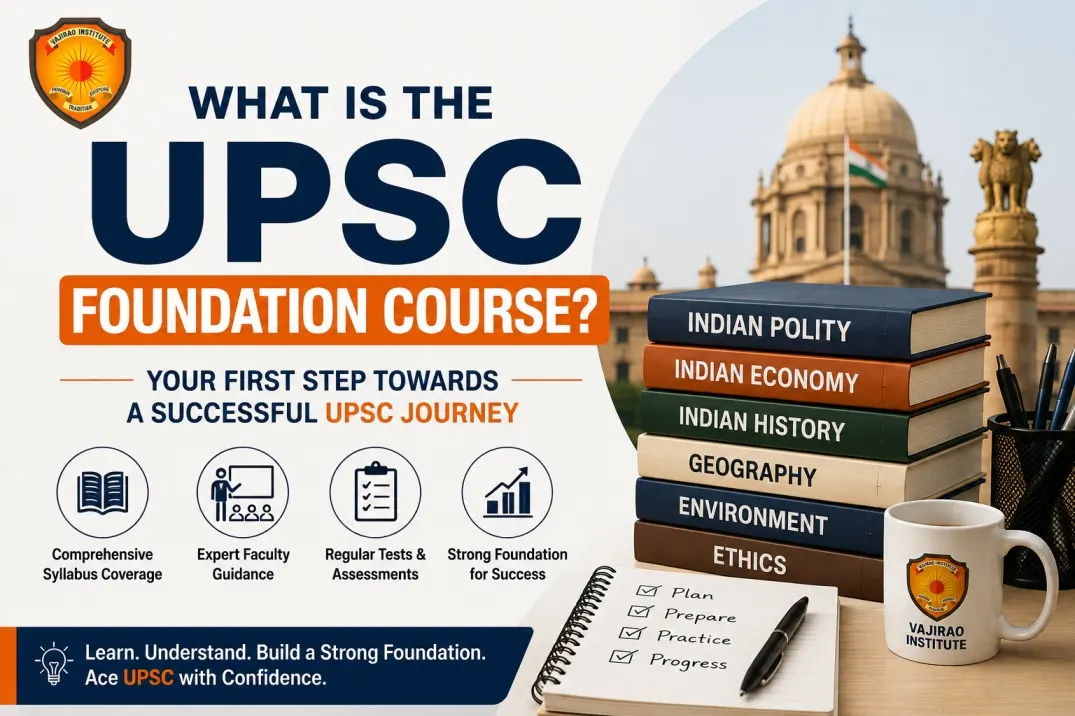
The course includes subjects such as History, Polity, Geography, Economy, Environment, and Science & Technology. Aspirants also get regular MCQ practice, Mains answer writing questions, mock tests, revision sessions and mentorship. These activities help students build strong concepts, improve answer-writing skills, and prepare confidently for all stages of the UPSC examination, including the Personality Test. The UPSC Foundation Course offers structured classes, expert mentorship, NCERT based notes, weekly and monthly current affairs and essential study materials to support complete UPSC preparation.
5 Best Strategies to Start UPSC Preparation After Graduation
Starting UPSC preparation after graduation begins with understanding the official syllabus and UPSC exam pattern, covering Prelims, Mains, and the Interview and developing a strong conceptual foundation through standard books.
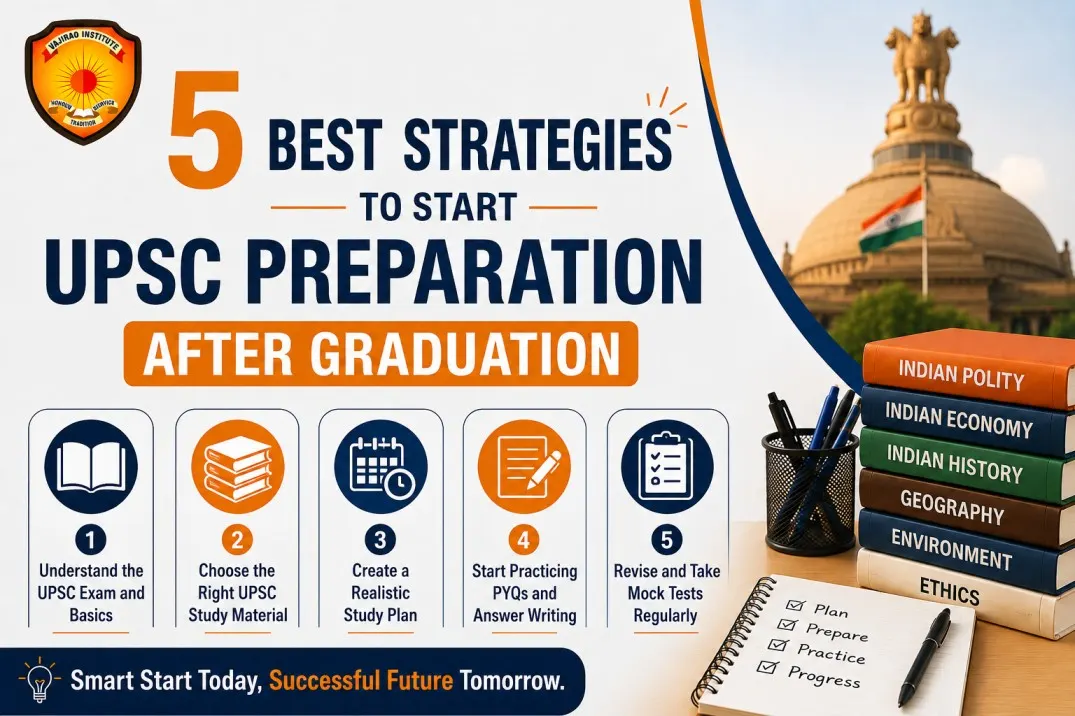
Start with Class 6 to 12 NCERT books to build strong conceptual foundations. Read a daily newspaper like The Hindu for current affairs. Choose your UPSC optional subject early and practice answer writing regularly to improve your speed, structure, and presentation. Lets a Look at the 5 best strategies to start UPSC preparation after graduation:-
1. Understand the UPSC Exam and Basics
The first mistake many beginners make is joining a UPSC coaching institute and collecting study materials without first understanding the examination. So, what should you do after graduation? Start by reading the official UPSC CSE notification and syllabus carefully. Understand the exam pattern, including Prelims, Mains, and the Personality Test. Then, analyse at least 10-15 years of UPSC Previous Year Questions (PYQs) to understand how questions are framed. You should also learn about the role and responsibilities of a civil servant. This will help you understand the qualities and knowledge expected from a successful civil servant and decide whether the career matches your goals and interests.
2. Choose the Right UPSC Study Material
To choose the right UPSC study material, start with NCERT textbooks from Classes 6-12 to build a strong foundation. Then, use standard books like M. Laxmikanth for Polity. Follow daily current affairs through reliable sources such as The Hindu or PIB. Avoid information overload by sticking to one trusted source for each subject:-
For UPSC Foundation Books
- NCERT textbooks (Class VI-XII) for History, Geography, Economics, Polity, Science, and Society.
- Indian Polity by M. Laxmikanth.
- Spectrum a Brief History of Modern India.
- Standard Geography and Economy references.
- One Atlas.
For Current Affairs
- One UPSC-centric national newspaper (The Hindu or The Indian Express).
- PIB (important releases only).
- Monthly current affairs compilation
For Practice Material
- Official UPSC PYQs.
- Quality mock tests after completing the basics.
Whether you join offline UPSC coaching classes, an online UPSC course, or start self-study, you must follow these recommended limited resources consistently instead of buying other new books.
3. Create a Realistic Study Plan
A realistic 12-month UPSC study plan after graduation requires around 6–8 hours of focused study each day. Set daily, weekly, and monthly targets. Divide your time between GS, Optional, Current Affairs, and revision. Divide your time between core subjects, the Optional Subject, current affairs, revision, and answer writing. Follow a consistent routine, set achievable targets and take regular breaks to maintain focus without feeling overwhelmed.
4. Start Practicing PYQs and Answer Writing
Start practicing Previous Year Questions (PYQs) and answer writing early in your UPSC preparation. Ideally, begin within the first 3-4 months after graduation, once you have covered the basic NCERT textbooks and standard books. This will help you understand the exam pattern, improve your answer-writing skills, and identify important topics.
5. Revise and Take Mock Tests Regularly
Regular revision and mock tests form the foundation of a successful UPSC preparation strategy after graduation. Revision strengthens your memory and improves retention, while mock tests help you manage time, test your understanding, and identify weak areas before the actual exam.
What are the Different Stages in UPSC Civil Services Examination?
Before starting your UPSC study material and preparation plan, it is important to understand the UPSC Civil Services Examination pattern. The UPSC exam has three stages i.e.. UPSC Prelims, Mains and the Personality Test (Interview). The UPSC Preliminary Examination has two papers i.e.. General Studies Paper I and General Studies Paper II (CSAT). Each paper carries 200 marks. Candidates who qualify for Prelims can appear for the Mains Examination. The UPSC Mains is a written examination. It includes General Studies papers, an Optional Subject, and an Essay paper. The merit papers carry a total of 1,750 marks. Candidates who qualify for the Mains are called for the final stage, the Personality Test (Interview). Whether you start your UPSC preparation after graduation or during college, the basic approach remains the same. Start by understanding the syllabus and building strong fundamentals. Revise regularly, practice Mains answer writing, analyse Previous Year Questions (PYQs), and take mock tests to track your progress. In this guide, we will cover a structured UPSC preparation plan, along with useful strategies, official guidelines, and recommended study materials to help you prepare effectively.
How to Manage Time to Prepare Current Affairs, General Studies, and Optional Together?
Managing Current Affairs, General Studies, and Optional Subjects together requires a balanced daily routine. Give most of your study time to GS and Optional, while keeping a fixed time for current affairs. Avoid spending too much time on newspapers or multiple sources. Regular revision and answer writing should also be part of your daily schedule.
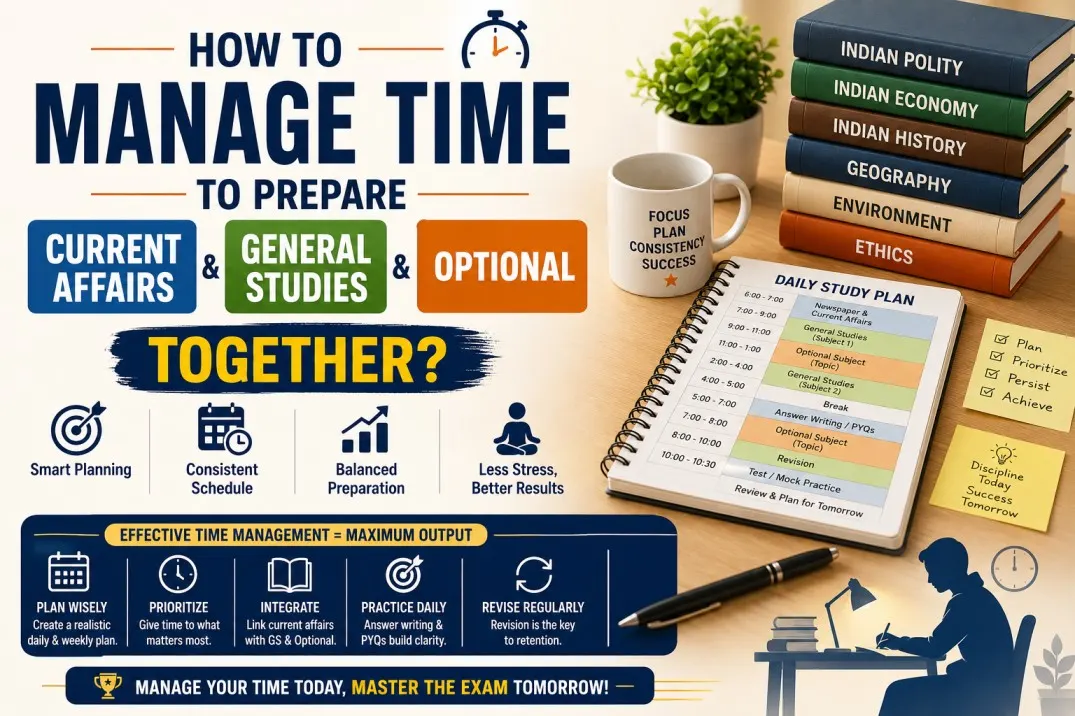
Several students start with Prelims preparations only and wait for the result to start for the Mains. As UPSC gives only 3-3.5 months to prepare for Mains after you clear Prelims, it becomes very important to start covering the relatable topics from the beginning. Check out a balanced weekly time plan for effective UPSC preparation.
| Activity |
Time |
| General Studies |
4-5 Hours |
| Optional Subject |
2-3 Hours |
| Current Affairs |
1 Hour |
| Revision |
1-2 Hours |
| Answer Writing / PYQs |
45-60 Minutes |
Preparing current affairs, general studies, and optional helps to cover several important topics before you appear for exams. It also reduces unnecessary pressure during the Mains Examination and Personality Test.
Avoid Common Mistakes in UPSC preparation
To avoid common mistakes in UPSC preparation, do not overload yourself with too many resources. Follow the official UPSC Exam Syllabus, revise regularly, start answer writing early, and practice mock tests. Keep your study sources limited and follow a balanced daily routine. Consistency, proper planning, and regular revision are key to effective UPSC preparation.
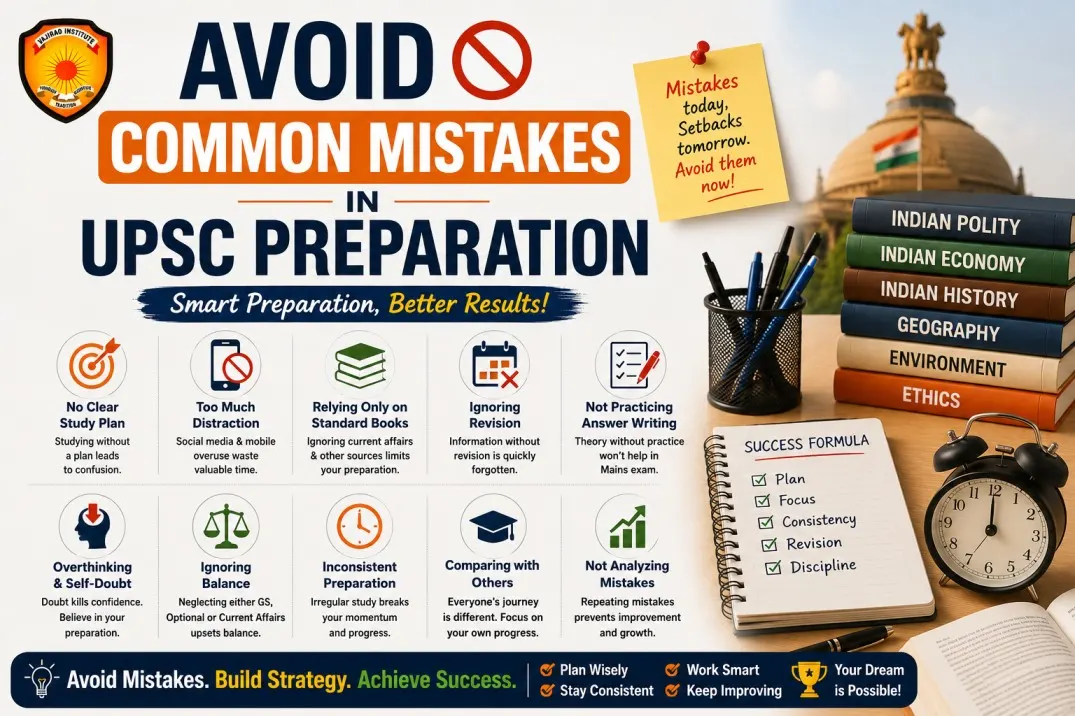
As we have discussed earlier, there are a few common mistakes that most fresh graduates make. Let’s take a quick look at them: -
- Go through the official UPSC syllabus before starting the preparations.
- Avoid collecting too many sources for study material.
- Choose just a few reputable institutes. Don’t follow multiple coaching notes.
- Don’t delay revision. Do it regularly.
- Analyze previous year question papers alongside your preparations.
- Keep practicing answer writing regularly.
- Attempt mocks to see your progress and find weak areas to improve.
Conclusion
As graduation is the lowest education level required to be eligible for the UPSC Civil Services Examination. You must plan systematically instead of being in a hurry. Almost every successful aspirant follows a similar approach to start preparations. They understand the syllabus, read NCERT books first to build their fundamentals strong, and start reading one newspaper daily instead of collecting so many current affairs sources. They also don’t delay preparations for the optional and start it early. From practicing writing answers to solving PYQs regularly, they keep revising the syllabus multiple times. So, whether an aspirant chooses the Top IAS Coaching in Delhi, the focus should be on building sustainable study habits, following a consistent study plan, and making the most of the guidance and resources provided to succeed in the UPSC examination.
Frequently asked questionsFrequently asked questions
Q1. Is Graduation the Right Time to Start UPSC Preparation?
Yes. Graduation is the right time to start preparation for UPSC(CSE). Even in a recent seminar held in the Agra branch of Vajirao & Reddy IAS Institute, the former Chairman, Prof. D. P. Agrawal also suggested aspirants should start UPSC preparation in the middle of graduation or just after graduation. This helps students to get sufficient time to understand UPSC exams and prepare effectively.
Q2. How Many Hours Should a Beginner Study Daily?
Not fixed, but most UPSC candidates study for 6 to 8 hours daily with full focus and dedication. Remember, your preparation strategy and regular revision are more important than following a big number of hours.
Q3. Should I Complete General Studies before Starting the Optional Subject?
No. This is one of the most common mistakes that several candidates make. Always prepare the Optional subject alongside General Studies to prepare for the Mains in advance. This will help you manage your time for revision.
Q4. Is coaching Compulsory after Graduation?
No. Coaching is not compulsory, but it provides a structured study plan and guidance. But if you are disciplined and persistent towards your UPSC aim, and follow a well-managed time plan for study and regular revision, you can crack UPSC through self-study without taking any UPSC coaching.
Q5. When Should I Start Solving UPSC Previous Year Questions?
Start solving PYQs as soon as you complete any topic or subject. In starting, you can solve topic-wise PYQs and later analyze full UPSC PYQs . This helps you understand the question pattern and the topics that are asked frequently.
Q6. What is the Biggest Mistake Beginners Make?
The biggest and most common mistake that beginners make is to buy or collect several books and sources for study material without understanding the UPSC syllabus. You just need to pick a few reliable study materials and revise them regularly.