Residents of Delhi are divided over whether to participate in a protest scheduled for October 10, 2026, demanding the removal of Chief Election Commissioner (CEC) Gyanesh Kumar and the suspension of the Special Intensive Revision (SIR) of electoral rolls. While the police have warned people against joining the gathering, youth and workers’ organisations are mobilising citizens affected by the revision process.
Citizenship Amendment Act Protests
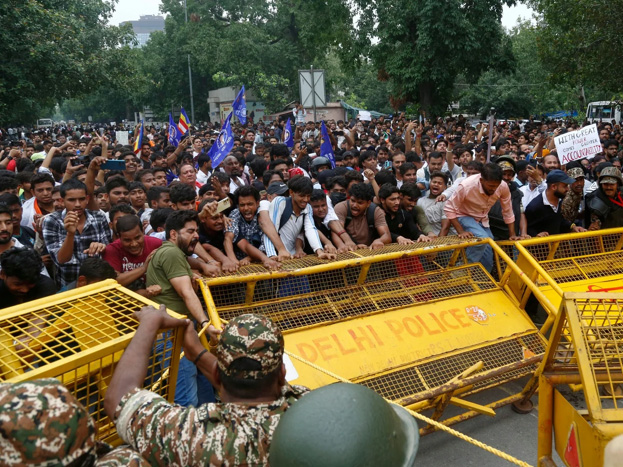
The Citizenship Amendment Act (CAA) protests occurred after the Citizenship Amendment Act was enacted by the Government of India on 12 December 2019. The Act provides a pathway to Indian citizenship for specified non-Muslim migrants from Pakistan, Bangladesh, and Afghanistan. Protests erupted across India over concerns about religious discrimination, constitutional equality, secularism, and the implications of the law for Indian citizenship.
Why in the News?
The Delhi Police has been contacting residents, holding meetings and making public announcements ahead of the proposed protest. Meanwhile, several organisations are conducting door-to-door campaigns to explain the possible impact of SIR and encourage affected people to participate.
Watch : Citizens Divided Over October 10 Protest Calls and Police
Section 163 of BNSS and Police Restrictions
Section 163 of the Bharatiya Nagarik Suraksha Sanhita (BNSS), 2023 empowers an Executive Magistrate to issue urgent, temporary orders to prevent danger, maintain public order and stop unlawful assemblies. Ahead of the protest, the police have taken several steps to discourage participation:
- Held meetings in colleges, universities and paying guest (PG) accommodations.
- Contacted residents and community representatives.
- Made public announcements in Old Delhi markets and mosques.
- Warned people against participating in the gathering, citing concerns about law and order.
- Advised residents not to respond to provocative messages or gather unnecessarily.
The restrictions and police warnings have created concern among some residents and traders, who fear detention if they join the protest.
Different Views Among Residents
Citizens and local organisations have expressed different views about participating in the protest. These differences reflect the tension between concerns over public order and demands for political participation.
- Some shopkeepers fear police action and have reportedly been advised not to provide food or accept bulk orders for protesters.
- Some residents’ associations maintain that peaceful protest is a democratic right and that concerns related to SIR need to be addressed.
- Heavy police deployment and possible restrictions on transport and communication services may make it difficult for people to reach the protest site.
Door-to-Door Mobilisation of SIR-Affected People
Youth organisations are conducting campaigns in slum settlements and other localities to reach people who may be affected by SIR. They are focusing on domestic workers, daily-wage earners, factory workers and other marginalised groups. The organisations argue that some people may not fully understand the revision process or know whether their names have been deleted from the electoral rolls. Their main concerns include:
- Lack of awareness about SIR and its possible impact on voter registration.
- Limited information about deleted names and the documents required to address such cases.
- Difficulties faced by marginalised communities in accessing election-related information.
- Challenges in reaching the protest site because of possible transport restrictions and heavy police deployment.
Demands of the Protest Organisers
The proposed protest is linked to wider opposition to the SIR process and demands for accountability in the Election Commission. The demands mentioned by participating organisations include:
- Removal of Chief Election Commissioner Gyanesh Kumar.
- Suspension or scrapping of SIR.
- Re-election in States affected by SIR, as demanded by some organisations.
Some groups are also conducting campaigns across 13 States to mobilise working-class communities and raise awareness about their concerns regarding electoral-roll revision.
Conclusion
The proposed October 10 protest highlights the disagreement over the SIR process and the response of the authorities. The situation brings together concerns about public order, the right to peaceful protest, and the need for transparency in electoral-roll revision. Clear communication, lawful action, and accessible grievance-redressal mechanisms are important for addressing these concerns.
Test your understanding
Questions from this article
Prelims practiceQuestion: With reference to Citizens Divided Over October 10 Protest Calls and Police: Complete UPSC Guide, consider the following statements:
- Residents of Delhi are divided over whether to participate in a protest scheduled for October 10, 2026, demanding the removal of Chief Election Commissioner (CEC) Gyanesh Kumar and the.
- While the police have warned people against joining the gathering, youth and workers’ organisations are mobilising citizens affected by the revision process
Which of the statements given above is/are correct?
- 1 only
- 2 only
- Both 1 and 2
- Neither 1 nor 2
View answer and explanation
Suggested answer: (c) Both 1 and 2
Explanation: Citizens remain divided over October 10 protest calls as police issue warnings, raising concerns about public safety, demonstrations, and law and order
Mains practiceQuestion: Discuss Citizens Divided Over October 10 Protest Calls and Police: Complete UPSC Guide with reference to Citizenship Amendment Act Protests, Why in the News?, Section 163 of BNSS and Police Restrictions and Different Views Among Residents. (150 words, 10 marks)
View answer-writing approach
Answer approach:
- Introduce the topic using its meaning and context.
- Explain Citizenship Amendment Act Protests, Why in the News?, Section 163 of BNSS and Police Restrictions and Different Views Among Residents.
- Use facts and examples given in the article.
- Conclude with a balanced way forward.
Frequently asked questionsFrequently asked questions
What is Citizens Divided Over October 10 Protest Calls and Police: Complete UPSC Guide?
Citizens remain divided over October 10 protest calls as police issue warnings, raising concerns about public safety, demonstrations, and law and order
Why is Citizens Divided Over October 10 Protest Calls and Police: Complete UPSC Guide relevant for UPSC preparation?
While the police have warned people against joining the gathering, youth and workers’ organisations are mobilising citizens affected by the revision process
What key points should aspirants remember about Citizens Divided Over October 10 Protest Calls and Police: Complete UPSC Guide?
The article covers Citizenship Amendment Act Protests, Why in the News?, Section 163 of BNSS and Police Restrictions and Different Views Among Residents.