Punjab has been struggling with drug abuse and trafficking for more than a decade. Its proximity to Pakistan, the growth of pharmaceutical drug abuse, drone-based smuggling, limited employment opportunities, and alleged links between traffickers and influential individuals have contributed to the persistence of the crisis. According to National Crime Records Bureau (NCRB) data for 2024, released in September 2026, Punjab recorded 6,060 drug trafficking cases, the highest in India. It also reported 106 drug overdose deaths, second only to Tamil Nadu, which recorded 313 deaths.
Why in the News?
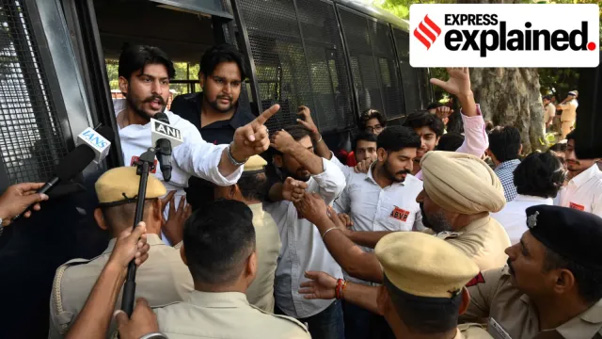
- The death of a 35-year-old man suspected of dying from a drug overdose triggered protests in Mansa, Punjab, on October 28, 2026.
- The incident renewed public anger over the state's persistent drug crisis.
- With Assembly elections due in 2027, drug trafficking and addiction have become major political issues.
Historical Roots of Drug Use in Punjab
Opium and poppy husk were common in pre-Independence Punjab and were socially accepted among certain sections of society. Opium, locally known as afeem, was traditionally consumed in small quantities, sometimes on medical advice.
- The Royal Commission on Opium (1894) observed that opium consumption in India was generally very low, although it had been used for centuries by certain groups in northern India.
- Home-brewed alcohol, or desi daru, was also a long-established and socially accepted form of intoxication.
- After Independence, opium use continued despite restrictions in Punjab. People reportedly crossed into Rajasthan, where opium was legally available through licensed outlets.
- A 1979 study on opium use in rural Punjab found that it remained widespread despite being smuggled from neighbouring states.
Geography: Punjab’s Vulnerable Border
Punjab shares a 553-km border with Pakistan, making it vulnerable to cross-border drug smuggling. The Golden Crescent, comprising Afghanistan, Iran and Pakistan, is a major global centre for opium production and heroin processing. Other major drug-producing regions include the Golden Triangle of Myanmar, Thailand and Laos, and parts of South America. Security officials have also raised concerns about the alleged use of drug trafficking to finance or support cross-border security threats, a practice commonly described as narco-terrorism. Drug supplies entering Punjab include:
- Heroin (chitta): Smuggled across the Pakistan border.
- Opium and poppy husk: Sourced from Rajasthan and Madhya Pradesh, where cultivation is permitted for specified purposes.
- Charas and hashish: Brought from Himachal Pradesh.
- Pharmaceutical drugs: Supplied from manufacturing hubs in Himachal Pradesh, Uttar Pradesh, Haryana and Rajasthan.
Pharmaceutical Drugs and the Changing Pattern of Trafficking
An increase in the abuse and trafficking of pharmaceutical drugs has accompanied stronger border enforcement. The issue has also been linked to allegations of prohibited drugs being sold through medicine shops, raising concerns about the enforcement of pharmaceutical regulations.
- In 2021, the Centre extended the Border Security Force (BSF) jurisdiction from 15 km to 50 km inland along specified borders.
- Of the 5.13 crore pharmaceutical drug units seized across India in 2024, Punjab accounted for 2.94 crore.
- Around 25% of Punjab Police FIRs under the Narcotic Drugs and Psychotropic Substances (NDPS) Act in 2022 involved pharmaceutical drugs.
- Approximately 80% of these drugs reportedly enter Punjab from manufacturing hubs in neighbouring states.
Drone-Based Drug Smuggling
Drones have become an important method of cross-border smuggling, allowing traffickers to transport heroin and weapons while attempting to evade security forces.
- According to BSF data, reported drone droppings in Punjab increased from three in 2021 to more than 200 in 2025.
- The Amritsar–Tarn Taran–Ferozepur–Gurdaspur belt forms the main operational corridor.
- To counter the threat, the BSF has established a dedicated anti-drone intelligence wing, while Punjab Police has procured anti-drone guns. However, smugglers continue to find ways to evade detection.
Economic Factors: A Lucrative Illegal Business
The high profits associated with drug trafficking encourage people to enter the illegal trade despite the risk of arrest. An alleged nexus between drug traffickers, police personnel and politicians has also been identified as a factor sustaining the business. A prominent example was the 2013 arrest of Punjab Police Deputy Superintendent of Police Jagdish Singh Bhola in a major drug racket. He was convicted in 2019 and is currently out on bail.
- A gram of heroin, locally called chitta, can fetch ₹1,000–₹5,000.
- A single trip as a drug carrier, or drug mule, can reportedly earn up to ₹1 lakh.
- Limited employment opportunities and the aspirations of young people can make such illegal earnings attractive.
- Changing social attitudes towards wealth and the pursuit of quick money may further encourage participation in the trade.
Women and Drug Trafficking
Women are increasingly becoming involved in drug trafficking and related activities. Data presented in the Punjab Assembly in March 2023 showed that arrests of women under the NDPS Act increased by 85% in 2022 compared with 2015. Women may become involved because:
- Traffickers believe they are less likely to be searched.
- They can transport drugs through public transport, including buses.
- Women experiencing addiction may enter drug peddling to finance their dependence.
- Entire families may become involved in trafficking, leading to multiple family members being arrested together.
Government Measures to Combat Drugs
Punjab has adopted an Enforcement, De-addiction and Prevention (EDP) approach to address the drug problem.
Major Initiatives
1. War on Drugs (2014): The then Akali-BJP government declared a war on drugs, focusing on enforcement and efforts to address addiction.
2. AAP Government’s Strategy (2022): After taking office in 2022, the government strengthened action against major traffickers while expanding outreach programmes to discourage drug use.
3. Yudh Nasheyan Virudh (2025): The campaign aimed to disrupt drug supply, target traffickers’ finances and demolish properties allegedly built using proceeds from illegal activities.
4. Community Participation: The campaign’s second phase expanded community-led action by deploying more than 1.5 lakh village volunteers, known as Pind De Pehredar.
5. Earlier Prevention Measures: The previous Congress government introduced measures such as dope tests for arms licences and new government recruitment. Despite these measures, the continued availability of drugs indicates that enforcement alone has not resolved the crisis.
Challenges in Tackling Punjab’s Drug Crisis
- Cross-border smuggling: The Pakistan border remains vulnerable to the movement of heroin and other contraband.
- Diversified supply chains: Traffickers use pharmaceutical drugs, drones and routes through neighbouring states.
- Economic vulnerability: Limited employment opportunities can make illegal earnings attractive.
- Alleged institutional links: Corruption and possible links between traffickers and influential individuals can weaken enforcement.
- Inadequate prevention and rehabilitation: A strategy focused heavily on arrests may not sufficiently address addiction and its social causes.
- Social and family impact: Addiction can affect entire families and contribute to the recruitment of vulnerable individuals into trafficking.
Way Forward
Punjab needs an integrated approach that combines enforcement with prevention and rehabilitation.
- Strengthen border security: Improve drone detection, intelligence sharing and coordination among security agencies.
- Target major traffickers: Focus on supply networks, financial assets and organised trafficking rather than only low-level carriers.
- Regulate pharmaceutical drugs: Strengthen monitoring of medicine distribution and action against illegal sales.
- Expand de-addiction services: Improve access to treatment, rehabilitation and long-term support.
- Increase public awareness: Involve families, educational institutions, village organisations and community leaders in prevention.
- Improve employment opportunities: Expand skill development and sustainable livelihood options for young people.
- Strengthen accountability: Investigate alleged links between traffickers and officials to prevent corruption from undermining enforcement.
Conclusion
Punjab’s drug crisis is rooted in a combination of historical patterns of substance use, geographical vulnerability, profitable illegal trade, and socio-economic challenges. Although successive governments have introduced enforcement campaigns, the continued availability of drugs highlights the need for a broader strategy. Effective action requires coordinated border security, financial investigations, prevention, rehabilitation and better economic opportunities.
Test your understanding
Questions from this article
Prelims practiceQuestion: With reference to drug trafficking and smuggling in India, consider the following statements:
- The Narcotic Drugs and Psychotropic Substances (NDPS) Act was enacted in 1985.
- The Narcotics Control Bureau (NCB) was established in 1986.
- The Golden Crescent region is associated with drug production in Afghanistan, Pakistan and Iran.
- The Golden Triangle comprises India, Myanmar and Thailand.
Which of the statements given above are correct?
- 1 and 2 only
- 1, 2 and 3 only
- 2, 3 and 4 only
- 1, 2, 3 and 4
View answer and explanation
Suggested answer: (b) 1, 2 and 3 only
Explanation:
- Statement 1 – Correct: NDPS Act was enacted in 1985 to regulate narcotic drugs and psychotropic substances.
- Statement 2 – Correct: NCB was established in 1986.
- Statement 3 – Correct: Golden Crescent includes Afghanistan, Pakistan and Iran.
- Statement 4 – Incorrect: Golden Triangle comprises Myanmar, Laos and Thailand.
Mains practiceQuestion: “Drug trafficking and smuggling pose serious challenges to India's internal security and regional stability.” Discuss the major challenges and suggest measures to strengthen India's response. (15 marks, 250 words)
View answer-writing approach
Answer approach:
Introduction: Drug trafficking as a major internal security threat.
Body: Causes – Porous borders, organised crime, narco-terrorism, money laundering.
Challenges: Youth addiction, crime, terrorism financing, national security.
Measures: Border surveillance, NCB coordination, international cooperation, strict enforcement and rehabilitation.
Conclusion: A coordinated approach combining security, diplomacy and social awareness.
Frequently asked questionsFrequently asked questions
What is Why Has Punjab Failed to Overcome Its Drug Crisis? Causes and Challenges?
Despite repeated efforts by successive governments through high-profile anti-drug campaigns, Punjab continues to struggle with its drug crisis due to a combination of geographical vulnerabilities, the growing misuse of unregulated pharmaceutical supply chains, economic stagnation, and persistent weaknesses in law enforcement mechanisms
Why is Why Has Punjab Failed to Overcome Its Drug Crisis? Causes and Challenges relevant for UPSC preparation?
Its proximity to Pakistan, the growth of pharmaceutical drug abuse, drone-based smuggling, limited employment opportunities, and alleged links between traffickers and influential individuals have contributed to the persistence of the crisis
What key points should aspirants remember about Why Has Punjab Failed to Overcome Its Drug Crisis? Causes and Challenges?
The article covers Why in the News?, Historical Roots of Drug Use in Punjab, Geography: Punjab’s Vulnerable Border and Pharmaceutical Drugs and the Changing Pattern of Trafficking.