UPSC Current Affairs
U.S. and Iran Conflict Escalation- Strait of Hormuz at the Centre
The U.S.-Iran conflict escalates around the Strait of Hormuz, pushing oil prices above $100 per barrel and disrupting global energy supplies. Learn how military tensions, shipping disruptions and reduced oil flows are impacting international markets.
VRKalpana Sharma
3 min read
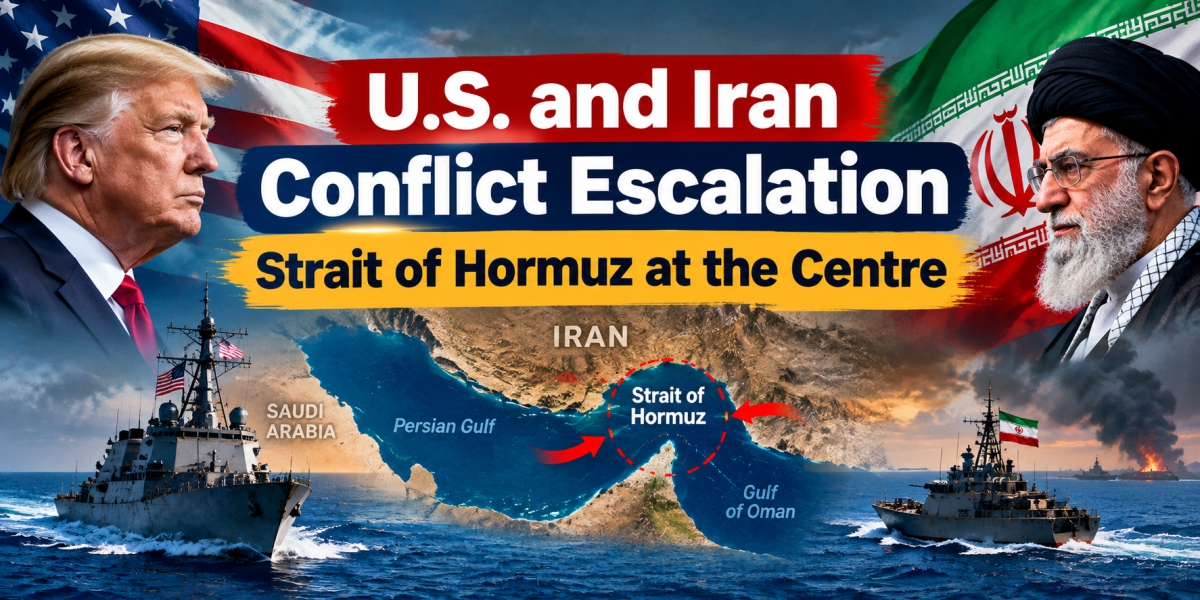
The U.S. and Iran conflict has intensified sharply around the Strait of Hormuz, pushing global oil prices above $100 per barrel and significantly disrupting energy supplies. Oil flows through the strategic maritime chokepoint have reportedly fallen to just 2 million barrels per day, compared with 8-9 million bpd late last month. The escalation follows the breakdown of a June ceasefire amid disagreements over ship traffic control, leading to direct military clashes, widespread shipping disruptions, and increased pressure on global energy markets. The U.S recently struck and sank five Iranian oil tankers, saying the action followed Iranian attacks on U.S naval vessels.
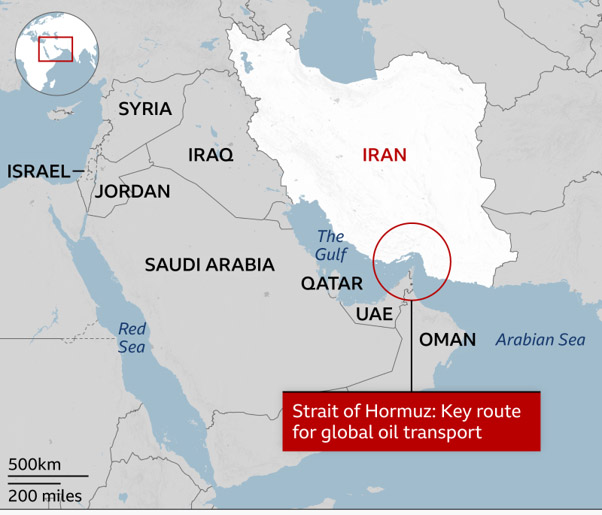
Strait of Hormuz
Why in the News?
- The U.S.–Iran conflict has entered a new phase after:
- Iranian attacks on U.S. warships near the Strait of Hormuz.
- U.S. strikes on three Iranian oil tankers in Gulf waters.
- The escalation follows the collapse of the June 17 Islamabad MoU, which aimed to resolve the conflict through negotiations.
Recent Escalation
- The U.S. initially shifted from direct military action towards economic warfare, including:
- New sanctions.
- Tightening of the naval blockade of Iranian ports.
- The U.S. attempted to move oil tankers through a southern route along the Omani coast.
- Iran continued attacking vessels using this route.
- The U.S. subsequently resumed strikes, followed by Iranian attacks on U.S. bases in:
Latest Development
- Iran attacked U.S. military vessels for the first time in months, apparently attempting to break the blockade.
- The U.S. retaliated by targeting Iranian oil tankers.
- Iran’s Islamic Revolutionary Guard Corps (IRGC) claimed attacks on six Gulf vessels:
- 3 tankers
- 3 U.S.-linked ships
Why is the Strait of Hormuz Important?
The Strait of Hormuz is the world's most critical energy chokepoint, carrying roughly 20% of global petroleum and liquefied natural gas supplies. Its strategic importance directly affects major oil-producing nations, including the Top 10 Countries with the Highest Oil Reserves, making it vital for global energy security, trade, and economic stability. Lets a look Why is the Strait of Hormuz Important:-
- The Strait of Hormuz has become the central theatre of the conflict.
- It is a crucial maritime chokepoint for global energy trade.
- Iran’s continued ability to threaten shipping has:
- Increased risks to global oil supplies.
- Raised transportation and insurance costs.
- Threatened wider global supply chains.
- The conflict therefore has implications far beyond the U.S. and Iran.
Watch : U.S. and Iran Conflict Escalation
Major Strategic Takeaways
1. No Clear U.S. “Theory of Victory”
- Neither:
- Military strikes, nor
- Economic sanctions/blockade
- has forced Iran to change its position.
- The Strait remains insecure despite sustained U.S. pressure.
2. Iran’s Counter-Strategy
- Iran has become increasingly assertive despite economic pressure.
- Tehran appears to be targeting U.S. military capabilities and presence in its immediate neighbourhood.
- The article describes this as a “debasification” strategy aimed at pushing U.S. forces away from Iran’s periphery.
3. Risk of Escalation
- Both sides are seeking escalation dominance.
- Repeated cycles of:
U.S. strike → Iranian retaliation → U.S. counter-strike
increase the possibility of the conflict spiralling beyond control.
Wider Implications
- Global energy security: Disruption of Gulf shipping can affect oil supplies and prices.
- Maritime security: Commercial vessels face increased risks in a critical shipping corridor.
- Global economy: Prolonged disruption can raise energy and transportation costs.
- Regional stability: U.S. military bases and regional partners may increasingly become targets.
- Diplomacy: Continued escalation makes revival of negotiations increasingly important.
Way Forward
- Restore diplomatic negotiations and revive the Islamabad MoU framework.
- Avoid further attacks on commercial shipping and critical infrastructure.
- Establish mechanisms for safe maritime navigation through the Strait of Hormuz.
- Reduce the risk of miscalculation through direct communication channels.
- Prioritise a negotiated solution over an open-ended cycle of military retaliation.
Conclusion
The conflict between the United States and Iran escalated sharply in September 2026, increasing concerns about a wider war in the Middle East. The latest escalation has involved attacks on ships and military targets linked to both sides. The United States has carried out strikes against Iranian oil tankers, while Iran has claimed attacks on several ships near the Strait of Hormuz. Iran-backed Houthi forces have also increased attacks on regional energy infrastructure.
The Strait of Hormuz has become a major concern because it is a key route for global oil and gas supplies. Disruption in shipping has pushed international crude oil prices above $100 per barrel. This could increase fuel, transport and production costs across countries.For India, prolonged disruption may affect crude oil imports, inflation, the rupee and overall economic stability. The situation also raises concerns about further regional escalation and global energy security.
Test your understanding
Questions from this article
Prelims practiceQuestion: With reference to U.S. and Iran Conflict Escalation- Strait of Hormuz at the Centre, consider the following statements:
- and Iran conflict has intensified sharply around the Strait of Hormuz, pushing global oil prices above $100 per barrel and significantly disrupting energy supplies
- Oil flows through the strategic maritime chokepoint have reportedly fallen to just 2 million barrels per day, compared with 8-9 million bpd late last month
Which of the statements given above is/are correct?
- 1 only
- 2 only
- Both 1 and 2
- Neither 1 nor 2
View answer and explanation
Suggested answer: (c) Both 1 and 2
Explanation: The U.S.-Iran conflict escalates around the Strait of Hormuz, pushing oil prices above $100 per barrel and disrupting global energy supplies. Learn how military tensions, shipping disruptions and reduced oil flows are impacting international markets
Mains practiceQuestion: Discuss U.S. and Iran Conflict Escalation- Strait of Hormuz at the Centre with reference to Why in the News?, Recent Escalation, Latest Development and Why is the Strait of Hormuz Important?. (150 words, 10 marks)
View answer-writing approach
Answer approach:
- Introduce the topic using its meaning and context.
- Explain Why in the News?, Recent Escalation, Latest Development and Why is the Strait of Hormuz Important?.
- Use facts and examples given in the article.
- Conclude with a balanced way forward.
Frequently asked questionsFrequently asked questions
What is U.S. and Iran Conflict Escalation- Strait of Hormuz at the Centre?
The U.S.-Iran conflict escalates around the Strait of Hormuz, pushing oil prices above $100 per barrel and disrupting global energy supplies. Learn how military tensions, shipping disruptions and reduced oil flows are impacting international markets
Why is U.S. and Iran Conflict Escalation- Strait of Hormuz at the Centre relevant for UPSC preparation?
Oil flows through the strategic maritime chokepoint have reportedly fallen to just 2 million barrels per day, compared with 8-9 million bpd late last month
What key points should aspirants remember about U.S. and Iran Conflict Escalation- Strait of Hormuz at the Centre?
The article covers Why in the News?, Recent Escalation, Latest Development and Why is the Strait of Hormuz Important?.