The Supreme Court on September 22, 2026, observed that a democratically elected government may decide the scope and length of the National Song. However, it cannot violate individual and collective religious freedoms or impose penal consequences on conscientious objectors who refuse to sing one or more stanzas of Vande Mataram. The observation was made by Justice Joymalya Bagchi, who was part of a three-judge Bench headed by Chief Justice of India Surya Kant.
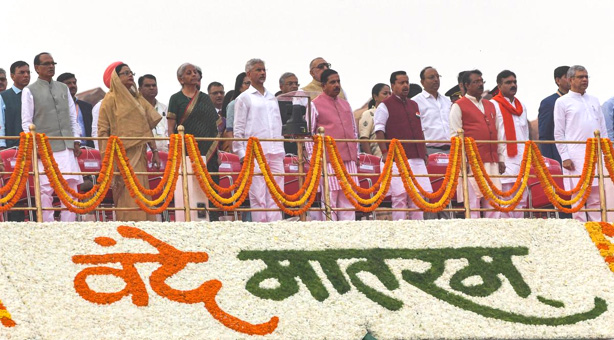
Why in the News?
The Supreme Court of India was hearing a petition challenging provisions relating to the National Song and the way it is to be performed at public functions.
- The petition was filed by Carnatic vocalist and author T.M. Krishna.
- The petition challenges the Prevention of Insults to National Honour (Amendment) Act, 2026.
- It also challenges administrative directions issued by the Ministry of Home Affairs in January and a subsequent circular in July.
- The Court sought a response from the Union government.
- The Bench referred to the 1986 Supreme Court judgment in Bijoe Emmanuel v. State of Kerala.
What Did the Supreme Court Say?
Justice Joymalya Bagchi observed that the democratically elected State could decide what constitutes the National Song and whether it should consist of two or four stanzas. However, according to the Court, this power cannot override constitutional protections relating to religious freedom.
The Court observed that:
- Articles 25 and 26 protect religious freedom.
- A conscientious objector cannot be subjected to penal consequences merely for refusing to sing one or all stanzas of the National Song.
- The rights recognised in the Bijoe Emmanuel judgment continue to be relevant.
- The Court would examine whether the 2026 amendment and government circulars affect the rights of conscientious objectors. (The Economic Times)
What is the Petition About?
T.M. Krishna, represented by senior advocate S. Muralidhar and advocate Prasanna S., has challenged the amended law and executive directions. According to the petition, the amended law and government orders compel the:-
- Playing of Vande Mataram
- Mass singing of all six stanzas
- Singing of the National Song before the National Anthem at public functions
The petition states that non-compliance could result in:
- Imprisonment of up to three years
- Fine
- Or both
What Does the Petition Say About the Six Stanzas?
The petition argues that the last four stanzas of Vande Mataram contain devotional and deity-invoking elements. It describes stanzas three to six as:
- Devotional
- Deity-invoking
- Non-secular
The petition argues that making all six stanzas compulsory under penal provisions would affect citizens who object to such participation on religious or conscientious grounds.
It also argues that the scheme violates fundamental rights guaranteed by the Constitution and affects the basic feature of secularism.
Watch : SC Vande Mataram and Religious Freedom
Court Discusses What Defines a ‘National Song’
During the hearing, senior advocate S. Muralidhar argued that the 2026 Act does not define what a “National Song” is. Chief Justice of India Surya Kant observed that anyone who had studied history would know the National Song.
- Solicitor General Tushar Mehta said that Vande Mataram had been the National Song since the pre-Independence period.
- Justice Bagchi also observed that customs and usages could be considered in determining the status of the National Song.
Religious Elements and Secularism
Justice Bagchi discussed whether religious references in a national symbol necessarily affect secularism in a constitutional democracy.
He observed that a religious flavour, an icon or homage to a particular God may not necessarily affect secularism.
- He referred to the example of the American Constitution and National Anthem, noting the use of the word “God” in the American National Anthem.
- At the same time, the Court said it would examine whether the 2026 amendment and government circulars affect the rights of conscientious objectors.
Bijoe Emmanuel v. State of Kerala
The Supreme Court referred to its 1986 judgment in Bijoe Emmanuel v. State of Kerala.
Justice Bagchi said the precedent continues to uphold principles relating to:
- Religious freedom
- Constitutional tolerance
- Silent objection
The judgment is relevant to the present discussion because the Court is examining whether individuals can be subjected to penal consequences for refusing to participate in the singing of the National Song on conscientious grounds.
Debate Over the Law-Making Process
Senior advocate S. Muralidhar also questioned the process through which the definition and requirements concerning the National Song were introduced. He argued that:-
- Defining the National Song required broader debate and consensus.
- It should not be imposed on citizens through the threat of penal action.
- The Ministry of Home Affairs’ office memorandum was not gazetted.
- The memorandum did not cite a supporting provision of law.
Exchange Between the Solicitor General and the Bench
Solicitor General Tushar Mehta objected to what he viewed as sensationalising the National Song issue.
Justice Bagchi responded that the Court was not seeking to create sensations, but was examining whether the law of the land, including the Bijoe Emmanuel judgment, governs the 2026 amendment. The discussion also involved senior advocate Sanjay Hegde, while Justice Bagchi responded to remarks made during the hearing.
Constitutional Issues Involved
The case brings together questions concerning:
- Religious freedom
- Conscientious objection
- Freedom of individual choice
- Articles 25 and 26
- Secularism
- The State’s authority concerning national symbols
- The use of penal provisions to enforce participation
Conclusion
The Supreme Court has observed that a democratically elected government may determine the scope and length of the National Song, but such authority cannot override constitutional protections relating to religious freedom. The Court is examining whether conscientious objectors can face penal consequences for refusing to sing one or more stanzas of Vande Mataram. The Bench has referred to the Bijoe Emmanuel v. State of Kerala precedent, which recognised religious freedom, constitutional tolerance and silent objection. The case also raises questions about the 2026 amendment, government directions, and the relationship between national symbols, individual rights, and secularism.
Test your understanding
Questions from this article
Prelims practiceQuestion: With reference to Supreme Court on Vande Mataram and Religious Freedom, consider the following statements:
- The Supreme Court on September 22, 2026, observed that a democratically elected government may decide the scope and length of the National Song
- However, it cannot violate individual and collective religious freedoms or impose penal consequences on conscientious objectors who refuse to sing one or more stanzas of Vande Mataram
Which of the statements given above is/are correct?
- 1 only
- 2 only
- Both 1 and 2
- Neither 1 nor 2
View answer and explanation
Suggested answer: (c) Both 1 and 2
Explanation: The Supreme Court of India on September 22, 2026, said responsible objectors should not face criminal consequences for refusing to sing Vande Mataram on religious or moral grounds. The three-judge bench also said the government can decide the National Song’s scope and protocol
Mains practiceQuestion: Discuss Supreme Court on Vande Mataram and Religious Freedom with reference to Why in the News?, What Did the Supreme Court Say?, What is the Petition About? and What Does the Petition Say About the Six Stanzas?. (150 words, 10 marks)
View answer-writing approach
Answer approach:
- Introduce the topic using its meaning and context.
- Explain Why in the News?, What Did the Supreme Court Say?, What is the Petition About? and What Does the Petition Say About the Six Stanzas?.
- Use facts and examples given in the article.
- Conclude with a balanced way forward.
Frequently asked questionsFrequently asked questions
What is Supreme Court on Vande Mataram and Religious Freedom?
The Supreme Court of India on September 22, 2026, said responsible objectors should not face criminal consequences for refusing to sing Vande Mataram on religious or moral grounds. The three-judge bench also said the government can decide the National Song’s scope and protocol
Why is Supreme Court on Vande Mataram and Religious Freedom relevant for UPSC preparation?
However, it cannot violate individual and collective religious freedoms or impose penal consequences on conscientious objectors who refuse to sing one or more stanzas of Vande Mataram
What key points should aspirants remember about Supreme Court on Vande Mataram and Religious Freedom?
The article covers Why in the News?, What Did the Supreme Court Say?, What is the Petition About? and What Does the Petition Say About the Six Stanzas?.