UPSC Current Affairs
Social Media Posts Blocked in India Amid Protests: What is Happening?
Social media posts are being blocked in India amid protests. Understand why content is restricted, the government's role, freedom of expression concerns, and its implications for digital rights.
VRArpit Adlakha
3 min read
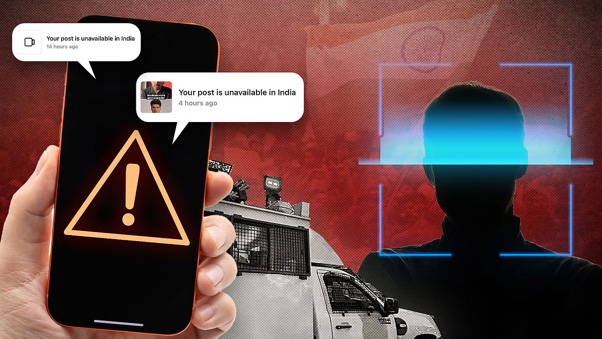
Social media users have reported several posts, reels, and accounts being blocked or removed across platforms such as Instagram, Facebook, and X. Some users have received notices stating, “Your post is unavailable in India”. These restrictions have come amid protests against the Special Intensive Revision (SIR) of electoral rolls and demands for the resignation of Chief Election Commissioner Gyanesh Kumar. The issue has brought attention to the government's content-blocking powers and the role of social media platforms in regulating online content.
Why in the News?
1. MeitY's Advisories to Social Media Platforms
October 8 Advisory:
MeitY asked social media platforms to exercise enhanced diligence over content related to ongoing public events. Platforms were advised to:
- Provide context to misleading content.
- Prioritise complaints from authorised government agencies.
- Curb manipulated and out-of-context content.
- Take action against AI-generated deepfakes.
October 10 Advisory:
- It was issued specifically to Meta, which owns Instagram and Facebook.
- It focused on content distribution through feeds and recommendation systems.
- Meta was asked to identify content that could cause public disorder, violence or unlawful activities.
- It was also asked to review recommendation systems and provide context for visuals whose authenticity, date, or location was unclear.
- The advisory clarified that lawful civic and public discourse should not be unnecessarily restricted.
2. Information Technology (IT) Rules, 2021: 2026 Amendments
The Information Technology (Intermediary Guidelines and Digital Media Ethics Code) Amendment Rules, 2026, notified on February 10 and brought into force on February 20, introduced stricter obligations for intermediaries. Key Changes:
- Three-hour Deadline: Under amended Rule 3(1)(d), intermediaries must remove or disable access to specified unlawful information within three hours of receiving a qualifying court order or authorised government intimation.
- Earlier Deadline: The previous compliance period was 36 hours.
- Synthetic Content: Additional requirements were introduced for identifying and labelling permitted synthetically generated content, including realistic AI-generated or altered audio-visual material.
- Grievance Redressal: The amendments shortened grievance-redressal timelines.
- Automated Tools: The amendments recognise the use of reasonable technical measures and automated tools for complying with content-removal requirements.
3. Legal Provisions Related to Online Content Blocking
| Provision | Key Features |
| Section 69A, IT Act, 2000 | Empowers the Central Government to direct the blocking of public access to online information on specified grounds. |
| Rule 3(1)(d), IT Rules, 2021 | Requires intermediaries to act on qualifying court orders or authorised government intimations concerning unlawful information. |
| Section 79(3)(b), IT Act, 2000 | Deals with conditions under which intermediaries may lose safe-harbour protection for third-party content. |
Section 69A of the IT Act, 2000
- Empowers the Central Government or its authorised officer to order the blocking of online information.
- Blocking can be ordered on grounds such as:
- Sovereignty and integrity of India.
- Defence and security of the State.
- Friendly relations with foreign States.
- Public order.
- Preventing incitement to certain offences.
- The procedure is governed by the Information Technology (Procedure and Safeguards for Blocking for Access of Information by Public) Rules, 2009.
Rule 3(1)(d) of the IT Rules, 2021
- Specifies the obligations of intermediaries after receiving qualifying court orders or authorised government intimations.
- The 2025 amendments, effective from November 15, 2025, introduced additional safeguards:
- Senior-level authorisation.
- Identification of specific content.
- Mention of the relevant legal provision.
- Periodic review.
- Police intimations must be issued by specially authorised officers of the rank of Deputy Inspector General of Police (DIG) or above.
- The February 2026 amendments reduced the compliance deadline to three hours.
Section 79: Safe-Harbour Protection
- Provides intermediaries with conditional protection from liability for third-party content.
- Under Section 79(3)(b), this protection may be affected if an intermediary fails to act after receiving the legally required notification concerning unlawful information.
4. Government Orders and Automated Takedowns
- According to an official from the Delhi Police's Intelligence Fusion and Strategic Operations (IFSO) unit, automated takedowns increased during October.
- Delhi Police issued around 300 takedown requests during the preceding three months, with most acted upon by platforms.
- The recent restrictions also highlight the role of platforms' own community standards and automated content moderation systems.
5. Grievance Redressal for Users
Users facing content restrictions can seek remedies through the following channels:
- Government-ordered blocking: Users can challenge the legality of restrictions, including through courts where appropriate.
- Platform-level restrictions: Users can first approach the platform's Grievance Officer.
- Further Appeal: If dissatisfied, users can approach the government's Grievance Appellate Committee (GAC).
Key Concerns
- Freedom of Expression: Content restrictions may affect lawful online speech and public discourse.
- Transparency: Users may not always receive clear reasons for content removal.
- Automated Moderation: Automated systems may restrict content without proper human review.
- Delayed Remedies: Lengthy grievance procedures may affect users, particularly those dependent on social media for their livelihood.
Conclusion
The growing use of government directions and automated content moderation has made regulation of online platforms increasingly important. However, content regulation must maintain a balance between public order, national security and freedom of expression.
Test your understanding
Questions from this article
Prelims practiceQuestion: With reference to the blocking of social media posts and online content in India, consider the following statements:
- Section 69A of the Information Technology Act, 2000 empowers the Central Government to issue directions for blocking online content on specified grounds.
- The grounds for blocking content under Section 69A include threats to national security, sovereignty and public order.
- Social media intermediaries are legally required to comply with valid blocking orders issued under Section 69A.
- The Central Government can block any social media post without following any prescribed procedure.
Which of the statements given above are correct?
- 1 and 2 only
- 1, 2 and 3 only
- 2, 3 and 4 only
- 1, 2, 3 and 4
View answer and explanation
Suggested answer: (b) 1, 2 and 3 only
Explanation:
- Statement 1 – Correct: Section 69A of the IT Act empowers the Central Government or its authorised officers to direct the blocking of online information.
- Statement 2 – Correct: Blocking may be ordered on grounds such as sovereignty and integrity of India, defence, security of the State and public order.
- Statement 3 – Correct: Intermediaries are required to comply with valid blocking directions.
- Statement 4 – Incorrect: Blocking orders must follow the procedure and safeguards prescribed under the IT (Procedure and Safeguards for Blocking for Access of Information by Public) Rules, 2009.
Mains practiceQuestion: “Regulating social media content is essential to maintaining public order and national security, but excessive restrictions may undermine freedom of speech and expression.” Critically examine the statement in the context of social media content blocking in India. (15 marks, 250 words)
View answer-writing approach
Answer approach:
- Introduction: Explain the need to regulate social media while protecting freedom of expression under Article 19.
- Body: Discuss the need for regulation (national security, public order, misinformation) and concerns (censorship, arbitrary blocking, privacy and misuse of power). Suggest transparent procedures, judicial oversight and accountability.
- Conclusion: Advocate a balanced regulatory framework that safeguards both national security and constitutional freedoms.
Frequently asked questionsFrequently asked questions
What is Social Media Posts Blocked in India Amid Protests: What is Happening??
Social media posts are being blocked in India amid protests. Understand why content is restricted, the government's role, freedom of expression concerns, and its implications for digital rights
Why is Social Media Posts Blocked in India Amid Protests: What is Happening? relevant for UPSC preparation?
Some users have received notices stating, “Your post is unavailable in India”
What key points should aspirants remember about Social Media Posts Blocked in India Amid Protests: What is Happening??
The article covers Why in the News?, 1. MeitY's Advisories to Social Media Platforms, 2. Information Technology (IT) Rules, 2021: 2026 Amendments and 3. Legal Provisions Related to Online Content Blocking.