Semicon India 2026 highlighted India’s growing role in the semiconductor industry. Prime Minister Narendra Modi said that India can become a trusted place for making semiconductors and electronic products.
Why in the News?
Prime Minister Narendra Modi inaugurated Semicon India 2026, highlighting India’s growing role in the global semiconductor ecosystem amid concerns over the weaponisation of supply chains and increasing geopolitical risks.
Key Highlights
Semicon India 2026 focuses on India’s efforts to build a strong semiconductor ecosystem. The government is working to develop different stages of semiconductor production and attract global companies.
- India as a Trusted Chipmaking Destination
- PM Modi projected India as a “new and trustworthy location” for electronics and semiconductor manufacturing.
- He highlighted India’s potential to help make global electronics supply chains more resilient and diversified.
- The emphasis comes amid growing concerns that critical supply chains are increasingly being used as instruments of geopolitical and economic pressure.
- India Developing a Complete Semiconductor Ecosystem
- PM Modi noted that semiconductor manufacturing cannot succeed through factories alone.
- India is simultaneously developing capabilities across:
- Chip design
- Semiconductor manufacturing
- Equipment manufacturing
- Materials ecosystem
- Testing and packaging
- This approach aims to create an integrated end-to-end semiconductor ecosystem in India.
- India Semiconductor Mission 2.0
- The government has notified the second phase of the India Semiconductor Mission (ISM 2.0).
- It has an outlay of ₹1.27 lakh crore.
- The initiative seeks to strengthen domestic semiconductor manufacturing and expand India's participation across the global semiconductor value chain.
Why is Semiconductor Supply Chain Important?
Semiconductors are a basic part of modern technology. They are used in everyday electronic products as well as important sectors such as defence, space and artificial intelligence. Any major disruption in their supply can affect several industries at the same time.
- Semiconductors are essential for:
- Automobiles
- Consumer electronics
- Telecommunications
- Artificial intelligence
- Defence systems
- Space technology
- Industrial machinery
- The semiconductor industry is highly concentrated geographically, making global supply chains vulnerable to:
- Geopolitical tensions
- Trade restrictions
- Export controls
- Natural disasters
- Disruptions in critical raw materials and components
- India seeks to emerge as an additional manufacturing and technology base to improve global supply-chain resilience.
Watch : Semicon India 2026
Skill Development
A growing semiconductor industry needs a large number of trained professionals. These include engineers, technicians, researchers and workers with specialised manufacturing skills. Developing such talent is therefore an important part of India's semiconductor plans.
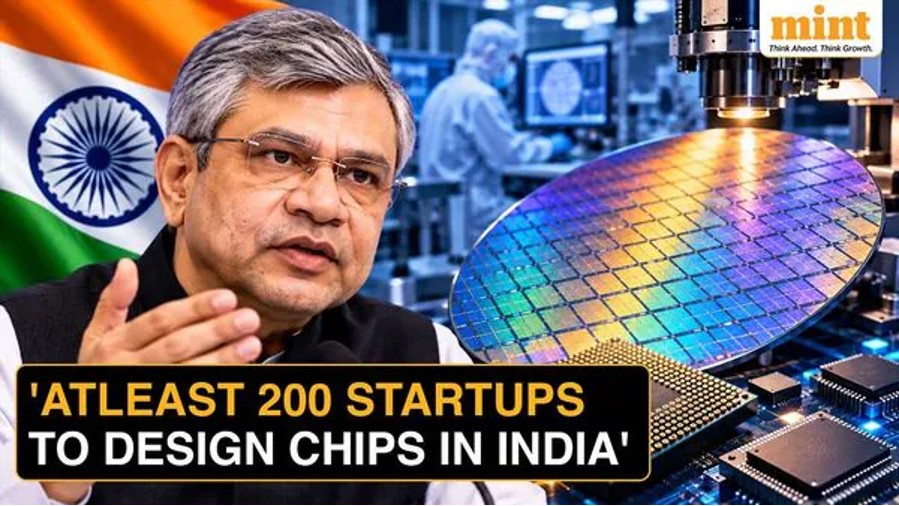
- IT Minister Ashwini Vaishnaw announced plans to train one lakh people for the semiconductor industry.
- The objective is to create a global pool of skilled semiconductor talent that can directly support new manufacturing facilities being established in India.
Industry Outlook
The global demand for semiconductor is expected to increase as industries adopt more digital and advanced technologies. The growth of artificial intelligence, electronics, automobiles and telecommunications is also expected to increase semiconductor demand.
- Ajit Manocha, CEO of SEMI, estimated that the global semiconductor industry could:
- Cross $1.3 trillion in 2026
- Reach around $2 trillion by 2030
Major Industry Investments and Developments
Several major global companies are increasing their presence in India’s semiconductor sector. Their investments cover areas such as research and development, manufacturing, hiring, equipment and supply chains.
| Company | Major Development |
|---|
| Applied Materials | Committed $5 billion over five years to expand its R&D centre and supply chain in India. |
| Micron | Began commercial production at its Sanand facility in Gujarat earlier in 2026. |
| Infineon | Increased hiring in India by 28% and highlighted India's growing role in the semiconductor value chain. |
| Merck | Highlighted India's transition from a major chip consumer and design hub towards a broader semiconductor ecosystem. |
| Lam Research | Announced an investment of ₹10,000 crore for its first silicon component manufacturing facility in India and expansion of supplier partnerships. |
| ASML | Highlighted India's increasing global importance as its semiconductor ecosystem develops. |
India's Emerging Semiconductor Value Chain
The semiconductor value chain includes several stages, from designing a chip to manufacturing, testing, packaging and using it in electronic products. India has strong capabilities in some areas, especially chip design, and is now working to expand into other stages.
- Chip Design → Materials → Equipment → Fabrication → Assembly, Testing & Packaging → Electronics Manufacturing
- India has traditionally been strong in chip design and semiconductor-related engineering talent, while large-scale fabrication and some parts of the manufacturing ecosystem have remained limited.
- Recent government initiatives seek to bridge these gaps.
Significance for India
A stronger semiconductor ecosystem can support India’s economic and technological development. It can also reduce dependence on external supply chains and support important industries that require a steady supply of semiconductor components.
- Strategic autonomy: Reduces excessive dependence on external semiconductor supply chains.
- Supply-chain resilience: Provides an alternative manufacturing base amid geopolitical disruptions.
- Economic growth: Supports high-value manufacturing and technology-intensive industries.
- Employment: Creates demand for engineers, technicians, researchers and skilled manufacturing workers.
- Electronics manufacturing: Strengthens India's ambition to become a major global electronics manufacturing hub.
- Technology ecosystem: Encourages growth in R&D, semiconductor design, advanced manufacturing and specialised materials.
- National security: Semiconductors are critical inputs for defence, telecommunications, space and strategic technologies.
Challenges
India is making progress in building its semiconductor ecosystem, but developing a large-scale industry requires high investment, advanced infrastructure and specialised skills. India also needs to build a strong network of domestic suppliers and compete with countries that already have established semiconductor industries.
Despite rapid progress, India faces several challenges:
- High capital requirements for semiconductor fabrication plants.
- Need for reliable and large-scale power and water supply.
- Dependence on several specialised equipment, materials and technologies.
- Need to develop a deeper domestic supplier ecosystem.
- Shortage of highly specialised semiconductor manufacturing skills.
- Strong competition from established semiconductor hubs such as Taiwan, South Korea, the United States, Japan and China.
- Need for sustained investment and technological upgrading.
Conclusion
Semicon India 2026 highlighted India’s growing role in the semiconductor industry. Prime Minister Narendra Modi said that India can become a trusted place for making semiconductors and electronic products. India is trying to build a complete semiconductor system. This includes chip design, manufacturing, equipment, materials, testing, and packaging. The government has also started the India Semiconductor Mission 2.0 with an outlay of ₹1.27 lakh crore. The aim is to increase semiconductor production in India and reduce dependence on other countries. The government also plans to train one lakh people for the semiconductor industry. Companies such as Micron, Applied Materials, Infineon, Merck, Lam Research and ASML are increasing their work in India. Semiconductors are important for cars, mobile phones, telecom, AI, defence, space and other industries. However, India still faces challenges such as high costs, shortage of skilled workers, dependence on foreign technology, and strong competition from countries like Taiwan, South Korea, Japan, the US, and China.
Test your understanding
Questions from this article
Prelims practiceQuestion: With reference to Semicon India 2026: India Trusted Semiconductor Manufacturing Hub, consider the following statements:
- Semicon India 2026 highlighted India’s growing role in the semiconductor industry
- Prime Minister Narendra Modi said that India can become a trusted place for making semiconductors and electronic products
Which of the statements given above is/are correct?
- 1 only
- 2 only
- Both 1 and 2
- Neither 1 nor 2
View answer and explanation
Suggested answer: (c) Both 1 and 2
Explanation: Semicon India 2026 highlights India’s growing role as a trusted semiconductor manufacturing hub, driven by policy support, investment, advanced technology, skilled talent, and a resilient global semiconductor supply chain
Mains practiceQuestion: Discuss Semicon India 2026: India Trusted Semiconductor Manufacturing Hub with reference to Context, Key Highlights, Why is Semiconductor Supply Chain Important? and Skill Development. (150 words, 10 marks)
View answer-writing approach
Answer approach:
- Introduce the topic using its meaning and context.
- Explain Context, Key Highlights, Why is Semiconductor Supply Chain Important? and Skill Development.
- Use facts and examples given in the article.
- Conclude with a balanced way forward.
Frequently asked questionsFrequently asked questions
What is Semicon India 2026: India Trusted Semiconductor Manufacturing Hub?
Semicon India 2026 highlights India’s growing role as a trusted semiconductor manufacturing hub, driven by policy support, investment, advanced technology, skilled talent, and a resilient global semiconductor supply chain
Why is Semicon India 2026: India Trusted Semiconductor Manufacturing Hub relevant for UPSC preparation?
Prime Minister Narendra Modi said that India can become a trusted place for making semiconductors and electronic products
What key points should aspirants remember about Semicon India 2026: India Trusted Semiconductor Manufacturing Hub?
The article covers Context, Key Highlights, Why is Semiconductor Supply Chain Important? and Skill Development.