The Reserve Bank of India (RBI) raised the policy repo rate by 25 basis points (bps) to 5.50% amid rising inflationary pressures and global economic uncertainty. The RBI also changed its monetary policy stance to calibrated tightening.
Why in the News?
The Monetary Policy Committee (MPC) met on October 5–7, 2026, and unanimously decided to increase the policy repo rate by 25 bps. The decision comes amid higher food and fuel prices, geopolitical tensions, elevated crude oil prices, and uncertainty in global financial markets.
Key Monetary Policy Decisions
Under the RBI Monetary Policy, the MPC unanimously increased the policy repo rate from 5.25% to 5.50% to address inflation concerns and support price stability. These changes reflect the current RBI Monetary Policy stance and are aimed at managing liquidity, borrowing costs, inflationary pressures, and overall economic stability.
The other policy rates were adjusted as follows:-
| Policy Rate | New Rate |
|---|
| Repo Rate | 5.50% |
| Standing Deposit Facility (SDF) | 5.25% |
| Marginal Standing Facility (MSF) | 5.75% |
| Bank Rate | 5.75% |
The MPC also changed its stance to calibrated tightening. Near-term rate cuts are therefore not expected; future action will depend on developments in inflation and growth.
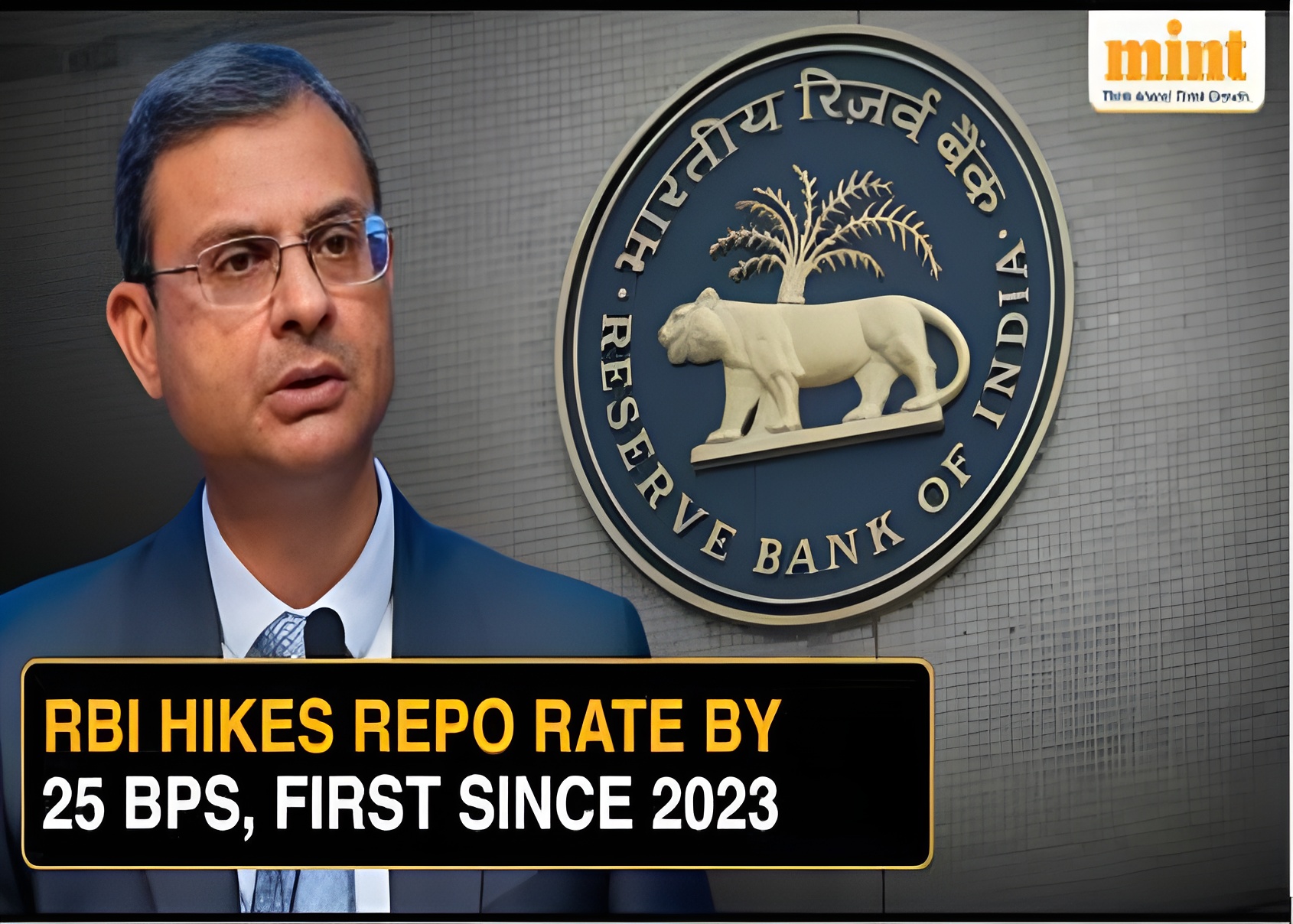
Why Did the RBI Raise the Repo Rate?
The RBI noted that inflation and its outlook have become less favourable compared with the previous year. The RBI also noted that supply-side inflation can affect inflation expectations and the pricing behaviour of firms over time.
Key concerns include:
- Rising food and fuel prices.
- Higher international crude oil prices.
- Geopolitical tensions, particularly the West Asia conflict.
- Increasing inflation expectations.
- Signs of inflation becoming broader across the economy.
- Strong growth in money and credit aggregates.
Global Economic Conditions
The global economic environment remains uncertain. The escalation of the West Asia conflict has increased crude oil price volatility and financial-market risks. These factors could create downside risks for global economic growth.
Other concerns include:
- Higher global inflation.
- Rising bond yields in advanced economies.
- Appreciation of the US dollar.
- Trade-related uncertainty.
- Tighter global financial conditions.
- Uncertainty over the valuation of AI-related stocks.
India’s Growth Outlook
Despite global challenges, the Indian economy continues to show resilience. Real GDP growth was 7.8% in Q1 2026–27, supported by private consumption, investment, and positive net exports. Manufacturing and services activity also remained in the expansion zone. The RBI has projected real GDP growth for 2026–27 at 7.1%.
| Period | GDP Growth Projection |
|---|
| 2026–27 | 7.1% |
| Q2: 2026–27 | 7.2% |
| Q3: 2026–27 | 6.9% |
| Q4: 2026–27 | 6.8% |
| Q1: 2027–28 | 7.1% |
The growth outlook is supported by infrastructure spending, private capital expenditure, strong credit growth and resilient services exports. However, global trade uncertainty, high commodity prices and geopolitical tensions remain risks.
Inflation Outlook
India’s CPI inflation increased to 4.8% in August 2026, compared with 4.5% in July. The increase was mainly driven by food and fuel inflation. Prices of some food items, including sugar and onion, also recorded notable increases. Core inflation rose to 4.2% in August from 3.9% in the previous three months.
The RBI projects:
- CPI inflation for 2026–27: 5.2%
- Q2: 4.9%
- Q3: 6.0%
- Q4: 5.7%
- Q1 2027–28: 5.6%
- Core inflation for 2026–27: 4.4%
The major inflation risks include a weak Southwest monsoon, El Niño conditions and volatility in international oil prices.
Liquidity and Financial Markets
System liquidity increased significantly during August and September due to measures aimed at attracting capital inflows. Average daily surplus liquidity under the Liquidity Adjustment Facility (LAF) stood at about ₹5.9 lakh crore after the previous MPC meeting. At the same time, geopolitical tensions and higher global bond yields pushed government security yields higher. Credit growth, however, remained strong and broad-based.
Financial Stability
The financial position of India's banking system remains strong. Key indicators of Scheduled Commercial Banks (SCBs) include:
- Capital adequacy
- Liquidity
- Asset quality
- Profitability
External Sector
India's current account deficit (CAD) remained within sustainable levels in Q1 2026–27 despite external shocks. However, the merchandise trade deficit increased to US$58.7 billion during July–August 2026, compared with US$55.1 billion during the same period in 2025.
- The increase was mainly driven by higher imports of electronic goods and crude oil.
Foreign Investment
Net FDI inflows increased to US$13.8 billion during April–August 2026, compared with US$9.6 billion a year earlier. However, FPI recorded net outflows of US$10.3 billion during April–October 5, 2026.
Foreign Exchange Reserves
India's foreign exchange reserves remain adequate. Adequate reserves provide a buffer against external shocks and excessive exchange-rate volatility.
The reserves provide:
- Around 11 months of import cover.
- 94.4% external debt cover.
Additional RBI Measures
The RBI announced two additional measures.
1. Interoperability of NBFC Account Aggregators
- The RBI will allow interoperability among NBFC Account Aggregators. This will enable financial information to be aggregated through different account aggregators.
- SEBI-regulated depositories will also be facilitated to include deposit-account information in their Consolidated Account Statements (CAS).
- These measures are scheduled for implementation by December 31, 2026.
2. Technical Consultative Committee for Financial Markets
The RBI will establish a Technical Consultative Committee for Financial Markets. The committee will advise on policy and operational issues related to financial markets.
It will provide a structured platform for interaction with:
- Market participants
- Financial-sector stakeholders
- Other relevant institutions
Conclusion
The RBI faces a difficult balance between controlling inflation and sustaining economic growth. The 25 bps rate hike and shift to calibrated tightening reflect growing concern over broadening price pressures, while India's strong growth, stable financial system, and adequate external buffers provide resilience against global uncertainties.
Test your understanding
Questions from this article
Frequently asked questionsFrequently asked questions
What is RBI Increases Repo Rate to 5.50% to Tackle Inflation Concerns?
RBI raises the repo rate to 5.50% to address inflation concerns. Know the reasons and the impact on loans, interest rates, growth, and the Indian economy
Why is RBI Increases Repo Rate to 5.50% to Tackle Inflation Concerns relevant for UPSC preparation?
The RBI also changed its monetary policy stance to calibrated tightening
What key points should aspirants remember about RBI Increases Repo Rate to 5.50% to Tackle Inflation Concerns?
The article covers Why in the News?, Key Monetary Policy Decisions, Why Did the RBI Raise the Repo Rate? and Global Economic Conditions.