UPSC Current Affairs
MEA Challenges OIC’s Anti-India Remarks and Pakistan’s Alleged Role
Ministry of External Affairs (MEA) rejects OIC's anti-India statements and highlights Pakistan's role. Detailed International Relations analysis for UPSC CSE.
VRKalpana Sharma
3 min read
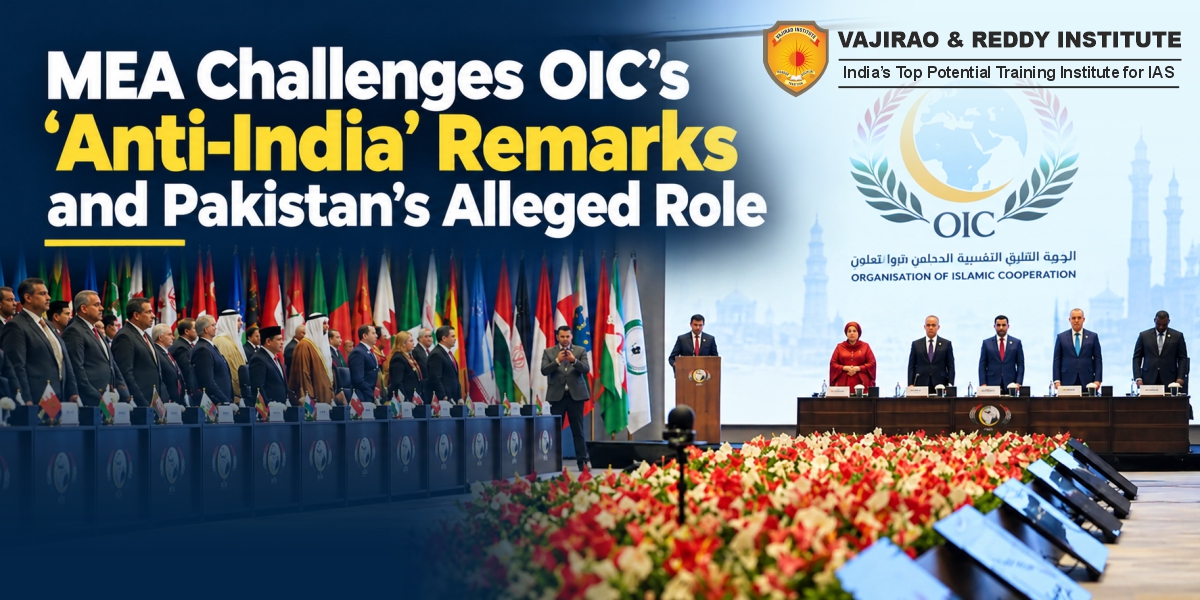
The Ministry of External Affairs (MEA) rejected references to India in resolutions adopted at the Organization of Islamic Cooperation (OIC) Council of Foreign Ministers’ meeting held in Baghdad on October 17–18, 2026. India described these references as “malicious, biased and false” and accused Pakistan of orchestrating them to target India on issues related to Jammu and Kashmir and minority rights.
Why in the News?
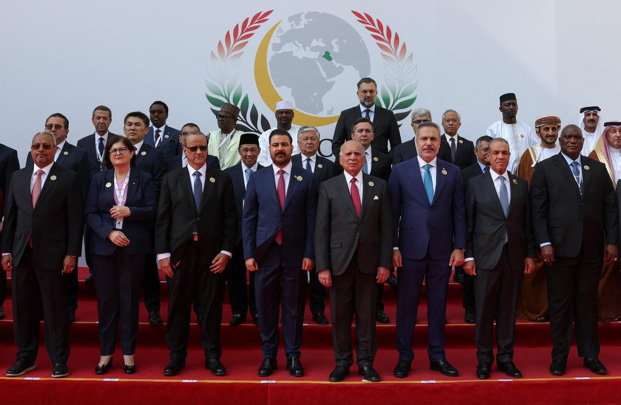
On October 19, 2026, the MEA rejected the references to India in the resolutions adopted during the OIC Council of Foreign Ministers’ meeting.
- India accused Pakistan of using the OIC to promote its political agenda against India.
- The MEA stated that the OIC has no locus standi (place to stand) to comment on matters that are strictly internal to India.
- India reiterated that Jammu and Kashmir and Ladakh are integral and inalienable parts of India.
- The MEA also criticised the OIC’s references to alleged Islamophobia in India.
India’s Response to the OIC Resolutions
The MEA strongly criticised the OIC for adopting what India described as politically motivated and biased references.
- India expressed disappointment that the OIC had once again allowed itself to be used by Pakistan to promote its agenda.
- The MEA questioned the credibility and integrity of the OIC for repeatedly endorsing Pakistan’s claims.
- India urged OIC member countries to reform the organisation and adopt a more balanced approach.
India’s Position on Jammu and Kashmir
India maintained that Jammu and Kashmir and Ladakh are integral parts of the country and that external organisations have no authority to comment on matters strictly internal to India.
- Article 370: Following its abrogation in August 2019, India has highlighted economic growth, infrastructure development, improved connectivity and tourism in Jammu and Kashmir.
- Pakistan-occupied Jammu and Kashmir (PoJK): India accused Pakistan of using violence and repression against civilian protesters, resulting in the deaths of many people, including women and children.
- Outstanding issues: India stated that the key issues concerning Jammu and Kashmir are Pakistan’s withdrawal from areas under its illegal occupation and the cessation of its support for cross-border terrorism.
India’s Response to Allegations of Islamophobia
The MEA rejected the OIC’s references to alleged Islamophobia and accused Pakistan of using these claims to divert international attention from its own internal problems.
- India described the references as an attempt to divert attention from Pakistan’s record of minority persecution and sectarian violence.
- The MEA also highlighted Pakistan’s governance failures and political instability.
- India criticised the OIC for repeatedly endorsing what it considers Pakistan-sponsored propaganda.
About the Organization of Islamic Cooperation (OIC)
The Organization of Islamic Cooperation (OIC) is an international organisation that brings together Muslim-majority countries to promote cooperation and address issues concerning the Islamic world.
- Establishment: 1969
- Headquarters: Jeddah, Saudi Arabia
- Membership: 57 member states
- Objective: To promote solidarity and cooperation among its member states and protect their common interests.
- India and the OIC: India is not a member of the OIC. The organisation has repeatedly raised issues related to Jammu and Kashmir, drawing strong objections from India.
Significance for India
- National sovereignty: India’s response highlights its position that matters concerning Jammu and Kashmir and Ladakh are internal affairs.
- Countering cross-border terrorism: India continues to demand an end to Pakistan’s support for cross-border terrorism.
- Diplomatic relations: The disagreement reflects continuing tensions between India and Pakistan in international forums.
- Multilateral organisations: The episode raises questions about the role of international organisations in addressing bilateral disputes and maintaining impartiality.
Conclusion
India’s rejection of the OIC resolutions reflects its continued opposition to external interference in matters concerning Jammu and Kashmir and Ladakh. The MEA accused Pakistan of using the organisation to promote anti-India propaganda and divert attention from its own internal challenges. India reiterated that Pakistan must vacate the areas under its illegal occupation and stop supporting cross-border terrorism. The development highlights the continuing diplomatic tensions between India and Pakistan and India’s emphasis on national sovereignty and territorial integrity.
Test your understanding
Questions from this article
Prelims practiceQuestion: Consider the following statements regarding the Organisation of Islamic Cooperation (OIC):
- It was established in 1969 following the Al-Aqsa Mosque fire.
- Its headquarters is located in Jeddah, Saudi Arabia.
- India is a full member of the organisation.
- Its membership includes countries from both Asia and Africa.
Which of the statements given above are correct?
- 1 and 2 only
- 1, 2 and 4 only
- 2, 3 and 4 only
- 1, 2, 3 and 4
View answer and explanation
Suggested answer: (v) 1, 2 and 4 only
Explanation: The OIC was established in 1969 and is headquartered in Jeddah, Saudi Arabia. It has 57 member states across Asia, Africa and other regions. India is not a member of the OIC.
UPSC Mains Question
“Examine the major challenges in India–OIC relations and suggest measures to strengthen engagement between the two.” (15 marks | 250 words)
Introduction
India–OIC relations are shaped by economic cooperation, energy security and geopolitical differences.
Body
- Challenges: Kashmir issue, Pakistan’s influence and criticism of India’s domestic policies.
- Opportunities: Trade, energy security, investment and cooperation with Gulf countries.
- Way forward: Strengthen diplomatic dialogue, economic ties and people-to-people relations.
Conclusion
India should pursue constructive engagement with OIC members while safeguarding its national interests.
Frequently asked questionsFrequently asked questions
What is MEA Challenges OIC’s Anti-India Remarks and Pakistan’s Alleged Role?
Ministry of External Affairs (MEA) rejects OIC's anti-India statements and highlights Pakistan's role. Detailed International Relations analysis for UPSC CSE
Why is MEA Challenges OIC’s Anti-India Remarks and Pakistan’s Alleged Role relevant for UPSC preparation?
India described these references as “malicious, biased and false” and accused Pakistan of orchestrating them to target India on issues related to Jammu and Kashmir and minority rights
What key points should aspirants remember about MEA Challenges OIC’s Anti-India Remarks and Pakistan’s Alleged Role?
The article covers Why in the News?, India’s Response to the OIC Resolutions, India’s Position on Jammu and Kashmir and India’s Response to Allegations of Islamophobia.