Over-the-Top (OTT) platforms have changed the way people access films, web series and other digital content. However, the streaming of online content is subject to government regulations in India. The recent direction to Netflix regarding Pakistani-origin content has again raised questions about the regulation of OTT platforms, freedom of expression and national security.
Why in the News?
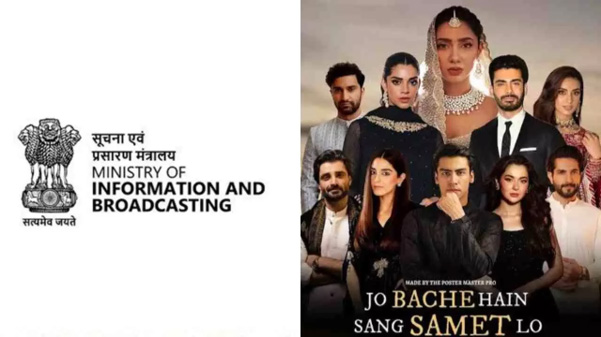
The Ministry of Information and Broadcasting (I&B) has directed Netflix to ensure that content originating from Pakistan is not streamed in India.
- The direction reiterates an advisory issued on May 8, 2025, during Operation Sindoor.
- The development followed complaints and representations regarding the possible release of the Pakistan-based web series Jo Bachay Hain Sang Samait Lo in India.
- The issue has brought attention to the legal framework governing OTT content, including content originating from foreign countries.
1. Rules Governing OTT Content in India
The government regulates online content through the Information Technology (Intermediary Guidelines and Digital Media Ethics Code) Rules, 2021.
These rules were introduced to regulate digital platforms and establish accountability for online content.
Major Features:
- They provide a Code of Ethics for publishers of online curated content, including OTT platforms.
- They establish a grievance redressal mechanism for addressing complaints related to digital content.
- They prescribe responsibilities for digital publishers and intermediaries.
- They apply to OTT platforms, digital news publishers and intermediaries operating in India, under their respective provisions.
2. What is the Code of Ethics for OTT Content?
Part III of the IT Rules, 2021 provides a Code of Ethics for publishers of online curated content, including OTT platforms.
- It is based on principles drawn from existing content-related codes for television and print media.
- It requires publishers to exercise due caution and discretion while deciding to feature, transmit, publish or exhibit content.
Content Requiring Special Caution
OTT publishers must consider whether their content:
- Affects the sovereignty and integrity of India.
- Threatens, endangers or jeopardises the security of the State.
- Is detrimental to India's friendly relations with foreign countries.
- Is likely to incite violence or disturb the maintenance of public order.
Respect for Religious and Cultural Diversity
Publishers must consider India's multi-racial and multi-religious context. They should exercise due caution while presenting the activities, beliefs, practices and views of any racial or religious group.
Responsibilities of Intermediaries
Rule 3(1)(b) of Part II of the IT Rules, 2021 requires intermediaries to make reasonable efforts to ensure that users do not host, display, upload, modify, publish, transmit, store, update or share prohibited information.
- This includes information that threatens the unity and sovereignty of India, among other prohibited categories.
3. What Rules Govern Streaming of Content Originating in Other Countries?
There are no separate, specific rules exclusively governing the streaming of online content based on its country of origin.
- However, the government can issue advisories or directions to streaming platforms based on security concerns, complaints or violations of applicable laws.
- It may also restrict content originating from a particular country through a specific government order or advisory.
Government Advisory on Pakistani-Origin Content
In May 2025, during Operation Sindoor, the government issued an advisory asking digital platforms to discontinue Pakistani-origin content in India.
The advisory covered:
- Web series.
- Films.
- Songs.
- Podcasts.
- Other streaming media content.
It applied to content made available through both subscription-based and other models.
The advisory stated that such content should be discontinued with immediate effect in the interest of national security.
Netflix's Earlier Response
- In June 2025, Netflix informed the Ministry that it had not made any film or series originating in Pakistan available to subscribers in India.
Government's Power to Restrict Content
The government can restrict online content through the following legal provisions:
A. IT Rules, 2021
The IT Rules empower the Secretary, Ministry of Information and Broadcasting, to direct the blocking of public access to specific content in emergency situations.
- Such action is subject to the prescribed legal procedure.
B. Section 69A of the Information Technology Act, 2000
Section 69A empowers the Central Government to direct the blocking of public access to information through any computer resource.
Blocking can be ordered in the interest of:
- Sovereignty and integrity of India.
- Defence of India.
- Security of the State.
- Friendly relations with foreign States.
- Public order.
- Preventing incitement to the commission of any cognizable offence relating to these grounds.
4. Case Study: Blocking of the Movie Satluj
In the case of the movie Satluj, the Ministry of Information and Broadcasting issued an interim order to OTT platform ZEE5.
- The Ministry invoked Section 69A of the IT Act, 2000 and directed the platform to remove the film, citing security concerns.
- ZEE5 complied with the order.
- The government subsequently referred the film to the Inter-Departmental Committee.
- The Committee also maintained that the film should remain blocked from public access in India.
5. Key Challenges in OTT Regulation
- National Security: Online content may raise concerns relating to national security and India's international relations.
- Freedom of Expression: Restrictions on digital content must be balanced with freedom of speech and expression.
- Foreign-Origin Content: Regulating content produced outside India can create jurisdictional and enforcement challenges.
- Platform Accountability: OTT platforms must follow Indian laws while operating across international markets.
- Transparency: Clear reasons and procedures for content restrictions are important to prevent arbitrary decisions.
- Grievance Redressal: An effective complaint mechanism is necessary to address concerns raised by viewers and other stakeholders.
Conclusion
OTT platforms have expanded access to digital entertainment, but their operations must follow India's legal framework. The IT Rules, 2021 and Section 69A of the IT Act provide mechanisms to regulate online content and address security concerns. However, such regulation must maintain a balance between national security, platform accountability and freedom of expression.
Test your understanding
Questions from this article
Prelims practiceQuestion: Consider the following statements:
- The government regulates online content through the Information Technology (Intermediary Guidelines and Digital Media Ethics Code) Rules, 2021.
- Part III of the IT Rules, 2021 provides a Code of Ethics for publishers of online curated content, including OTT platforms.
- Section 69A empowers the Central Government to direct the blocking of public access to information through any computer resource.
Which of the options given below is correct:
- 1 only
- 2 only
- 2 and 3 only
- 1, 2 and 3
View answer and explanation
Suggested answer: (c) Both 1 and 2
Explanation:
- The government regulates online content through the Information Technology (Intermediary Guidelines and Digital Media Ethics Code) Rules, 2021. These rules were introduced to regulate digital platforms and establish accountability for online content.
- Part III of the IT Rules, 2021 provides a Code of Ethics for publishers of online curated content, including OTT platforms.It is based on principles drawn from existing content-related codes for television and print media.
- Section 69A empowers the Central Government to direct the blocking of public access to information through any computer resource.
Mains practiceQuestion: In the name of national security and public interest, India has restricted access to certain Pakistani OTT content. Critically examine the need for regulating OTT platforms while balancing national security concerns with freedom of expression.
View answer-writing approach
Answer approach:
- Introduction: highlight the emerging market of OTT platforms.
- Body:
- Explain the need of regulation like national security, public order, cultural sensitivity, morality.
- Concerns related to excessive regulation: like chilling effect, freedom of speech and expression, misuse.
- Way Forward: proportionate evidence based approach with transparent and legal decision making.