Actor Imran Khan, a U.S. citizen and Overseas Citizen of India (OCI) cardholder, has been asked to leave India by October 28, 2026, following his participation in a protest in Mumbai demanding the resignation of Chief Election Commissioner Gyanesh Kumar. The case has raised questions about the rights of OCI cardholders, their participation in political protests and the government’s powers over foreign nationals.
Why in the News?
Bollywood actor and U.S. citizen Imran Khan, who holds an Overseas Citizen of India (OCI) card, was reportedly directed by the Foreigners Regional Registration Office (FRRO) to leave India by October 28, 2026, following his brief detention during a Mumbai protest demanding the resignation of Chief Election Commissioner Gyanesh Kumar. The Foreigners Regional Registration Office (FRRO) issued a Leave India Notice to Imran Khan after a complaint by BJP leader Kirit Somaiya, who alleged that Khan had violated immigration law by participating in the protest. The notice invokes Sections 7(2)(c) and 29 of the Immigration and Foreigners Act, 2025.
1. What is an OCI Card?
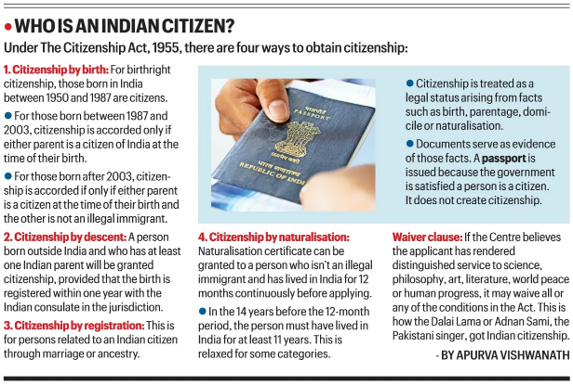
The Overseas Citizen of India (OCI) scheme was introduced in 2005 for eligible foreign nationals of Indian origin. India does not permit dual citizenship, so OCI cardholders remain foreign citizens and hold passports issued by other countries. OCI status provides several privileges in India but does not confer Indian citizenship.
Eligibility
Under Section 7A of the Citizenship Act, 1955, eligible applicants include certain former Indian citizens and their descendants, people connected to territories that became part of India after August 15, 1947, and qualifying foreign spouses of Indian citizens or OCI cardholders, subject to legal conditions. People with specified citizenship links to Pakistan, Bangladesh, and other notified countries are generally excluded.
2. Rights and Privileges of OCI Cardholders
OCI cardholders enjoy several facilities that make travel, residence, and certain economic activities in India easier.
- Visa: Lifelong, multiple-entry visa to India.
- FRRO registration: Generally exempt from registration, regardless of the duration of stay.
- Property: Certain property rights similar to those of Non-Resident Indians (NRIs), excluding agricultural land, farmhouses and plantation properties.
- Education and professions: Access to specified educational opportunities and professional activities, subject to applicable rules.
- Entry fees: Parity with Indian nationals for entry fees to specified national parks, wildlife sanctuaries, monuments and museums.
Restrictions on Activities
A government notification issued in March 2021 requires OCI cardholders to obtain special permission for certain activities, including:
- Research.
- Missionary work and Tabligh activities.
- Mountaineering and journalism.
- Certain internships or employment involving foreign diplomatic establishments.
- Visits to protected, restricted or prohibited areas.
Political protests are not expressly listed as activities requiring prior permission under this notification. However, OCI cardholders remain subject to immigration laws and applicable government orders.
3. Do OCI Cardholders Have Political Rights?
OCI cardholders do not enjoy the political rights reserved for Indian citizens. Under Section 7B of the Citizenship Act, 1955, they cannot vote or contest elections. They are also ineligible for specified constitutional offices, including the President, Vice-President, and judges of the Supreme Court and High Courts. The Constitution distinguishes between rights available to citizens and those available to all persons.
- Article 19: Guarantees freedoms such as speech, expression, and peaceful assembly specifically to Indian citizens.
- Article 21: Protects the right to life and personal liberty of every person, including foreign nationals, subject to the law.
Therefore, OCI cardholders cannot claim Article 19 freedoms in the same capacity as Indian citizens. However, they remain entitled to applicable constitutional protections, including Article 21.
4. Can the Government Ask an OCI Cardholder to Leave India for Joining a Protest?
The government has broad powers to regulate the entry, stay and departure of foreign nationals. However, the legality of a particular order depends on the applicable law and the grounds supporting the action. The Immigration and Foreigners Act, 2025, which came into force in September 2025, replaced the Foreigners Act, 1946. The provisions cited in Imran Khan’s case are:
- Section 7(2)(c): Allows the government to direct a foreign national not to remain in India or in a specified area.
- Section 29: Provides for the removal of a foreign national in specified circumstances, including violations of the Act, its rules or orders, and cases involving an adverse security report.
The Act does not expressly prohibit every instance of a foreign national attending a political rally. However, it gives the government powers to regulate foreigners’ presence and conduct. A September 2025 notification delegated certain powers under Sections 7(2) and 29 to FRROs and Foreigners Registration Officers. In Imran Khan’s case, the notice invokes the power to direct him to leave India rather than a provision specifically restricting particular activities. The legal question is whether the action is justified under the applicable provisions and the grounds stated in the notice.
5. Important Court Cases
Previous cases involving foreign nationals and OCI cardholders have examined the government’s powers and the need to follow legal procedures.
Kamil Siedczynski Case, 2020
The Calcutta High Court quashed a Leave India Notice issued to Polish student Kamil Siedczynski after he participated in an anti-CAA rally in Kolkata. The Court held that participation in a political rally, by itself, was insufficient to justify the action in that case. The judgment was delivered under the earlier Foreigners Act, 1946, which has since been replaced by the 2025 law.
Ashok Swain Case
The government cancelled academic Ashok Swain’s OCI registration, citing his writings, social media posts and public statements. In March 2025, the Delhi High Court set aside a subsequent cancellation order because the material relied upon had not been supplied to him, preventing him from effectively responding to the allegations. The government was allowed to initiate fresh proceedings.
Christo Thomas Philip Case
Christo Thomas Philip, a U.S. citizen and doctor working in Bihar, faced action over alleged missionary activity. The Delhi High Court ordered restoration of his OCI registration after finding that the government had not established the required legal basis for cancellation.
Khalid Jahangir Qazi Case
The OCI registration of U.S. citizen Khalid Jahangir Qazi was cancelled over allegations of activities prejudicial to India, and he was separately blacklisted.
- In November 2024, the Delhi High Court set aside both actions, finding that vague allegations did not provide a meaningful opportunity to defend himself.
- The government was permitted to begin fresh proceedings with specific allegations.
- These cases demonstrate that government decisions concerning foreign nationals and OCI cardholders can be challenged in court.
- Their legality depends on the applicable law, the evidence and compliance with procedural requirements.
6. When Can OCI Registration Be Cancelled?
A Leave India Notice and cancellation of OCI registration are separate legal actions. A Leave India Notice directs a person to leave the country, while cancellation removes their OCI status. Under Section 7D of the Citizenship Act, 1955, the Central Government may cancel OCI registration on specified grounds, including:
- Registration obtained through fraud, false representation or concealment of material facts.
- Showing disaffection towards the Constitution.
- Certain conduct involving an enemy during a war involving India.
- A qualifying prison sentence of at least two years within five years of OCI registration.
- Grounds involving India’s sovereignty and integrity, security, friendly relations with foreign countries or the general public.
- Other specified violations, including certain cases relating to OCI status obtained through marriage.
The government must follow the applicable legal procedure. An OCI cardholder must be given a reasonable opportunity of being heard before cancellation under Section 7D.
7. What Legal Remedies are Available?
A person who receives a notice directing them to leave India can seek reconsideration and challenge the decision through legal channels.
- Representation: Request the FRRO or Central Government to reconsider or withdraw the notice.
- High Court petition: Challenge the legality of the notice under Article 226 of the Constitution, which empowers High Courts to issue writs.
- Interim protection: Request a temporary stay or other relief while the Court examines the case.
Unlike Section 7D of the Citizenship Act, Section 7 of the Immigration and Foreigners Act does not provide a comparable express appeal procedure against a direction to leave India.
Imran Khan’s lawyers have approached the High Court. The notice requires him to leave by October 28, 2026. Unless the FRRO withdraws or modifies it, or a court grants interim protection, the direction remains operative.
Conclusion
OCI status provides foreign nationals of Indian origin with important travel and residence privileges, but it does not grant Indian citizenship or the political rights reserved for citizens. The government can regulate their stay and activities under immigration law, while courts can examine whether specific actions comply with the law and procedural safeguards.