The new U.S.-Denmark-Greenland security agreement marks a shift in the U.S. approach towards Greenland. President Donald Trump had earlier demanded that Greenland become part of the United States, but the September 22, 2026 agreement does not transfer any territory to the U.S. Instead, it expands the U.S. military presence and provides Washington greater strategic access to Greenland.
Why in the News?
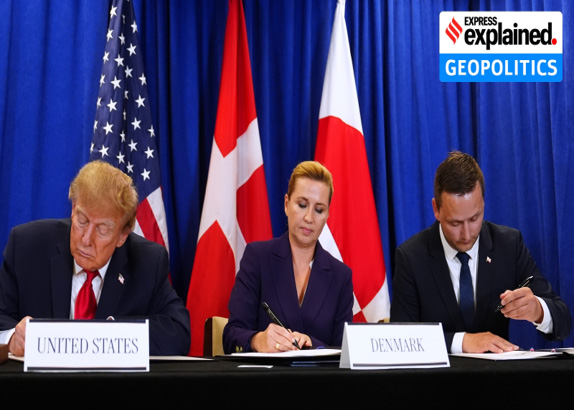
The leaders of the United States, Denmark, and Greenland signed a new security agreement on September 22, 2026.
The agreement allows the U.S. to expand its military presence in Greenland.
New military facilities are planned at Narsarsuaq and Mestersvig.
Greenland remains a self-governing territory within the Kingdom of Denmark.
The agreement does not transfer Greenland to the United States.
Greenland has become a direct signatory to the agreement along with Denmark.
The agreement also provides that an independent Greenland would remain in NATO.
From Acquisition Demand to Security Agreement
President Trump first raised the possibility of acquiring Greenland during his first term. After returning to office in January 2025, he again argued that the United States needed to take control of the island and make it part of the U.S.
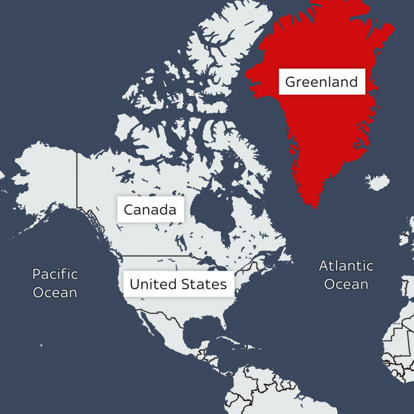
The new agreement takes a different approach. Thus, the agreement provides the U.S. with greater strategic access while avoiding a transfer of sovereignty.
The U.S. does not acquire Greenland.
Denmark retains sovereignty over the territory.
Washington receives expanded military access.
The U.S. can develop additional military facilities.
The agreement strengthens the U.S. strategic position without changing Greenland's territorial status.
Strategic Importance of Greenland
Greenland has growing importance because of its geographical position in the Arctic. The United States therefore considers Greenland important for its wider Arctic security strategy. The Arctic region is becoming increasingly important due to:
Growing strategic activity by Russia and China.
Melting ice opening previously difficult-to-access areas.
Greater importance of Arctic sea routes.
Potential access to critical minerals and rare earths.
Its location is between North America and Europe.
Existing U.S. Military Presence
The United States already maintains a military presence in Greenland. The new agreement therefore builds on an existing security relationship rather than creating an entirely new U.S. military presence.
Around 150 U.S. troops are stationed at Pituffik Space Base.
The 1951 U.S.-Denmark security agreement already provided Washington broad rights to establish military bases in Greenland.
During the Second World War and Cold War, the U.S. operated more than 30 bases and installations on the island.
Most of these facilities were closed over the following decades, particularly after the end of the Cold War.
Expansion of U.S. Military Facilities
The agreement identifies two locations for possible expansion of U.S. military facilities. It allows the United States to establish additional defence areas at Narsarsuaq and Mestersvig, subject to agreed arrangements between the parties.
Narsarsuaq
Narsarsuaq is located in southern Greenland.
The U.S. previously maintained a major airfield there during the Second World War.
The facility was closed decades ago.
The new agreement provides for renewed U.S. military development in the area.
Mestersvig
Mestersvig is located in eastern Greenland.
The U.S. has not previously maintained a permanent military presence there.
The location provides a strategic position overlooking waters between Greenland, Norway and Iceland.
The Danish military currently uses the area for activities including dog-sled patrols.
1951 U.S.-Denmark Security Agreement
The new agreement is connected to the existing 1951 U.S.-Denmark security arrangement. The earlier agreement gave the United States broad rights to build military facilities in Greenland. The new agreement therefore expands and formalises aspects of the existing U.S.-Denmark security relationship.
During the Cold War:
The U.S. maintained numerous military installations.
There was even a plan for an under-the-ice nuclear weapons base.
Many facilities were later abandoned because of high costs and the end of the Cold War.
Watch : Greenland Security Agreement: A Shift from U.S.
Greenland and NATO
An important provision concerns Greenland's possible future independence. The agreement states that if Greenland exercises its right to self-determination and becomes independent:
Denmark and Greenland would ensure that the independent Greenlandic state agrees to remain in NATO.
The existing security arrangement with the United States would continue.
This would provide the U.S. continued access to military facilities on the island.
This gives the agreement a potential long-term significance even if Greenland's constitutional status changes in the future.
Greenland's Role in the Agreement
One important development is that Greenland itself is a direct signatory to the agreement. Previously, Greenland's international role was largely represented through the Kingdom of Denmark.
The direct participation of Greenland is significant because:
Greenland has a population of around 50,000.
There has been a long-standing debate over its relationship with Denmark.
Greenland has its own political movement supporting greater autonomy and independence.
Direct participation could provide greater scope for Greenlandic involvement in foreign and security policy.
Restrictions on China and Other Non-NATO Powers
The agreement also addresses the involvement of countries outside NATO.
Non-NATO countries would not be allowed to establish military facilities in Greenland.
Such countries would also face restrictions on investment in sensitive areas, particularly rare earths.
Denmark has already blocked Chinese investments in Greenland.
The new agreement effectively formalises this strategic restriction.
This reflects wider concerns about Chinese and Russian activities in the Arctic.
Importance of Rare Earths
Greenland has gained strategic importance partly because of its potential rare earth resources. Rare earth elements are important for:
Restrictions on foreign investment in sensitive areas therefore have both economic and strategic implications.
Significance for the United States
The agreement strengthens the U.S. position in the Arctic without requiring territorial acquisition.
Expands U.S. military access.
Provides new locations for military facilities.
Strengthens U.S. presence near the North Atlantic and Arctic.
Limits military and sensitive economic activities by non-NATO countries.
Supports U.S. efforts to respond to growing Russian and Chinese activity in the region.
Significance for Denmark and Greenland
The agreement also provides important benefits and changes for Denmark and Greenland.
Denmark: Retains sovereignty over Greenland while strengthening security cooperation with the U.S.
Greenland: Gains a direct role as a signatory to an international security agreement.
NATO: Gains stronger security arrangements in the strategically important Arctic region.
Greenlandic autonomy: Direct participation may create a precedent for greater Greenlandic involvement in foreign-policy matters.
Major Challenges
Several issues remain important despite the agreement.
Sovereignty: Greenland's future constitutional status remains a sensitive issue.
U.S.-Denmark relations: Earlier acquisition demands created tensions between Washington and Copenhagen.
Greenlandic autonomy: Greater U.S. military involvement must be balanced with Greenland's interests.
China and Russia: Their growing Arctic activities remain a strategic concern.
Environmental concerns: Expansion of military infrastructure in the Arctic requires consideration of the fragile environment.
Future independence: The status of the agreement after possible Greenlandic independence could become an important issue.
Conclusion
The Greenland deal, formally reflected in the Greenland security agreement, represents a shift from President Trump's earlier demand for U.S. ownership of Greenland towards expanded American military access without territorial acquisition. It strengthens the U.S. position in the increasingly important Arctic region, while keeping Greenland under Danish sovereignty. The direct participation of Greenland and provisions concerning possible future independence also give the agreement importance for the island's evolving relationship with Denmark, NATO and the United States.
Test your understanding
Questions from this article
Prelims practiceQuestion: With reference to Greenland Security Agreement: A Shift from U.S. Acquisition Demand, consider the following statements:
- The new U.S.-Denmark-Greenland security agreement marks a shift in the U.S
- President Donald Trump had earlier demanded that Greenland become part of the United States, but the September 22, 2026 agreement does not transfer any territory to the U.S
Which of the statements given above is/are correct?
- 1 only
- 2 only
- Both 1 and 2
- Neither 1 nor 2
View answer and explanation
Suggested answer: (c) Both 1 and 2
Explanation: Greenland Security Agreement marks a shift from U.S. acquisition demands to expanded security cooperation, military access, and Arctic defense, while reaffirming Greenland’s sovereignty and self-determination
Mains practiceQuestion: Discuss Greenland Security Agreement: A Shift from U.S. Acquisition Demand with reference to Why in the News?, From Acquisition Demand to Security Agreement, Strategic Importance of Greenland and Existing U.S. Military Presence. (150 words, 10 marks)
View answer-writing approach
Answer approach:
- Introduce the topic using its meaning and context.
- Explain Why in the News?, From Acquisition Demand to Security Agreement, Strategic Importance of Greenland and Existing U.S. Military Presence.
- Use facts and examples given in the article.
- Conclude with a balanced way forward.
Frequently asked questionsFrequently asked questions
What is Greenland Security Agreement: A Shift from U.S. Acquisition Demand?
Greenland Security Agreement marks a shift from U.S. acquisition demands to expanded security cooperation, military access, and Arctic defense, while reaffirming Greenland’s sovereignty and self-determination
Why is Greenland Security Agreement: A Shift from U.S. Acquisition Demand relevant for UPSC preparation?
President Donald Trump had earlier demanded that Greenland become part of the United States, but the September 22, 2026 agreement does not transfer any territory to the U.S
What key points should aspirants remember about Greenland Security Agreement: A Shift from U.S. Acquisition Demand?
The article covers Why in the News?, From Acquisition Demand to Security Agreement, Strategic Importance of Greenland and Existing U.S. Military Presence.