China launched the Belt and Road Initiative (BRI) in 2013 to build large infrastructure and connectivity projects across Asia, Africa and Europe. India has chosen not to join the BRI, mainly because of concerns related to sovereignty, security and strategic autonomy. For India, the biggest concern is the China-Pakistan Economic Corridor (CPEC), which passes through Pakistan-Occupied Kashmir (PoK). India's concerns also extend to China's growing presence in the Indian Ocean Region.
What is the Belt and Road Initiative?
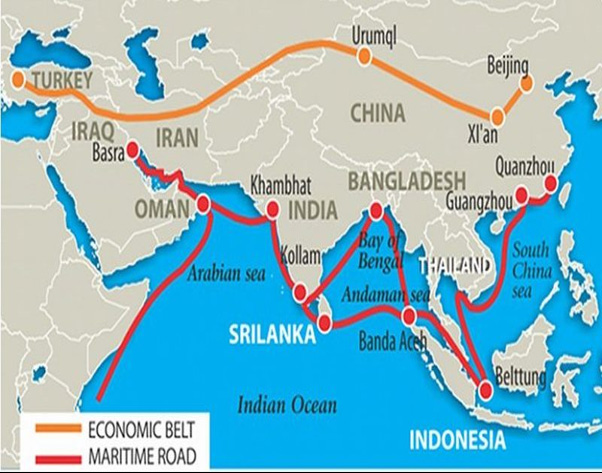
The BRI was launched by Chinese President Xi Jinping in 2013. It was earlier known as One Belt, One Road (OBOR). It has two major components:
- Silk Road Economic Belt: Overland routes connecting China with Central Asia, the Middle East and Europe.
- 21st Century Maritime Silk Road: Maritime routes connecting Southeast Asia, the Indian Ocean, Africa and Europe.
The BRI focuses on five major areas:
- Policy coordination
- Infrastructure connectivity
- Unimpeded trade
- Financial integration
- People-to-people ties
The initiative involves a large number of countries and has attracted significant Chinese investment in infrastructure projects.
Why Does the BRI Matter Strategically?
The BRI is not limited to economic development. It also increases China's economic and geopolitical influence in different regions. China also aims to improve the movement of critical resources such as oil and gas and reduce its dependence on vulnerable trade routes.
- A major concern for China is the Strait of Malacca, through which a large share of its energy imports passes.
- Land-based corridors and ports across the Indian Ocean can help China diversify its supply routes.
- This has strategic importance for India because several BRI projects are located close to India's borders or along important Indian Ocean sea routes.
India's Main Objection: CPEC
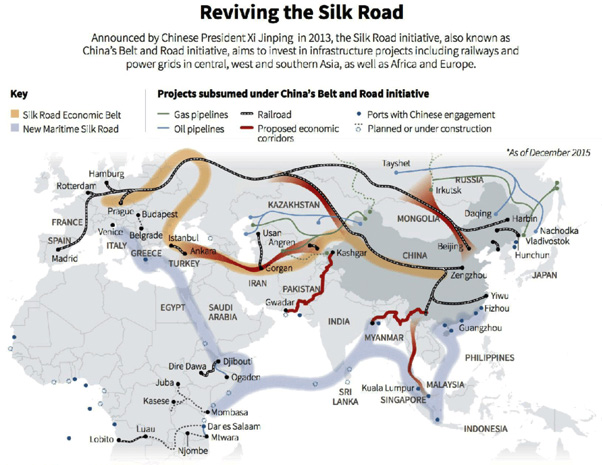
The China-Pakistan Economic Corridor (CPEC) is the main reason for India's opposition to the BRI. CPEC connects China's Xinjiang region with Gwadar Port in Pakistan through roads, railways and other infrastructure. It provides China with access to the Arabian Sea and helps reduce its dependence on the Strait of Malacca.
- However, the corridor passes through Pakistan-Occupied Kashmir (PoK), including the Gilgit-Baltistan region.
- India objects to this because it considers the area part of its territory. India argues that infrastructure development in the region affects its sovereignty and territorial integrity.
Sovereignty and Territorial Integrity
India has consistently maintained that connectivity projects must respect the sovereignty and territorial integrity of countries. India has also linked its concerns over CPEC with the Simla Agreement of 1972, under which India and Pakistan agreed to resolve their disputes through bilateral means. China maintains that CPEC is an economic project and is not directed against any third country. However,
India has not accepted China's position as sufficient to address its concerns.
Security Concerns
CPEC also has a security dimension for India. The presence of Chinese investment and personnel in areas claimed by India strengthens the China-Pakistan strategic partnership.
- India is also concerned about Chinese and Pakistani military cooperation in the disputed region.
- Therefore, India's concern is not limited to infrastructure. It also involves the possible long-term impact on India's western security environment.
China's Growing Presence in the Indian Ocean
India's concerns also extend to China's growing presence in the Indian Ocean Region.
Chinese-supported infrastructure projects include:
- Gwadar Port in Pakistan.
- Hambantota Port in Sri Lanka.
- Kyaukpyu in Myanmar.
Indian strategic thinking has often linked such developments with the “String of Pearls” concept, which refers to a network of Chinese strategic and commercial facilities around the Indian Ocean. The concern is that commercial facilities could potentially acquire strategic or military importance in the future.
Debt-Trap Diplomacy Debate
Another concern related to the BRI is the debt-trap diplomacy argument. Critics argue that China provides large loans for infrastructure projects, often involving Chinese companies. If a country struggles to repay these loans, it may become economically dependent on China or face pressure involving important assets.
Watch : China’s Belt and Road Initiative
Hambantota Port Example
Hambantota Port in Sri Lanka is the most commonly cited example. Sri Lanka leased the port to a Chinese company for 99 years in 2017 after facing difficulties related to its debt and port operations.
- However, the debt-trap explanation is contested. Some researchers argue that the Hambantota lease was mainly a financing and economic arrangement and that Chinese loans were not the only cause of Sri Lanka's wider debt crisis.
- Therefore, the debt-trap argument should be understood as a debated interpretation, rather than a fact.
India's Alternative Connectivity Initiatives
India's opposition to the BRI does not mean that it opposes international connectivity. India has supported alternative connectivity projects that aim to improve trade while protecting sovereignty and strategic interests.
International North-South Transport Corridor
The International North-South Transport Corridor (INSTC) is being developed with Russia and Iran. It aims to connect India with Russia and Europe through Iran and provides an alternative route that does not depend on China or Pakistan.
Chabahar Port
India has invested in Chabahar Port in Iran. Chabahar provides India with access to Afghanistan and Central Asia without having to pass through Pakistan.
- It is also located close to Gwadar Port, which is operated with Chinese involvement.
Other Initiatives
India has also supported:
- Asia-Africa Growth Corridor
- Connectivity projects in India's eastern neighbourhood.
- Greater engagement with Southeast Asia through the Act East Policy.
These initiatives reflect India's preference for connectivity based on sovereignty, transparency and financial sustainability.
Strategic Autonomy
India's position on the BRI is closely linked to its policy of strategic autonomy. Strategic autonomy means maintaining the freedom to make foreign-policy decisions based on national interests, rather than becoming dependent on any major power.
- India has therefore chosen not to join the BRI despite its potential economic benefits.
- The decision reflects a balance between economic opportunities and strategic concerns, particularly sovereignty, security and long-term dependence.
Conclusion
India's opposition to the BRI is based mainly on sovereignty, security and strategic autonomy. CPEC remains the central concern because it passes through territory claimed by India. At the same time, India continues to support connectivity through initiatives such as the INSTC, Chabahar Port and Act East Policy. This reflects India's effort to promote regional connectivity while protecting its strategic interests and decision-making independence.
Test your understanding
Questions from this article
Prelims practiceQuestion: With reference to China’s Belt and Road Initiative- Why it Matters for India, consider the following statements:
- China launched the Belt and Road Initiative (BRI) in 2013 to build large infrastructure and connectivity projects across Asia, Africa and Europe
- India has chosen not to join the BRI, mainly because of concerns related to sovereignty, security and strategic autonomy
Which of the statements given above is/are correct?
- 1 only
- 2 only
- Both 1 and 2
- Neither 1 nor 2
View answer and explanation
Suggested answer: (c) Both 1 and 2
Explanation: Understand China’s Belt and Road Initiative, its objectives and strategic significance, and why BRI matters for India’s economy, security and regional interests
Mains practiceQuestion: “China’s Belt and Road Initiative (BRI) has transformed South Asia from a regional space into a theatre of great power competition.” Analyse the strategic implications of the BRI for India’s security and regional influence in South Asia. (15 marks, 250 words) (UPSC mains 2026)
View answer-writing approach
Answer approach:
Introduction
●
Briefly define the Belt and
Road Initiative (BRI) as China's connectivity and infrastructure initiative
Body
1. Strategic implications for India's
security
2. Impact on India's regional influence
3. India’s response
Conclusion
Suggest additional measures which India should take like comprehensive neighbourhood policy, net security provider and first responder.
Frequently asked questionsFrequently asked questions
What is China’s Belt and Road Initiative- Why it Matters for India?
Understand China’s Belt and Road Initiative, its objectives and strategic significance, and why BRI matters for India’s economy, security and regional interests
Why is China’s Belt and Road Initiative- Why it Matters for India relevant for UPSC preparation?
India has chosen not to join the BRI, mainly because of concerns related to sovereignty, security and strategic autonomy
What key points should aspirants remember about China’s Belt and Road Initiative- Why it Matters for India?
The article covers What is the Belt and Road Initiative?, Why Does the BRI Matter Strategically?, India's Main Objection: CPEC and Sovereignty and Territorial Integrity.