UPSC Current Affairs
The history of Iran’s Chabahar port, and its imperative for India
What is the nature of India’s involvement in the Chabahar port? India’s involvement in the development of the Chabahar port began in 2002, with discussions between Hassan Rouhani, then National Security Advisor to Iran’s President, and his Indian counterpart, Brajesh Mishra. The following year, a roadmap of strategic cooperation was signed, with Chabahar as a key project.
VRAuthor Desk
3 min read
What is the nature of India’s involvement in the Chabahar port? India’s involvement in the development of the Chabahar port began in 2002, with discussions between Hassan Rouhani, then National Security Advisor to Iran’s President, and his Indian counterpart, Brajesh Mishra. The following year, a roadmap of strategic cooperation was signed, with Chabahar as a key project.
What is the nature of India’s involvement in the Chabahar port?
- India’s involvement in the development of the Chabahar port began in 2002, with discussions between Hassan Rouhani, then National Security Advisor to Iran’s President, and his Indian counterpart, Brajesh Mishra.
- The following year, a roadmap of strategic cooperation was signed, with Chabahar as a key project. The need for alternative trade routes became more urgent for India after the 1990s, as its economy opened up and the Taliban took over Afghanistan.
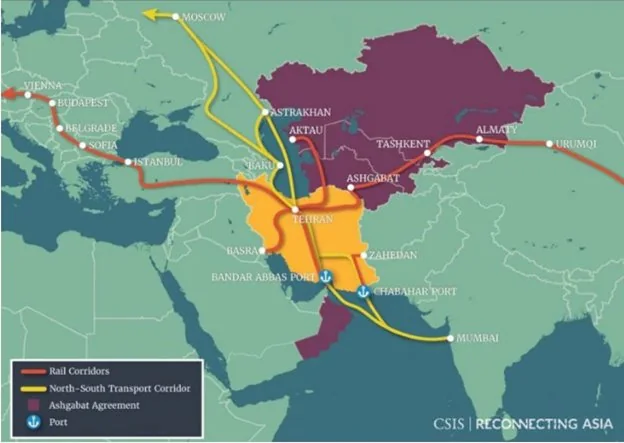
- The Chabahar project gained further importance after China began developing the Gwadar port in Pakistan as part of the Belt and Road Initiative (BRI). The port offers India easier access to Central Asia and Russia, bypassing Pakistan and Afghanistan.
How much of the Chabahar port has been developed?
- The Chabahar project in Iran comprises two distinct ports: Shahid Beheshti and Shahid Kalantari. India’s investment is specifically in the Shahid Beheshti port. A trilateral agreement was signed by India, Iran, and Afghanistan in April 2016 to develop the port.
- The first phase of Shahid Beheshti port was inaugurated in December 2017, marking the start of India’s wheat consignments to Afghanistan via this route. By 2019, Afghan exports to India were also being routed through this port.
- India Ports Global Limited (IPGL), incorporated in 2015, took over part of the operations at Shahid Beheshti in December 2018. The port is being developed in four phases, with a projected capacity of 82 million tons per year upon completion.
- The construction of a modern cruise terminal in the first phase increased the port’s capacity to 5.8 million tonnes.
But why is it taking so long to develop the port?
- India has faced challenges in implementing infrastructure projects in its neighborhood due to geopolitical roadblocks, particularly Iran’s relationship with the US.
- After the 2003 agreement between India and Iran, progress was slow due to pressure from the US. The US-Iran relationship improved temporarily after the 2015 Joint Comprehensive Plan of Action (JCPOA), but deteriorated again in 2018 when the US withdrew from the Iran nuclear deal and imposed sanctions.
- Despite these sanctions, India was allowed to continue with the Chabahar project, but finding international suppliers was difficult. The return of the Taliban to power in Afghanistan in 2021 further complicated matters.
- However, India has since reopened its embassy in Kabul, pledged development assistance, allocated funds for the Chabahar project, and announced plans to send wheat to Afghanistan through the port.
What happens in the project here onward?
- The development of the Chabahar port is influenced by US-Iran relations, which have been steadily deteriorating and could worsen if Trump returns to the White House.
- The ongoing crisis in the Red Sea, a result of the Israel-Hamas conflict, has made the regional situation volatile.
- Yemen’s Houthi militia, backed by Iran, has been harassing commercial vessels, leading to retaliatory strikes by the US and UK.
- Recent missile strikes between Iran and Pakistan have escalated tensions. India has expressed zero tolerance for terror and stated that the Houthi attacks harm its interests. However, it also acknowledged that countries need to act in self-defense.
- Despite challenges such as American sanctions, volatility in Afghanistan, and potential incompatibility with the Belt and Road Initiative (BRI), Omidi and Noolkar-Oak suggest that through active diplomacy and efficient implementation, Iran and India can maintain the Chabahar project as a viable transit hub.
- Prelims: Key facts, institutions, locations and terminology in the article.
- Mains: Connect the topic with Economy, International Relations, Defence.
- Revision: Use the article headings to prepare concise notes and answer-writing points.
Test your understanding
Questions from this article
Prelims practiceWith reference to The history of Iran’s Chabahar port, and its imperative for India, consider the following statements:
- India’s involvement in the development of the Chabahar port began in 2002, with discussions between Hassan Rouhani, then National Security Advisor to Iran’s President, and his Indian counterpart, Brajesh Mishra.
- The following year, a roadmap of strategic cooperation was signed, with Chabahar as a key project. The need for alternative trade routes became more urgent for India after the 1990s, as its economy opened up and the…
- The Chabahar project gained further importance after China began developing the Gwadar port in Pakistan as part of the Belt and Road Initiative (BRI). The port offers India easier access to Central Asia and Russia…
Which of the statements given above are correct?
- 1 and 2 only
- 2 and 3 only
- 1 and 3 only
- 1, 2 and 3
View answer
Answer: (d) 1, 2 and 3. All three statements are drawn from the article.
Mains practiceDiscuss the background, key issues and significance of The history of Iran’s Chabahar port, and its imperative for India for India.
Answer in 250 words.
View answer approach
- What is the nature of India’s involvement in the Chabahar port?
- How much of the Chabahar port has been developed?
- But why is it taking so long to develop the port?
- What happens in the project here onward?
Frequently asked questionsFrequently asked questions
Why is The History Of Iran’S Chabahar Port, And Its Imperative For India in the news?
What is the nature of India’s involvement in the Chabahar port? India’s involvement in the development of the Chabahar port began in 2002, with discussions between Hassan Rouhani, then National Security Advisor to Iran’s President, and his Indian counterpart, Brajesh Mishra.
What are the key facts about The History Of Iran’S Chabahar Port, And Its Imperative For India?
The following year, a roadmap of strategic cooperation was signed, with Chabahar as a key project. The need for alternative trade routes became more urgent for India after the 1990s, as its economy opened up and the Taliban took over Afghanistan. The Chabahar project gained further importance after China began developing the Gwadar port in Pakistan as part of the Belt and Road Initiative (BRI).
Why is The History Of Iran’S Chabahar Port, And Its Imperative For India important for UPSC preparation?
The topic connects current developments with Economy, International Relations, Defence and is relevant for both objective revision and analytical answer writing.