The breakdown of civic infrastructure and governance systems is increasingly becoming a cause of preventable deaths in India. Incidents involving illegal structures, building collapses, encroachments, and unsafe establishments point towards deeper problems of systemic failure, weak enforcement, poor urban planning, and lack of accountability.
Why in the News?
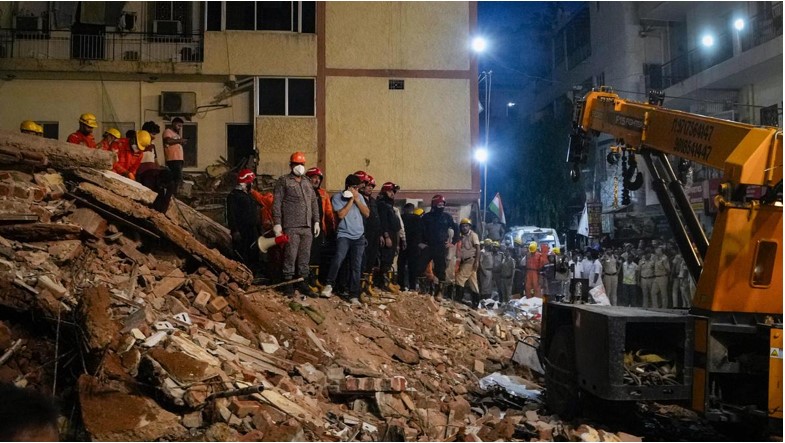
The repeated occurrence of civic infrastructure-related tragedies has raised concerns over the functioning of urban governance and regulatory systems.
From illegal billboards collapsing on bystanders to unauthorised buildings collapsing, a similar pattern often follows: arrests are made, some officials are suspended, compensation is provided to victims' families and investigations are announced. However, public attention often fades until another incident occurs.
The issue therefore goes beyond individual accidents and raises questions about civic responsibility, regulatory enforcement and administrative accountability.
Systemic Impunity
A major concern is the alleged involvement or negligence of administrative officials in allowing illegal activities to continue.
Need for Official Accountability
Officials responsible for maintaining civic order need to be held accountable when they knowingly allow violations.
- An official who approves an unauthorised structure or knowingly ignores it should face consequences.
- Accountability of officials responsible for enforcement can strengthen compliance with regulations.
- Failure to hold responsible officials accountable can weaken public confidence in civic regulations.
Another concern is that some individuals accused after such incidents may already have criminal offences registered against them. Despite this, illegal activities can continue when the system fails to establish clear accountability for violations.
Poor Urban Planning
Unauthorised Colonies
- Unauthorised colonies in Delhi are cited as an example of how unplanned urban development can create serious regulatory challenges.
- Where buildings are constructed without proper approvals or outside effective urban planning mechanisms, owners may be able to construct structures without adequate oversight.
- This can create conditions where regulatory violations become difficult to control.
Watch : Breakdown of Civic Infrastructure in India
Encroachment of Public Land
Encroachment on public land for private use is another major civic governance concern. Such encroachment can occur across different types of residential areas, including both upscale neighbourhoods and unauthorised colonies. The problem is aggravated when enforcement drives do not consistently address all forms of encroachment.
Selective Enforcement
Safety Regulations and Public Responsibility
- The issue is not limited to government agencies and officials. Owners, operators and consumers also have responsibilities in maintaining civic safety.
- A 2025 fire at a bar in Goa illustrates the consequences of inadequate safety arrangements. Fireworks were reportedly used indoors during a performance, while limited escape routes and crowding contributed to several deaths.
- Although the establishment was permanently closed and its owners were arrested, concerns remain about whether consumers continue to patronise other establishments operated by the same owners.
- This raises the broader question of consumer responsibility in enforcing safety standards.
Role of Consumer Choices
- Consumer behaviour can also influence compliance with regulations.
- The article refers to consumer boycott movements in the United States, where established food and coffee chains have experienced sales slowdowns because of consumer reactions to their political positions.
- Similarly, consumers in India could make informed choices regarding establishments that have violated safety regulations, particularly when such violations have resulted in loss of life.
- However, this requires consumers to have access to reliable information.
Need for Public Compliance Information
An ordinary citizen may not remember previous incidents or have sufficient information about an establishment's compliance record.
The absence of easily accessible information such as:
- Publicly displayed compliance certificates
- Safety and regulatory approvals
- Records of regulatory violations
- Public registries of violations
Can make it difficult for consumers to make informed choices. Providing access to such information can therefore become an important part of regulatory transparency and civic governance.
Strengthening Enforcement
The experience of the COVID-19 pandemic demonstrated that establishments could be subjected to strict operating guidelines. During the pandemic:
- Establishments operated under strict guidelines.
- Deviations from prescribed rules could result in immediate closure.
- Regulatory compliance was closely monitored.
A similar approach to enforcement can be applied to civic and building safety regulations. All buildings and establishments need appropriate monitoring to ensure continued compliance with prescribed guidelines. The possibility of losing an operating licence should provide a meaningful incentive for establishments to follow safety and civic regulations.
Key Issues
| Issue | Concern |
|---|
| Illegal construction | Buildings constructed without adequate approvals can create safety risks |
| Administrative accountability | Officials who knowingly ignore violations may weaken enforcement |
| Poor urban planning | Unplanned development can increase civic and safety problems |
| Encroachment | Private use of public land can undermine planned urban development |
| Selective enforcement | Unequal enforcement may fail to establish effective compliance |
| Safety violations | Poor safety arrangements can turn accidents into major tragedies |
| Information gaps | Citizens may lack access to compliance and violation records |
| Weak monitoring | Inadequate monitoring can allow repeated violations |
Way Forward
Strengthening civic infrastructure requires more than action after a tragedy. The focus needs to shift towards prevention, continuous monitoring and accountability. Key measures include:
- Personal accountability for officials who knowingly ignore serious violations.
- Stronger monitoring of unauthorised construction.
- Better urban planning and regulation of rapidly growing settlements.
- Equal enforcement against public-land encroachment.
- Regular monitoring of establishments for safety compliance.
- Greater public access to compliance certificates and violation records.
- Effective penalties, including the possibility of licence cancellation, for serious or repeated violations.
- Greater awareness among citizens regarding civic responsibility and safety norms.
Conclusion
The breakdown of civic infrastructure reflects a wider challenge of governance, enforcement, and civic responsibility. Repeated tragedies involving illegal construction, encroachment and unsafe establishments show the consequences when regulations are not consistently implemented. Effective civic governance requires accountability not only after an incident but also before a tragedy occurs. Strong enforcement, transparent compliance information, better urban planning, and continuous monitoring can help make civic infrastructure safer and strengthen public trust in regulatory institutions.
Test your understanding
Questions from this article
Prelims practiceQuestion: With reference to Breakdown of Civic Infrastructure in India: Causes, Challenges and Way Forward, consider the following statements:
- The breakdown of civic infrastructure and governance systems is increasingly becoming a cause of preventable deaths in India
- Incidents involving illegal structures, building collapses, encroachments, and unsafe establishments point towards deeper problems of systemic failure, weak enforcement, poor urban.
Which of the statements given above is/are correct?
- 1 only
- 2 only
- Both 1 and 2
- Neither 1 nor 2
View answer and explanation
Suggested answer: (c) Both 1 and 2
Explanation: The breakdown of civic infrastructure in India, including key causes, urban challenges, gaps in public services, governance issues, and infrastructure stress. Understand the impact on citizens and the sustainable measures needed for better urban development
Mains practiceQuestion: Discuss Breakdown of Civic Infrastructure in India: Causes, Challenges and Way Forward with reference to Why in the News?, Systemic Impunity, Need for Official Accountability and Poor Urban Planning. (150 words, 10 marks)
View answer-writing approach
Answer approach:
- Introduce the topic using its meaning and context.
- Explain Why in the News?, Systemic Impunity, Need for Official Accountability and Poor Urban Planning.
- Use facts and examples given in the article.
- Conclude with a balanced way forward.
Frequently asked questionsFrequently asked questions
What is Breakdown of Civic Infrastructure in India: Causes, Challenges and Way Forward?
The breakdown of civic infrastructure in India, including key causes, urban challenges, gaps in public services, governance issues, and infrastructure stress. Understand the impact on citizens and the sustainable measures needed for better urban development
Why is Breakdown of Civic Infrastructure in India: Causes, Challenges and Way Forward relevant for UPSC preparation?
Incidents involving illegal structures, building collapses, encroachments, and unsafe establishments point towards deeper problems of systemic failure, weak enforcement, poor urban planning, and lack of accountability
What key points should aspirants remember about Breakdown of Civic Infrastructure in India: Causes, Challenges and Way Forward?
The article covers Why in the News?, Systemic Impunity, Need for Official Accountability and Poor Urban Planning.