UPSC Current Affairs
Very Short Range Air Defence Systems
Overview On 1st February 2025, the Defence Research and Development Organisation (DRDO) successfully conducted three successive flight trials of the Very Short-Range Air Defence System (VSHORADS) off the coast of Odisha, at Chandipur. These trials marked a significant milestone in the development of an indigenous air defence system designed to counter threats from aerial targets, particularly low-flying drones. FLIGHT TRIALS & OBJECTIVES The flight trials were aimed at testing the VSHORADS missile system against high-speed targets flying at very low altitudes, simulating the characteristics of low-flying drones.
VRAuthor Desk
3 min read
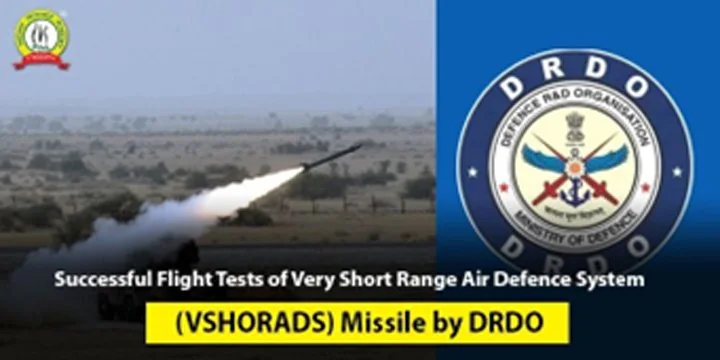
Overview On 1st February 2025, the Defence Research and Development Organisation (DRDO) successfully conducted three successive flight trials of the Very Short-Range Air Defence System (VSHORADS) off the coast of Odisha, at Chandipur. These trials marked a significant milestone in the development of an indigenous air defence system designed to counter threats from aerial targets, particularly low-flying drones. FLIGHT TRIALS & OBJECTIVES The flight trials were aimed at testing the VSHORADS missile system against high-speed targets flying at very low altitudes, simulating the characteristics of low-flying drones.
Overview
- On 1st February 2025, the Defence Research and Development Organisation (DRDO) successfully conducted three successive flight trials of the Very Short-Range Air Defence System (VSHORADS) off the coast of Odisha, at Chandipur.
- These trials marked a significant milestone in the development of an indigenous air defence system designed to counter threats from aerial targets, particularly low-flying drones.
FLIGHT TRIALS & OBJECTIVES
- The flight trials were aimed at testing the VSHORADS missile system against high-speed targets flying at very low altitudes, simulating the characteristics of low-flying drones.
- The primary objective was to demonstrate the system's capability to intercept and destroy targets with reduced thermal signatures.
- The system successfully neutralized drones and other aerial threats under varying flight conditions.
The trials were conducted in the
final deployment configuration, with two field operators responsible for:
- Weapon readiness
- Missile firing
- Target acquisition
This configuration ensures that the system is ready for deployment in real-world operational
environments.
KEY OUTCOMES OF THE FLIGHT TRIAL
- Success of All Three Tests: In all three trials, the VSHORADS missile intercepted and completely destroyed the targets.
- Pinpoint Accuracy: The trials demonstrated the system’s precision in engaging low-flying aerial threats.
- Data Capture and Analysis: Various range instruments such as Telemetry, Electro-Optical Tracking System (EOTS), and Radar were deployed at the Integrated Test Range, Chandipur, to capture flight data.
- The captured data confirmed the accuracy of the missile system, establishing its unique capability to neutralize drones and other aerial threats in different flight conditions.
SYSTEM DESCRIPTION
- VSHORADS is a Man Portable Air Defence System (MANPADS) that has been indigenously developed by Research Center Imarat (RCI), with collaboration from other DRDO laboratories and development partners.
- The system is designed to provide air defence for the Indian Army, Navy, and Air Force against a wide range of aerial threats, especially those coming at low altitudes.
- The system is lightweight, portable, and capable of being operated by a single soldier, making it effective in close-range defence
SIGNIFICANCE & STRATEGIC IMPORTANCE
- Counter to Drone Threats: The successful trials have validated the system’s ability to counter the growing threat of low-flying drones, a concern that is becoming increasingly important in modern warfare.
- Indigenous Defence Capability: The development of VSHORADS is a step toward enhancing India's self-reliance in defence technology under the "Atmanirbhar Bharat"
- The system strengthens the air defence capabilities of the Indian Armed Forces and is critical in providing close-in protection against a variety of aerial threats.
FUTURE PROSPECTS
- The successful trials pave the way for operational induction of VSHORADS into the Indian Armed Forces.
- With further refinement and integration, the missile system is expected to be a critical asset in India’s air defence strategy, particularly in dealing with new-age threats such as drones, loitering munitions, and other low-flying aerial targets.
- Prelims: Key facts, institutions, locations and terminology in the article.
- Mains: Connect the topic with Economy, Defence, Polity & Governance.
- Revision: Use the article headings to prepare concise notes and answer-writing points.
Test your understanding
Questions from this article
Prelims practiceWith reference to Very Short Range Air Defence Systems, consider the following statements:
- On 1st February 2025, the Defence Research and Development Organisation (DRDO) successfully conducted three successive flight trials of the Very Short-Range Air Defence System (VSHORADS) off the coast of Odisha, at…
- These trials marked a significant milestone in the development of an indigenous air defence system designed to counter threats from aerial targets, particularly low-flying drones.
- The flight trials were aimed at testing the VSHORADS missile system against high-speed targets flying at very low altitudes, simulating the characteristics of low-flying drones.
Which of the statements given above are correct?
- 1 and 2 only
- 2 and 3 only
- 1 and 3 only
- 1, 2 and 3
View answer
Answer: (d) 1, 2 and 3. All three statements are drawn from the article.
Mains practiceDiscuss the background, key issues and significance of Very Short Range Air Defence Systems for India.
Answer in 250 words.
View answer approach
- FLIGHT TRIALS & OBJECTIVES
- KEY OUTCOMES OF THE FLIGHT TRIAL
- SYSTEM DESCRIPTION
- SIGNIFICANCE & STRATEGIC IMPORTANCE
- FUTURE PROSPECTS
Frequently asked questionsFrequently asked questions
Why is Very Short Range Air Defence Systems in the news?
Overview On 1st February 2025, the Defence Research and Development Organisation (DRDO) successfully conducted three successive flight trials of the Very Short-Range Air Defence System (VSHORADS) off the coast of Odisha, at Chandipur. These trials marked a significant milestone in the development of an indigenous air defence system designed to counter threats from aerial targets, particularly low-flying drones.
What are the key facts about Very Short Range Air Defence Systems?
FLIGHT TRIALS & OBJECTIVES The flight trials were aimed at testing the VSHORADS missile system against high-speed targets flying at very low altitudes, simulating the characteristics of low-flying drones. The primary objective was to demonstrate the system's capability to intercept and destroy targets with reduced thermal signatures. The system successfully neutralized drones and other aerial threats under varying flight conditions.
Why is Very Short Range Air Defence Systems important for UPSC preparation?
The topic connects current developments with Economy, Defence, Polity & Governance and is relevant for both objective revision and analytical answer writing.