UPSC Current Affairs
Unseasonal rains and lightning strikes in Gujarat
Context: Unseasonal and sudden heavy rainfall, accompanied by thunderstorms, hailstorms and lightning strikes, have so far claimed 27 lives in Gujarat on November 26. What explains the unseasonal rainfall in November? The India Meteorological Department (IMD) has attributed the lightning flashes to three weather systems – cyclonic circulation over the Northeast Arabian Sea and adjoining Saurashtra and Kutch, Western Disturbances, and Easterly trough.
VRAuthor Desk
2 min read
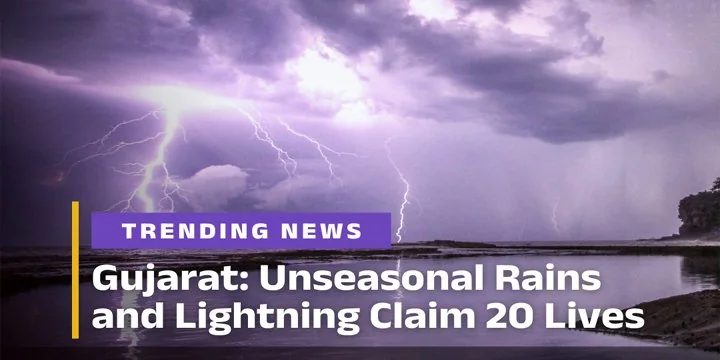
Context: Unseasonal and sudden heavy rainfall, accompanied by thunderstorms, hailstorms and lightning strikes, have so far claimed 27 lives in Gujarat on November 26. What explains the unseasonal rainfall in November? The India Meteorological Department (IMD) has attributed the lightning flashes to three weather systems – cyclonic circulation over the Northeast Arabian Sea and adjoining Saurashtra and Kutch, Western Disturbances, and Easterly trough.
Context:
- Unseasonal and sudden heavy rainfall, accompanied by thunderstorms, hailstorms and lightning strikes, have so far claimed 27 lives in Gujarat on November 26.
What explains the unseasonal rainfall in November?
- The India Meteorological Department (IMD) has attributed the lightning flashes to three weather systems – cyclonic circulation over the Northeast Arabian Sea and adjoining Saurashtra and Kutch, Western Disturbances, and Easterly trough.
- Western disturbances are storms that originate over the Mediterranean Sea region and may bring rainfall to northwestern India in the winter.
- Whereas, easterly winds flow from the east in the equatorial region throughout the year.
Why the lightning?
- There are two reasons for lightning strikes.
- Whenever there is an interaction between any system and Western Disturbance it always leads to lightning.
- Also, the first spell of activity after a long dry period leads to convective activity that results in lightning.
About lightening:
- Lightning is a natural phenomenon formed by electrostatic discharges through the atmosphere between two electrically charged regions, either both in the atmosphere or with one in the atmosphere and on the ground, temporarily neutralizing these in a near-instantaneous release of an average of one gigajoule of energy.
- This discharge may produce a wide range of electromagnetic radiation, from heat created by the rapid movement of electrons, to brilliant flashes of visible light in the form of black-body radiation.
- Lightning causes thunder, a sound from the shock wave which develops as gases in the vicinity of the discharge experience a sudden increase in pressure.
- Lightning occurs commonly during thunderstorms as well as other types of energetic weather systems, but volcanic lightning can also occur during volcanic eruptions.
Syllabus: Prelims; Geography
- Prelims: Key facts, institutions, locations and terminology in the article.
- Mains: Connect the topic with Polity & Governance.
- Revision: Use the article headings to prepare concise notes and answer-writing points.
Test your understanding
Questions from this article
Prelims practiceWith reference to Unseasonal rains and lightning strikes in Gujarat, consider the following statements:
- Unseasonal and sudden heavy rainfall, accompanied by thunderstorms, hailstorms and lightning strikes, have so far claimed 27 lives in Gujarat on November 26.
- The India Meteorological Department (IMD) has attributed the lightning flashes to three weather systems – cyclonic circulation over the Northeast Arabian Sea and adjoining Saurashtra and Kutch, Western Disturbances, and…
- Western disturbances are storms that originate over the Mediterranean Sea region and may bring rainfall to northwestern India in the winter.
Which of the statements given above are correct?
- 1 and 2 only
- 2 and 3 only
- 1 and 3 only
- 1, 2 and 3
View answer
Answer: (d) 1, 2 and 3. All three statements are drawn from the article.
Mains practiceDiscuss the background, key issues and significance of Unseasonal rains and lightning strikes in Gujarat for India.
Answer in 250 words.
View answer approach
- Context:
- What explains the unseasonal rainfall in November?
- Why the lightning?
- About lightening:
Frequently asked questionsFrequently asked questions
Why is Unseasonal Rains And Lightning Strikes In Gujarat in the news?
Context: Unseasonal and sudden heavy rainfall, accompanied by thunderstorms, hailstorms and lightning strikes, have so far claimed 27 lives in Gujarat on November 26. What explains the unseasonal rainfall in November?
What are the key facts about Unseasonal Rains And Lightning Strikes In Gujarat?
The India Meteorological Department (IMD) has attributed the lightning flashes to three weather systems – cyclonic circulation over the Northeast Arabian Sea and adjoining Saurashtra and Kutch, Western Disturbances, and Easterly trough. Western disturbances are storms that originate over the Mediterranean Sea region and may bring rainfall to northwestern India in the winter. Whereas, easterly winds flow from the east in the equatorial region throughout the year.
Why is Unseasonal Rains And Lightning Strikes In Gujarat important for UPSC preparation?
The topic connects current developments with Polity & Governance and is relevant for both objective revision and analytical answer writing.