UPSC Current Affairs
UNION BUDGET 2025-26
On 1 Feb 2025, Union Minister for Finance and Corporate Affairs Smt Nirmala Sitharaman presented the Union Budget 2025-26 in Parliament. The national budget is prepared by the budget division under the Department of Economic Affairs (DEA), the Ministry of Finance and is presented to the Parliament for discussion and approval. ENGINES OF DEVELOPMENT CORE OBJECTIVES OF THE BUDGET The budget focuses on 5 key objectives: Accelerating Growth: Aiming for faster economic progress.
VRAuthor Desk
4 min read
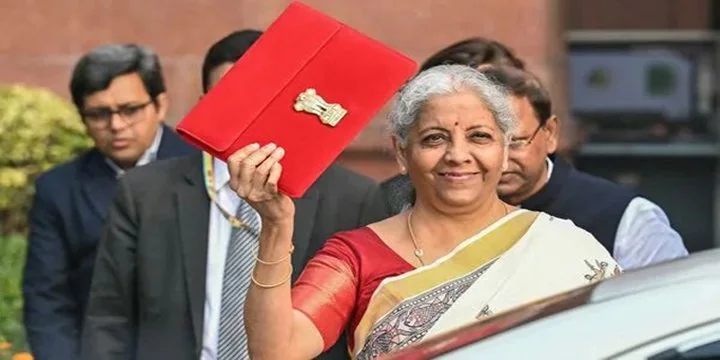
On 1 Feb 2025, Union Minister for Finance and Corporate Affairs Smt Nirmala Sitharaman presented the Union Budget 2025-26 in Parliament. The national budget is prepared by the budget division under the Department of Economic Affairs (DEA), the Ministry of Finance and is presented to the Parliament for discussion and approval. ENGINES OF DEVELOPMENT CORE OBJECTIVES OF THE BUDGET The budget focuses on 5 key objectives: Accelerating Growth: Aiming for faster economic progress.
On 1 Feb 2025, Union Minister for Finance and Corporate Affairs Smt Nirmala Sitharaman
presented the Union Budget 2025-26 in Parliament.
WHO PREPARES IT?
The
national budget is prepared by the budget division under the Department of Economic Affairs (DEA), the
Ministry of Finance and is
presented to the Parliament for discussion and approval.
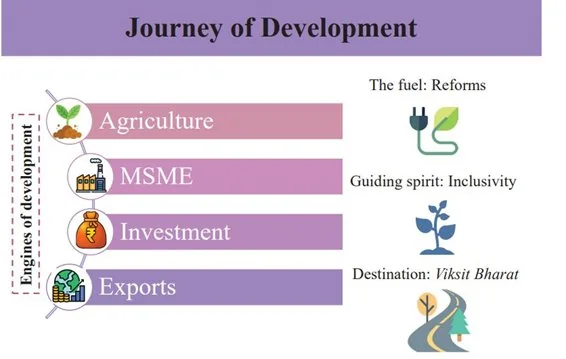
ENGINES OF DEVELOPMENT
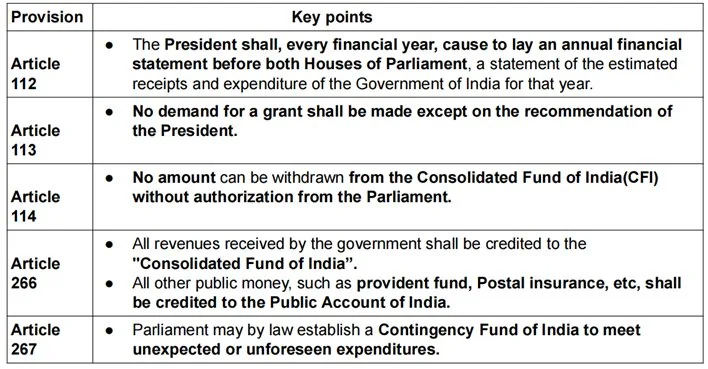
CORE OBJECTIVES OF THE BUDGET
- The budget focuses on 5 key objectives:
- Accelerating Growth: Aiming for faster economic progress.
- Securing Inclusive Development: Ensuring that growth benefits all sections of society.
- Invigorating Private Sector Investments: Boosting investment from the private sector to create jobs and increase economic output.
- Uplifting Household Sentiments: Enhancing the financial confidence and well-being of households.
- Enhancing Spending Power of India’s Middle Class: Increasing the disposable income of the growing middle class in India.
BUDGET THEME
- India’s Growth Story
- India’s economy is the fastest-growing among major global economies, and structural reforms over the past decade have positioned the country as a rising global power. The focus for the next five years is on realizing "Sabka Vikas" (development for all) with balanced growth across regions.
- The Vision of "Viksit Bharat"
- The vision for a developed India includes:
- Zero Poverty: Eradicating poverty for all citizens.
- Quality Education: Providing 100% access to good education for every child.
- Affordable Healthcare: Ensuring access to high-quality healthcare for all.
- Skilled Workforce: Ensuring every Indian is skilled and employed.
- Women’s Economic Participation: Aiming for 70% women in the workforce.
- Agriculture: Positioning India as the "food basket of the world" through better support for farmers.
KEY DEVELOPMENT MEASURES
- The budget outlines measures targeting ten areas of development:
- Spurring Agricultural Growth and Productivity: Boosting farm productivity and sustainability.
- Building Rural Prosperity and Resilience: Ensuring rural areas thrive economically.
- Inclusive Growth: Ensuring no one is left behind as the country grows.
- Boosting Manufacturing and "Make in India": Focusing on self-reliance and strengthening India’s manufacturing sector.
- Supporting MSMEs: Strengthening small and medium-sized enterprises to drive growth.
- Employment-led Development: Creating more jobs through strategic economic policies.
- Investing in People, Economy, and Innovation: Fostering innovation and talent development to drive future growth.
- Securing Energy Supplies: Ensuring sustainable and secure energy sources.
- Promoting Exports: Expanding India's reach in global markets.
- Nurturing Innovation: Focusing on research, innovation, and technology for the future.
TRANSFORMATIVE REFORMS
- Over the next five years, reforms will focus on six crucial areas to enhance India’s growth and global competitiveness:
- Taxation: Streamlining tax policies for ease of doing business.
- Power Sector: Modernizing energy production and consumption.
- Urban Development: Improving urban infrastructure and development.
- Mining: Strengthening the mining sector for sustainable growth.
- Financial Sector: Reforming financial systems to support economic development.
- Regulatory Reforms: Simplifying regulations for a more business-friendly environment.
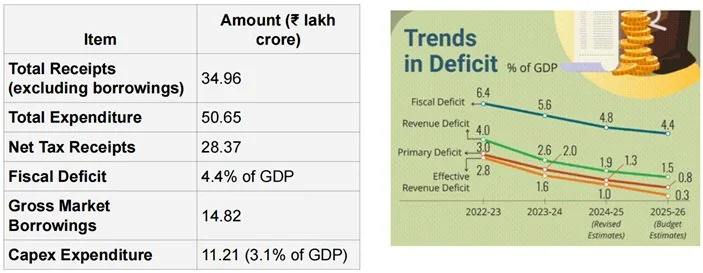
KEY INDICATORS
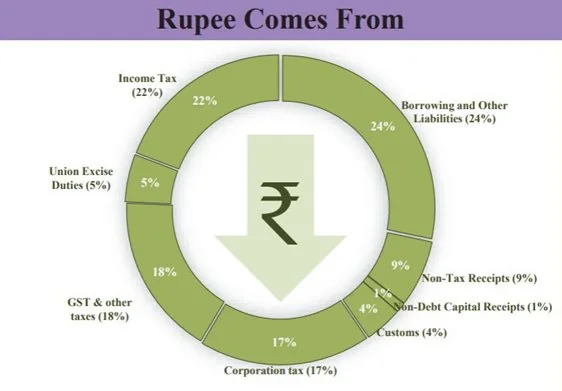
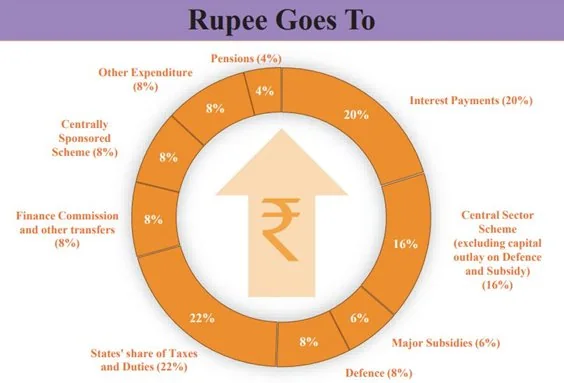
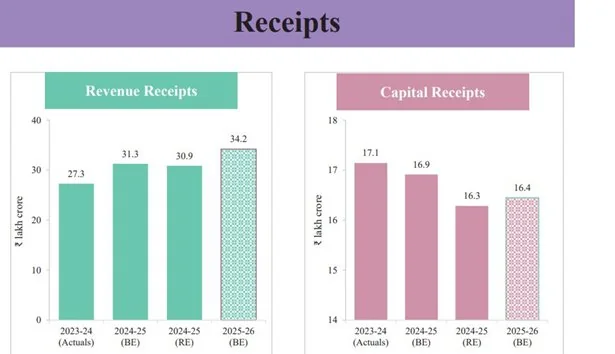
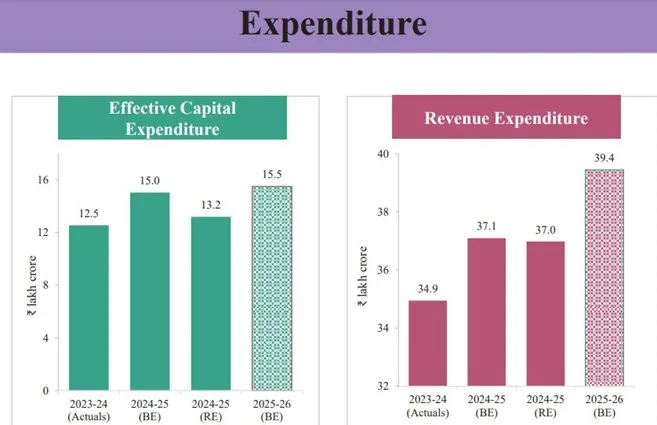
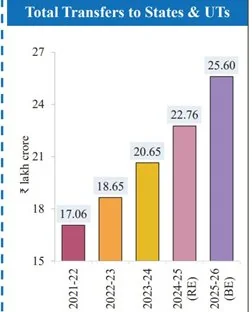
TRANSFERS TO STATES
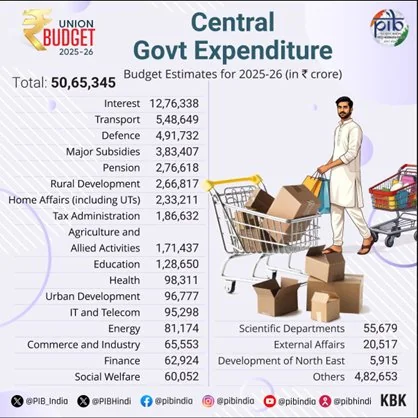
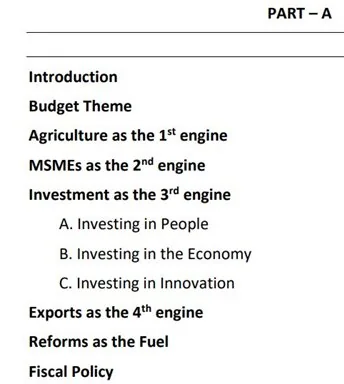
PARTS OF THE BUDGET
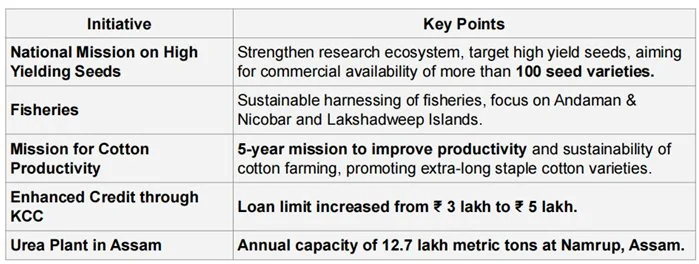
AGRICULTURE AS FIRST ENGINE OF GROWTH
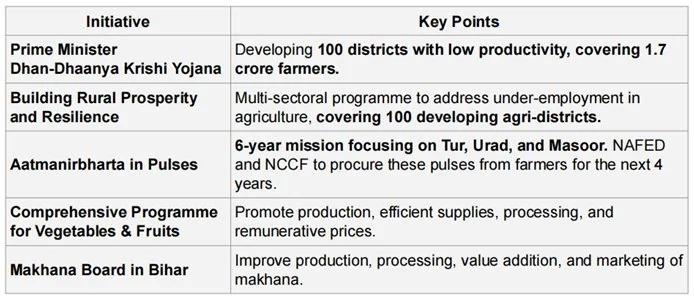
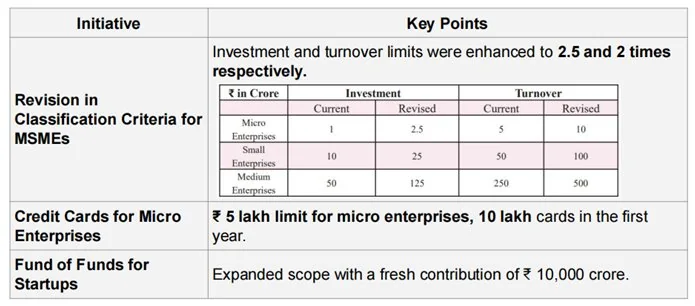
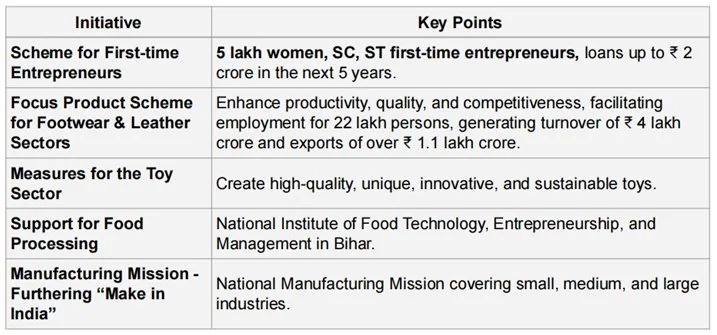
MSME AS SECOND ENGINE OF DEVELOPMENT
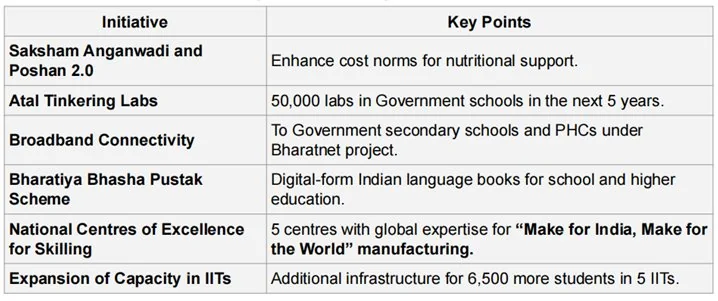
INVESTING IN PEOPLE (3RD ENGINE)
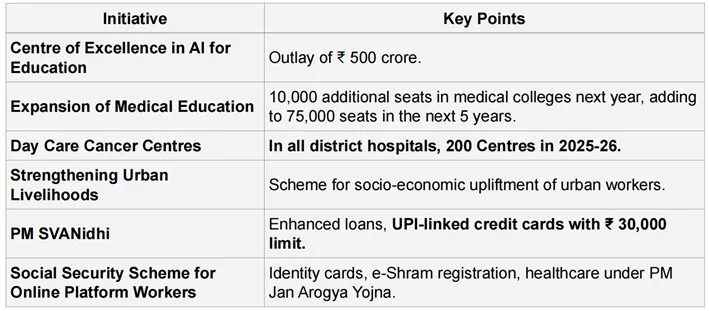
INVESTING IN THE ECONOMY (3RD PILLAR)
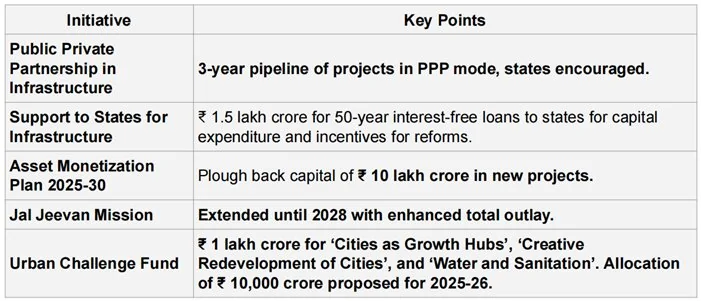
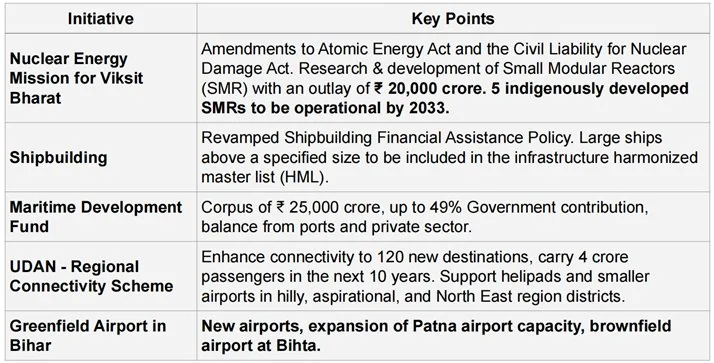
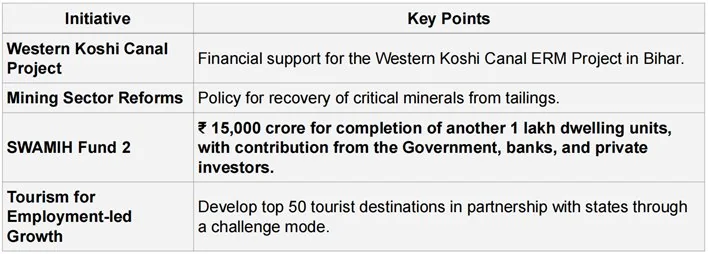
INVESTING IN INNOVATION (3RD PILLAR)
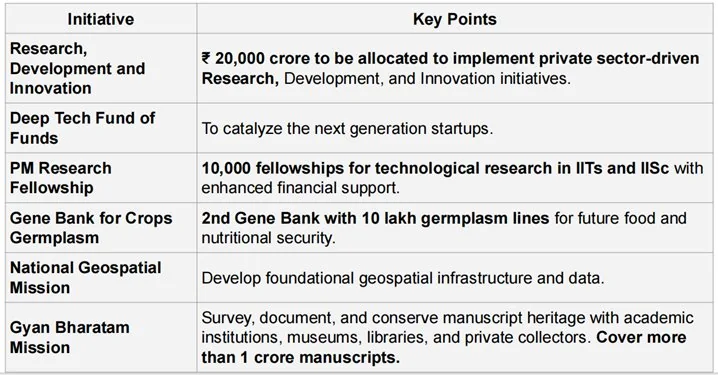
EXPORTS AS THE FOURTH ENGINE OF DEVELOPMENT
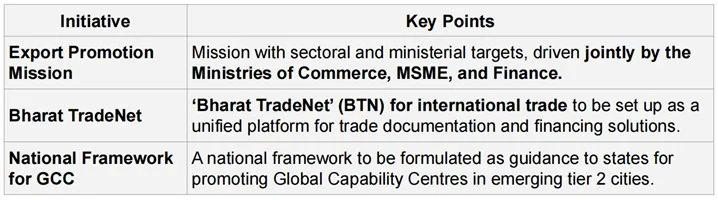
REFORMS AS FUEL
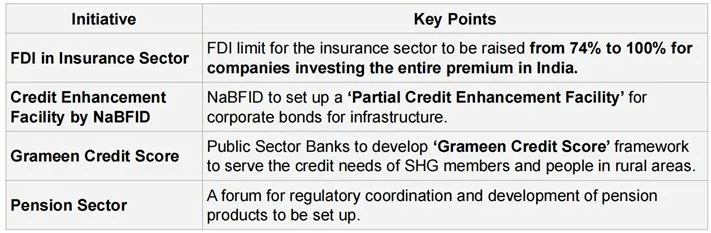
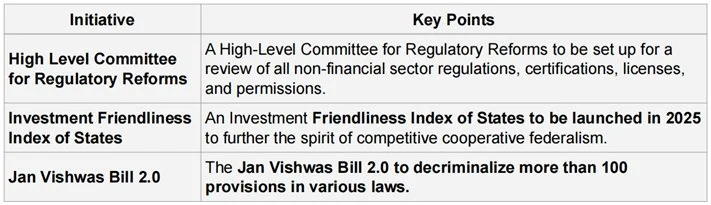
PART B: TAXATION REFORMS
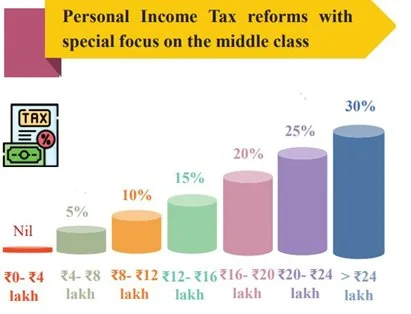
- No Personal Income Tax: Up to income of ₹ 12 lakh (average income of ₹ 1 lakh per month other than special rate income such as capital gains) under the new regime.
- Salaried Taxpayers: This limit will be ₹ 12.75 lakh for salaried taxpayers, due to a standard deduction of ₹ 75,000.
- Benefits: The new structure will substantially reduce the taxes of the middle class, leaving more money in their hands, boosting household consumption, savings, and investment.
- New Income-Tax Bill: To be clear and direct, making it simple to understand for taxpayers and tax administration, leading to tax certainty and reduced litigation.
- Revenue Forgone: About ₹ 1 lakh crore in direct taxes.
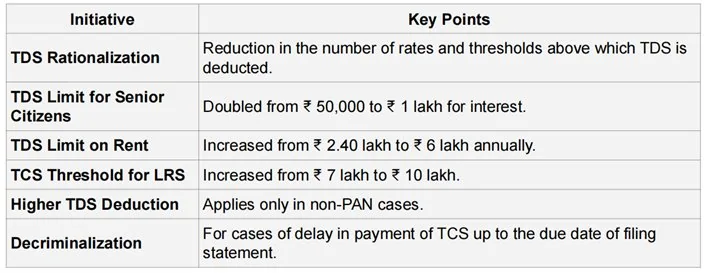
TDS/TCS RATIONALISATION
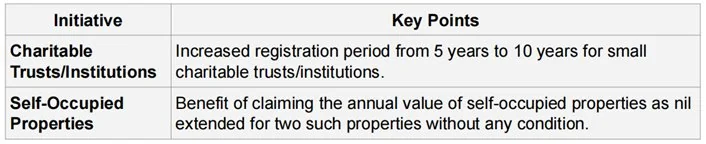
REDUCING COMPLIANCE BURDEN
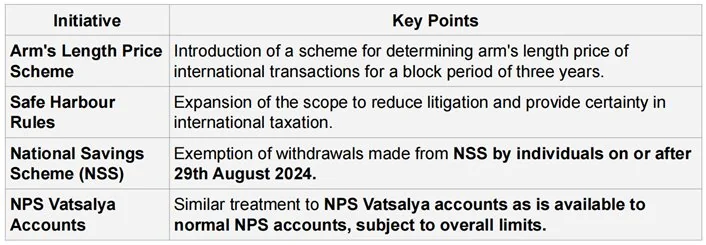
EASE OF DOING BUSINESS
EMPLOYMENT AND INVESTMENT
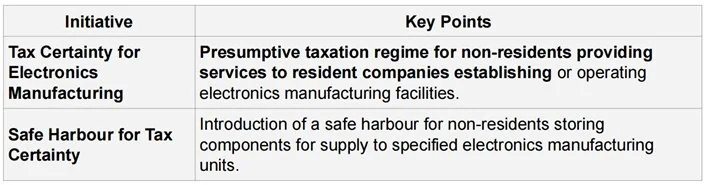
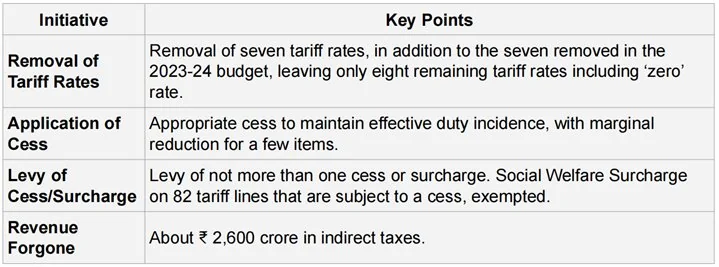
RATIONALISATION OF CUSTOMS TARIFF STRUCTURE FOR INDUSTRIALISATION GOODS
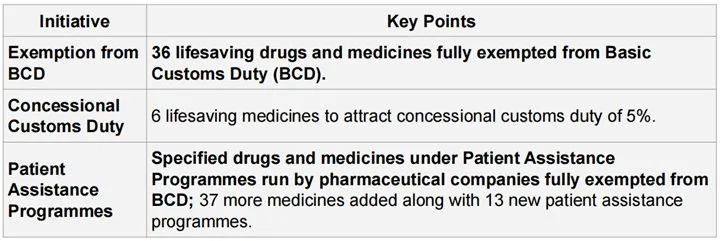
RELIEF ON IMPORT OF DRUGS
SUPPORT TO DOMESTIC MANUFACTURING & VALUE ADDITION
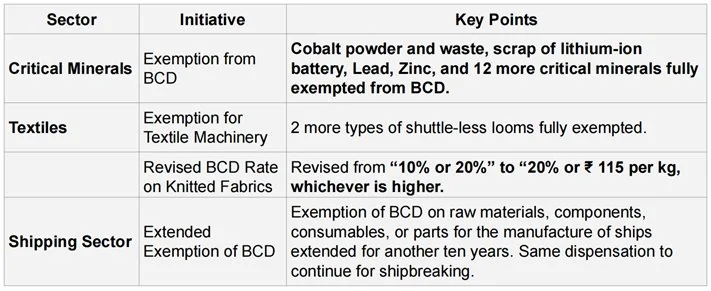
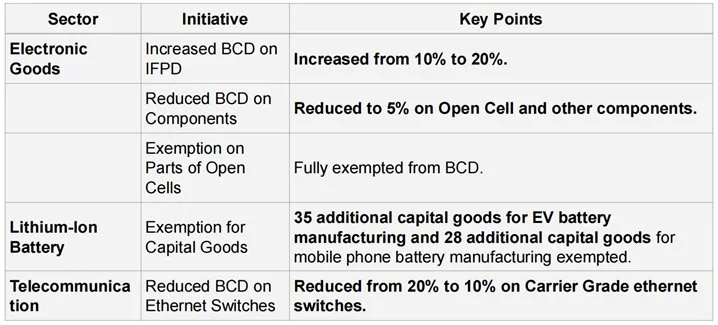
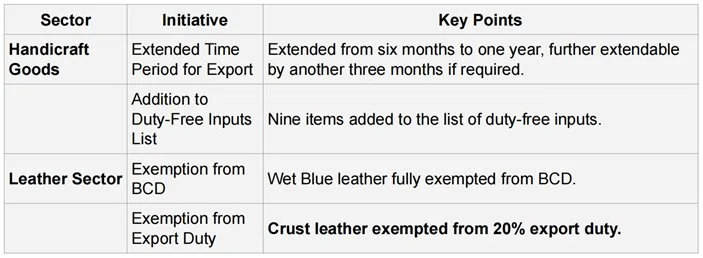
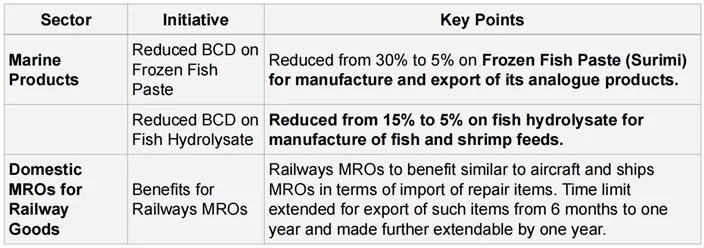
EXPORT PROMOTION
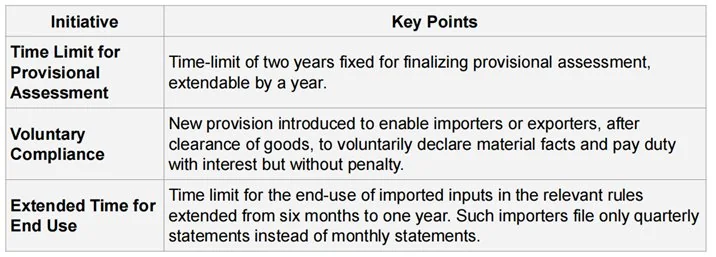
TRADE FACILITATION
 CONCLUSION
Union Minister of Finance and Corporate Affairs Smt. Nirmala Sitharaman said that
Democracy, Demography and Demand are
key pillars of Viksit Bharat journey. She said that the middle class gives strength of India’s growth and the Government has periodically hiked the
‘Nil tax’ slab in recognition to their contribution. She said the proposed new tax structure will
substantially boost consumption, savings and investment, by putting more money in the hands of the middle class.
- Prelims: Key facts, institutions, locations and terminology in the article.
- Mains: Connect the topic with Economy, Polity & Governance, Health.
- Revision: Use the article headings to prepare concise notes and answer-writing points.
Test your understanding
Questions from this article
Prelims practiceWith reference to UNION BUDGET 2025-26, consider the following statements:
- The budget focuses on 5 key objectives: Accelerating Growth: Aiming for faster economic progress. Securing Inclusive Development: Ensuring that growth benefits all sections of society. Invigorating Private Sector…
- Accelerating Growth: Aiming for faster economic progress.
- Securing Inclusive Development: Ensuring that growth benefits all sections of society.
Which of the statements given above are correct?
- 1 and 2 only
- 2 and 3 only
- 1 and 3 only
- 1, 2 and 3
View answer
Answer: (d) 1, 2 and 3. All three statements are drawn from the article.
Mains practiceDiscuss the background, key issues and significance of UNION BUDGET 2025-26 for India.
Answer in 250 words.
View answer approach
- ENGINES OF DEVELOPMENT
- CORE OBJECTIVES OF THE BUDGET
- BUDGET THEME
- KEY DEVELOPMENT MEASURES
- TRANSFORMATIVE REFORMS
Frequently asked questionsFrequently asked questions
Why is Union Budget 2025-26 in the news?
On 1 Feb 2025, Union Minister for Finance and Corporate Affairs Smt Nirmala Sitharaman presented the Union Budget 2025-26 in Parliament. The national budget is prepared by the budget division under the Department of Economic Affairs (DEA), the Ministry of Finance and is presented to the Parliament for discussion and approval.
What are the key facts about Union Budget 2025-26?
ENGINES OF DEVELOPMENT CORE OBJECTIVES OF THE BUDGET The budget focuses on 5 key objectives: Accelerating Growth: Aiming for faster economic progress. Securing Inclusive Development: Ensuring that growth benefits all sections of society. Invigorating Private Sector Investments: Boosting investment from the private sector to create jobs and increase economic output.
Why is Union Budget 2025-26 important for UPSC preparation?
The topic connects current developments with Economy, Polity & Governance, Health and is relevant for both objective revision and analytical answer writing.