UPSC Current Affairs
Theatre Commands: Meaning, Structure and Significance for India
A theatre command integrates personnel and capabilities from different armed services under a unified commander for a defined geographical or functional area. The reform aims to improve joint planning, resource use and operational effectiveness while requiring careful command and organisational design.
VRAuthor Desk
3 min read
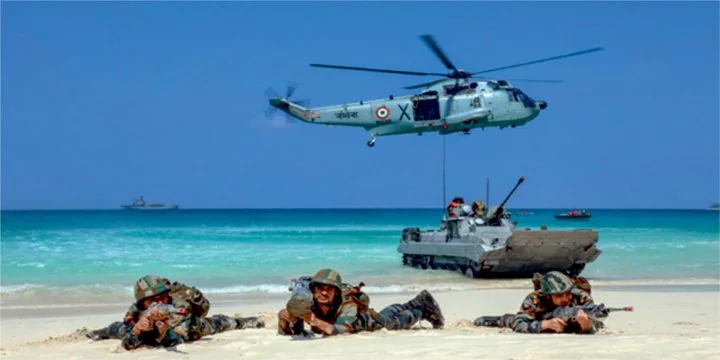
In brief: A theatre command integrates personnel and capabilities from different armed services under a unified commander for a defined geographical or functional area. The reform aims to improve joint planning, resource use and operational effectiveness while requiring careful command and organisational design.
A theatre command integrates personnel and capabilities from different armed services under a unified commander for a defined geographical or functional area. The reform aims to improve joint planning, resource use and operational effectiveness while requiring careful command and organisational design.
WHY IN NEWS ?
- The Inter-Services Organisations (Command, Control and Discipline) Bill, 2023, was introduced in the Lok Sabha on March 15.
- It provides disciplinary powers to the commanders heading tri-services organisations.
- It is a requisite precursor to the creation of unified theatre commands, which are along-awaited reform.
WHAT ARE THEATRE COMMANDS?
- Integrated Theatre Commands of the Indian Armed Forces are varying degrees of synergy and cross–service cooperation between the military wings of the Indian Armed Forces.
- Combining the resources of all three services ( the Army, Navy, and Air Force) under a single commander to secure a particular geographic area is known as integrated theatre commands.
- India currently has service–specific commands system. However, joint and integrated commands, also known as unified commands and further divided into theatre or functional commands, have been set up and more are proposed.
- The only fully functional theatre command is the Andaman and Nicobar Command set up in 2001.
- While the Strategic Forces Command, set up in 2003, is an integrated functional command or specified combatant command.
CURRENT COMMANDS IN INDIA:
- The Indian armed forces currently have 17 commands.There are seven commands each of the Army (Northern, Eastern, Southern, Western, Central, South-western and Army Training Command).
- The Air Force has seven commands (Western, Eastern, Southern, Southwestern, Central, Training and Maintenance).
- The Navy has three commands (Western, Eastern and Southern).
- A four-star military commander is in charge of each command.
ADVANTAGES OF THEATRE COMMANDS:
- The aim is to bring all the 17 individual commands into four or five unified or theatre commands. It might also have two more functional commands for training and logistics.
- The rationale being this will help in better planning and military response and also bring down cost.
- While the cost may go up in the immediate future since all theatres would have to be armed with sufficient systems, it will prove to be cost-effective in the long term as all acquisition will be a unified one.
- The need for a unified approach to war fighting was brought out in the deliberations after the 1999 Kargil battle.
SYLLABUS: PRELIMS, CURRENT AFFAIRS
Why This Topic Matters for UPSC
- Prelims: Revise definitions, institutions, locations, reports and factual features connected with Theatre Commands: Meaning, Structure and Significance for India.
- Mains: Link the topic with Defence, Internal Security, Military Reforms and organise the answer under background, significance, challenges and way forward.
- Interview: Explain the issue in balanced language and distinguish verified facts from opinion.
Key Takeaway
A theatre command integrates personnel and capabilities from different armed services under a unified commander for a defined geographical or functional area. The reform aims to improve joint planning, resource use and operational effectiveness while requiring careful command and organisational design.
- Prelims: Revise the key facts and terminology.
- Mains: Connect the topic with Defence, Internal Security, Military Reforms.
- Revision: Prepare notes under background, features, significance, challenges and way forward.
Test your understanding
Questions from this article
Prelims practiceWith reference to THEATRE COMMANDS, consider the following statements:
- The Inter-Services Organisations (Command, Control and Discipline) Bill, 2023, was introduced in the Lok Sabha this year.
- It provides disciplinary powers to the commanders heading tri-services organisations.
- It is a requisite precursor to the creation of unified theatre commands, which are along-awaited reform.
Which of the statements given above are correct?
- 1 and 2 only
- 2 and 3 only
- 1 and 3 only
- 1, 2 and 3
View answer
Answer: (d) 1, 2 and 3. All three statements are drawn from the article.
Mains practiceDiscuss the background, key issues and significance of THEATRE COMMANDS for India.
Answer in 250 words.
View answer approach
- WHY IN NEWS ?
- WHAT ARE THEATRE COMMANDS?
- CURRENT COMMANDS IN INDIA:
- ADVANTAGES OF THEATRE COMMANDS:
Frequently asked questionsFrequently asked questions
What is Theatre Commands?
A theatre command integrates personnel and capabilities from different armed services under a unified commander for a defined geographical or functional area. The reform aims to improve joint planning, resource use and operational effectiveness while requiring careful command and organisational design.
Why is Theatre Commands important for UPSC?
It connects current developments with Defence, Internal Security, Military Reforms and supports factual revision as well as analytical answer writing.
How should aspirants prepare Theatre Commands?
Prepare a short definition, key facts, institutional or legal framework, significance, challenges and a balanced way forward. Revise the specific developments and examples explained in the article.