UPSC Current Affairs
Snow Leopards
Context: Recently, the Padmaja Naidu Himalayan Zoological Park (PNHZP) in Darjeeling has made headlines for successfully breeding 77 snow leopards since the 1980s. With this it got placing next only to New York’s Bronx Zoo, which has produced 80 snow leopard cubs since it started breeding experiments with the species in the 1960s. About Snow Leopard: The snow leopard commonly known as the ounce, is a species of large cat in the genus Panthera of the family Felidae.
VRAuthor Desk
2 min read
Context: Recently, the Padmaja Naidu Himalayan Zoological Park (PNHZP) in Darjeeling has made headlines for successfully breeding 77 snow leopards since the 1980s. With this it got placing next only to New York’s Bronx Zoo, which has produced 80 snow leopard cubs since it started breeding experiments with the species in the 1960s. About Snow Leopard: The snow leopard commonly known as the ounce, is a species of large cat in the genus Panthera of the family Felidae.
Context:
- Recently, the Padmaja Naidu Himalayan Zoological Park (PNHZP) in Darjeeling has made headlines for successfully breeding 77 snow leopards since the 1980s.
- With this it got placing next only to New York’s Bronx Zoo, which has produced 80 snow leopard cubs since it started breeding experiments with the species in the 1960s.
About Snow Leopard:
- The snow leopard commonly known as the ounce, is a species of large cat in the genus Panthera of the family Felidae.
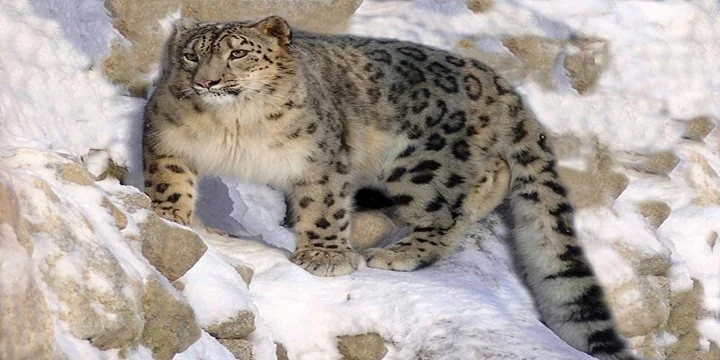
- It’s fur is whitish to grey with black spots on the head and neck, with larger rosettes on the back, flanks and bushy tail.
- The fur is thick with hairs measuring from 5 to 12 cm (2.0 to 4.7 in) in length, and its underbelly is whitish in color.
- The snow leopard shows different kind of adaptations for living in a cold, mountainous environments. Its small rounded ears help to minimize heat loss.
- It is solitary and mostly active at dawn till early morning, and again in afternoons and early evenings.
- They mostly rest near the cliffs and ridges that provide vantage points and shade.
- The species is native to the mountain ranges of Central and South Asia.
- It inhabits alpine and subalpine zones at elevations of 3,000–4,500 m, which ranges from eastern Afghanistan, the Himalayas and the Tibetan Plateau to southern Siberia, Mongolia and western China.
- In the northern part of its range, it also lives at lower elevations.
- It is listed as Vulnerable on the IUCN Red List due to fact that the global population is estimated to number fewer than 10,000 mature individuals and is expected to decline about 10% by 2040.
- It is mainly threatened by poaching and habitat destruction and infrastructural developments.
- Prelims: Key facts, institutions, locations and terminology in the article.
- Mains: Connect the topic with Polity & Governance.
- Revision: Use the article headings to prepare concise notes and answer-writing points.
Test your understanding
Questions from this article
Prelims practiceWith reference to Snow Leopards, consider the following statements:
- Recently, the Padmaja Naidu Himalayan Zoological Park (PNHZP) in Darjeeling has made headlines for successfully breeding 77 snow leopards since the 1980s.
- With this it got placing next only to New York’s Bronx Zoo, which has produced 80 snow leopard cubs since it started breeding experiments with the species in the 1960s.
- The snow leopard commonly known as the ounce, is a species of large cat in the genus Panthera of the family Felidae.
Which of the statements given above are correct?
- 1 and 2 only
- 2 and 3 only
- 1 and 3 only
- 1, 2 and 3
View answer
Answer: (d) 1, 2 and 3. All three statements are drawn from the article.
Mains practiceDiscuss the background, key issues and significance of Snow Leopards for India.
Answer in 250 words.
View answer approach
- Context:
- About Snow Leopard:
- Background and context
- Key facts and institutional framework
- Significance and way forward
Frequently asked questionsFrequently asked questions
Why is Snow Leopards in the news?
Context: Recently, the Padmaja Naidu Himalayan Zoological Park (PNHZP) in Darjeeling has made headlines for successfully breeding 77 snow leopards since the 1980s. With this it got placing next only to New York’s Bronx Zoo, which has produced 80 snow leopard cubs since it started breeding experiments with the species in the 1960s.
What are the key facts about Snow Leopards?
About Snow Leopard: The snow leopard commonly known as the ounce, is a species of large cat in the genus Panthera of the family Felidae. It’s fur is whitish to grey with black spots on the head and neck, with larger rosettes on the back, flanks and bushy tail. The fur is thick with hairs measuring from 5 to 12 cm (2.0 to 4.7 in) in length, and its underbelly is whitish in color.
Why is Snow Leopards important for UPSC preparation?
The topic connects current developments with Polity & Governance and is relevant for both objective revision and analytical answer writing.