UPSC Current Affairs
Smart/Precision Farming
The Centre is planning to invest Rs 6,000 crore to promote precision farming or smart farming using advanced technologies like AI, drones, and data analytics to enhance crop yields while minimizing environmental impacts. Precision farming, or precision agriculture, utilizes advanced technologies such as GPS, sensors, drones, and data analytics to monitor and manage crop production with high accuracy. The primary goal is to optimize resource use—like water, fertilizers, and pesticides—based on specific site conditions, thereby maximizing yield while minimizing waste and environmental impact.
VRAuthor Desk
3 min read
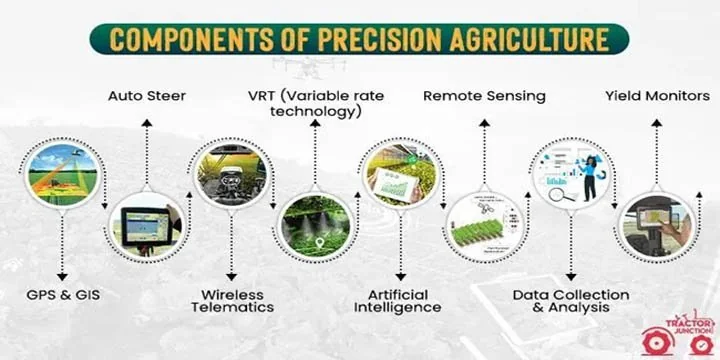
The Centre is planning to invest Rs 6,000 crore to promote precision farming or smart farming using advanced technologies like AI, drones, and data analytics to enhance crop yields while minimizing environmental impacts. Precision farming, or precision agriculture, utilizes advanced technologies such as GPS, sensors, drones, and data analytics to monitor and manage crop production with high accuracy. The primary goal is to optimize resource use—like water, fertilizers, and pesticides—based on specific site conditions, thereby maximizing yield while minimizing waste and environmental impact.
Why in News?
The
Centre is planning to invest
Rs 6,000 crore to promote
precision farming or
smart farming using advanced technologies like
AI,
drones, and
data analytics to enhance
crop yields while minimizing
environmental impacts.
Precision farming, or
precision agriculture, utilizes advanced technologies such as
GPS,
sensors,
drones, and
data analytics to monitor and manage crop production with high accuracy. The primary goal is to
optimize resource use—like
water,
fertilizers, and
pesticides—based on specific site conditions, thereby maximizing
yield while minimizing waste and environmental impact.
KEY HIGHLIGHTS
- Smart Precision Horticulture Programme: Under the existing Mission for Integrated Development of Horticulture (MIDH), this program will cover 15,000 acres over five years (2024-25 to 2028-29) and aims to benefit approximately 60,000 farmers.
- Agriculture Infrastructure Fund (AIF): Launched during the COVID-19 pandemic, AIF supports financing for infrastructure projects related to smart agriculture, offering loans with a 3% interest subvention for farmers and farmer communities to adopt technological solutions.
- Technological Solutions: These include:
- Farm automation
- Purchase of drones
- Specialized sensors
- Blockchain and AI applications
- Remote sensing and IoT implementations
- International Collaboration: The Centre is exploring partnerships with countries like the Netherlands and Israel to incorporate modern farming technologies through Centres of Excellence (CoEs), targeting 100 CoEs over the next five years.
- Currently, 32 CoEs have been established under the Indo-Israel Agriculture Project across 14 states.
- Precision Farming Development Centres (PFDCs): The government has set up 22 PFDCs in various states to test and adapt new technologies for local agricultural needs.
- Geographical Distribution of PFDCs: Located in states including Tamil Nadu, Karnataka, Madhya Pradesh, Odisha, Rajasthan, and others, these centres aim to facilitate the adoption of precision farming techniques.
- Funding for AI and Machine Learning Projects: The Centre also allocates funds to states/UTs for projects utilizing AI and machine learning under initiatives like the National e-Governance Plan in Agriculture.
BENEFITS
- Increased Productivity: Modified inputs to crop needs lead to higher yields and improved efficiency.
- Resource Optimization: Efficient use of water, fertilizers, and pesticides reduces waste and production costs.
- Environmental Benefits: Lower chemical usage minimizes soil and water contamination, promoting sustainability.
- Risk Management: Real-time data allows farmers to make informed decisions, mitigating risks from weather fluctuations and crop diseases.
CHALLENGES
- High Initial Cost: Significant investment in technology and infrastructure can be a barrier for small farmers.
- Technical Expertise: Farmers require training to effectively use precision tools and interpret data.
- Digital Divide: Limited internet access in rural areas restricts the adoption of precision farming technologies.
- Data Management: Processing large volumes of data necessitates specialized skills and software, often unavailable to small-scale farmers.
PRECISION FARMING IN INDIA
Context: While precision farming is an emerging approach in India, its implementation has primarily focused on
nutrient-use efficiency (NUE) and
water-use efficiency (WUE).
It has yet to be widely adopted in mainstream farming practices.
Area Under Precision Farming :
Currently, precision farming is at a
nascent stage in India, mainly adopted in states like
Punjab,
Haryana,
Maharashtra, and
Andhra Pradesh, typically in large commercial farms with advanced irrigation systems.
STEPS TAKEN IN INDIA
- National Mission on Sustainable Agriculture (NMSA) and Pradhan Mantri Krishi Sinchayee Yojana (PMKSY): Focus on enhancing water-use efficiency and soil health monitoring.
- Promotion of Technology: Use of drones, soil health cards, and satellite monitoring is being encouraged.
- Digital Public Infrastructure (DPI): Aimed at providing farmers access to technology and information.
- Precision Farming Development Centres (PFDCs): Development and dissemination of PF technology through 22 centres across the country.
- Agriculture Infrastructure Fund (AIF): Launched during COVID-19 to finance smart and precision agriculture projects.
- Prelims: Key facts, institutions, locations and terminology in the article.
- Mains: Connect the topic with Economy, Polity & Governance, Health.
- Revision: Use the article headings to prepare concise notes and answer-writing points.
Test your understanding
Questions from this article
Prelims practiceWith reference to Smart/Precision Farming, consider the following statements:
- Smart Precision Horticulture Programme: Under the existing Mission for Integrated Development of Horticulture (MIDH), this program will cover 15,000 acres over five years (2024-25 to 2028-29) and aims to benefit…
- Agriculture Infrastructure Fund (AIF): Launched during the COVID-19 pandemic, AIF supports financing for infrastructure projects related to smart agriculture, offering loans with a 3% interest subvention for farmers and…
- Technological Solutions: These include: Farm automation Purchase of drones Specialized sensors Blockchain and AI applications Remote sensing and IoT implementations
Which of the statements given above are correct?
- 1 and 2 only
- 2 and 3 only
- 1 and 3 only
- 1, 2 and 3
View answer
Answer: (d) 1, 2 and 3. All three statements are drawn from the article.
Mains practiceDiscuss the background, key issues and significance of Smart/Precision Farming for India.
Answer in 250 words.
View answer approach
- KEY HIGHLIGHTS
- BENEFITS
- CHALLENGES
- PRECISION FARMING IN INDIA
- STEPS TAKEN IN INDIA
Frequently asked questionsFrequently asked questions
Why is Smart/Precision Farming in the news?
The Centre is planning to invest Rs 6,000 crore to promote precision farming or smart farming using advanced technologies like AI, drones, and data analytics to enhance crop yields while minimizing environmental impacts. Precision farming, or precision agriculture, utilizes advanced technologies such as GPS, sensors, drones, and data analytics to monitor and manage crop production with high accuracy.
What are the key facts about Smart/Precision Farming?
The primary goal is to optimize resource use—like water, fertilizers, and pesticides—based on specific site conditions, thereby maximizing yield while minimizing waste and environmental impact. KEY HIGHLIGHTS Smart Precision Horticulture Programme: Under the existing Mission for Integrated Development of Horticulture (MIDH), this program will cover 15,000 acres over five years (2024-25 to 2028-29) and aims to benefit approximately 60,000 farmers. Agriculture Infrastructure Fund (AIF): Launched during the COVID-19 pandemic, AIF supports financing for infrastructure projects related to smart agriculture, offering loans with a 3% interest subvention for farmers and farmer communities to adopt…
Why is Smart/Precision Farming important for UPSC preparation?
The topic connects current developments with Economy, Polity & Governance, Health and is relevant for both objective revision and analytical answer writing.