UPSC Current Affairs
PM MODI’S SELF RELIANCE PUSH
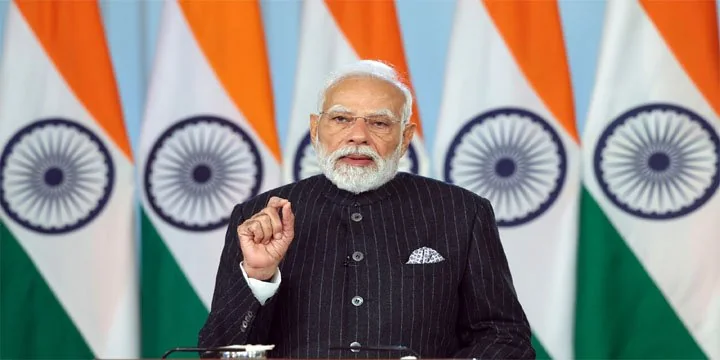
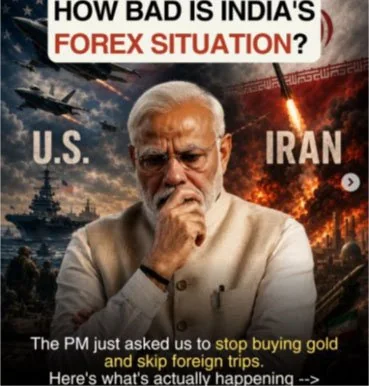
Background Prime Minister Narendra Modi appealed to citizens to support the country during the global crisis caused by tensions in West Asia. The Prime Minister made this appeal while addressing a public meeting in Hyderabad on May 10, 2026. He emphasized the need to conserve Foreign Exchange Reserves (Forex Reserves) and reduce dependence on imports.
VRAuthor Desk
6 min read
Background Prime Minister Narendra Modi appealed to citizens to support the country during the global crisis caused by tensions in West Asia. The Prime Minister made this appeal while addressing a public meeting in Hyderabad on May 10, 2026. He emphasized the need to conserve Foreign Exchange Reserves (Forex Reserves) and reduce dependence on imports.
 Background
- Prime Minister Narendra Modi appealed to citizens to support the country during the global crisis caused by tensions in West Asia.
- The Prime Minister made this appeal while addressing a public meeting in Hyderabad on May 10, 2026.
- He emphasized the need to conserve Foreign Exchange Reserves (Forex Reserves) and reduce dependence on imports.
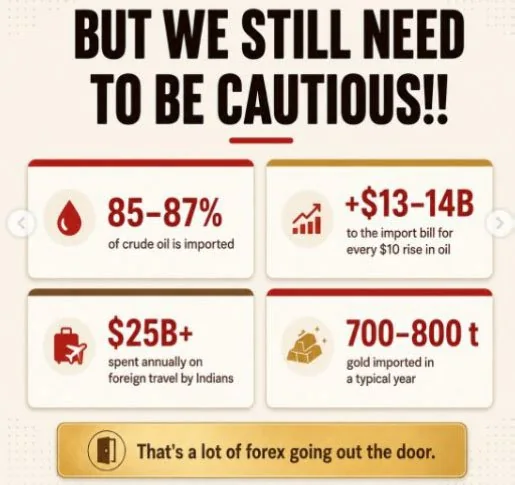
- The appeal came at a time when rising crude oil prices and high gold imports were increasing pressure on India’s economy.
- India’s gold imports reached nearly $72 billion in FY 2025–26, contributing to a widening trade deficit.
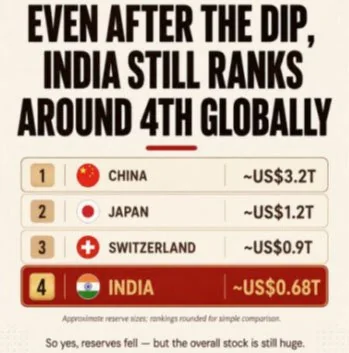
- India’s foreign exchange reserves were reported to be above $690 billion, but concerns remain regarding pressure from oil and gold imports.
- The Prime Minister linked the appeal with the vision of Atma Nirbhar Bharat or Self-Reliant India.
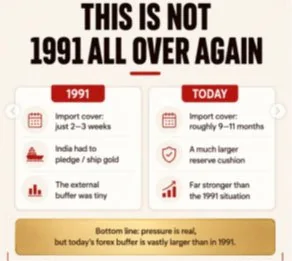
1991 V/S 2026
MAJOR APPEALS MADE BY THE PM
Reduction in Fuel Consumption
- The Prime Minister urged citizens to reduce the use of petrol and diesel in daily life.
- He advised people to use metro services wherever available.
- He encouraged the use of public transport and carpooling to reduce fuel consumption.
- He promoted the use of Electric Vehicles (EVs) to reduce dependence on imported crude oil.
- He suggested that goods should be transported more through railways rather than roadways.
- He stated that reducing fuel consumption would help India conserve foreign exchange reserves.
 Revival of Work From Home and Virtual Meetings
- The Prime Minister asked citizens and organizations to revive Work From Home (WFH) arrangements and virtual meetings.
- He stated that India had successfully adapted to digital working methods during the Covid-19 pandemic.
- He encouraged the use of video conferencing and remote work to reduce travel expenses and fuel consumption.
- He described these practices as the “need of the hour” during the present global crisis.
Appeal to Avoid Non-Essential Foreign Travel
- The Prime Minister appealed to citizens to postpone unnecessary foreign travel for at least one year.
- He specifically mentioned foreign vacations, destination weddings, and luxury overseas travel.
- He stated that increasing foreign travel among the middle class was causing a large outflow of foreign exchange.
- He urged citizens to prioritize national interest over non-essential spending abroad.
Appeal to Reduce Gold Purchases
- The Prime Minister urged people to avoid purchasing gold during festivals and weddings for at least one year.
- He stated that reducing gold imports would help conserve foreign exchange reserves.
- India is one of the world’s largest importers of gold, and heavy imports increase pressure on the trade deficit.
- The Prime Minister presented the appeal as a voluntary and patriotic contribution toward economic stability.
- The article noted that jewellery stocks declined after the Prime Minister’s appeal, as investors anticipated moderation in gold demand.
Promotion of “Vocal for Local”
- The Prime Minister encouraged citizens to identify imported goods used in daily life and gradually shift toward Indian-made products.
- He clarified that people should not immediately discard foreign products.
- He stated that the long-term goal should be to strengthen domestic manufacturing and self-reliance.
- He connected this appeal with the “Vocal for Local” campaign that had earlier been promoted during the Covid-19 pandemic.
Reduction in Cooking Oil Consumption
- The Prime Minister appealed to families to reduce cooking oil consumption by 10%.
- He stated that lower edible oil consumption would improve family health.
- He also noted that India imports large quantities of edible oil, and reducing consumption would lower import dependence.
Promotion of Natural Farming
- The Prime Minister appealed to farmers to reduce dependence on chemical fertilizers.
- He promoted natural farming practices to improve agricultural self-reliance.
- He stated that natural farming would reduce import dependence and support sustainable agriculture.
HISTORICAL CONTEXT OF GOLD CONTROL POLICIES
United States Gold Policy, 1933 :
- During the Great Depression, US President Franklin D. Roosevelt issued Executive Order 6102 in 1933.
- The order restricted private ownership of gold in the United States.
- Americans largely complied due to patriotism and fear of legal penalties.
- The policy helped strengthen US gold reserves and the financial position of the United States.
INDIA’S GOLD CONTROL ACT,1968
- In 1968, Finance Minister Morarji Desai introduced the Gold Control Act.
- The law was introduced after economic difficulties caused by the 1962 India-China War and the 1965 India-Pakistan War.
- The Act banned private ownership of gold bars and coins.
- Citizens were required to convert gold into jewellery and declare their holdings.
- The government expected citizens to cooperate in the national interest.
- However, demand for gold remained very high despite the restrictions.
- The policy led to increased gold smuggling, expansion of hawala networks, and growth of the black economy.
- Illegal trade and tax evasion increased significantly during this period.
- The Gold Control Act was eventually repealed in 1990.
DIFFERENCE BETWEEN 1968 POLICY & 2026 APPEAL
- The Gold Control Act of 1968 imposed compulsory legal restrictions, whereas the 2026 appeal is voluntary.
- The current government has not imposed any legal ban on gold ownership or purchases.
- Modern India has financial alternatives such as Gold ETFs, Sovereign Gold Bonds (SGBs), and digital gold investments.
- The present approach focuses on patriotism, awareness, and self-discipline rather than coercion.
MODERN ALTERNATIVES TO PHYSICAL GOLD
Sovereign Gold Bonds (SGBs) [Discontinued since 2025]
- Sovereign Gold Bonds (SGBs) are government securities denominated in grams of gold.
- The SGB Scheme was launched by the Government of India on 30 October 2015.
- SGBs were issued by the Reserve Bank of India (RBI) on behalf of the Governmentof India (GOI).
- SGBs acted as a substitute for holding physical gold, allowing investors to invest in gold without storing it physically.
CURRENT STATUS OF SGBs
- As of May 2026, the Sovereign Gold Bond (SGB) scheme is no longer open for new subscriptions.
- The Government of India has discontinued issuing new tranches of SGBs.
- However, existing SGBs remain valid until maturity.
- Existing bonds continue to trade on stock exchanges (NSE/BSE).
- Investors cannot purchase new SGBs directly from the RBI
- Investors can still buy SGB units from existing holders in the secondary market (NSE/BSE).
Gold ETFs
- Gold Exchange Traded Funds (ETFs) allow investors to invest in gold digitally.
- Gold ETFs reduce storage risks associated with physical gold.
Digital Gold
- Digital gold allows people to purchase and store gold online in small quantities.
- Digital platforms provide easy access to gold investment without physical handling.
WHY GOLD DEMAND REMAINS STRONG IN INDIA?
- Gold is considered a symbol of wealth, security, and prosperity in Indian society.
- Gold plays an important role in weddings, festivals, and religious traditions.
- Many households consider physical gold a safe investment during inflation and economic uncertainty.
- Rural and semi-urban families often trust physical assets more than financial instruments.
ECONOMIC IMPORTANCE OF THE APPEAL
- Reduced gold and fuel imports can help lower India’s trade deficit.
- Lower imports can reduce pressure on foreign exchange reserves.
- Reduced import dependence can help stabilize the Indian Rupee.
- More domestic savings may flow into productive investments such as manufacturing and infrastructure.
- Increased investment can support economic growth and job creation.
CHALLENGES ASSOCIATED WITH THE SCHEME
Cultural Attachment to Gold
- Gold buying is deeply linked with Indian cultural traditions and social customs.
- Weddings and festivals are major periods of gold consumption in India.
- Therefore, changing public behavior regarding gold purchases may be difficult.
Risk of Smuggling
- Historical experience shows that excessive restrictions on gold can increase smuggling activities.
- Illegal trade and black market networks may expand if harsh controls are introduced.
- Therefore, voluntary cooperation is considered more effective than strict legal enforcement.
- Prelims: Key facts, institutions, locations and terminology in the article.
- Mains: Connect the topic with Economy, International Relations, Polity & Governance.
- Revision: Use the article headings to prepare concise notes and answer-writing points.
Test your understanding
Questions from this article
Prelims practiceWith reference to PM MODI’S SELF RELIANCE PUSH, consider the following statements:
- Prime Minister Narendra Modi appealed to citizens to support the country during the global crisis caused by tensions in West Asia.
- The Prime Minister made this appeal while addressing a public meeting in Hyderabad on May 10, 2026.
- He emphasized the need to conserve Foreign Exchange Reserves (Forex Reserves) and reduce dependence on imports.
Which of the statements given above are correct?
- 1 and 2 only
- 2 and 3 only
- 1 and 3 only
- 1, 2 and 3
View answer
Answer: (d) 1, 2 and 3. All three statements are drawn from the article.
Mains practiceDiscuss the background, key issues and significance of PM MODI’S SELF RELIANCE PUSH for India.
Answer in 250 words.
View answer approach
- 1991 V/S 2026
- MAJOR APPEALS MADE BY THE PM
- HISTORICAL CONTEXT OF GOLD CONTROL POLICIES
- United States Gold Policy, 1933 :
- INDIA’S GOLD CONTROL ACT,1968
Frequently asked questionsFrequently asked questions
Why is Pm Modi’S Self Reliance Push in the news?
Background Prime Minister Narendra Modi appealed to citizens to support the country during the global crisis caused by tensions in West Asia. The Prime Minister made this appeal while addressing a public meeting in Hyderabad on May 10, 2026.
What are the key facts about Pm Modi’S Self Reliance Push?
He emphasized the need to conserve Foreign Exchange Reserves (Forex Reserves) and reduce dependence on imports. The appeal came at a time when rising crude oil prices and high gold imports were increasing pressure on India’s economy. India’s gold imports reached nearly $72 billion in FY 2025–26, contributing to a widening trade deficit.
Why is Pm Modi’S Self Reliance Push important for UPSC preparation?
The topic connects current developments with Economy, International Relations, Polity & Governance and is relevant for both objective revision and analytical answer writing.