UPSC Current Affairs
One Sun One World One Grid
In November, 2024, India is actively engaged in discussions with several nations, including Oman, UAE, Saudi Arabia, Maldives, and Singapore, to establish cross-border electricity transmission lines as part of the ambitious One Sun One World One Grid (OSOWOG)… ABOUT OSOWOG Launch: OSOWOG was proposed by Indian Prime Minister Narendra Modi at the 2018 ISA Assembly. It envisions a global interconnected solar grid that shares solar energy across countries, ensuring continuous access to clean energy.
VRAuthor Desk
4 min read
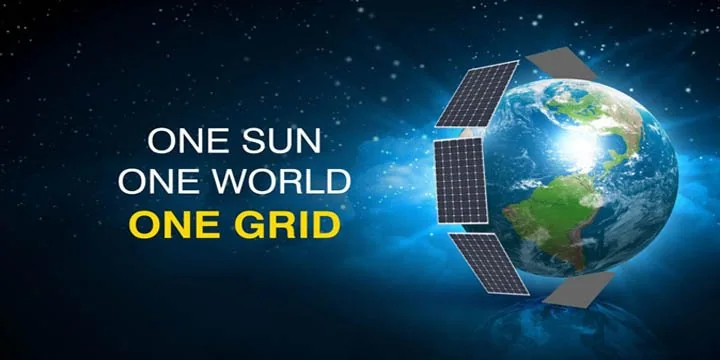
In November, 2024, India is actively engaged in discussions with several nations, including Oman, UAE, Saudi Arabia, Maldives, and Singapore, to establish cross-border electricity transmission lines as part of the ambitious One Sun One World One Grid (OSOWOG)… ABOUT OSOWOG Launch: OSOWOG was proposed by Indian Prime Minister Narendra Modi at the 2018 ISA Assembly. It envisions a global interconnected solar grid that shares solar energy across countries, ensuring continuous access to clean energy.
- In November, 2024, India is actively engaged in discussions with several nations, including Oman, UAE, Saudi Arabia, Maldives, and Singapore, to establish cross-border electricity transmission lines as part of the ambitious One Sun One World One Grid (OSOWOG)
- This project was 1st proposed by Prime Minister Narendra Modi in 2018 during the inaugural Assembly of the International Solar Alliance (ISA).
ABOUT OSOWOG
- Launch: OSOWOG was proposed by Indian Prime Minister Narendra Modi at the 2018 ISA Assembly. It envisions a global interconnected solar grid that shares solar energy across countries, ensuring continuous access to clean energy.
- Collaboration: In COP26 (2021), the Green Grids Initiative (GGI), launched by the UK, merged with OSOWOG into GGI-OSOWOG to promote renewable energy and ensure net-zero emissions by 2030.
Implementation Phases
- Phase 1: Connect India’s grid to neighboring regions in South Asia, Middle East, and Southeast Asia.
- Phase 2: Expand the grid to Africa for broader energy sharing.
- Phase 3: Achieve a global interconnected grid by 2050, integrating 2,600 GW of renewable energy.
CORE OBJECTIVES
- Global Solar Grid: Link solar power grids across continents to share energy globally, ensuring that wherever the sun is shining, energy is available.
- Maximize Renewable Energy: Shift energy production from fossil fuels to cleaner sources, balancing global energy needs with solar power.
- International Cooperation: promote collaboration to ensure equitable, sustainable energy access for all countries.
INDIA’S ROLE
- Leadership: India leads the OSOWOG initiative through ISA, aiming for 500 GW of non-fossil fuel electricity by 2030 and Net Zero by 2070.
- Energy Growth: India is the 4th largest renewable energy producer globally, with solar power playing a central role.
- Grid Interconnections: India has established connections with Nepal, Bangladesh, and Myanmar, and is negotiating with other nations like Sri Lanka, UAE, and Saudi Arabia.
INDIA’S STRATEGIC SHIFT:
- Energy Demand: India will account for 25% of global energy demand growth by 2040, making solar power crucial for energy security.
- Air Pollution: Solar energy helps reduce pollution caused by fossil fuels.
- Water Crisis: Solar power is water-efficient, unlike coal-based energy that depletes water resources.
CHALLENGES
- Infrastructure: The need for large-scale grid development, energy storage systems, and battery technologies.
- Investment: OSOWOG requires $1 trillion in funding by 2030 for developing countries.
- Geopolitical Coordination: Successful implementation requires global cooperation, trade agreements, and regulatory harmonization.
KEY FACTS & FEATURES OF OSOWOG
- Purpose of OSOWOG:
- The OSOWOG initiative aims to create a global interconnected grid that allows countries to transfer renewable energy, particularly solar power, across borders.
- This grid will help countries to use renewable resources more efficiently, reduce reliance on fossil fuels, and optimize energy distribution across regions.
- India-Oman Power Link:
- One of the 1st projects under OSOWOG is the interconnection of India’s power grid with Oman’s grid.
- This link will help to enhance renewable energy flow between the two countries.
- A key aspect of this initiative is the creation of a shared network that enables the efficient transfer of renewable energy across regions.
- Surplus solar or wind energy in one area can be transferred to another region experiencing an energy deficit.
- Renewable Energy Integration:
- The initiative aims to integrate solar, wind, and hydro power from different regions, which will help to balance supply and demand peaks and improve grid stability.
- By connecting renewable energy sources across borders, countries can better manage their electricity needs, especially during peak times, and reduce their reliance on fossil fuels.
- Current and Future Electricity Exchanges:
- India currently exchanges about 4,100 MW of electricity with neighboring countries, including Nepal, Bangladesh, Bhutan, and Myanmar.
- This capacity is expected to increase to 7,000 MW by 2026-27 as new interconnections are developed, including the Oman link.
- Maximizing Solar Energy with Time-Zone Diversity:
- The idea behind OSOWOG is to leverage time-zone diversity—since the sun is always shining somewhere on Earth, different regions can generate solar power at different times of the day.
- This allows for continuous generation of solar energy, making the system more reliable and reducing the need for large-scale storage
- Proposed Projects under OSOWOG:
- In addition to the India-Oman link, other planned interconnections include discussions with the UAE, Saudi Arabia, and Singapore.
- A 1,000-km undersea power cable connecting Gujarat in India with Oman is also being explored.
- This would create a secure energy exchange route between the two countries.
- Prelims: Key facts, institutions, locations and terminology in the article.
- Mains: Connect the topic with International Relations, Polity & Governance.
- Revision: Use the article headings to prepare concise notes and answer-writing points.
Test your understanding
Questions from this article
Prelims practiceWith reference to One Sun One World One Grid, consider the following statements:
- In November, 2024, India is actively engaged in discussions with several nations, including Oman, UAE, Saudi Arabia, Maldives, and Singapore, to establish cross-border electricity transmission lines as part of the…
- This project was 1st proposed by Prime Minister Narendra Modi in 2018 during the inaugural Assembly of the International Solar Alliance (ISA).
- Launch: OSOWOG was proposed by Indian Prime Minister Narendra Modi at the 2018 ISA Assembly. It envisions a global interconnected solar grid that shares solar energy across countries, ensuring continuous access to clean…
Which of the statements given above are correct?
- 1 and 2 only
- 2 and 3 only
- 1 and 3 only
- 1, 2 and 3
View answer
Answer: (d) 1, 2 and 3. All three statements are drawn from the article.
Mains practiceDiscuss the background, key issues and significance of One Sun One World One Grid for India.
Answer in 250 words.
View answer approach
- ABOUT OSOWOG
- CORE OBJECTIVES
- INDIA’S ROLE
- INDIA’S STRATEGIC SHIFT:
- CHALLENGES
Frequently asked questionsFrequently asked questions
Why is One Sun One World One Grid in the news?
In November, 2024, India is actively engaged in discussions with several nations, including Oman, UAE, Saudi Arabia, Maldives, and Singapore, to establish cross-border electricity transmission lines as part of the ambitious One Sun One World One Grid (OSOWOG)… ABOUT OSOWOG Launch: OSOWOG was proposed by Indian Prime Minister Narendra Modi at the 2018 ISA Assembly.
What are the key facts about One Sun One World One Grid?
It envisions a global interconnected solar grid that shares solar energy across countries, ensuring continuous access to clean energy. Collaboration: In COP26 (2021), the Green Grids Initiative (GGI), launched by the UK, merged with OSOWOG into GGI-OSOWOG to promote renewable energy and ensure net-zero emissions by 2030. Implementation Phases Phase 1: Connect India’s grid to neighboring regions in South Asia, Middle East, and Southeast Asia.
Why is One Sun One World One Grid important for UPSC preparation?
The topic connects current developments with International Relations, Polity & Governance and is relevant for both objective revision and analytical answer writing.