UPSC Current Affairs
NEW RULES FOR ELEPHANT TRANSFERS
liberalises the conditions under which elephants may be transferred within or between States. THE LEGALITIES: Elephants are, according to the provisions of the Wildlife Protection Act, a Schedule 1 species and therefore, be it wild or captive, cannot be captured or traded under any circumstances. Section 12 of the Act allows Schedule I animals to be translocated for ‘special purposes’ such as: Education and scientific research.
VRAuthor Desk
2 min read
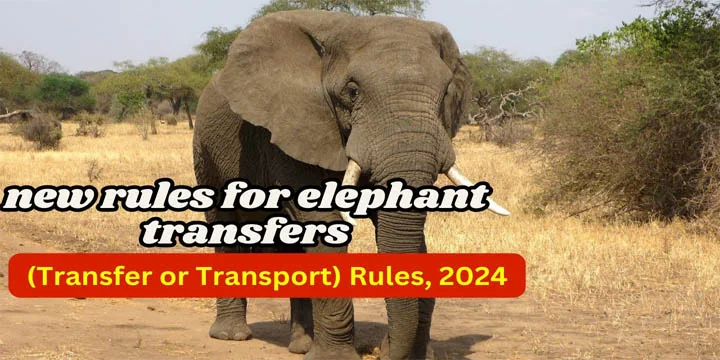
liberalises the conditions under which elephants may be transferred within or between States. THE LEGALITIES: Elephants are, according to the provisions of the Wildlife Protection Act, a Schedule 1 species and therefore, be it wild or captive, cannot be captured or traded under any circumstances. Section 12 of the Act allows Schedule I animals to be translocated for ‘special purposes’ such as: Education and scientific research.
liberalises the conditions under which elephants may be
transferred within or between States.
THE LEGALITIES:
- Elephants are, according to the provisions of the Wildlife Protection Act, a Schedule 1 species and therefore, be it wild or captive, cannot be captured or traded under any circumstances.
- Section 12 of the Act allows Schedule I animals to be translocated for ‘special purposes’ such as:
- Education and scientific research.
- Population management of wildlife without harming any wild animal and
- Collection of specimens for recognised zoos/museum
THE CAPTIVE ELEPHANTS
Captive elephants because of their historical role in:
- Forest management,
- Timber transport,
- Presence in estates of erstwhile royal families and
- In temple precincts for religious purpose
Can be owned and
therefore come under a special category.
Section 40 (2) of the Wildlife Protection Act, 1972 prohibits the acquisition, possession and transfer of a captive elephant without the written permission of the Chief Wildlife Warden of the State.
Until 2021, the
captive elephants were not allowed to be commercially traded. But an
amendment in 2021 allowed the transfer of elephants for ‘religious or any other purposes’.
THE NEW RULES
These rules provide new relaxations under which captive elephants can change owners or be transferred.
- These include, for instance, situations when an owner is no longer in a position to maintain the elephant or when a state’s Chief Wildlife Warden “deems it fit and proper” to transfer the elephant in circumstances which call for better upkeep of the elephant.
- Before a transfer within the State, an elephant’s health has to be ratified by a veterinarian, and the Deputy Conservator of Forests has to establish that the animal’s current habitat and prospective habitats are suitable.
- The Chief Wildlife Warden on receipt of such documents may choose to reject or approve the transfer.
- If the transfer involves moving the elephant outside of a State, similar conditions apply.
- Before a transfer is effected, the “genetic profile” of the elephant has to be registered with the Ministry of Environment, Forest and Climate Change.
- Earlier rules required that an elephant being transferred from say, Assam to Gujarat would need permissions from the Chief Wildlife Wardens of every State that the elephant would pass through in the process of being ferried by road. Now only the originating and recipient States’ permissions are required.
- Prelims: Key facts, institutions, locations and terminology in the article.
- Mains: Connect the topic with Environment, Polity & Governance, Health.
- Revision: Use the article headings to prepare concise notes and answer-writing points.
Test your understanding
Questions from this article
Prelims practiceWith reference to NEW RULES FOR ELEPHANT TRANSFERS, consider the following statements:
- Elephants are, according to the provisions of the Wildlife Protection Act, a Schedule 1 species and therefore, be it wild or captive, cannot be captured or traded under any circumstances.
- Section 12 of the Act allows Schedule I animals to be translocated for ‘special purposes’ such as: Education and scientific research. Population management of wildlife without harming any wild animal and Collection of…
- Education and scientific research.
Which of the statements given above are correct?
- 1 and 2 only
- 2 and 3 only
- 1 and 3 only
- 1, 2 and 3
View answer
Answer: (d) 1, 2 and 3. All three statements are drawn from the article.
Mains practiceDiscuss the background, key issues and significance of NEW RULES FOR ELEPHANT TRANSFERS for India.
Answer in 250 words.
View answer approach
- THE LEGALITIES:
- Background and context
- Key facts and institutional framework
- Significance and way forward
Frequently asked questionsFrequently asked questions
Why is New Rules For Elephant Transfers in the news?
liberalises the conditions under which elephants may be transferred within or between States. THE LEGALITIES: Elephants are, according to the provisions of the Wildlife Protection Act, a Schedule 1 species and therefore, be it wild or captive, cannot be captured or traded under any circumstances.
What are the key facts about New Rules For Elephant Transfers?
Section 12 of the Act allows Schedule I animals to be translocated for ‘special purposes’ such as: Education and scientific research. Population management of wildlife without harming any wild animal and Collection of specimens for recognised zoos/museum THE CAPTIVE ELEPHANTS Captive elephants because of their historical role in: Forest management, Timber transport, Presence in estates of… Section 40 (2) of the Wildlife Protection Act, 1972 prohibits the acquisition, possession and transfer of a captive elephant without the written permission of the Chief Wildlife Warden of the State.
Why is New Rules For Elephant Transfers important for UPSC preparation?
The topic connects current developments with Environment, Polity & Governance, Health and is relevant for both objective revision and analytical answer writing.