UPSC Current Affairs
Malaria Vaccine: Development, Types and Challenges
Malaria vaccines can reduce severe disease and deaths when combined with mosquito control, diagnosis and treatment. This guide explains how malaria vaccines work, the major vaccine options, funding, delivery and the scientific challenges that make malaria prevention difficult.
VRAuthor Desk
6 min read
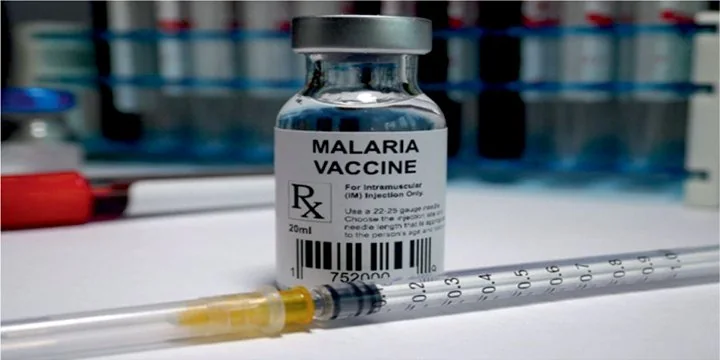
In brief: Malaria vaccines can reduce severe disease and deaths when combined with mosquito control, diagnosis and treatment. This guide explains how malaria vaccines work, the major vaccine options, funding, delivery and the scientific challenges that make malaria prevention difficult.
Malaria vaccines can reduce severe disease and deaths when combined with mosquito control, diagnosis and treatment. This guide explains how malaria vaccines work, the major vaccine options, funding, delivery and the scientific challenges that make malaria prevention difficult.
WHY IN NEWS ?
- Recently malaria vaccine developed by Oxford University and Serum Institute of India (SII) has been recommended for large-scale use by the World Health Organization (WHO).
- The R21/Matrix-M ,only the second malaria jab has shown up to 75% efficacy.
ABOUT NEW VACCINE :
- The vaccine was developed using US firm Novavax’s adjuvant technology.
- An adjuvant is a substance added to a jab to boost its immune response.
- The vaccine is shown to be effective in a wide range of settings, from places with high seasonal malaria to ones with perennial transmission.
- While efficacy from three doses waned after a year, a booster shot restored it. Cost is another factor in its favour.
- The $2-4 price tag per dose is comparable to other childhood jabs, enabling quicker scale-up at country-levels.
- The Phase III trials included 4,800 children aged 3-5 years from Burkina Faso, Kenya, Mali and Tanzania.
CHALLENGES IN DEVELOPING MALARIA VACCINES:
- A key reason for the delay is the stumbling blocks in vaccine development for ‘neglected’ diseases such as malaria, even tuberculosis and HIV-AIDS, which largely affect developing and under-developed countries.
- Malaria is not a virus, it’s not a bacterium.
- It’s a protozoan parasite, some thousands of times larger than a typical virus.
- A good measure of that is how many genes it has. COVID-19 has 13, malaria has about 5,500. This is one of the reasons that malaria is super complex.
- For some diseases, the return on investment is lower for vaccine manufacturers, which also translates into large funding shortfalls.
- Malaria, for instance, has a $3.8-billion funding gap globally, each year, according to RBM Partnership, a Switzerland- based non-profit.
- The complex genetic make-up of the parasite that causes malaria has also made the technology difficult to crack.
EXISTING VACCINES AGAINST MALARIA :
- Existing vaccine was developed by GSK, a UK drugmaker, and got approval in 2021.
- The vaccine acts against P. falciparum, the most deadly malaria parasite globally, and the most prevalent in Africa.
- It was engineered using genes from the outer protein of P. falciparum malaria parasite and a portion of a hepatitis B virus plus a chemical adjuvant to boost the immune response.
- However, only 18 million doses are available, to be allocated across 12 African countries over 2023-2025.
- With demand far outstripping the supply, the new vaccine’s scalability makes it an important development to “protect more children faster.
ADVANTAGES OF NEW VACCINE:
- Malaria had 247 million cases globally in 2021, with 619,000 deaths.
- Nearly half a million children, mainly in Africa, die of it each year.
- It’s prevalent in India despite massive strides—cases fell from 338,494 in 2019 to 176,522 in 2022, according to the National Vector Borne Disease Control Programme.
- With SII announcing a capacity of producing over 100 million doses a year (and soon 200 million), the vaccine, along with other public health measures, could aid India’s goal to eliminate malaria by 2030.
- A vaccine is a breakthrough addition to the malaria toolkit and can help get malaria control back on track.
- Children aged under 5 years are the most vulnerable group affected by malaria; in 2019, they accounted for 67% (274,000) of all malaria deaths worldwide.
WAY FORWARD:
- The vaccine is expected to be available globally in mid-2024.
- However, there’s no clarity on its availability in India yet. Indian rules ask for clinical trials to be conducted within the country.
- Broadly, the next immediate steps include completing the WHO prequalification process that assesses the quality, safety and efficacy of medicinal products, which would enable international procurement for a wider rollout.
SYLLABUS: MAINS, GS-3, SCIENCE AND TECHNOLOGY
SOURCE: THE HINDU
Context:
- Recently Cameroon in Africa became the first country in the world to launch the RTS, S malaria vaccine for children into its routine national immunisation services.
- According to the World Health Organization (WHO), the rollout follows a malaria vaccine pilot programme in Ghana, Kenya and Malawi, as efforts gather pace to improve vaccination against the disease in high risk areas.
- Twenty countries aim to roll out the vaccination drive this year, according to GAVI, the Vaccine Alliance, and other outfits which aim to provide equal access to new and underused vaccines for children living in the world’s poorest countries.
- According to the WHO’s World Malaria Report 2023, it is Africa that bears the highest malaria burden, accounting for 94% of cases and 95% of global malaria deaths in 2022.
- India in 2022, accounted for a staggering 66% of malaria cases in the WHO SouthEast Asia Region.
- According to the above report India and Indonesia accounted for about 94% of all malaria deaths in the WHO SouthEast Asia Region.
- Despite a 55% reduction in cases since 2015, India remains a significant contributor to the global malaria burden.
- The Health Ministry said that over the past 15 years, India has made progress in reducing the country’s malaria burden.
- India has a vision for a malariafree country by 2027 and elimination by 2030.
Who funds the vaccine?
- The current rollout is part of a UNICEF initiative where the contract for the firstever supply of a malaria vaccine was given to British multinational pharmaceutical and biotechnology company GSK.
- The vaccine acts against Plasmodium falciparum which is the most deadly malaria parasite globally.
How does the dose work?
- According to the WHO the vaccine should be provided in a schedule of four doses in children from around five months of age.
- It further adds that a 5th dose, given one year after dose 4, may be considered in areas where there is a significant malaria risk remaining in children a year after receiving dose 4.
About Malaria:
- It is a serious disease caused by a parasite which infects a certain type of mosquito.
- Most people get malaria from the bite of an infective mosquito.
- Anopheles mosquitoes are the type of mosquito that transmit malaria from one person to another person.
- Not all Anopheles mosquitoes have malaria, but if they bite a person with malaria, they can become infectious and transmit the same.
- Once they bite another person, this continues the cycle of spreading malaria from mosquito to people.
- Malaria can be a deadly disease if not diagnosed and treated quickly as per time.
Why This Topic Matters for UPSC
- Prelims: Revise definitions, institutions, locations, reports and factual features connected with Malaria Vaccine: Development, Types and Challenges.
- Mains: Link the topic with Health, Science and Technology, International Institutions and organise the answer under background, significance, challenges and way forward.
- Interview: Explain the issue in balanced language and distinguish verified facts from opinion.
Key Takeaway
Malaria vaccines can reduce severe disease and deaths when combined with mosquito control, diagnosis and treatment. This guide explains how malaria vaccines work, the major vaccine options, funding, delivery and the scientific challenges that make malaria prevention difficult.
- Prelims: Revise the key facts and terminology.
- Mains: Connect the topic with Health, Science and Technology, International Institutions.
- Revision: Prepare notes under background, features, significance, challenges and way forward.
Test your understanding
Questions from this article
Prelims practiceWith reference to MALARIA VACCINE, consider the following statements:
- Recently malaria vaccine developed by Oxford University and Serum Institute of India (SII) has been recommended for large-scale use by the World Health Organization (WHO).
- The R21/Matrix-M ,only the second malaria jab has shown up to 75% efficacy.
- The vaccine was developed using US firm Novavax’s adjuvant technology.
Which of the statements given above are correct?
- 1 and 2 only
- 2 and 3 only
- 1 and 3 only
- 1, 2 and 3
View answer
Answer: (d) 1, 2 and 3. All three statements are drawn from the article.
Mains practiceDiscuss the background, key issues and significance of MALARIA VACCINE for India.
Answer in 250 words.
View answer approach
- WHY IN NEWS ?
- ABOUT NEW VACCINE :
- CHALLENGES IN DEVELOPING MALARIA VACCINES:
- EXISTING VACCINES AGAINST MALARIA :
- ADVANTAGES OF NEW VACCINE:
Frequently asked questionsFrequently asked questions
What is Malaria Vaccine?
Malaria vaccines can reduce severe disease and deaths when combined with mosquito control, diagnosis and treatment. This guide explains how malaria vaccines work, the major vaccine options, funding, delivery and the scientific challenges that make malaria prevention difficult.
Why is Malaria Vaccine important for UPSC?
It connects current developments with Health, Science and Technology, International Institutions and supports factual revision as well as analytical answer writing.
How should aspirants prepare Malaria Vaccine?
Prepare a short definition, key facts, institutional or legal framework, significance, challenges and a balanced way forward. Revise the specific developments and examples explained in the article.